There is magic in being a little angry but not alone
Iceland’s higher education system was built to serve a national purpose. Jim Dickinson and Mack Marshall report from Reykjavík – and ask what the UK’s system is for when the salary returns stop adding up
Comment|
Jim is an Associate Editor (SUs) at Wonkhe
Mack Marshall is Editorial Coordinator at Wonkhe and Policy Officer at The Post-18 Project
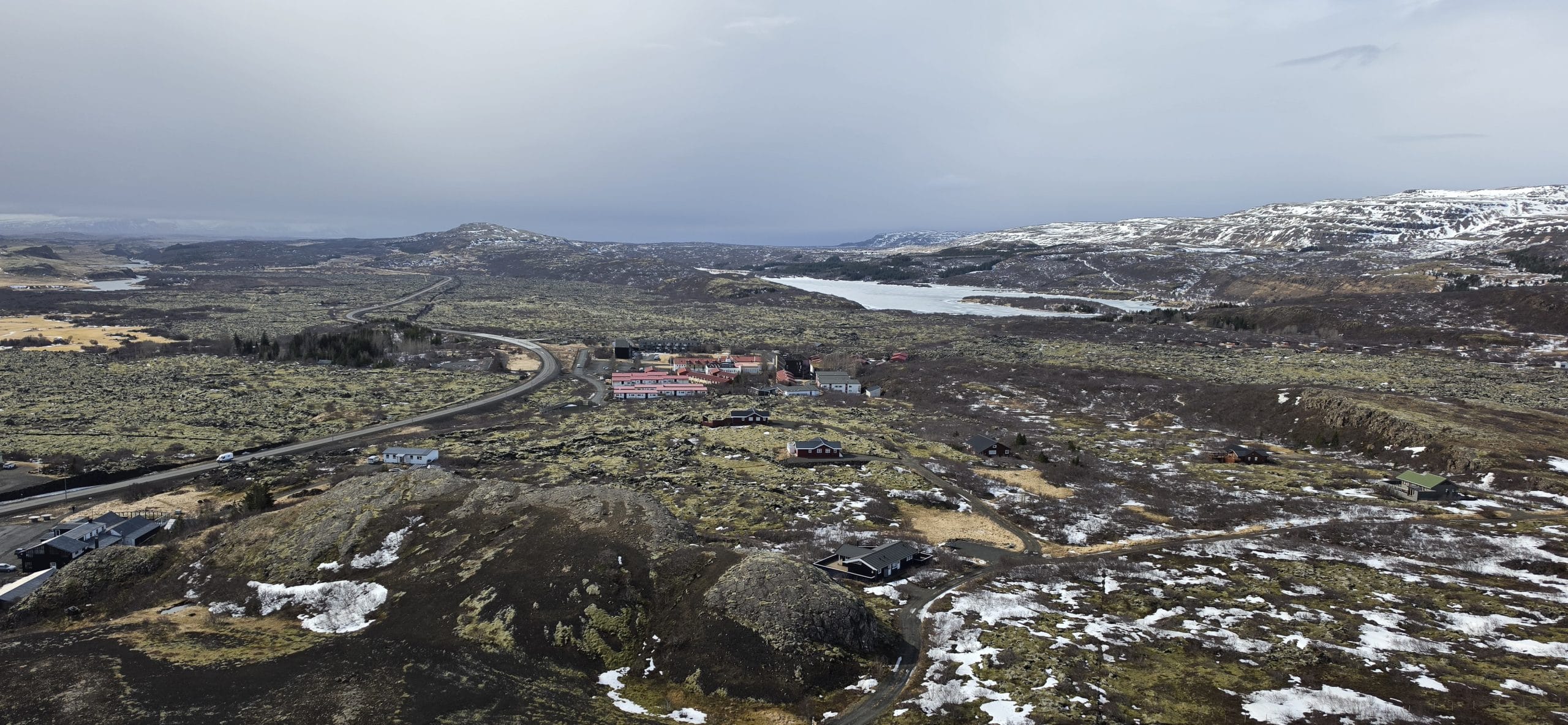
Iceland has a population of 395,000 people. It’s roughly the population of Coventry, although instead of a ring road, there’s a thermal beach.
The entire higher education system – seven accredited universities, about 20,000 students – is smaller than most individual UK universities.
In a country this dinky, a party leader on a campaign phonebank can personally recognise the voter on the other end of the line – the son of the harbourmaster in his own county.
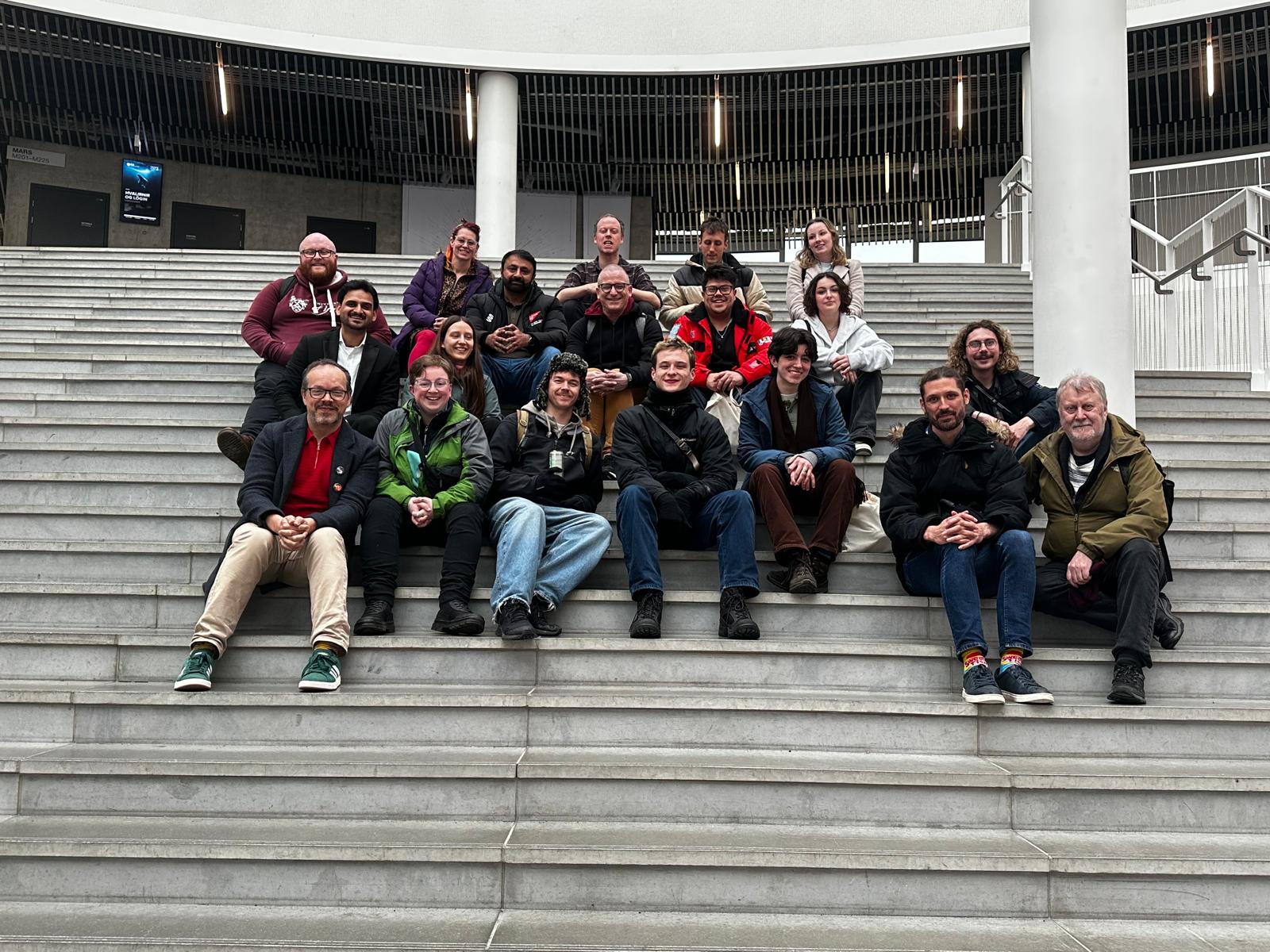
When we arrived in Reykjavík for the spring Wonkhe SUs study tour, the rain was horizontal and the sunshine was aggressive, sometimes within the same minute.
We’d spent the flight trying to untangle a system where every institution seems to be governed by, funded by, or housed inside another one. Nothing sits in isolation – everything is tangled into everything else.
But it was something from 1911 that we kept coming back to.
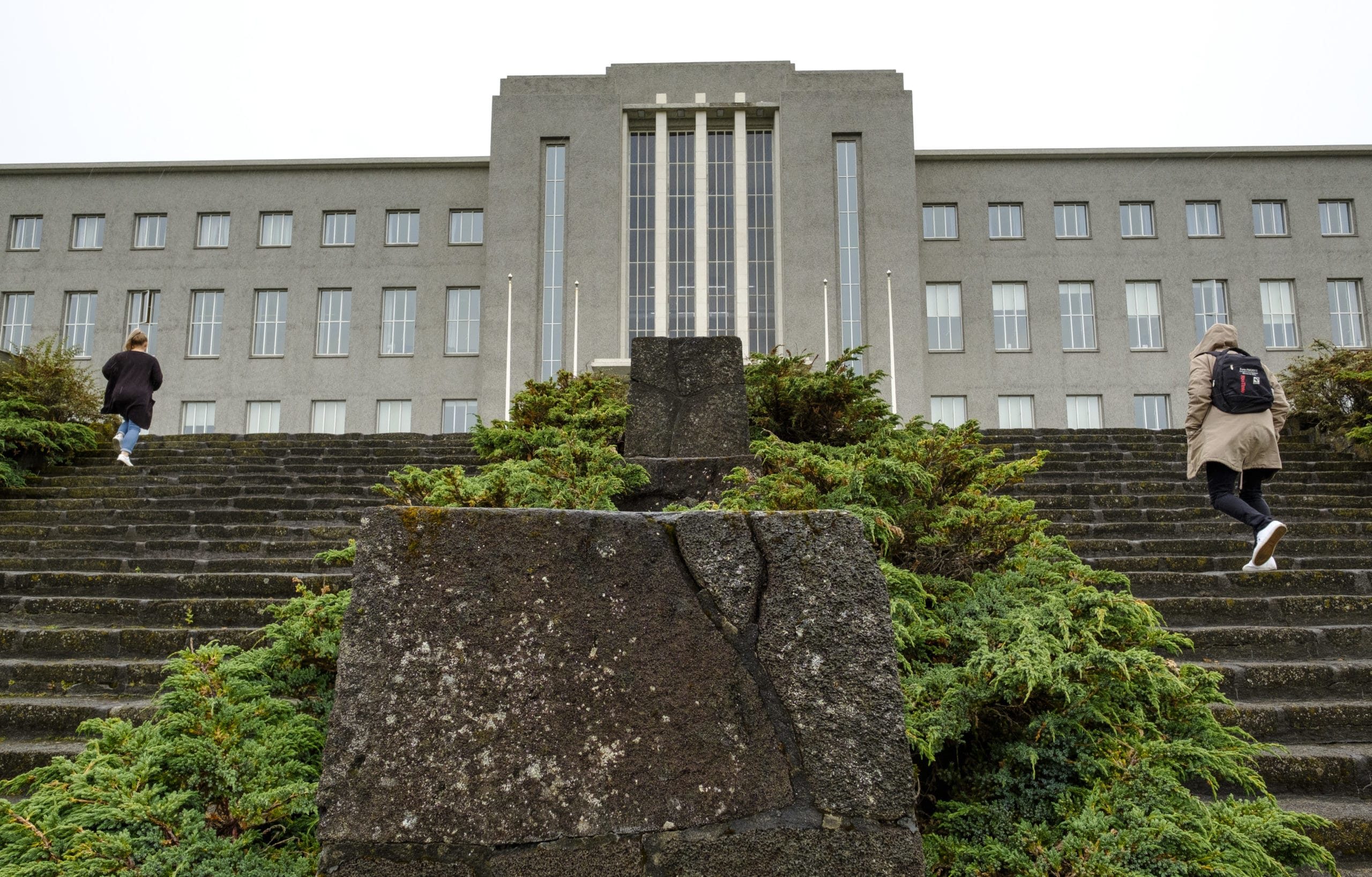
When the University of Iceland opened its doors in Parliament House with 45 students and one woman, its first rector acknowledged that the university was among the smallest and most imperfect in the world.
But he said it should become part of the “republic of the sciences”, while serving Iceland as a “nursery of culture” – an educational institution that would build the nation.
That dual mission – internationally credible and nationally purposeful – is one of the best formulations we’ve come across.
This is a country where roughly one in ten people will publish a book in their lifetime, where a special committee exists to approve children’s names, and where the word “geyser” entered the English language because the original one is here.
The university was not just a new educational institution. It was a nation-building project, founded on the centenary of the independence leader’s birth.
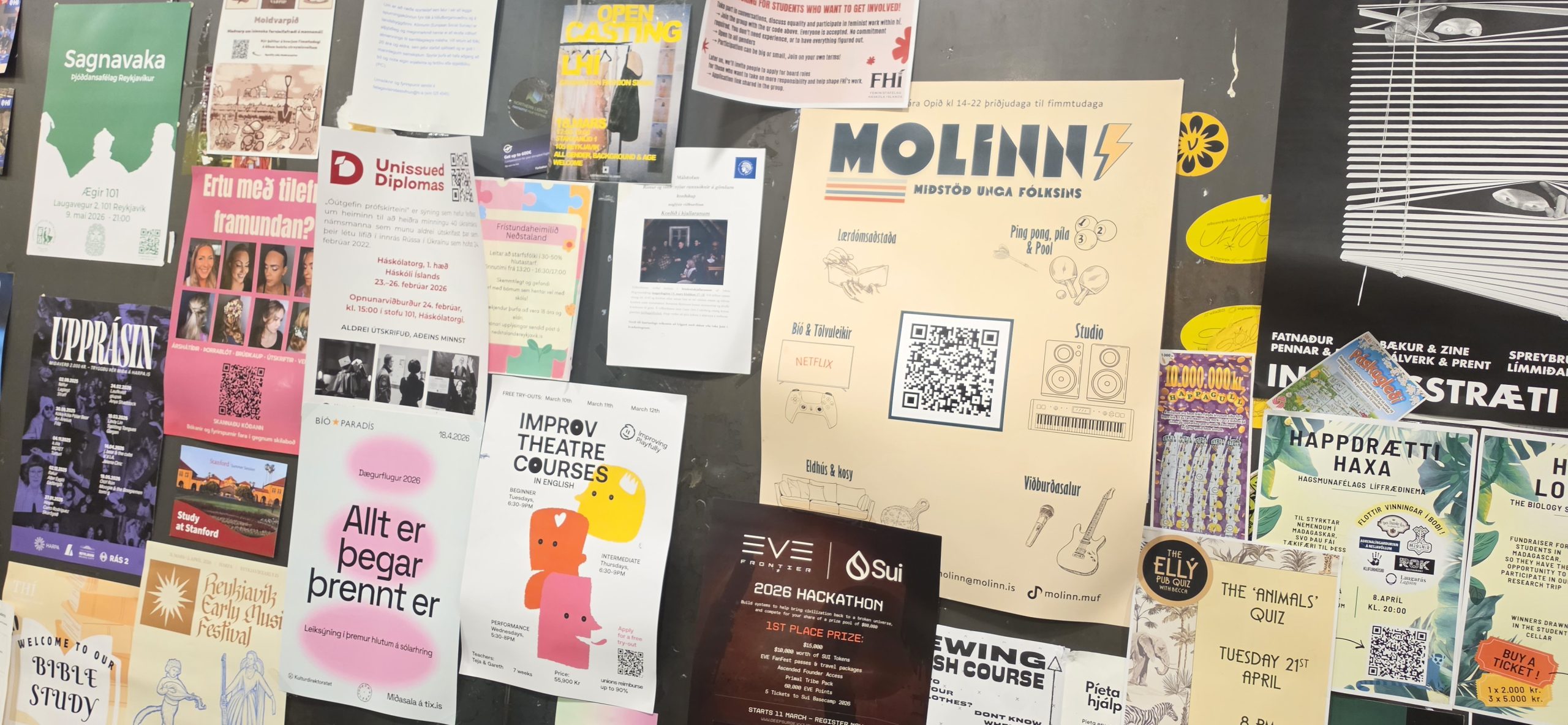
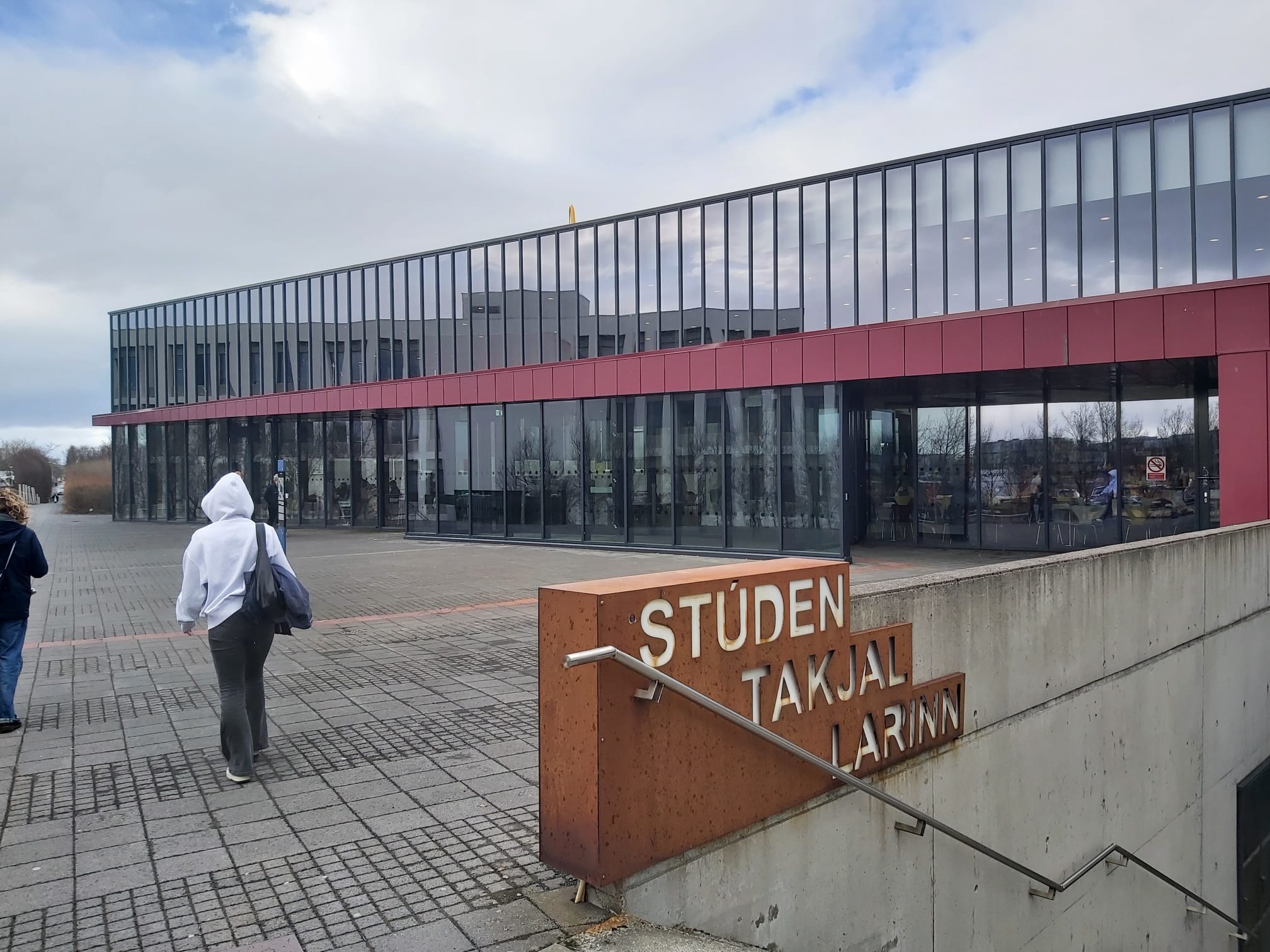
Students organised before the institution had finished building itself – the Student Council by 1920, a student canteen by 1921 because students needed to eat. They still run it now.
One of the odder facts of Icelandic student history is that some of the most important early work of national self-definition happened abroad – among students and scholars in Copenhagen in the 1830s, arguing that if languages die, nations die too.
Education was understood as nation-building before Iceland had a university. The purpose came first – the institution followed.
In the UK we do it the other way round. We have the institutions – vast, numerous, well-resourced by international standards – and an increasingly hard to articulate account of what they’re for beyond individual salary returns and institutional survival.
So the question hanging over every meeting we attended in Reykjavík was not whether Iceland’s answer was the right one. It was what happens when you don’t have one at all.
On every study tour we run, hosts ask some version of the same question – what could British higher education possibly learn from us?
The question always undersells them. But it also undersells the scale of Britain’s problem. A system that calls itself world-leading while its students can’t cover rent and its regulator can’t explain what it regulates might start by learning not to strut.
Iceland didn’t build the world’s narrowest gender gap, or the highest interpersonal trust, or the most peaceful society on Earth, by competing. It got there through collaboration, calm assertiveness and patient problem-solving over a very long time.
The last time the British arrived in Iceland with confidence, in 1940, they seized the only student hall and turned it into a military hospital.
Blind is the bookless man
On the plane, we’d come across the work of Dóra Guðmundsdóttir, the director of determinants of health and wellbeing at the Icelandic Directorate of Health.
Her research on the epidemiology of wellbeing has shaped government policy across multiple administrations. Income, she has found, predicts just 1 per cent of happiness in Iceland when other factors are taken into account. The biggest predictor of unhappiness is not low income – it’s financial difficulty.
People with high incomes who are in financial difficulty are unhappier than people with lower incomes who aren’t. “Making a higher income is not going to lead to more happiness,” she says. “It’s a fairly low predictor compared to social relations.”
The banking collapse looms large. When Guðmundsdóttir studied the effects of Iceland’s 2008 financial crisis, she found that adolescent happiness went up – because adults were working fewer hours, which meant parents had more time with their children.
A smaller economy produced happier young people because it produced more time. Adolescents who had strong relationships with their parents were unharmed by the crisis. Those with weak relationships saw their happiness fall.
If income barely predicts happiness, if financial difficulty is what destroys it, and if time with people who care about you is what protects it, then the entire “degrees pay” framing of UK higher education policy answers the wrong question.
The right question is whether the system reduces financial difficulty, builds social connection and creates the conditions for a life that feels worth living.
Iceland at least tries to ask that question. It has a wellbeing indicators framework with 39 measures linked to fiscal strategy – not a tourism branding exercise, but a budgeting and prioritisation device.
Six priorities steered 30 of the government’s 35 policy areas by 2021 – mental health, secure housing, work-life balance, zero carbon, innovation, communication with the public. The country has the narrowest gender gap in the world for the fifteenth year running. Parental leave gives each parent six months, designed around the assumption that both parents care. Children travel to school on their own.
It’s also the most peaceful country in the world – with no standing army, police without firearms, and negligible crime. Interpersonal trust runs at 82 per cent.
Quality of life rests on time, trust and shared institutions. This is a place where the state television channel didn’t broadcast on Thursdays until 1986 and took the whole of July off – so people would go outside. Where beer was banned until 1989, and the day the prohibition lifted is now celebrated annually. Where NASA sent astronauts to train for the moon landing because the landscape was the closest thing on Earth to another planet.
It all feels ambient in a country of 395,000 – but it’s designed. These are policy choices. And education sits inside them, not apart from them.
So what does a higher education system look like when it’s designed for social connection, time, belonging and freedom from financial strain – rather than for salary returns?
Ten drops
It looks, first, like a system built for the people actually in it.
Icelandic students have a mean age of 29.7 years – the oldest student population in Europe. Forty-three per cent are aged 30 or over. Around a third are parents – the highest proportion of student parents in any Eurostudent country.
Sixty-two per cent had worked for more than a year and more than 20 hours a week before entering higher education. Taking time out between school and university to work, travel, or figure things out is normalised rather than pathologised.
When we compared notes on study pace, our Icelandic hosts could only see stress and pressure in what we described. Here, only about 44 per cent of students finish a three-year bachelor’s in three years – many take four, some take six. Our politics would see a system failing. Theirs sees a system refusing to punish people for having lives.
A statutory non-profit student-led foundation, FS, manages around 1,610 rental units across a lifecycle model – students start in shared rooms when they want to meet people, move to studios as studies intensify, shift to couples’ apartments, then to family housing when children arrive.
FS runs two preschools for children aged six months to six years, and introduced pet ownership in some buildings as a COVID-era mental health measure – now expanded to four. The housing is designed around huge shared kitchens and living facilities – not because it’s cheaper, but because the foundation believes it reduces loneliness.
There is an Icelandic phrase – “tíu dropar,” ten drops – that means offering a friend coffee no matter how little you have left. It’s a fragment that tells the story of a people who survived difficult centuries but celebrated togetherness despite them. Ten drops for a friend, however many drops remain.
The exchange students we met kept describing a version of it. One German student talked about his shared kitchen:
…someone was always cooking, someone was always talking, someone was always having a crisis about their visa or their love life.
The intuition has data behind it. Icelandic academics Magnús Þór Torfason, Margrét Sigrún Sigurðardóttir and Anna Helga Jónsdóttir have spent nearly a decade tracking how friendships form among new students – and what happens when they don’t.
Students with more ties to peers are less likely to drop out. During the pandemic, when campus was partially closed, over 60 per cent of the connections a first-year student would normally make simply didn’t happen – and almost half of respondents made no new friends at all by second semester. The students valued the flexibility of distance learning. They were also lonely.
On our study tours over the years, we’ve often found that the thing that most reliably closes gaps in study success is learning communities built at small scale. In Iceland, the principle is everywhere – and it comes from purpose, not from a best-practice report.
Clean your own door
The vísindaferð – literally “science trip” – is a Friday afternoon visit to a company, run by a subject association, blending professional networking, intellectual curiosity and socialising in a single event that’s always oversubscribed, always student-led. In a country this size, the company you’re visiting may well employ someone you know.
A UK university might split that into a careers service event, an academic society social and a networking evening – three separate operations, none oversubscribed.
What’s also striking is the volume of things students are trusted to do.
At Reykjavik University, senior law students staff a free legal advice clinic and publish a peer-reviewed academic journal. SHÍ’s rights office handles grading disputes and complaints – staffed entirely by students.
SFHR runs its own safeguarding education, with plain, direct language about sexual violence and consent that some comms teams would sand down into uselessness. A student committee manages the university’s actual entrepreneurship centre.
Októberfest – a three-day outdoor music festival drawing 5,000 people – runs on one part-time hire, a committee and volunteers. In the UK, most of those functions sits inside a professional service, a compliance function or an outsourced contract. We professionalise the belonging out of student life.
And even in a country as wealthy as Iceland, no university could afford to deliver all of that as cold transactional service provision anyway – the model only works because students are trusted to run it.
On LinkedIn this week, a thread about student kitchenettes at Lund University drew dozens of UK academics pointing proudly to commuter lounges at their own institutions. They’d spotted the provision but missed the principle.
At Lund, the departmental student association owns each space, sets the rules, organises the cleaning rotas. The UK version is a professionally managed room with a microwave. Same furniture, opposite signal.
The university’s educational inclusion programme, Sprettur, runs a credited mentoring course – a 5-ECTS module, equivalent to 10 UK credits, where students mentor peers from immigrant or refugee backgrounds. The intercultural officer, Juan Camilo, told us the question underneath it:
Which kind of Iceland do we want to see in 10 years? Do we want to see a stratification where people of foreign background are only in the lowest-paid jobs – or are we creating a structure so that those who want to can receive all the opportunities they deserve?
That’s a purpose statement. When you know what your education system is for, giving academic credit to students who mentor refugees isn’t a stretch – it’s obvious. Without that clarity, it’s a nice idea that never survives a committee.
On with the butter
At Reykjavik University, six 1-ECTS personal development courses – pass-fail, centrally delivered by professional services staff – are embedded across every degree – university life, wellbeing, leadership, critical thinking, public speaking, career development.
Each is roughly ten hours of student effort, with no marking burden, plenty of student mixing, and no academic staff time. The UK version of that is a PDF sent to academics asking them to “embed” employability in the curriculum.
The Family Committee at the University of Iceland’s Student Council runs specific legislative asks – child benefit decoupled from academic performance, 10-month parental maintenance loans, interest suspension during childbirth, and a push to abolish compulsory attendance and in-person assessment after 4pm as an equality measure. That’s what family-friendly looks like when it’s treated as a rights question rather than an accommodation.
At the Agricultural University – a cluster of buildings around a farmyard in a nature reserve, where the entire student body would fit in a UK lecture theatre – the line between curriculum and club is almost invisible. The ram appreciation society involves students buying shares in a breeding ram. The cattle club organises farm visits planned by second-year students.
An annual inter-departmental football tournament is played in mud on the banks of a river. Iceland even has a subpopulation of “leader sheep” – animals that have been known for over a thousand years to predict weather and guide the flock away from danger. At this university, the students seem to be bred along similar lines.
KLAK, a non-profit startup accelerator co-owned by two competing universities, industry and government, runs Gulleggið – “the golden egg” – with over 3,000 ideas submitted across its history. Startup desks are allocated to students, with access to 180 volunteer mentors. In a country where you might drive through lava fields to a town of 800 people, your pitch meeting may well be with a former finalist now employing six of them. How else are students going to build the fourth (IP) pillar of the economy?
When the University of Iceland adopted an institution-wide AI policy in December 2025, it did so in months. There’s a standardised template, with the same rules for every course, and equality of access to AI named as one of the pillars.
When our group met the teaching and learning centre, our delegates took turns describing years of working groups producing waffle, staff secretly using AI to mark student work, and students terrified of false accusations. Iceland did it quickly because the policy was grounded in a clear institutional principle.
One of our delegates suggested that institutions at home are still arguing about first principles because they don’t have any.
Walk slowly through the doors of joy
Bifröst University answered another question we’ve been asking. In 2021, Eve Alcock and Jim argued that higher education was stuck in a false binary – you were either a boarder immersed in campus life or a commuter who never quite belonged. They proposed intensive residential blocks, one module at a time, campus accommodation used for sleeping, not for living. They just didn’t know the Icelandic word for it.
Bifröst went fully online in 2024 but compressed its in-person teaching into compulsory multi-day staðlotur – Thursday to Sunday – within seven-week blocks. Enrolment tripled. Dropout fell from 24 per cent to 8 per cent. The student association timed everything – freshers’ ball, gala dinner, pub nights – to the weekends when everyone was physically present. Distance learning with the social architecture bolted back on, designed for adults who have lives.
And then there’s the swimming pool. Reykjavík has 18 geothermally heated public pools that UNESCO has inscribed as intangible cultural heritage – not for the exercise but for the community. The hot tub is where friendships form, where group projects get discussed, where a German exchange student sits in 42-degree water in the snow and says nothing in his life back home comes close.
A French law student saw her constitutional law professor in one of the hot tubs in her first week – “he nodded at me like it was completely normal.” If a UK university wanted to think seriously about what makes integration work, the answer might be less “welcome week icebreaker” and more “42-degree water and a relative absence of clothing.”
None of these things exists because someone read a best-practice guide or won a bidding round. They exist because the system has a purpose – building the society it wants to become – and an institutional architecture that puts it into practice at human scale.
Smallness makes the connections visible, but the design choices are not products of smallness. They’re products of purpose.
No one becomes a bishop unbeaten
Not that everyone has always agreed. In the 1920s, some people worried the country would end up with an “educated proletariat mass.” And then came the British. In 1940, the occupation force seized the only student hall and turned it into a military hospital.
Students protested, marched on the embassy, and when the hall wasn’t returned, voted unanimously in March 1942 to build a new one – during wartime, with no materials, with heating equipment lost at sea, funded by towns across the country each donating the equivalent of one room.
Student housing was not a facilities problem. It was a national civic project – and that principle was institutionalised by statute in 1968 when FS was created.
On 3 May 1972, students formed a “reception committee” at the entrance to Árnagarður when the US Secretary of State visited – the flag of the Vietnamese National Liberation Front hung above the door. In 1975, students struck against cuts to student loans and voted unanimously to continue.
A young Össur Skarphéðinsson was photographed at the front of a protest in 1976 – he later became Foreign Minister. In 2013, the Student Council chair described a registration fee increase as a “special tax on students” – and that year the Council went to court over changes to loan eligibility and won.
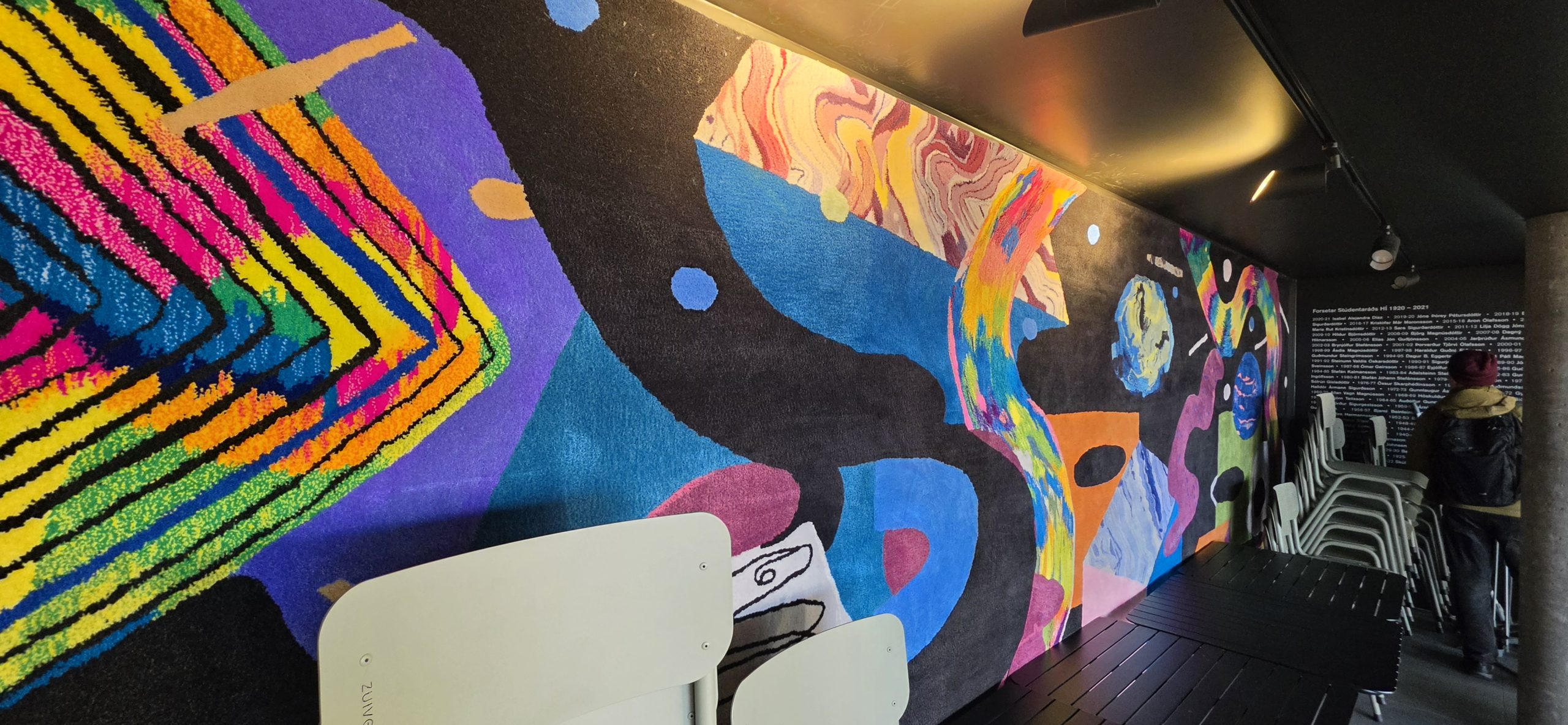
Two political groups – Vaka, founded in 1935, and Röskva, founded in 1988 – contest Student Council elections with manifestos and institutional memory stretching back decades. Every 1 December since 1922, students have walked to Jón Sigurðsson’s grave.
A 2022 address at the ceremony: “The fight for diverse education that is accessible to all is a fight for a better future.” The ceremony functions as annual constitutional memory. It says – we were here before, we will be here after, and this is what we’re for.
UK student politics has almost no equivalent. Officer cohorts turn over annually. Nobody litigates. Few students pursue ombudsman complaints. That’s not because UK students are apathetic. It’s because there’s little to hold anyone to.
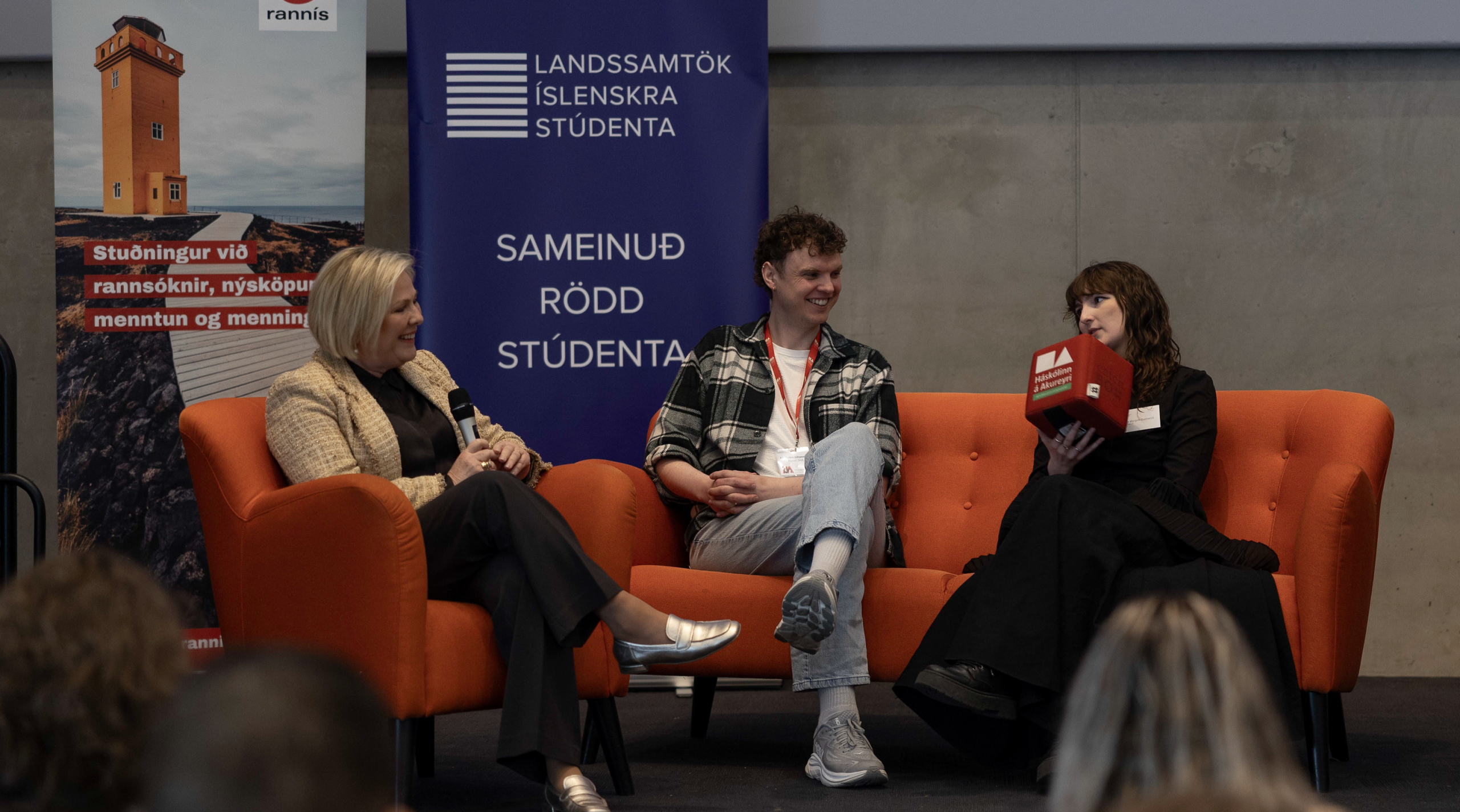
The current president of LÍS – Iceland’s national union of students – is the kind of leader who has something to hold people to. She first got involved after being given wrong information about her student finance entitlement and told to repay it all immediately. Lísa Margrét Gunnarsdóttir’s through-line is the same across every public intervention we can find – institutions describe themselves in ways that conceal their real distributive effects.
A student finance system marketed as a “social equalisation fund” cannot be described as one, she has argued, if it advantages those who already have money. A 30 per cent write-off designed to incentivise completion punishes those too poor to study full-time. The system now has a “deterrent effect” – fewer people are borrowing because the terms feel too dangerous. Thirty billion krónur have accumulated inside the fund while students face 9 per cent interest on non-indexed loans.
In a joint piece with BHM, the confederation of university graduates, she published a worked example – the student with children, working part-time, loan not covering living costs, completing late, the grant disappearing, entering the labour market with more than a full month’s wages going to repayment.
The student-loan system should be an investment in the future of the nation,” she has argued. That sentence only works if you have an account of what the nation’s future looks like.
Icelanders have a phrase for the UK version of all this – gluggaveður – window weather. It’s when you look outside and everything appears perfect, but when you step through the door it’s freezing.
Maintenance loans described as “support” that don’t cover rent. A regulator called the “Office for Students” that students have never encountered. Access and participation plans that don’t widen participation. Student protection plans that protected nobody when providers cut their costs. Consumer protection law that nobody enforces. Our higher education policy is window weather – it looks fine from inside the building, but the students are out in it.
When we described the weekend courses crisis to Lísa Margrét – 22,000 students across 15 providers having maintenance loans suspended overnight because their courses were reclassified – she said the UK had “lost the plot.” She recognised it immediately. It was a larger, faster version of what had happened to her.
On the Wonkhe Show this week, her objection to “student as consumer” is not that students don’t need rights – especially where there are power imbalances, she is emphatic that they do. It’s that the consumer frame treats students as recipients of a service rather than participants in something they help to build.
In Iceland, students run legal clinics, complaints offices, entrepreneurship centres, safeguarding education, housing governance. That trust is what builds the civic capacity that then holds the system to account. Rights without agency is window weather too – it looks protective from the outside, but nobody inside has the power to change anything.
LÍS and the graduate trade union Viska both share a policy space and run joint surveys, commission joint research, and stage joint exhibitions in shopping centres. You can join the graduate trade union before you graduate. The pipeline from student representation to professional representation isn’t a metaphor. And it matters more than ever, because Viska’s own data shows the financial case weakening.
Across 35 European countries, Iceland has the smallest income gap between graduates and non-graduates – 21 per cent, against a European average of 76 per cent. The purchasing power of a master’s degree increased by 1 per cent between 2000 and 2023. Intergenerational inequality has grown faster in Iceland than in any other Nordic country. And yet students still enrol.
Distance makes the mountains blue
Lísa Margrét is also one of the organisers of Druslugangan – the Icelandic SlutWalk. She has been public about her own experience of violence at multiple points in her life, and about the fact that for years the march itself felt too painful to attend.
What changed, she has said, was discovering that anger could be a source of strength rather than something to avoid – and that organising collectively was more healing than any individual intervention. She describes the march as a place where the shame goes back to where it belongs.
I find there’s a lot of magic in being able to be a little angry but also happy that I’m not alone.
The magic requires two things. Something to be angry about – a system that claims to be something and isn’t, a set of commitments that the state has made and is drifting from. And an institutional architecture that makes the anger productive – a movement with standing, continuity, data and the mandate to demand honesty.
Not managed anger, not surveys and satisfaction scores and “student voice” committees. Collective feeling, grounded in shared stakes.
Iceland has both. The purpose is contested, strained, under pressure from housing costs and compressed wages and intergenerational inequality. But at least it’s there. At least there’s a set of commitments that a student leader can stand up and hold the state to. At least there’s constitutional memory – the walk to the grave every December, the factions with 90 years of history, the willingness to litigate when something is wrong, and the pipeline from student council to graduate union to parliament that means the harbourmaster’s son might one day be the one taking the phone.
In the UK, we’ve never really articulated what mass higher education is for beyond individual salary returns and institutional survival. When the financial return compresses, when AI reshapes the labour market, when the maintenance loan doesn’t cover rent, when the regulator can’t explain what it regulates – what story do we have?
Dóra Guðmundsdóttir’s 1 per cent should haunt us. If income barely predicts a good life and social connection predicts almost everything, then the system we’ve built – individualised, commoditised, designed to churn out degree-holders at pace and measure its success by their salaries – isn’t just answering the wrong question. It’s building the wrong thing.
The Icelanders say fjarlægðin gerir fjöllin blá – distance makes the mountains blue. The further you are from something, the more beautiful it appears. There is a risk, when you spend two days in a country of 395,000 people with geothermal beaches and volcanic craters and a ram appreciation society, of painting the mountains bluer than they are.
Iceland’s system is under strain. Its student finance is failing. Its wage premium is collapsing. Its housing crisis is real.
But when Lísa Margrét stands up and says the system is drifting from its purpose, she can point to a purpose it’s drifting from. When students walk to the grave every December, they’re walking toward something – a commitment the country made to itself, in 1911, about what education was for.
Lay your head in water
In February, a few weeks before our visit, the University of Iceland’s rector stood before students and quoted Hannah Arendt – that the student years are the period of our lives when we face the question of whether we love the world enough to take responsibility for it.
She referenced the words of one of her professors, Einar Stefánsson – “Bad decisions are made in private” – and urged students to discuss their ideas, seek others’ opinions and learn from their mistakes.
She told them that in a world of rapid technological change, it was impossible to know which jobs would exist in the future, and that it was more important than ever that education strengthened the individual, so they could strengthen others.
Have the belief that you can influence the world. It’ll never be better than the people who choose to take responsibility for it – and now it’s your turn.
Something something “world-leading research” and “graduate outcomes.” It’s all fine, until the numbers stop adding up – at which point nobody is able to explain what was lost, because nobody ever said what it was.
Do we want students to love the world enough to take responsibility for it? In 1911, Iceland answered yes – and built a nursery of culture to prove it. The UK built a market for them and called it a system. Lísa Margrét would tell students to be a little angry about that – and to make sure they’re not alone.