Euro visions: Technology made beneficial to society
On Day Five of Eurovision week, Jim Dickinson has a mooch around Austrian HE to work out what it’s built on – and what staff and students do on top
Comment|
Jim is an Associate Editor (SUs) at Wonkhe
I’ve been thinking a lot about scaffolding this week.
One reason is that when I booked my little pension in Gramatneusiedl, what the website didn’t say is that extensive building work would be going on, which at various points has given me brown tap water, a stunning headache, and stunning views of an Austrian builder’s backside.
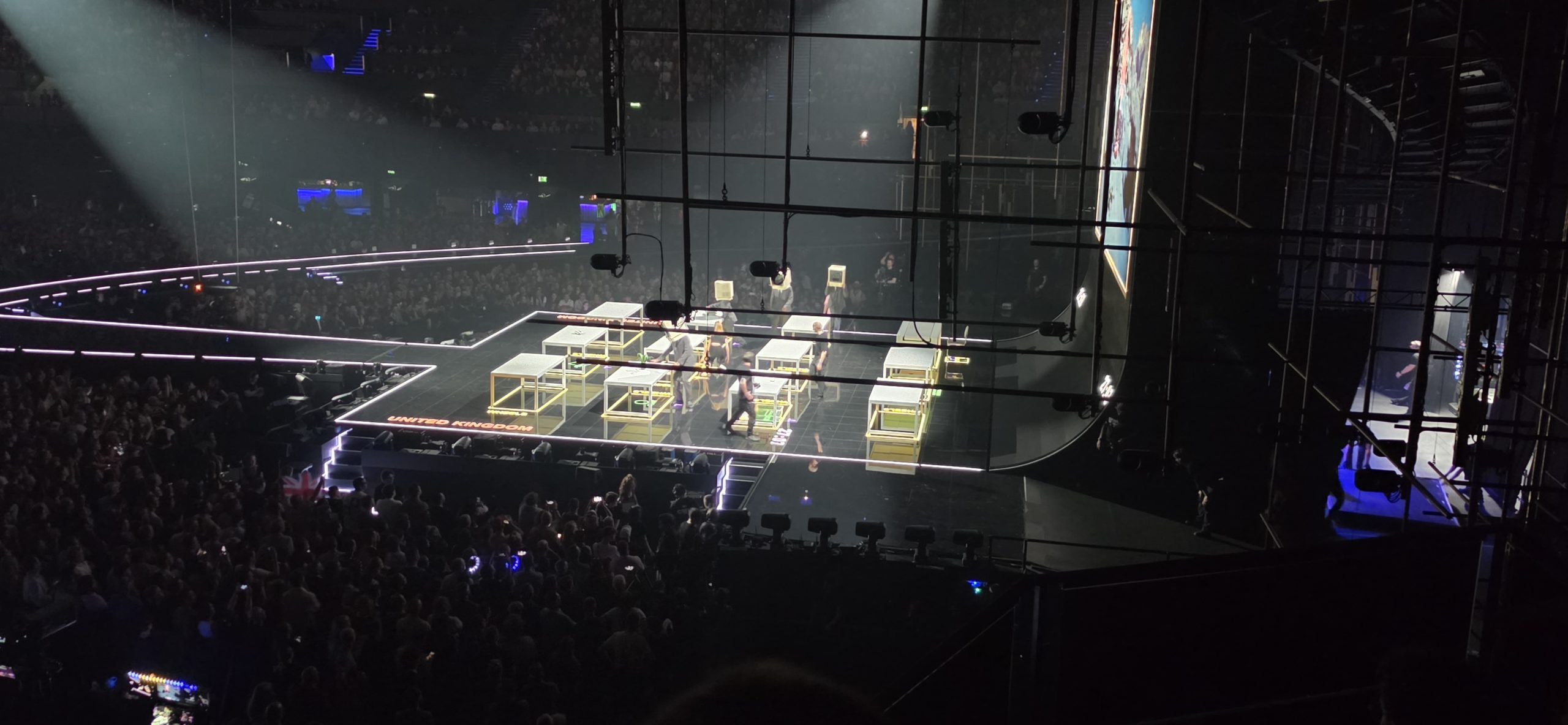
Another is that I somehow managed to get a tram in the wrong direction to the Wiener Stadthalle for Semi Final 2 on Thursday, and didn’t notice for at least ten stops. By the time I got into the arena, I ended up stood next to a bunch of grumpy and bizarrely tall Czechia fans with a lovely view of a load of scaffolding holding up the side of the stage and a boom camera that I thought was going to slide my head off if the operator wasn’t concentrating.
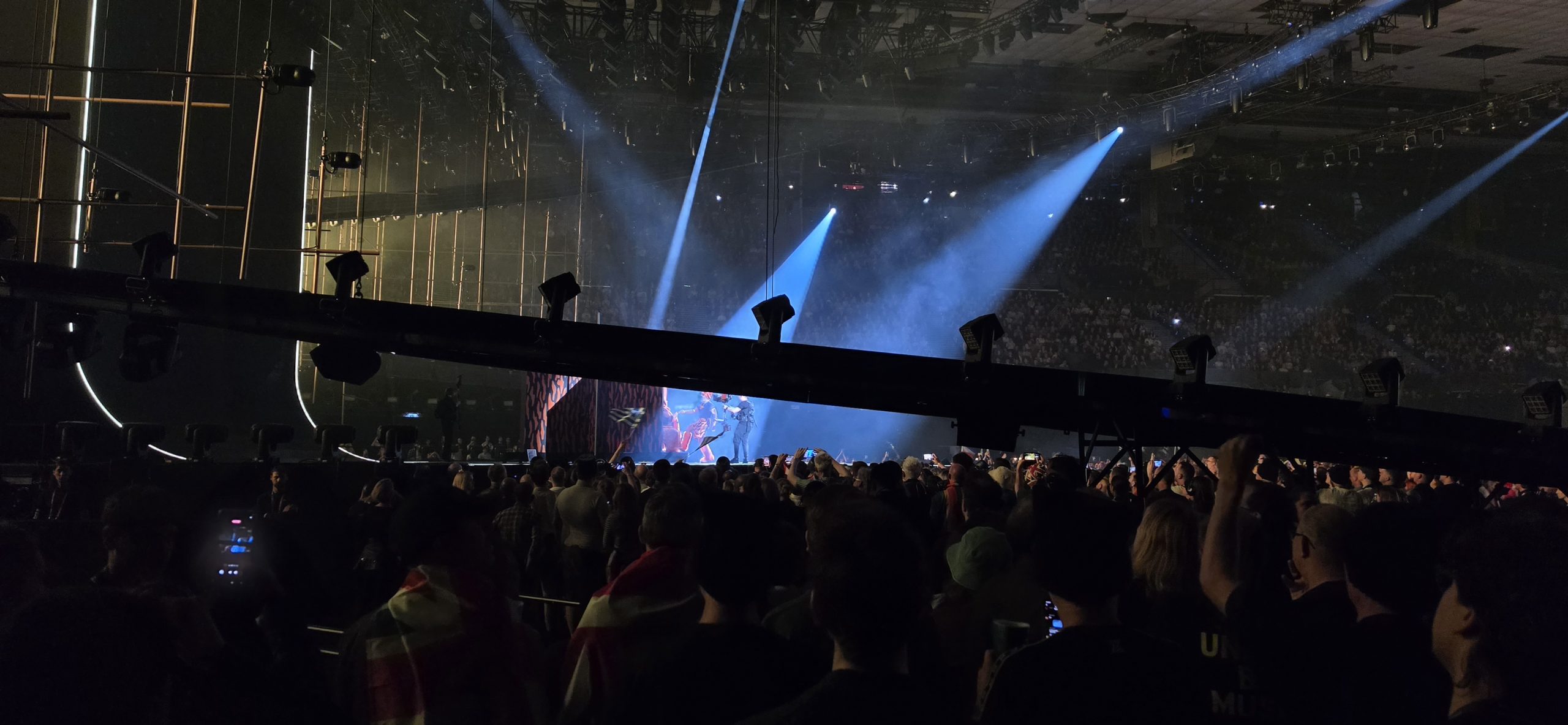
Judging by the wider quality of the production this year from ORF, I think I was reasonable in rating it high on my risk register.
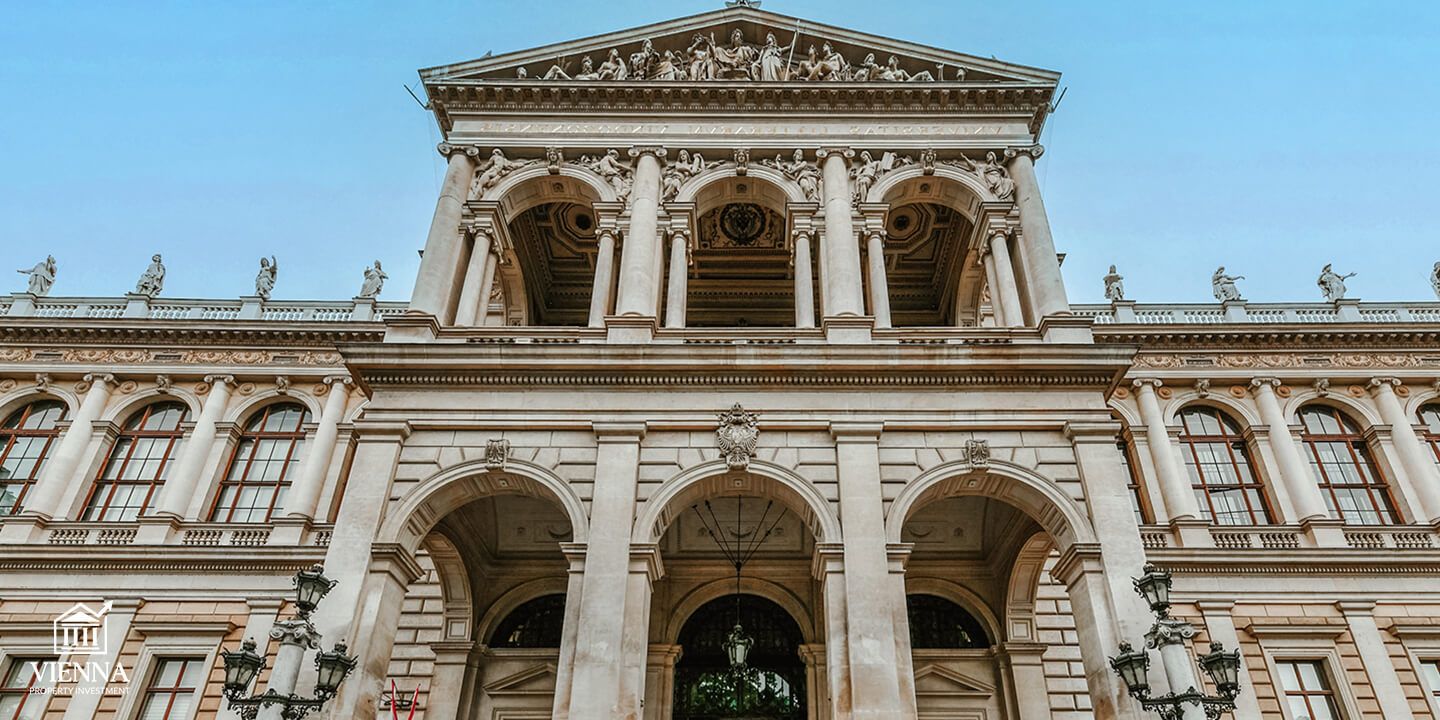
But the main reason for thinking a lot about scaffolding is the mooching around I’ve been doing while I’m in Vienna into the academic and wider student experience at the two big universities in the city – the University of Vienna, and the technical university, TU Wien.
Both have it in two layers. There’s the academic kind – what the curriculum hangs off that shapes what students are studying. And there’s the kind that sits around it – a layer of student-run activity that is older, more creative and more expansive than we might see in the UK.
The two do different work, but they hold each other up. Take one away and the rest goes wobbly.
Stefania
Let’s imagine you’re Stefan, who I met and is on the University of Vienna’s Business Administration bachelors – the country’s largest general-management programme, with around 449 entrants a year.
The first thing you spot is that of the 180 ECTS credits (ie 360 in the UK), thirty are open – students can fill the slot with one of dozens of pre-bundled extension curricula drawn from across the university (philosophy, sciences, languages, communication, psychology), with a whole study-abroad term, an in-house individual specialisation, or combinations of those.
That’s a sixth of the degree where the student is steering. On top of that they pick a specialisation stream within their degree from ten options.
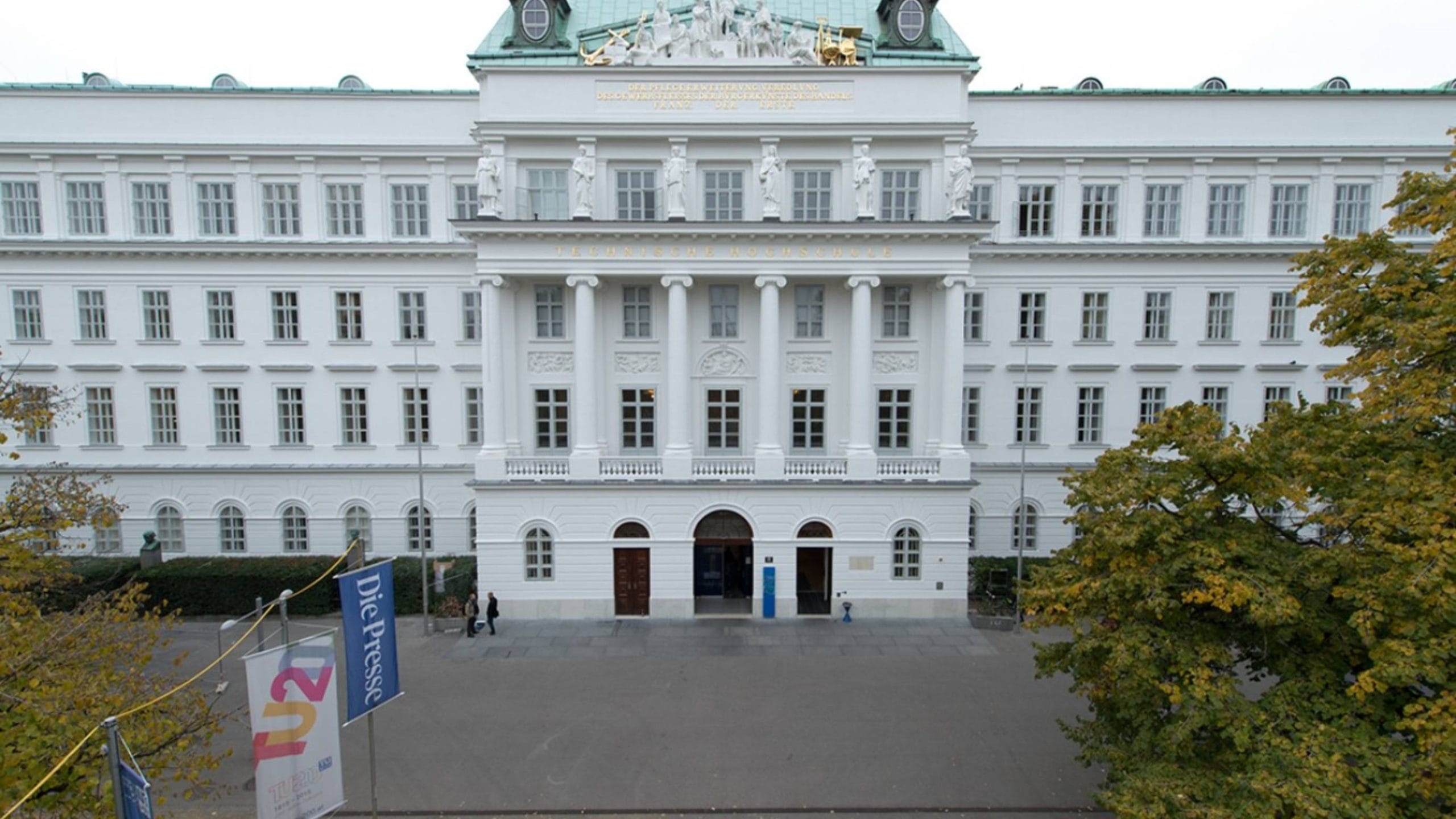
Down the road at TU Wien, Anna’s an informatics student whose curriculum has just consolidated four previously separate bachelors into a single shared core with seven selectable specialisations – AI and machine learning, cybersecurity, digital health, human-centred computing, software engineering, theoretical computer science and logic, visual computing.
The specialisation label will only go on Anna’s certificate based on her choices at the end – a “general” exit without the label is equally valid.
Eighteen of the 180 ECTS sit in a free-choice-and-transferable-skills pool, at least six of which must come from a centrally curated catalogue covering communication, scientific writing, ethics, technology assessment, gender and diversity and languages.
Cha cha cha
What does that actually look like once you’re inside it? Most of Stefan’s business modules come in at 6 ECTS, paired up as a 3 ECTS lecture and a 3 ECTS workshop or tutorial. A few are bigger – accounting is 9 ECTS, the law module 12, and the quantitative methods bundle a whopping 28 ECTS, the largest single block in the degree.
Anna’s modules at TU Wien follow the same shape, mostly 6 ECTS, with first-year foundations heavier – algebra and discrete maths 9, algorithms and data structures 8, introduction to programming 9.5. Her bachelor thesis at the end is a 13 ECTS module: 10 for the supervised thesis, 3 for the methodology seminar wrapped around it.
Cohorts are big up front and thin out through the entry phase. Stefan’s bookkeeping lecture seats most of his year’s 449 BWL entrants. Anna’s introductory programming course can hold 600 to 700 students in the same room. The workshop or tutorial half of each module then runs in parallel capped groups – fifty at the University of Vienna, twenty per tutor at TU Wien – so the conceptual stuff is delivered once at scale and the applied stuff is delivered many times in small rooms. A cheap-then-expensive architecture, calibrated for the kind of cohorts an open-access tradition produces.
Assessment splits along the same line. The lecture half is a single final exam – low marking load, three exam dates a semester at TU Wien, up to five attempts to pass. The workshop or tutorial half is continuous – problem sets, programming submissions, presentations, mid-terms, multiple things to mark across the term. The bachelor thesis at the end is the most expensive teaching block in the whole degree, individually supervised, capped at 24 students per seminar at the University of Vienna and 20 at TU Wien.
Grades are numeric on the Austrian 1-to-5 scale – 1 is excellent, 4 the lowest pass, 5 a fail. Pass/fail credit barely exists. At TU Wien exactly 1 ECTS of Anna’s 180 is structurally pass/fail (the orientation course in semester one), and her transferable-skills slot can be too, depending on which course she picks. Everything else gets a number. Credits earned on Erasmus are converted into the 1-to-5 scale on the way back.
The compulsory bits also do interesting work. The first-year Ways of Thinking module at TU Wien – 6.5 ECTS, mandatory in semester one – treats programming as one mode of thinking among several (mathematical, design, ethical, historical, sociological) so that these graduate specialists are ready to operate in a complex world.
Then back at the University of Vienna, several Studienvertretungen (like souped up academic societies) run their own credit-bearing courses inside the formal curriculum – Selbstorganisierte Lehrveranstaltungen, the SOLVen.
The economics basisgruppe has been doing it since the 1970s – heterodox economics, Marxist value theory, the political economy of war, ecological breakdown. External academics and practitioners are invited in to teach material the standard syllabus misses.
At TU Wien the equivalent is GRAT, sitting inside the SU’s sustainability department – literally a small academic programme run by the student body rather than by a faculty, offering credit-bearing lectures, exercises and a block practical on low-impact engineering, with diploma and doctoral supervision available through the unit.
Teresa & Maria
Outside of the curriculum, Austria then has specific layers of student organisation. The statutory students’ union – the Hochschüler_innenschaft – is a public-law corporation under federal legislation, funded by a compulsory levy that every student pays.
Then the Fachschaften and basisgruppen sitting next to it are self-organised volunteer associations, technically clubs, who speak as if they “own” both a part of the student experience and the future of their discipline.
If you stroll into the maths building at the University of Vienna the basisgruppe has its own room. It runs biweekly plenums, has named consultation hours, and its own teaching prize is awarded. It runs a public wiki of past papers and study tips, and puts on start-of-semester group mentoring and end-of-semester parties. They take responsibility for other students’ success, and take it seriously.
Across town at TU Wien the computer science Fachschaft, fsinf, runs an entire stack of digital infrastructure the institution itself does not provide – a self-hosted chat server, a video-call platform, a collaborative lecture wiki of past exam papers and notes, and a curriculum-explainer tool that demystifies degree regulations.
The infrastructure is explicitly framed around privacy and free-software politics – non-corporate alternatives to commercial tooling – and is an example of how Fachschaft autonomy gets used to build durable services that outlast any individual rep cohort.
The HTU also runs, in partnership with the national electrotechnical association, a free hardware prototyping lab open without membership fees or project gatekeeping, positioned as an alternative to faculty-controlled facilities.

Above that Fachschaft layer, the central SUs run sixteen “referate” apiece – issue-based offices covering social welfare, legal advice, queer affairs, anti-racism, feminism, climate, accessibility, working-class students, international affairs. An anonymous reporting channel for discrimination, harassment or sexualised violence sits inside the union so that students with limited trust in formal university routes have a parallel option.
Both unions run orientation activity each autumn as a deliberate counterweight to the technical orientation the institution provides – rights talks, workshops and debates on feminism in engineering, anti-fascism, climate politics and university democracy.
And then there’s the city-as-campus stuff. The HTU organises one of the country’s largest balls each January at the Hofburg, the former Habsburg imperial residence – thousands of guests, profits flowing back into student services, planning sitting in the chair team rather than outsourced to a commercial operator.
The ÖH Uni Wien turns courtyard 8 of the old general hospital campus into a free open-air Friday-evening concert series called Hofklänge – four spring nights, indie pop, jazz, global sounds, a pop-up bar cross-subsidising the production.
The HTU runs cargo bike rental, a van hire scheme, a print shop, a bookshop, a daycare crèche, hardship grants, a project funding pot, and an in-house newspaper (htu.info). The ÖH Uni Wien adds Bücherbörse (a long-running second-hand textbook service), a buddy project pairing new arrivals with returning students, subsidised German classes for non-native speakers, and a multi-month Black History programme that pointedly rejects the one-month celebratory model.
The code
None of this works without the legal scaffolding underneath. Compulsory statutory membership funded by a levy means every Fachschaft has guaranteed running money without having to justify a grant. Then federal law gives subject reps seats on academic committees as of right rather than as invited courtesy.
Under the federal university statute, every degree programme group has a Studienkommission – the curriculum-setting committee – with professors, mid-rank academics and students each holding one third of the seats. That includes votes over the elective curriculum in programmes. This is real curricular power, not consultation, and the reps on them are proud of the way in which they help keep the curriculum “relevant”.
There’s a national layer too, filled by Bundesfachschaftentagungen – BuFaTas – voluntary, twice-a-semester, pan-Germanophone disciplinary conferences. Maths goes to KoMa, physics to ZaPF, computer science to KIF, and so on across roughly forty disciplines.

These networks have real institutional weight – students send delegates to the agencies that accredit Bachelor’s and Master’s programmes via the Studentischer Akkreditierungspool, alongside the German national union and the regional student conferences. A student who joins their local Studienvertretung in Vienna can end up on a panel approving a Master’s at a Bavarian university three years later, with statutory standing in the quality assurance system.
It all answers a question that matters in massified systems. The University of Vienna’s institutional staff-student ratio sits at 36.6. TU Wien’s is 19.8. The scaffolding enables choice, ownership and “rounded” graduates, the “school play” principle drives engagement and belonging, and the student finance system means students complete and achieve when they’re ready, rather than the cost and mental health pressure of “get it all done in 3 years” that dominates back home.
It’s also, Euro for Euro, student for student, cheaper to run.
Hold me closer
Two structural features underpin. One is the meso layer – the Fachschaft and basisgruppe scaffolding that sits between the individual student and the whole institution, with continuity, ring-fenced budget, recognisable identity, space, institutional memory, and just enough scale to both feel like your mates are running it, and to deliver something valuable.
Programme-level reps working alone cannot supply those conditions – the meso layer is what makes the difference between a course rep with goodwill and a basisgruppe that has been continuously active since the 1970s, runs its own credit-bearing teaching, holds a teaching prize, maintains a past-paper archive, and elects its successors through a plenum.
The other is proper Bologna choice inside the curriculum – the extension slots, the seven or ten specialisation streams, the routes to a study-abroad term or an internship credited within the degree, the transferable-skills floor with a real catalogue. Without that slack, students have nothing to shape with. The meso layer can’t scaffold something the curriculum has not left room for.
Wasted love
Eurovision in many ways is just a big bit of scaffolding onto which host broadcasters and their artists create little modules of magic.
Universities are the same, or they ought to be. What looks from the outside like a student with an experience and a graduate with a degree certificate is, when it works, the output of a structure. The curriculum scaffolding makes the qualification mean something coherent. The meso layer gives the student somewhere to belong, someone to ask, somewhere to organise, and a route into shaping what happens to them. The legal scaffolding underneath stops both of those from being defunded the next time a Rektor needs to plug a hole.
Back home, the curriculum is narrowing, the meso layer is thining, and the legal protections never existed in the first place. We then act surprised that students turn up anxious, leave underwhelmed, and tell pollsters the whole thing wasn’t worth the price.
Austria’s universities are not perfect. The staff-student ratios are brutal, the bureaucracy is its own article, and the Hauptgebäude looks as if it hasn’t been seriously redecorated since the Habsburgs were still using the place. But the scaffolding holds.
Stefan can shape his degree, and Anna can build her own infrastructure when the institution won’t. The economics basisgruppe that has been running since the 1970s will still be there when the current cohort graduates, ready to teach the next one heterodox value theory before the lectures have even started.