Higher education postcard: up for the cup
This week’s card from Hugh Jones’ postbag takes us onto the playing fields
Comment|
Hugh Jones is a freelance HE consultant. You’ll find a daily #HigherEducationPostcard if you follow him on Bluesky
What do the Oxford University, the Royal Engineers, and Barnsley FC have in common? They’ve all won the FA Cup. In 1874, in Oxford’s case.
The journey started with a 4-0 away win against Upton Park (Upton Park were an amateur team, now disbanded, which represented Great Britain at the 1900 Paris Olympics, winning the gold medal). And then a 2-0 home win against Barnes FC (Barnes FC, which still plays in the Middlesex Division 1 West, were the first ever team to win an FA Cup match).
In the third round Oxford University drew 1-1 with Wanderers, before beating them 1-0 in the reply. Wanderers were an amateur side who won the first FA Cup in 1872, and won it four more times (1873, 1876, 1877 and 1878) before being disbanded in about 1887. They’d beaten Oxford University in the 1873 final, so this would have been a sweet victory for the university team.
In the semi-final Oxford University beat Clapham Rovers 1-0. (Clapham would have their revenge, beating Oxford University in the final in 1880 by the same scoreline.)
And in the final, played at Kennington Oval on 14 March 1874, Oxford beat the Royal Engineers 2-0.
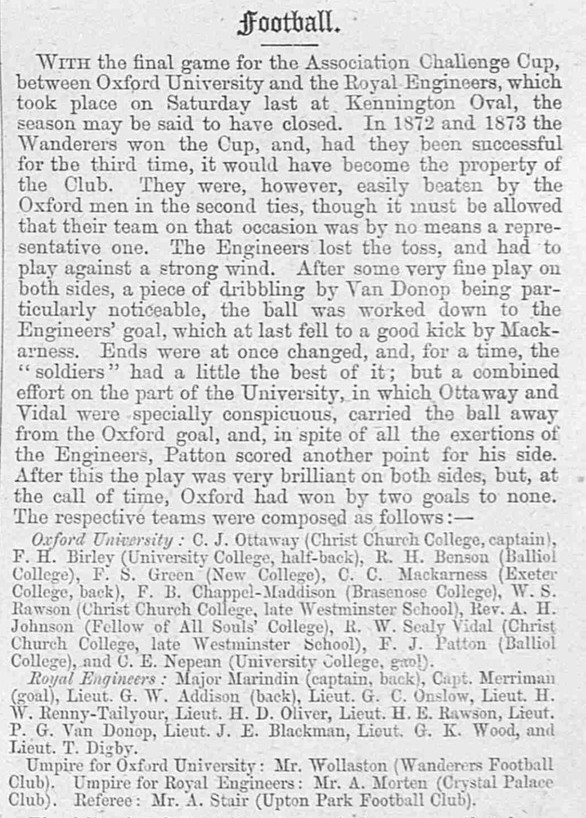
Here’s a report of the match, from the Illustrated Sporting and Dramatic News of 21 March 1874:
And here’s a picture of the victorious Oxford University team:
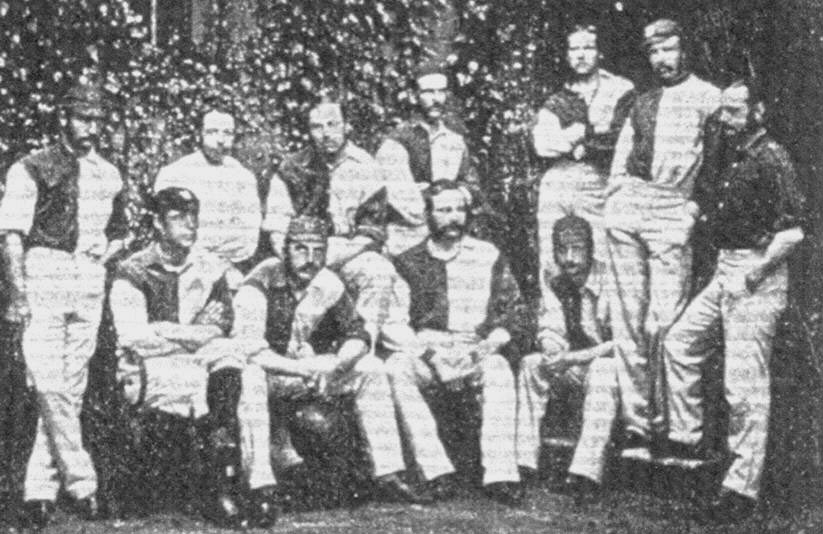
We can also, wonderfully, identify the individual players. Standing, from left to right: Walpole Vidal, Frederick Green, Charles Mackarness, Arthur Johnson, Robert Benson, Francis Birley, Charles Nepean. And seated, from left to right: Cuthbert Ottaway, Frederick Patton, Frederick Maddison, William Rawson.
Of those standing, Walpole Vidal became a vicar; Frederick Green became barrister and, in 1880, His Majesty’s Inspector of Schools. Charles Mackarness, one of the goalscorers, went into the church, finishing his career as Archdeacon of the East Riding (of Yorkshire). Arthur Johnson was ordained a vicar but became a lecturer in modern history at the University of Oxford, in 1884 holding appointments simultaneously at nine different colleges. Robert Benson became a banker in the USA. Francis Birley became a barrister. Charles Nepean became the vicar of Lenham in Kent.
Of the seated players, Cuthbert Ottaway – who represented Oxford at five different sports, a record – became a barrister. Frederick Patton, the second goalscorer, also became a barrister. Frederick Maddison became a music publisher. And William Rawson became a schoolmaster in Brecon, before joining his family’s electrical engineering business.
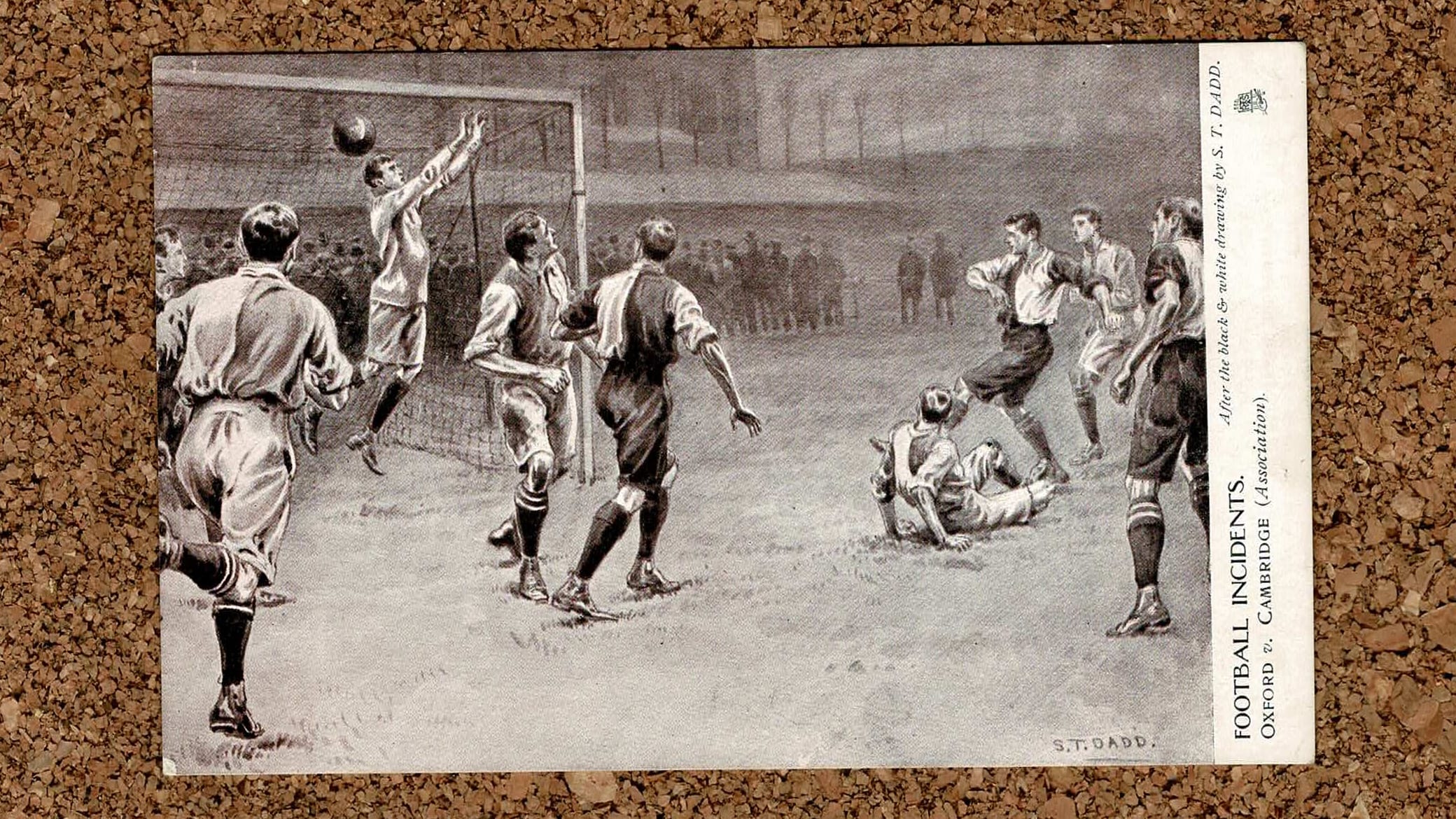
Here’s a jigsaw of the card. Not, sadly, of the FA Cup final but of an Oxford v Cambridge football match in 1906. This has now been an annual fixture since 1874, only two years less than the more celebrated Varsity rugby match at Twickenham. In 1906, the match was played at the Queen’s Club, London, and Cambridge won 3-1.
Comments
New comments will come back with sign-in later this year.
Related articles

During times of transformation emerging leaders need to be inside the leadership tent
Alistair Jarvis | Comment | 12/10/26

Britain likes its universities but not its degrees
Jim Dickinson | Comment | 12/10/26
Who pays the price when universities cancel offers to protect refusal rates?
Jim Dickinson | Comment | 10/10/26

Erasmus+ is back, but who gets left behind?
Jonathan Disley | Comment | 9/10/26

Procurement is a collaboration question too
James Coe | Comment | 9/10/26
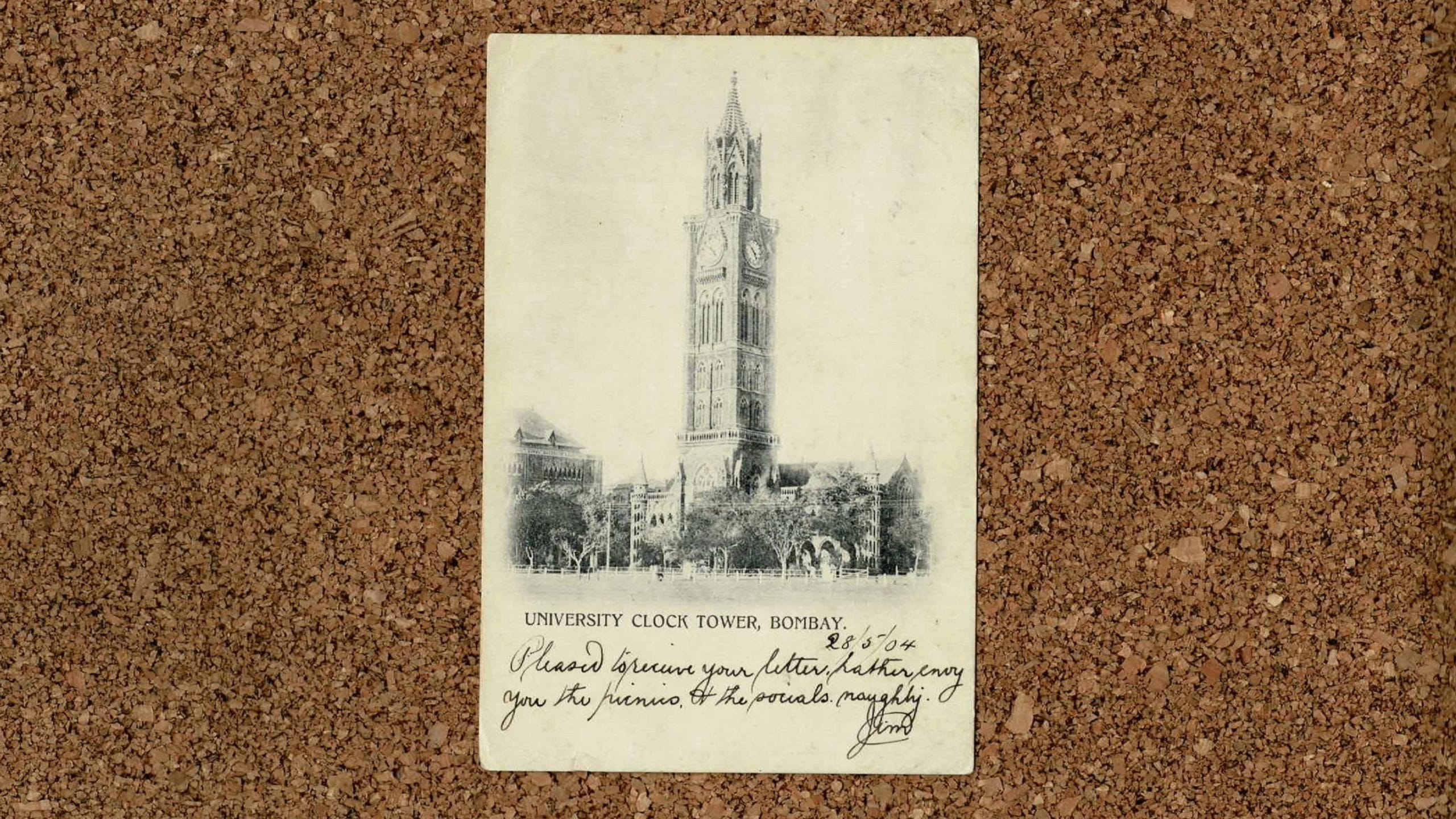
Higher education postcard: Rajabai Clock Tower, University of Mumbai
Hugh Jones | Comment | 9/10/26