What Jason Arday’s tragic death reveals about the spectacularisation of racism and crisis of UK higher education
Christina Horvath reflects on Jason Arday’s death and asks the sector to confront some uncomfortable questions
Comment|
Christina Horvath is Reader in French Politics at the University of Bath
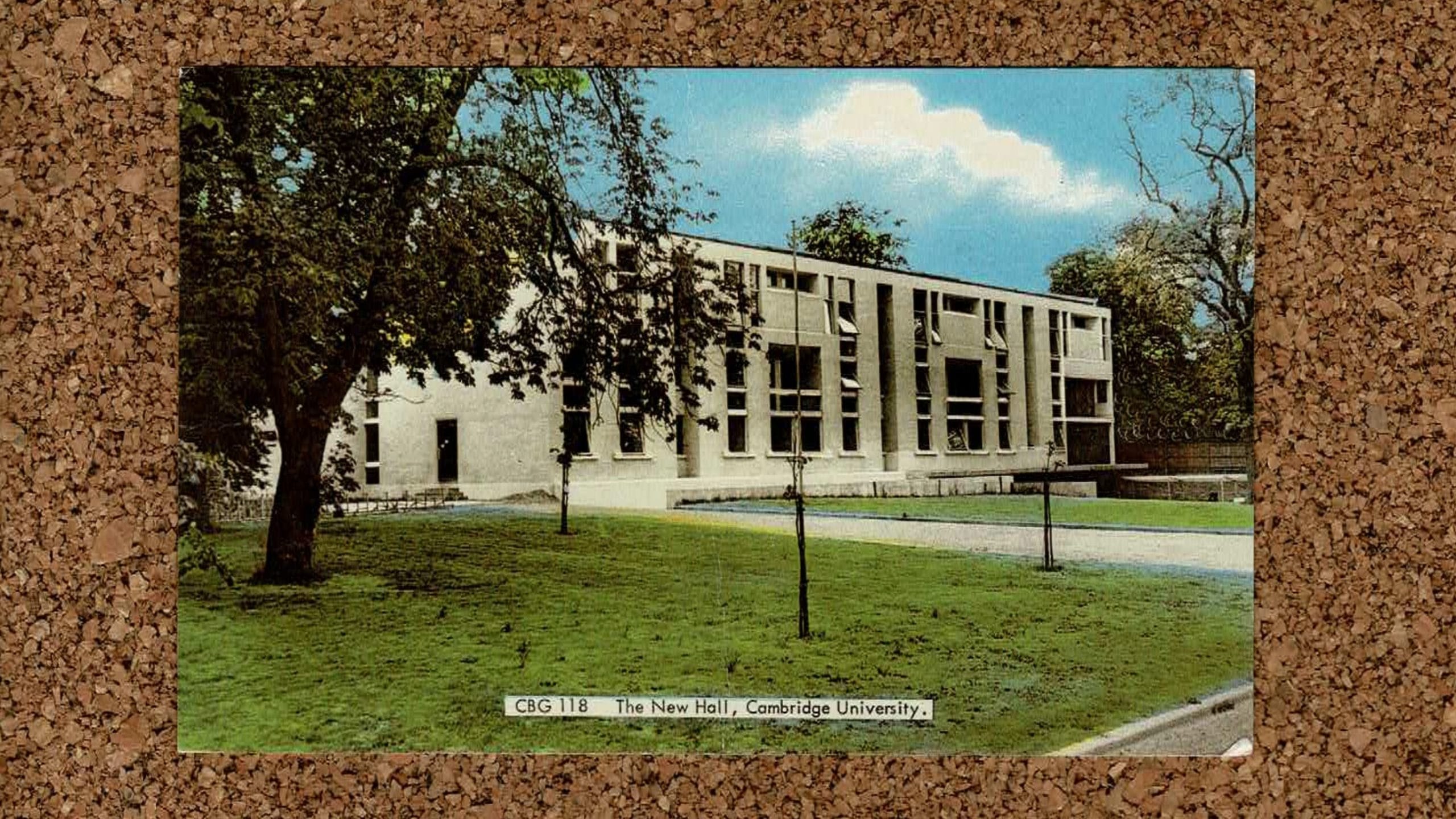
When Dr Jason Arday was appointed the “youngest ever Black Professor” at the University of Cambridge in 2022, the story attracted considerable media attention, mostly for the wrong reasons.
Three years later, his name dominated headlines again – this time because of allegations of plagiarism and CV embellishment that turned one of EDI’s most celebrated success stories into one of its most weaponised liabilities. Right-wing commentators, emboldened by Donald Trump’s dismantling of diversity, equity and inclusion programmes in US academia, were swift to draw their conclusion: EDI had failed, and Arday was the proof.
What followed was systematic, relentless bullying rather than academic scrutiny. Over several years – and with particular intensity during the final summer of his life – Arday became the object of hostile public attention, memes and vitriolic commentary. Legitimate questions about academic integrity became entangled with a toxic spectacle of racialised exposure and punishment.
On Friday, 14 August, Jason Arday was found dead. He was only 41. His tragic death should force British higher education to confront questions far more difficult than whether one professor’s CV contained inaccuracies or particular passages met accepted standards of academic attribution. It demands scrutiny of the institutions that elevated him, the diversity structures that turn individuals into symbols of progress and easy targets for defenders of privilege, and the racial politics surrounding both.
A symbolic appointment and its contradictions
From the outset, Arday’s appointment was framed in troubling ways. Less attention was given to his scholarship in the sociology of education than to his remarkable biography: unable to speak until eleven and to read or write until eighteen, diagnosed with autism, he became the youngest Black professor in Cambridge’s history.
The timing matters. Arday took up his post only a few years after the Black Lives Matter (BLM) protests and the toppling of Edward Colston’s statue in Bristol in 2020, events that forced British institutions to confront more openly their entanglement with slavery, empire and racial inequality. Elite universities had long benefited from colonial wealth, while names such as Rhodes and Codrington remained embedded in academic memory. In this post-BLM climate, increasing Black representation in elite universities was widely understood as overdue.
The institutional context matters too. In 2023, the Times and Sunday Times Social Inclusion ranking placed Cambridge third from bottom among 115 universities in England and Wales. According to the University’s own Equality and Diversity Information Report for 2022–23, Black professors represented just 0.3 per cent of its 728 professors.
Yet the media framing of Arday’s rise to academic stardom also reactivated the myth of Caliban – the voiceless, supposedly savage figure who gains speech and agency through Prospero’s civilising intervention – casting the institution in the role of white saviour. It is a comfortable arrangement: a Caliban who owes his voice to Prospero is unlikely to use it too loudly, or demand too much for himself and others.
As Kalwant Bhopal has argued, symbolic representation is not the same as structural change. White privilege can survive apparently progressive equality policies when institutions demonstrate commitment to diversity without substantially redistributing power. Professorial appointment itself forms part of this problem. Alongside formal criteria such as research, leadership, teaching and impact, peer reputation, professional networks and academic visibility remain decisive, allowing privilege to reproduce itself despite formal procedures. A highly visible appointment can therefore signal transformation without altering the conditions that determine who normally acquires authority.
The impostor and his syndrome
The extraordinary prominence of Arday’s charity running and physical endurance also deserves scrutiny. Impostor syndrome, documented among first-generation academics, women and Black scholars in predominantly white institutions, offers one possible framework: the feeling that intellectual achievement alone is insufficient and must be supplemented by exceptional performance elsewhere.
In Arday’s case, that performance took a particularly physical form: marathon running through injury, survival narratives and bodily endurance. It is worth asking why he felt compelled to exaggerate his physical achievements and construct a superhero-like persona, becoming entangled in easily verifiable claims and exposing himself unnecessarily.
Stephen Jay Gould’s The Mismeasure of Man and Angela Saini’s Superior: The Return of Race Science document how scientific racism constructed Blackness as biological spectacle, positioning Black people as physically exceptional but intellectually subordinate. Arday’s public persona can also be read against this history of racialised stereotyping and what Fanon called the white gaze. These are precisely the structural pressures that equality policy should seek to address.
Academic integrity is more complex than headlines suggest
The allegations against Arday – plagiarism and listing unpublished work as forthcoming – were generally presented in the media as self-evidently damning. Yet academic misconduct is not always as simple as deliberate appropriation. The boundary between inadequate referencing and plagiarism can be difficult to establish, and academic writing necessarily incorporates other people’s research. Listing work as forthcoming can also be acceptable in academic job applications; a publication that later fails to appear is therefore not automatically fraudulent.
The rise of generative AI complicates this further. AI detection remains unreliable, while AI itself can operate as a linguistic leveller for academics with dyslexia or less fluent English. The challenge is to distinguish legitimate linguistic assistance from outsourcing the intellectual work being assessed.
Claims of plagiarism should ultimately be adjudicated through academic procedures, not by newspapers treating detection software as definitive evidence. Tools such as Turnitin can identify textual overlap without determining whether misconduct occurred. Cambridge’s investigation should also establish what was known at the time of appointment and whether inaccuracies in Arday’s CV were identifiable then. If so, the failure is institutional as well as individual.
Structural inequality in British academia remains substantial. Women made up 48.6 per cent of UK academic staff in 2022–23 but only 30.8 per cent of professors, rising to just 32 per cent by 2024–25. The number of Black professors increased from 210 to 270 over the same period, yet they still account for only around one per cent of the professoriate. This is not evidence of overcorrection but of persistent underrepresentation.
Arday should therefore be treated as an individual case. When Dame Glynis Breakwell resigned as vice chancellor of the University of Bath in 2018 following controversy over her £468,000 salary package, no one concluded that women were unsuitable for university leadership. Neither should one Black professor become evidence of the incompetence of other Black scholars.
Spectacularising “Black incompetence”
The Arday affair cannot be understood solely in terms of whether the allegations against him were true or false. What also requires explanation is why his alleged failures became such an extraordinary public spectacle. Filmmaker and philosopher Guy Debord’s analysis of “spectacle” offers a useful critical lens: for Debord, the spectacle does not simply represent reality; it reorganises it through images that acquire a social force of their own.
Through sustained media hounding, Dr Arday ceased to appear as an individual academic accused of wrongdoing and became instead the image of the incompetent diversity hire: supposed proof that attempts to address racial inequality inevitably compromise academic standards. Questionable practices by white academics have often been tolerated without comparable public outrage; those involved have barely made headlines and, in some cases, remained in post. Arday’s repeatedly investigated, yet never conclusively established, shortcomings were instead made to cast a shadow over the legitimacy of Black academics more generally.
In Debordian terms, the mediated image comes to matter more than the complexity of the underlying case. “Arday” becomes less a person than a sign through which anxieties about race, merit, and institutional decline are made intelligible. Once established, that image can circulate independently of whether the allegations themselves are ever conclusively resolved.
There is also a disciplinary logic to this toxic spectacularisation. Barely two centuries ago, plantation punishment was exemplary: the suffering of one communicated to others the consequences of transgression. Public punishment disciplined not only the person subjected to it but also those forced to witness it. Without collapsing contemporary academia into the plantation, this history offers a way of thinking about exemplary punishment: the highly visible destruction of one person establishes boundaries for others. The prolonged public pursuit of a highly visible Black academic can perform a similar disciplinary function. Arday’s alleged shortcomings were repeatedly revisited and circulated until the allegations themselves acquired permanence. The spectacle communicates that visibility brings vulnerability, and that those entering spaces from which Black and working-class people have historically been excluded may not receive the same presumption of competence, protection or right to make mistakes as those whose belonging is taken for granted.
Whiteness retains the privilege of individuality: the failures of white academics generally remain their own, whereas the alleged failure of a Black academic can be made to stand as evidence of the incompetence – or, more insidiously, the supposed lesser intellectual capacity – of an entire group. This is especially troubling where such claims intersect with attempts to rehabilitate racial and eugenic theories of intelligence. The spectacle thus transforms an individual case into a public lesson about race, merit and who is presumed to belong in the university: the exceptional Black academic is first celebrated as evidence that the institution has changed, then spectacularised in failure as evidence that such change has gone too far.
The real crisis that is not making front pages
The contradiction extends beyond academic appointments. Universities encourage students from working-class and immigrant backgrounds to see higher education as a route to social mobility and professional success. Yet a system may welcome them as students – and increasingly depend on them as fee-paying customers – without necessarily becoming equally willing to accept them later as colleagues, competitors for authority or members of the professoriate.
Inherited advantage continues to reproduce itself through family familiarity with higher education, elite schooling, financial security, professional networks and tacit knowledge of how academic institutions work. These advantages rarely appear as advantages; instead, they are recoded as merit, professionalism, excellence or “fit.” Academia can also be intensely hierarchical and toxic, shaped by precarious employment, patronage, competition, informal networks and unequal protections. Some are allowed to make mistakes or recover from conflict; for others, a single allegation can become defining.
Those presenting Arday as the defining symbol of British academia’s decline might therefore consider what they are choosing not to see. According to UCU, UK universities announced cuts equivalent to more than 15,000 jobs between roughly October 2024 and October 2025, while the British Academy reports a marked contraction in early-career staffing across the humanities, social sciences and arts.
In a system increasingly dependent on tuition-fee income, students are also customers, and universities are under pressure to remain attractive in a competitive market. Diversity therefore acquires reputational value. Institutions may find it easier to market the appearance of inclusivity than to undertake the slower work of changing recruitment, promotion, pay and power structures.
The contrast with Germany is instructive: stronger public funding makes universities less dependent on continuously selling themselves to fee-paying students. In the UK, marketisation risks turning equality itself into part of the institutional product. The lesson of the Arday affair is therefore not that “EDI has gone too far,” but that equality cannot be separated from the way higher education itself is funded and organised.
Universities should not be abandoned by the state and left to survive through tuition fees, international student recruitment and the cultivation of a small number of academic “stars.” Such a model is exclusionary and dangerously fragile: a decline in international enrolments can quickly translate into programme closures and mass job losses.
A more democratic university would invest instead in developing talent on a much broader scale, including those who cannot afford substantial fees or rationalise large student debts through the promise of high earnings in disciplines such as business or finance. Higher education should be treated as a public good rather than a luxury whose accessibility depends on individual purchasing power.
The deeper lesson is not simply to make universities look more diverse, but to build institutions that are publicly supported, less precarious, less toxic and less dominated by inherited privilege. The real crisis is not that people like Arday have entered academia. Universities have always been deeply unequal and privilege-bound; they are now becoming ever more precarious and market-dependent. Yet instead of confronting those enduring hierarchies and the political choices that sustain them, the supposed dangers of diversity are what make the front pages.