English degrees help students change the world
Gail Marshall and Andrew McRae explain the campaign that’s aimed at promoting English degrees for their creative, critical and vocational potential
This article is more than 2 years old
Comment|
Andrew McRae is Dean of Postgraduate Research at the University of Exeter and was formerly Head of the English Department.
Serving on the executive of a national university subject association gives a grim overview on departmental cuts and its damage to scholarly communities.
You see friends and colleagues lose long-held jobs – and those at the start of their careers squeezed out of academia before they’ve begun to fulfil their potential.
At University English, we’re determined that our community should also be part of the solution.
The #EnglishCreates campaign, which reaches a peak of activity this week, was conceived to address this situation by reaching out to students aged 16-18, their teachers, and supporters, to show them the personal and professional benefits of an English degree.
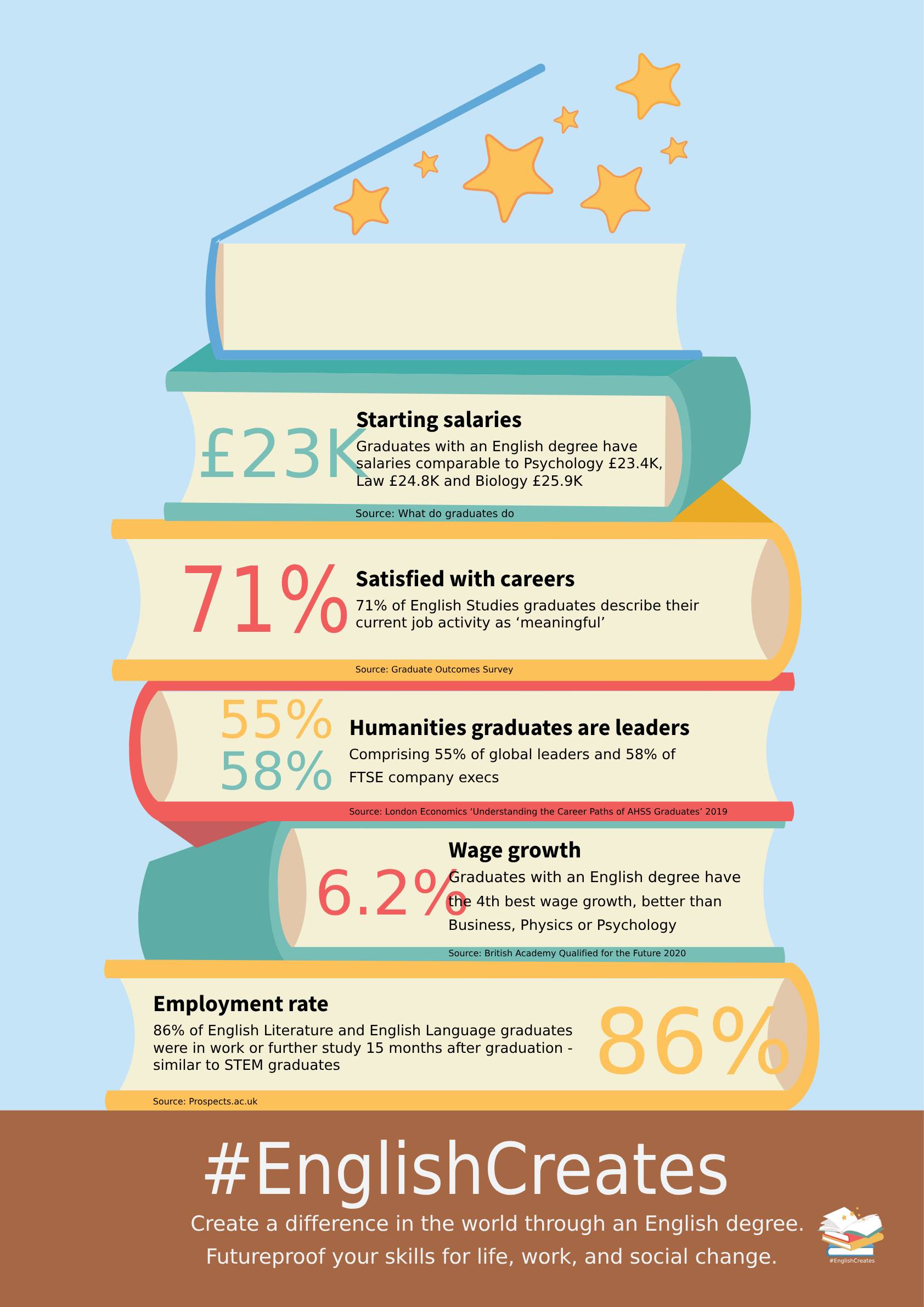
Using the strapline “Create a difference in the world through an English degree, and futureproof your skills for life, work, and social change”, #EnglishCreates promotes the intellectual and vocational skills that young people acquire through doing degrees in English literature, language and creative writing – to myth-bust the idea that only STEM students get good jobs.
It also stresses the interest and intrinsic benefits of the subject.
Our vision is higher educational access to English study for all those impassioned by reading and writing – and a society that values the English degree for both its creative, critical and vocational potential.
Stories (get you) so far
Colleagues across the UK have been sharing material, student stories, events, and their time in order to work for the discipline, eschewing institutional competition for the larger goal of enabling young people to have a better sense of the choices that are open to them at 18.
From this material we have created collections of testimonials from students and recent graduates, and some of our better-known supporters.
The campaign has been active across all major social media channels, and has included a student-facing video competition (winners to be announced this week). As a result, we will collect a stock of material (much of which we will archive via our YouTube channel) for future use by advisors in schools and colleges, and admissions tutors in university departments.
We’ve always been aware that post-18 options were complicated – even before the prospect of national service was raised!
There’s campaign material, including an infographic poster for office doors and classroom walls, and branding. Though not a cash-rich organisation, we have benefited from the guidance of Campaign Collective, a not-for-profit PR group, and generous university press offices (looking at you, Reading and Exeter).
We have gained traction throughout our wider subject community through links with supportive partner institutions: the English Association, English and Media Centre, and the National Association for the Teaching of English. Our campaign works in parallel with the English Association’s ‘Choose English’ project, aimed at 14-16-year-olds.
The #EnglishCreates events week, 3-7 June, is open to all, with most events accessible online. There are sessions on careers for English graduates, the place of arts and humanities in climate education, what it means to be a reader, reading novels during the pandemic, oracy – a subject high on the Labour Party’s list of educational priorities – and much more besides.
Amplification and inculcation
#EnglishCreates amplifies what we do as academics – collaborate, appreciate, and learn from each other – and builds it into the fabric and the message of the campaign. We offer young people not only information about what an English degree can be, but a model of working that draws on the creativity, critical thinking, and communication that English inculcates.
By using our member departments’ subscriptions carefully and drawing on the great generosity of talented, committed colleagues, University English has been able to build a grassroots campaign whose resources are available to all.
The National Curriculum declares that ‘English has a pre-eminent place in education and in society’ and helps us develop “culturally, emotionally, intellectually, socially and spiritually”.
#EnglishCreates demonstrates both what can be gained, and what we risk losing, if we fail as a sector and as a society to realise the multiple values of this discipline.
Our understanding of literature and language is central to how we understand ourselves now and in the future – and our creativity, fostered directly in creative writing and engendered by the discipline, is vital for our well-being and for the economy.