


At the end of every month, Icelandic student bank accounts are at their emptiest.
So Stúdentakjallarinn – the student bar at the University of Iceland – runs a night called Skítblankur föstudagur (Flat Broke Friday).
Drinks and food are at rock-bottom (well, for Reykjavík) prices, timed precisely to the point in the month when nobody has any money left.
It is, in its small way, a piece of institutional design that tells us everything about who this place thinks it’s for.
We’ve arrived at Stúdentakjallarinn – the name translates literally as “The Student Cellar,” and it is indeed in a basement – towards the end of Day Two of the Wonkhe SUs study tour, where a group of UK SU officers and staff are learning about student life and everything from belonging to beer.
After a morning with LÍS and Viska that had left the group slightly dazed by the sheer organisational density of Icelandic student representation, what some of us needed was a drink, or at least a space that didn’t come with a governance diagram.
What we got was both.
A plant wall and a broken six-year promise
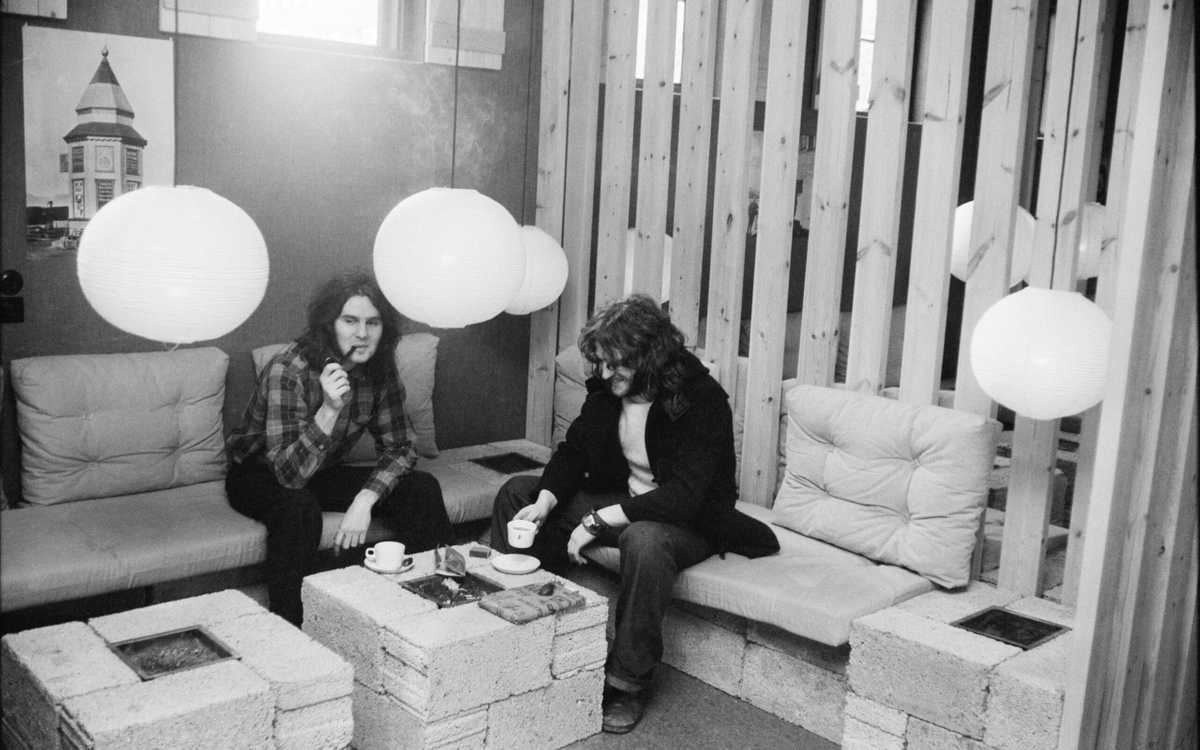
The original Stúdentakjallarinn opened in 1975 in a corridor between two older campus buildings and ran for over 30 years.
When the university built its new central student services building – Háskólatorg – in 2007, the old cellar was closed and converted to teaching space. For six years there was no student bar on campus.
The student council campaigned throughout, and in January 2013 Félagsstofnun Stúdenta – the non-profit student services body that owns the venue – built a purpose-designed 400-square-metre extension to Háskólatorg and reopened it.
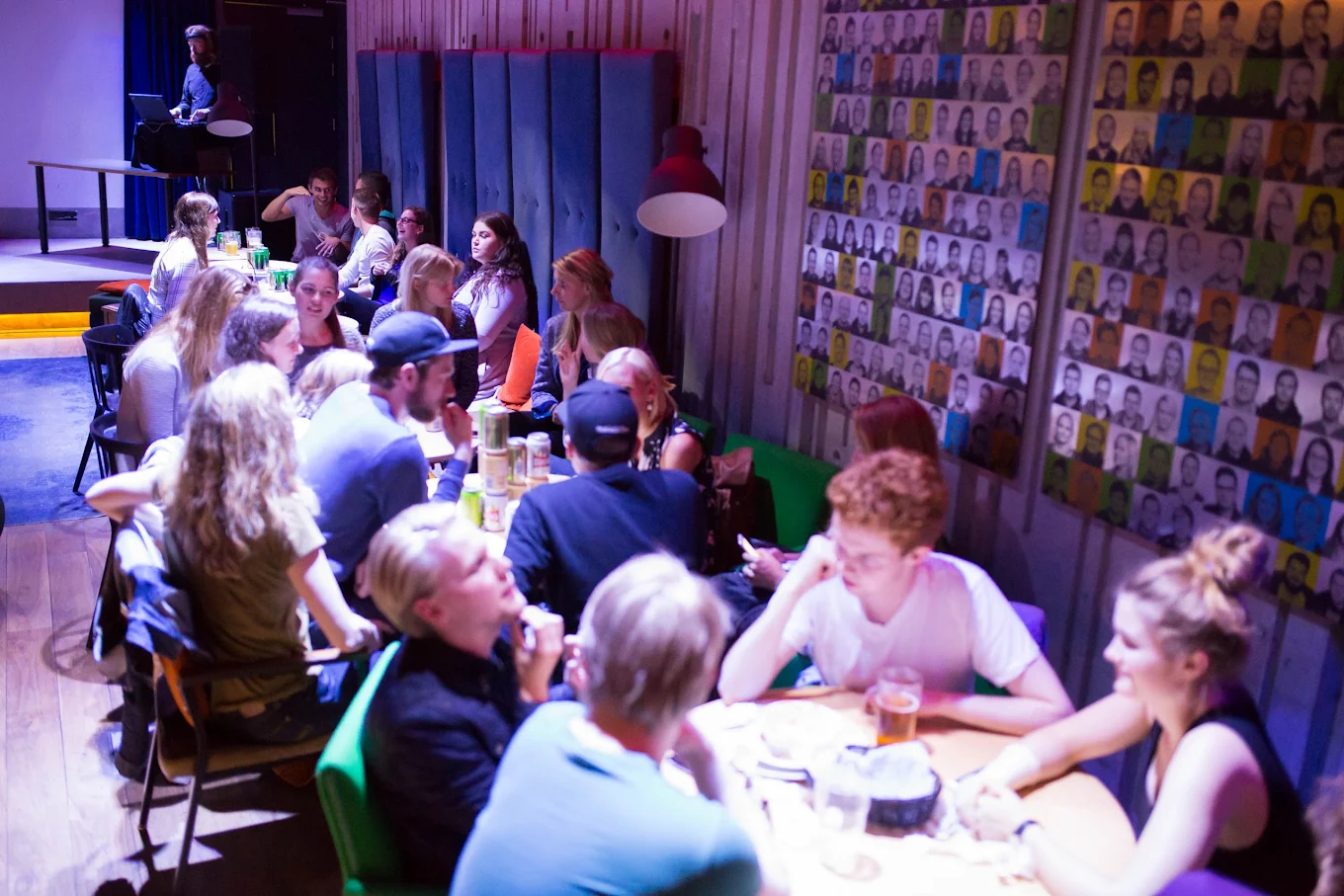
The space itself is worth describing because it does something that a lot of UK university spaces don’t manage, which is a) it’s cosy rather than feeling like you’re in an airport, and b) it feels like it belongs to the people using it rather than to the people who commissioned it.
There’s a living wall of greenery running along one side – native plants, Dutch irrigation system, automatic grow lights that kick in after closing time – softening what would otherwise be a stark concrete basement.

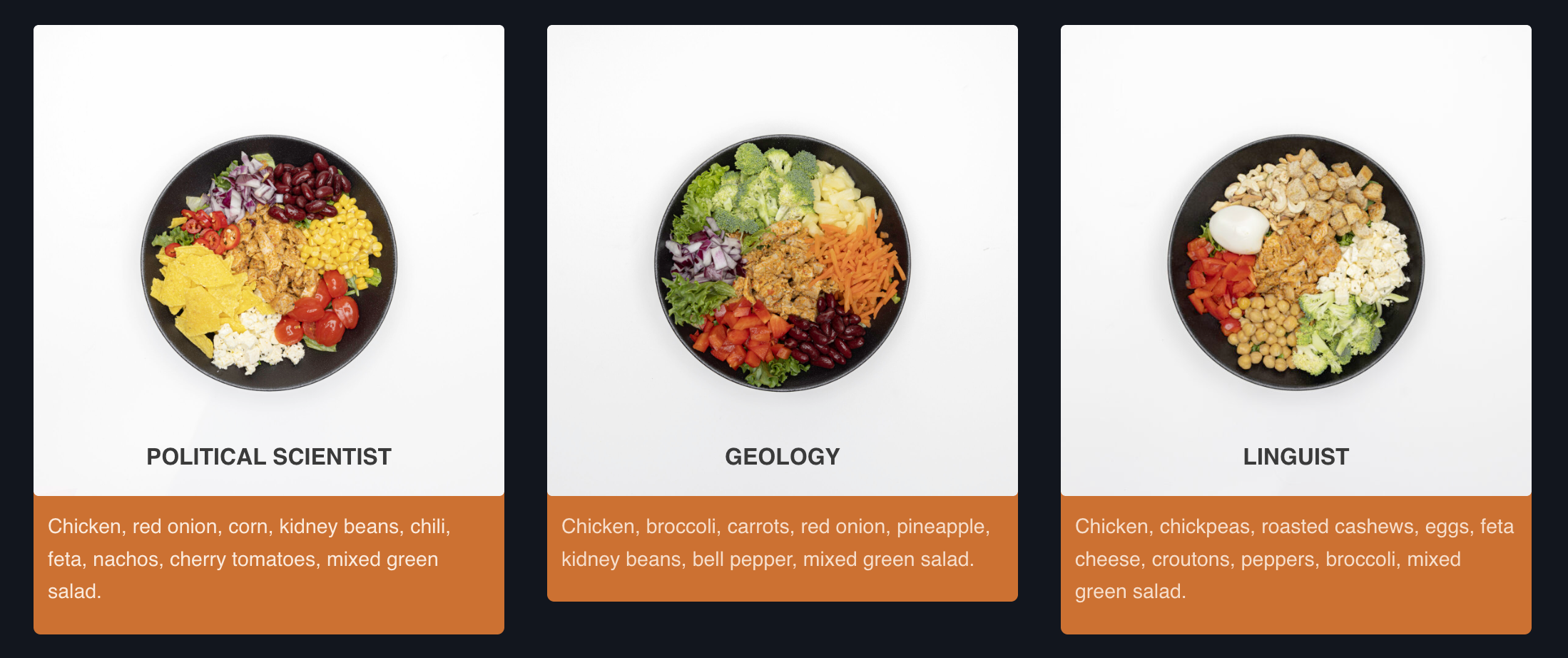
The menu is burgers, pizzas, sandwiches. Student cardholders get discounted drinks all day, and the general public get happy hour from four to seven.
The school play principle makes it viable. Around 100 student organisations can (and do) use the space for events at no charge. There are themed pub quizzes – the video game edition has run at least eight times. There’s Sunday movie screenings with free popcorn, welcoming enough that families with small children turn up. There’s also one major concert a month during term, always free entry, with Icelandic artists across every genre. Even Væb.
The venue has served as an off-venue site for Iceland Airwaves, the country’s big annual music festival, hosting free sets by emerging acts. And then there are the Nerd Nights – eclectic talks on everything from cosmology to the history of niche hobbies, delivered in a pub, to people holding pints. One for the working groups on co-curricular learning, that.
It is, unmistakably, a third space – not home, not a lecture hall, not a library, and emphatically not one of those unpleasantly bright and soulless (anti-)”social learning spaces” that look more like the airport we flew into.
It’s just a bar that also happens to be a venue, a meeting room, a cinema, and a community hub, run cheaply, designed well, and owned by the students through a governance structure we’ll come to in a moment.
His Majesty the foundation
Stúdentakjallarinn is one arm of something much bigger. Félagsstofnun Stúdenta – FS – is a non-profit, self-financing foundation established by legislation in 1968 to provide practical services to students at the University of Iceland.
All registered students are automatically members. Its board has five seats – three nominated by the student council, one by the university, one by the government ministry. Students hold the formal majority.
The three student-nominated board members have never actually been current students. The rationale, as FS’s new chief executive puts it, is about balancing short-term demands – lower rents, cheaper sandwiches – against long-term financial sustainability.
Current students, the thinking goes, tend to prioritise what they want today over what the organisation needs to survive for the next decade. The SU does have an observer at board meetings who can comment on any item under discussion – but an observer is not a vote.
The students own the foundation, nominate the board, and hold the majority – but the people they nominate are former students making strategic judgements about the very services current students are using. Whether that’s wise institutional design or a democratic deficit probably depends on how much faith you have in the people doing the nominating.
In a tie, the chair – usually the student-nominated member – gets the casting vote.
FS runs six things: the campus food service – Háma – which operates canteens at six locations around campus; the cellar; the university bookstore, which also houses a café; a student co-op shop; and two preschools for children aged six months to six years, located within the student housing area, following the HighScope curriculum.
And a whole clutch of housing.
1,610 units and an 800-person waiting list
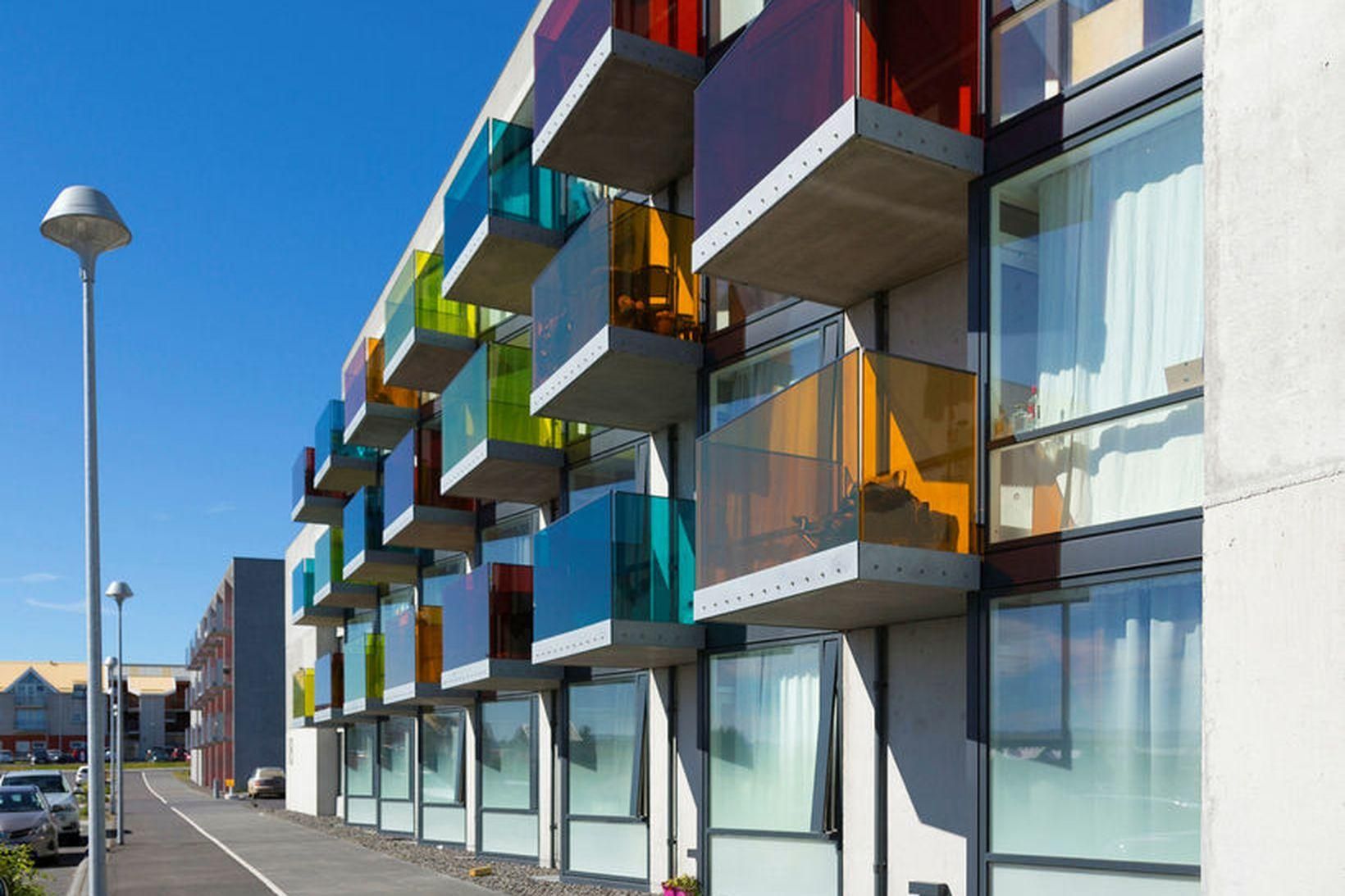
FS manages around 1,610 rental units across multiple sites in Reykjavík – housing roughly 2,100 individuals including students and their families. Options range from single rooms with shared facilities to studios, couples’ apartments, and family apartments.
It’s a lifecycle model, not a one-year-and-out arrangement. Students can transfer between accommodation types as their circumstances change – start in a shared room when you’re a first-year wanting to meet people and go out, move to a studio when your studies intensify, shift to a couples’ apartment when you acquire a partner, and eventually into family housing when children arrive. The average stay is two years, significantly longer than the single-year norm in UK halls, and that transfer pathway is part of what holds people in the system.
Between 2020 and 2024, the foundation added 433 new units, including 111 individual studios in a building that opened in spring 2023. The total is still nowhere near enough – at the 2024 autumn allocation there were over 2,600 applicants and roughly 800 people on the waiting list.
FS aims to house 15 per cent of the University of Iceland’s students. It currently sits at 12 per cent, meaning it needs roughly 500 more units – and at the time of our visit, there was no construction underway. Finding sites is difficult and building costs in Iceland are high. There are plans – up to 186 family-sized apartments across two phases in a planned new neighbourhood on a bay-side site, and a bid to purchase a historic former student building from the university and convert it into shared accommodation for around 49 students – but plans and buildings are different things.
There’s a stated approach to allocation that is deliberately designed to combat social isolation – the majority of the 582 units distributed in autumn 2025 placed students in rooms with shared kitchen and living facilities, not because it’s cheaper (though it is), but because the foundation believes it reduces loneliness. In the 2025 allocation, nearly 680 students were housed. In 2020, FS introduced pet ownership in some of its buildings – initially in one, as a COVID-era mental health measure, now expanded to four. Small decisions, structurally embedded.
One detail worth noting. Government housing benefits are available for every type of FS accommodation, but not for rooms rented on the private market. That’s a significant structural advantage that reinforces the logic of the non-profit model – it’s not just that FS housing is cheaper, it’s that the state actively subsidises students who live in it in ways it doesn’t for those renting privately.
The whole operation runs lean. Three staff manage the entire housing service – allocations, contracts, queries, and community work – with 15 in property management. For 1,610 units and over 2,000 residents, that’s a remarkably thin team. The CEO is candid that they could use another person, particularly to do the community-building work properly rather than squeezing it in around the repetitive administrative tasks that currently eat up the time.
A two per cent rent increase in 2024 – necessary, FS said, because rising operational costs meant the previous year’s income hadn’t covered adequate maintenance – generated attention precisely because the organisation is non-profit and the increase was small. The CEO told us the two per cent had been capped below what was actually needed to maintain the buildings, and that it would probably need to go higher. But the principle is gradualism – it’s more fair, she said, to spread increases over years than to hit tenants with a 10 per cent rise a decade from now when the maintenance fund runs dry.
When your housing provider is legally constituted to not make money, a two per cent rise is a governance event rather than a quarterly earnings strategy.
The bill that would have made things worse
And then the politics. In November 2025, the Althingi debated a new housing lease bill that would prohibit rent increases during the first twelve months of a tenancy. On the face of it, tenant-friendly legislation.
But the student council argued – and FS agreed – that it would paradoxically force non-profit student housing providers to set initial rents higher, building predicted future inflation into the starting price rather than adjusting gradually via the consumer price index.
Legislation designed for the commercial rental market would, in effect, raise costs in the one part of the market specifically designed to keep them low.
It’s a neat illustration of something that came up repeatedly today – the way that student housing, when it’s run by students or by bodies students govern, operates on a fundamentally different logic from the commercial or university-owned models dominant in the UK.
FS isn’t a university department, and isn’t a private PBSA operator. It’s a foundation created by statute, governed by a student-majority board, operating at cost, and responsive to the student council in a way that means when the council says “this bill will hurt our members,” FS shows up to say the same thing.
Why do we think that universities or hedge funds make good landlords or caterers?
The new CEO and the long view
FS appointed a new chief executive in September 2025, following the departure of a leader who’d held the role for 26 years.
Heiður Anna Helgadóttir had spent nearly a decade working within the organisation – starting in 2017 as customer service manager for student housing, later serving as information representative – and sits on the board of a Nordic student housing collaboration. She completed an MBA with a concentration in strategy and sustainability before taking the role.
Twenty-six years in one role is a long time anywhere, and in a student-facing organisation it’s remarkable – it spans a period in which the entire student body turned over more than six times. The continuity clearly built institutional depth. But Heiður Anna is candid about what it also left behind – a set of service operations that grew organically without clear strategic direction.
Her pitch for the job, she told us, was built on three things. First, strategy. Several of FS’s service entities don’t have one. She used the canteen operation as her example – after nine years working in the organisation, she said, she still didn’t know whether Hálma was trying to be the cheapest option, the most varied, or the most innovative. Students want cheap food and quality food, and the tension between those demands has never been resolved into a clear position. Hálma is the unit that struggles most in the annual accounts, and the board is now beginning strategy work for both it and the university bookstore.
Second, quality assurance. When you grow quickly – and FS has grown quickly – the systems that ensure consistent quality across housing, food, childcare, and retail tend to get left in the background. Until something goes wrong, at which point you’d better have your processes in order.
Third, digitalisation. Much of the housing team’s time goes on repetitive administrative tasks – processing applications, allocating apartments, answering the same questions – that could be automated or supported by AI, freeing staff to do the community-building work that currently gets squeezed out. She’s cautious about it – digitalisation is almost always expensive and not always valuable in the long term – but the prioritisation work is underway.

We left Stúdentakjallarinn later than planned, which felt appropriate for a bar. Someone in the group pointed out that a student services foundation with a statutory basis, a student-majority board, its own housing stock, two preschools, six canteens, a bookshop, and a bar would be – in a UK context – roughly seven different organisations, three outsourced contracts, and an annual item on a committee group that meets to discuss synergies between them.
In Iceland it’s one body, created by one piece of legislation, in 1968, and it still works.
There’s also clearly some fascinating advantages to FS being linked to but separate from the SU itself and its member faculty SUs, allowing for distinct governance and planning processes that larger SUs in the UK should have a think about.
That’s it for the Daily blogs from Iceland – keep an eye out for some broader conclusions on the main site on Monday, and do have a listen to this week’s Wonkhe Show.


The bar in the Rootes building at the University of Warwick was once upon a time actually called Airport, although by the time I started university Hospitality services had unimaginatively renamed it The Bar.