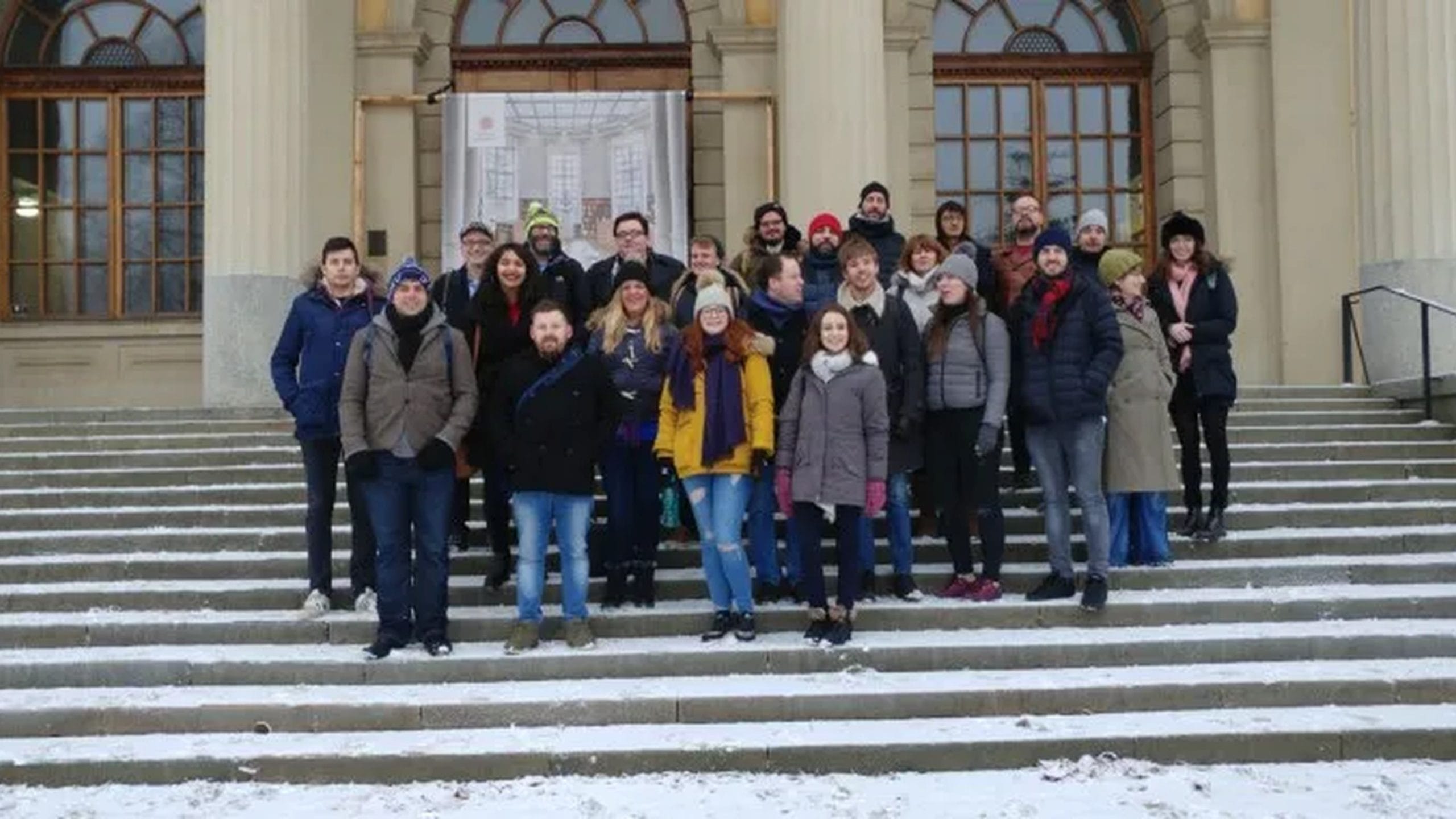
We are 22 students. We speak for 22,000
Ministers say students were let down by incompetence or abuse. Irena Zoltak writes for 22,000 weekend students given four days to decide their future and three impossible options
SU Blogs|

Irena Zoltak is a Student Group Representative at one of the providers hit by the weekend courses classification issue
We are a group of weekend students at a university, taught by a franchised partner college.
Among the 22,000 weekend students caught up in the maintenance loan crisis across the UK, we are a small number – perhaps too small to matter in a country of 67 million.
But we stand for every student who feels misled, pressured, and let down by a system that was supposed to help us build a better future.
And we stand for every student in this country. Because if this can happen to us – if a university regulated by the Department for Education can play this game with us – then no student in the UK is safe.
A dream that turned into a nightmare
We enrolled on weekend courses because we had no other choice.
We work during the week. We have children, elderly parents, caring responsibilities. We are fathers, mothers, sons, daughters – people who hoped for a better life.
Our offer letters stated “Study mode: Full time” and referenced our entitlement to maintenance loans. We believed in that promise – we believed in the UK system.
Then in March 2026, DfE and SLC took abrupt action against us. The law, we were told, had been clear for over a decade. Universities were warned in December 2025 – but seemingly did nothing. SLC blocked our maintenance payments, reclassified our loans as commercial debt, and sent demand letters telling us to repay.
On 20 April, the government said we had been “let down by incompetence or abuse of the system”. But in the first instance, the full power of the state was directed at us, not at the universities or colleges.
The stress was already extreme. The sleepless nights had already happened. Only then did ministers announce a partial reprieve. That reprieve did not undo the harm, and it did not solve the problem.
The deadline and the “choice”
On 10 April 2026, we received an email. We had, we were told, until midday on 14 April to decide our future – or we would not be able to continue our studies at all. The Easter break meant we could not properly meet or speak to each other. The only message from our provider was – “we are waiting for instructions”.
We were given three options. Transfer to weekday in-person attendance. Withdraw from the course. Or transfer to another, unspecified, weekday.
What we were not told mattered just as much as what we were.
We were not told that a genuinely accessible distance learning option might exist at a reduced fee. We were not told that if we walked away before the next liability point, our tuition fee debt would stop at half the year’s fee rather than the whole.
We were not told what an exit award might look like, or whether one was available. The deadline itself sat in the narrow window before the provider’s third tuition fee instalment was due to be triggered – the largest single payment in the year.
Under that pressure, most of us chose Wednesday – even though Wednesday is impossible for many of us because of work or family commitments.
Do the maths. 100 students at £9,250 a year is £925,000 in tuition fees. 22,000 students at £9,250 is over £203 million. That is the scale of fee income paid at the full in-attendance rate for courses that were, in law, distance learning.
The universities were warned in December 2025. They let us continue – with enrolment letters still saying “full-time”.
What we are asking for now
A group of us have come together to lodge a formal Stage Two group complaint with our university. We are not asking for special treatment. We are asking for what consumer law and the university’s own obligations already require.
We are asking for written acknowledgement that the course was misclassified, and a formal apology. We are asking for the difference between the in-attendance fees we paid and the appropriate distance learning fee, refunded with interest, for every year we have been on the course.
We are asking for banded compensation for distress, in line with OIA precedents for systemic institutional failures. We are asking for a genuine choice of three options for those who cannot transfer to weekday delivery – reinstatement of weekend delivery, accessible distance learning at a reduced fee, or a managed exit with a full refund and an exit award where appropriate.
And we are asking the university to write to SLC seeking a write-off of Childcare Grant overpayments for this cohort.
If those requests are not met, we are prepared to escalate – to the Office of the Independent Adjudicator, to the Competition and Markets Authority under the Digital Markets, Competition and Consumers Act 2024, to the Office for Students, and ultimately to a group litigation claim under the Consumer Rights Act 2015.
One of us is no longer here
Among our group is my husband. He passed away last year during his studies.
My university awarded him his bachelor’s degree posthumously – a gesture I am not yet ready to accept. Because I know him, and he would never have accepted that diploma seeing the injustice we are facing now. He was one of us – he will always be one of us. We fight for his memory too.
We lost this round. We are now signed up to attend Wednesday classes we never wanted, under a timetable we never agreed to freely – and which, at the time of writing, has still not been confirmed.
Some of us are now trying desperately to juggle and reschedule to make weekdays work. If we can’t, we may face losing employment or being “attendance monitored” in a way that few other students in the UK would face.
But we are not giving up.
We are 22, and we speak for 22,000 – and for every student in the UK. They thought students like us could be silenced, ignored, and buried under bureaucracy. 22 is not just a number. It is a question of perspective. If the UK does not care about 22 students, then it does not care about any student in this country.
We have our stories, our families, our hopes – and no one has the right to dismiss them. We are not backing down. We will not be silenced. We are putting ourselves on the line for every student in this country.
If justice does not happen here, this country has failed its own students.
Share our story. Stand with us. Because if this can happen to us, it can happen to anyone.
Irena writes as student group representative on behalf of weekend students at a partner college campus, on university-validated programmes.
Related articles
Climate, Coffee, Crisis – where do SUs fit in?
Krzysztof Mikulski | SU Blogs | 14/10/26

Universities can’t keep demanding diagnoses the NHS is slowing down
Sharanya Sivarajah | SU Blogs | 12/10/26

Higher education needs to recognise gambling harm as a student wellbeing issue
Max Gogerty | SU Blogs | 5/10/26