Euro visions: Knowledge creates the future, the future needs democracy
On Day Two of Eurovision week, Jim Dickinson reports from Vienna on a higher education strategy that names democracy as a core mission – and asks what happens if the populists it opposes form the next government
Comment|
Jim is an Associate Editor (SUs) at Wonkhe
I’m not entirely sure what the problem is.
For the fourth year in a row, the eurocrats at the European Broadcasting Union have somehow refused me media accreditation to cover the Eurovision Song Contest.
I had been all set to rock up at the Wiener Stadthalle with my branded notepad and pencil to ascertain the views of the 35 acts on Hochschulstrategie 2040, the future of doctoral powers for Fachhochschulen, and the ongoing housing crisis facing Austrian students.
Apparently the “intersection of debates surrounding higher education policy and the world’s biggest TV show” is not an angle they’re after – which is daft given all everyone else does is copy out the press releases and record TikToks saying that everyone is “shamazing”.
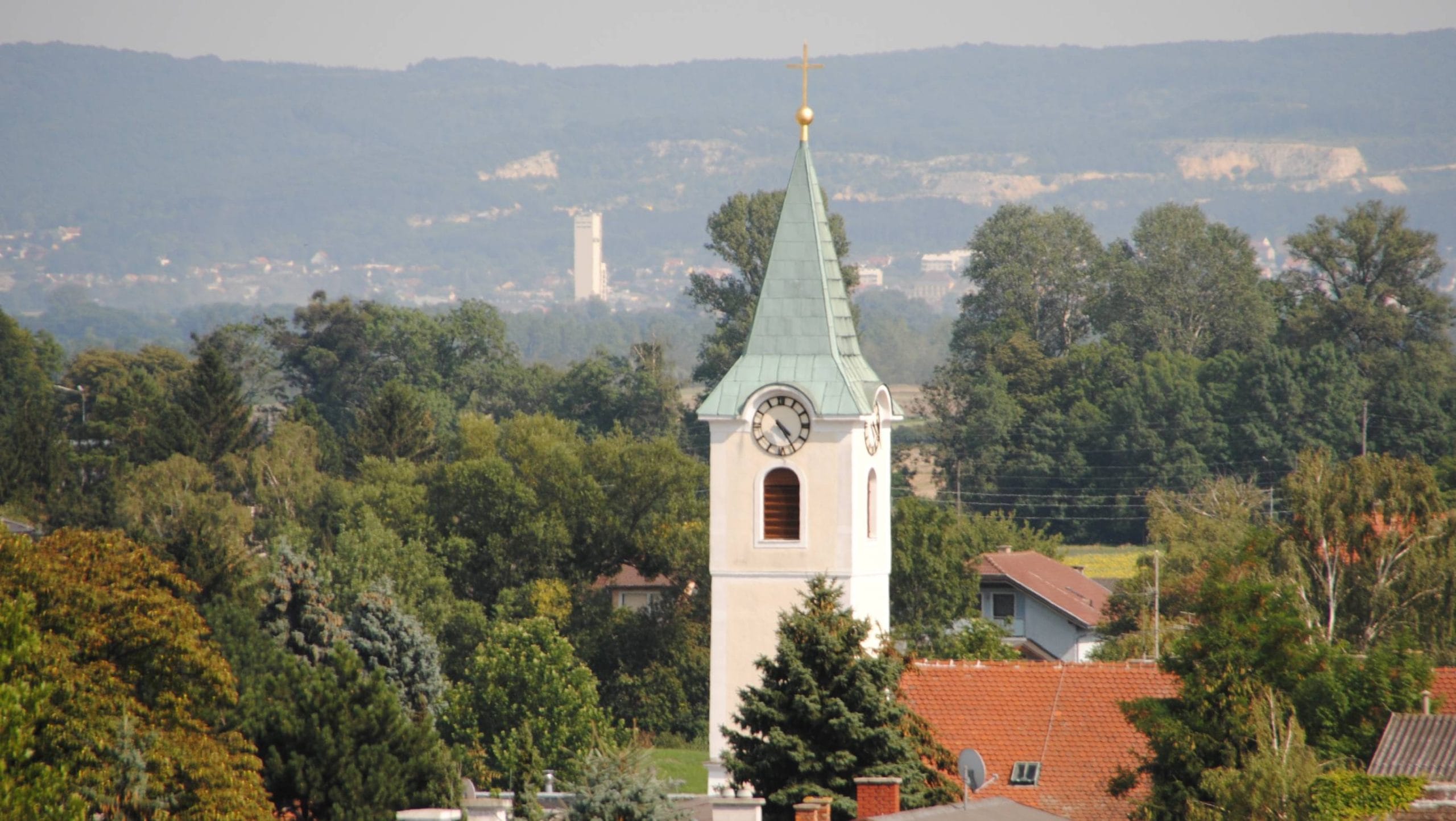
Anyway, I am off to Luton later to fly to Bratislava and then onto Austria, where I’ll be staying in a hotel in Gramatneusiedl, Vienna – which was already famous as the site of a study of mass unemployment during the Great Depression, and in 2023 became the location of a fascinating job guarantee pilot run by the country’s Public Employment Service (AMS), offering work to anyone unemployed for over a year.
The scheme eliminated long-term unemployment and improved participants’ financial security, psycho-social stability and social inclusion, informed EU, OECD, UN and ILO policy reports, and was the basis for the European Commission’s ESF+ to fund 23 million EUR of job guarantee pilots across Europe. It also has a lovely little church and a branch of Billa, where you can “snack on real hits” – which will be a relief after this.

Whatever else you say about Austria, this is a country where social policy questions are still studied properly, in real places, over decades, and where the evidence sometimes makes it back into the policy. That same instinct is now being applied to higher education – which is the other reason I’m here.
This time last year
We’re in Vienna off the back of JJ’s victory in Basel, where this time last year I noted that Austrian HE was structurally rich but politically unloved. The populist FPÖ had topped the polls the previous autumn, FPÖ-ÖVP coalition talks had leaked plans for higher fees, slashed student representation and tighter content controls, and the eventual centrist coalition under Christian Stocker only emerged after months of talks. The headline was that JJ’s “Wasted Love” was a pretty good description of the universities’ position too – plenty to give, no one taking them up on it.
A year on, the picture has shifted – the centrist coalition has held and the FPÖ has been kept out. The federal ministries law took effect in April 2025, and Eva-Maria Holzleitner (SPÖ) took on the science, research and digitalisation brief. And from her first parliamentary statement onwards, she has been talking about one thing more than any other – a national Higher Education Strategy 2040 process that is now the spine of every daytime conversation I am about to have here.
Hochschulstrategie 2040 was approved by the Council of Ministers last October and formally kicked off in December under the slogan “Wissen schafft Zukunft. Zukunft braucht Demokratie” – knowledge creates the future, the future needs democracy.
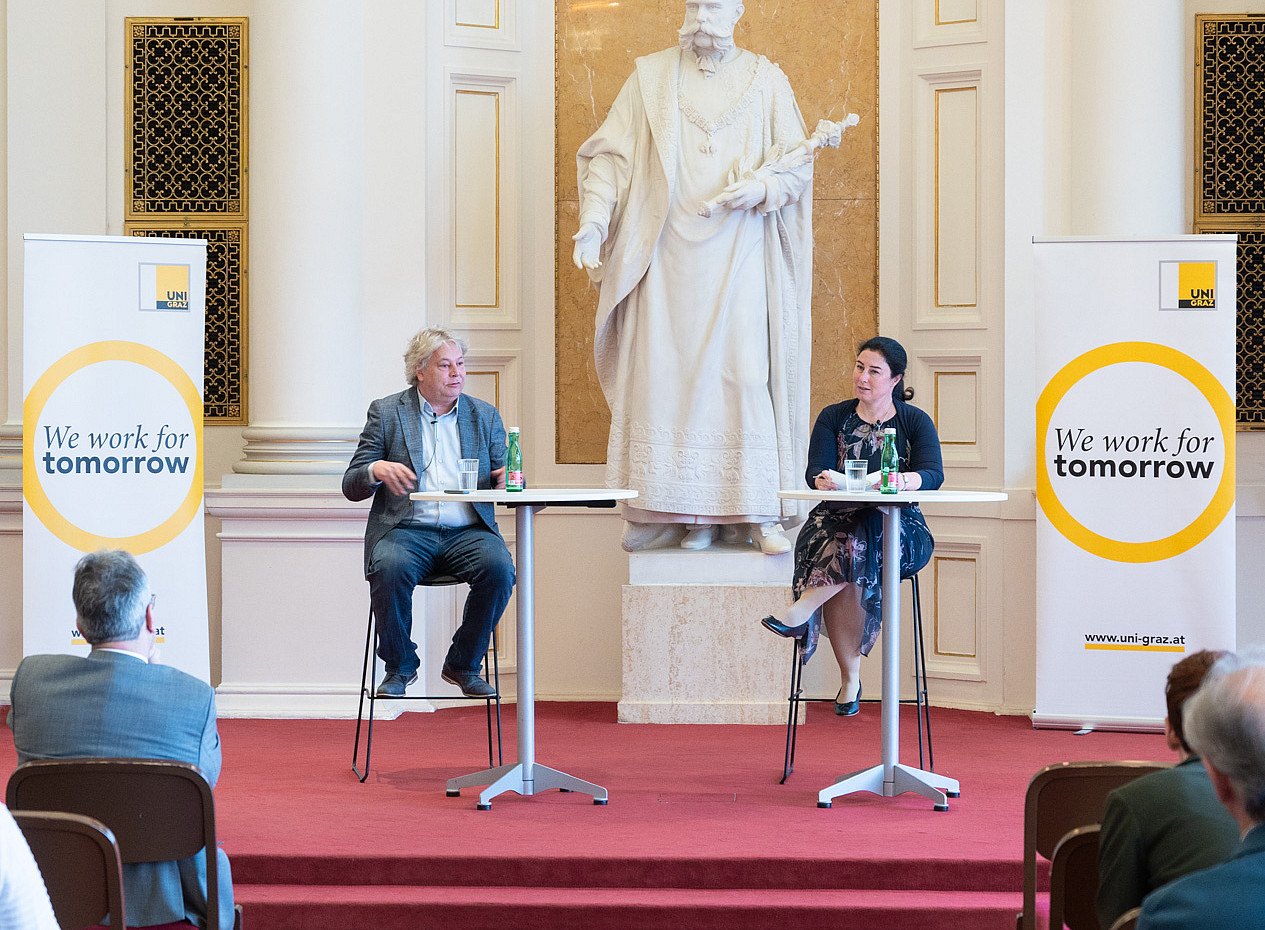
The process covers all four Austrian higher education sectors – 23 public universities, 21 universities of applied sciences, 14 teacher education colleges and 19 private institutions, 77 in all – and is structured around eight working groups: study conditions, academic careers, international visibility, innovation and excellence, quality and efficiency, openness and social justice, cooperation and division of labour, and (as a discrete strand, not an afterthought) higher education and democracy.
The evidence base is a system analysis by FORWIT, the federal advisory council for research, science, innovation and technology development. FORWIT chair Thomas Henzinger’s diagnosis is that the system is “strongly segmented” organisationally, financially and in governance terms, and that segmentation hurts permeability, blurs profile, and makes it hard to act strategically.
The figures put Austria at 8.2 HE institutions per million inhabitants, above the EU average and above Germany, Switzerland and Sweden. Half of full-time students sit in just six universities. The diagnosis is basically – too many institutions, too much overlap, not enough purpose.
The big debate is over what “profile” means. Uniko, the public universities’ conference, hears it and thinks clearer sectoral hierarchy, no “watering-can” funding spread thinly across everything, no doctoral powers for the applied-science institutions blurring the line between them and universities.
The Fachhochschul-Konferenz, representing the applied science institutions, hears profile and thinks: applied doctoral authority, regional innovation, parity of esteem with the universities.
Both are arguing for differentiation, but they mean different things by it. It’s a major unresolved fight, and it won’t be resolved by a working group on cooperation and division of labour, however nicely named.
Genau so?!
Meanwhile the strategy has a student-facing arm. The ministry and the national student body ÖH ran a creative call called “Genau so?!” – roughly, “exactly like that?!” – inviting students to submit utopia, dystopia or “Realsatire” about Austrian higher education in 2040.
The call at the weekend, with winning entries to be presented at a midterm conference in June. It is a gesture, but it is at least a gesture that lets students draw a dystopia.
The reason this matters is the same reason the strategy needed a democracy strand at all. The lived student experience in Austria is not especially utopian right now.
The 2025 Studierenden-Sozialerhebung, released in April, reported that students are spending an average of €586 a month on housing, with student residence costs up 61 per cent since 2015.
ÖH’s Chair Selina Wienerroither has been pointing out that the average study grant of €684 sits well below the at-risk-of-poverty threshold of €1,661, and that 67 per cent of working students are doing eleven hours a week or more alongside study.

Anna Dibiasi at IHS describes a “conflict between paid work and study time” which, translated, means the same thing we see across Europe – the formal entitlement to study and the material capacity to study have come apart.
The strategy is therefore doing a fair amount of work at once. It is trying to settle a system-design fight about sectoral mission. It is trying to absorb a cost-of-living crisis into a long-term framework.
It is trying to position universities, via the “Hochschule und Demokratie” strand, as defenders of democratic public reasoning against what the working group’s own paperwork calls a “postfactual” environment.
And it is doing all of this in the same year that Austria has been very publicly trying to recruit US-based academics displaced by funding cuts and political pressure across the Atlantic – Reuters reported last September that 25 had already taken up €500,000 grants here, with more in the pipeline.
Rise like a phoenix
The “Hochschule und Demokratie” working group is not marginal. The ministry’s framing at the strategy launch in October was that science faces challenges that are technological, social and democracy-political – and that higher education institutions should be “Gestaltungskräfte für eine lebhafte, wehrhafte Demokratie” – shaping forces for a lively, resilient democracy.
The working group’s own framing question is direct: “Wozu braucht unsere Demokratie 2040 (noch) Hochschulen?” – what will our democracy still need higher education institutions for in 2040? The premise, by the ministry’s own account, is that they will be needed more than ever.
At a Science Talk on democracy in January, the Vienna sociologist Anna Durnová warned that wider discussion does not automatically strengthen democracy. “Ohne sie”, she said – without democratic hierarchies and values – you can have a democratic discussion, but not a democracy.

Holzleitner spoke about a strong connection between the freedom of science and a consolidated democracy, and described it as a strength that Europe and Austria must build on, particularly in light of developments “in other countries and continents” – about as close as a serving Austrian minister is going to come to naming the United States.
One reading is that universities are in the business of truth, evidence and public reason, and that pretending neutrality between expertise and conspiracy, or between climate science and climate denial, would itself be a kind of abdication.
The ministry’s polling reportedly found 89 per cent of Austrian respondents regarded universities as important for democracy, even as trust in the political system fell. Higher education researcher Martin Unger has put the point more bluntly than the ministry would – that one of the things Hochschulstrategie 2040 has to address is “first and foremost emerging fascism,” and that universities sit high on the list of threatened species in democracies, with the United States as the visible warning case.
On this reading, an Austrian strategy that identifies democratic resilience as a central institutional mission is arguably doing what European HE should have started doing a decade ago.
Another reading is that we’re watching a sector pick a side in a fight that isn’t yet over. Hochschulstrategie 2040 will be finalised under the current coalition and implemented over decades that may well include at least one government that does not share its assumptions.
The FPÖ topped the polls eighteen months ago and is not going away – and the leaked coalition plans from early 2025 (higher fees, slashed student representation, content controls, “native Austrian” admissions priorities) are a reasonable preview of what an FPÖ-influenced government would actually do with higher education.
A sector that has formally branded itself as the institutional defence of liberal democracy is not well placed when the people it is defending against form a government. The strategy embeds a vocabulary that depends, for its survival, on the political outcome it is trying to influence.
You can also argue that Austrian universities are doing what universities should do, and the doing of it makes them a target. There’s a Gramatneusiedl-shaped thread there – the willingness to study something properly, in a real place, over enough years, and to stake the institution on what comes back.
It’s not a guarantee against the populists, and on a bad day, it might even hasten them. But it reminds us that for both the EBU and universities, “staying out of politics” is both harder than it sounds – and may well be a strategic mistake.