Even dance degrees are valuable
What’s the point in a degree in dance? And how many dancers does the country need? Eleanor McCarthy reflects on the pattern of provision that ensues when metrics take over
This article is more than 3 years old
Comment|
Eleanor McCarthy is an Educational Governance Manager at Newcastle University
Do you regret your degree? It’s a question I’ve been asked many times.
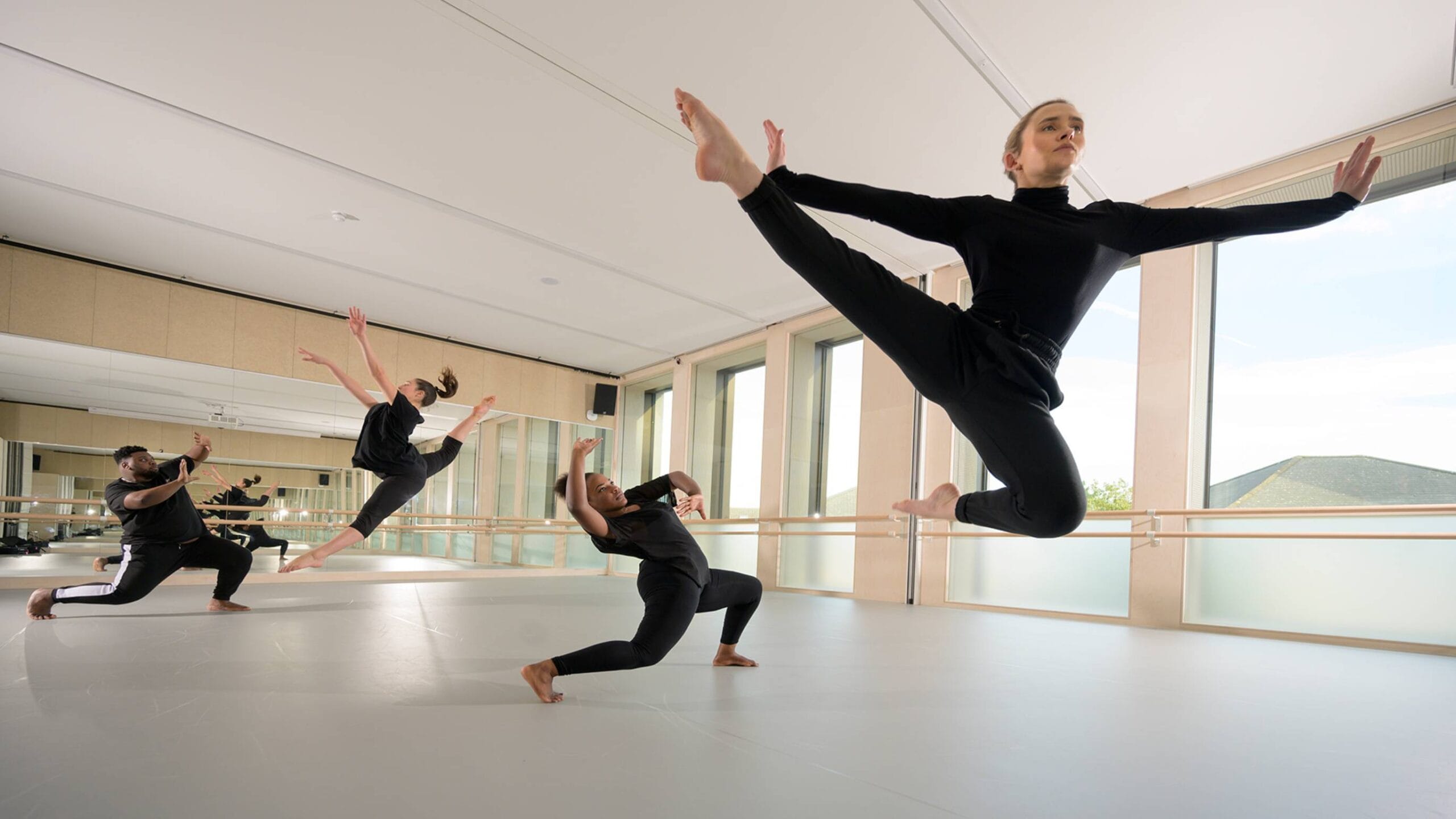
I spent 3 years and tens of thousands of pounds on a Professional Dance degree and since graduating have worked in an SU and a university – now love working in higher education.
Some might see this as a waste of time and money – but I respectfully disagree.
Following One Dance UK’s worrying report on the state of dance education in HE – and at a time when many feel as though arts and humanities are under attack with an increasingly metrics driven approach – it’s vitally important that we advocate for the value of dance and creative arts degrees outside of linear career pathways.
Five will make you get down now
Thinking of my dance education, I was lucky enough to attend a high school that allowed its A-Level programme to run with only 5 students (3 for their music A-Level!).
I applied to study dance at university at a time when it felt as though there was a significant variety of options – traditional universities, specialist institutions, conservatories, HND’s, foundation years etc.
I was privileged to be able to choose a degree because I loved the practice. Now, I am greatly concerned that students would face so many more barriers to accessing dance in higher education.
Faced with the cost-of-living crisis, programme closures and reduced numbers of GCSE and A-Level provision in dance, students will be forced to think about the money they will be projected to make after they graduate, perhaps more than ever when choosing a degree.
Even if they do choose to pursue dance or a creative arts subject, they will be lucky if their local state schools offer such provision.
Of course, many dance and creative arts graduates enter the creative sector and go on to have flourishing and fulfilling creative careers. But the opportunities for graduates to go into high-paying, professional, linear (i.e., not freelance) work are incredibly limited, particularly within the performing arts.
Thus, in an increasingly metrics driven environment (focussing on traditional job pathways), how creative arts graduates may look in statistics/outcomes and what this could mean for provision is very concerning.
Metrics drive decisions
As OfS has ramped up its metrics driven approach and thus institutions have been forced to do the same, we have already begun to see the effect of providers cutting back on their arts and humanities provision, with cuts particularly in dance outlined by One Dance UK (UCLan and Roehampton amongst myself and my peers are known as leading universities for dance, the fact they are now withdrawing/suspending dance programmes is incredibly concerning).
Pressure from regulators and government agendas has put institutions offering arts and humanities provision in an impossible position. With the “levelling-up agenda” focussing on technical skills and OfS’ B3 conditions focussing on graduate outcomes and progression.
If universities face financial hardship and cutbacks have to be made somewhere, I can imagine it’s difficult to argue that the arts subjects shouldn’t go first. But what a tragedy that is.
Skills and confidence
For creative arts degrees in particular, the experiences and skills you learn are worth much more than regulators and government seem to acknowledge – regardless of the job you end up in.
I had to perform for an audience regularly, teach members of the community and constantly create as part of a team and as an individual. I had the opportunity to explore, research and dedicate 3 years to becoming highly skilled in dance, learning discipline, commitment and self-motivation. The confidence I gained cannot be understated.
I don’t believe I would have been an SU officer last year or be in my current roles without the confidence I gained from my dance degree. It is these skills, these experiences, that make a creative arts degree worthwhile regardless of the career path.
The intrinsic value of arts degrees to an individual and the extrinsic impact on communities for those who go on to work in the sector, is far too often left out of the conversation. Not to mention the UK regularly celebrating the world-leading performing and creative arts outputs it produces, contributing £10.8billion a year to the UK economy (as of 2019).
Next job in cyber?
I want to emphasise I am not suggesting that dance degree students’ next job could be in cyber, but simply to speak in support of the plethora of skills, experiences and knowledge a dance degree can give, any degree can give for that matter, outside of career prospects.
The sector,, governments, and regulators ought to look beyond graduate outcomes and the B3. Students being able to study a subject they love, simply for the love of it, is something I always think should be a possibility and it speaks to the hubs of learning and growing that universities should be.
But for this to still be an option for students, the courses have to exist, be resourced and be valued by the institutions they’re in – something which is increasingly coming under threat, particularly for creative arts courses as we have seen.
It’s also important to acknowledge students need to have the financial support and security to be able to study subjects where the career path is less linear and guaranteed – something for student finance providers and governments to consider but that’s another conversation.
University is and should be about so much more than the job you end up in after graduating, we must ensure that future generations of students are able to choose a degree without the threat of whole subjects and provision being taken away.
Related articles

The Milburn review’s proposals on apprenticeships miss the bigger economic picture
Mandy Crawford-Lee | Comment | 22/11/26
Franchised HE is getting bigger, owners are getting richer, and more students are dropping out
Jim Dickinson | Comment | 20/11/26

In the final REF guidance, the devil is not in the detail
Karen Stroobants | Comment | 20/11/26