This is no ordinary strike in no ordinary year
There’s a familiar pattern to industrial action in higher education, but this time round everything has changed, says Jim Dickinson
This article is more than 7 years old
Comment|
Jim is an Associate Editor (SUs) at Wonkhe
There’s a familiar pattern to industrial action in higher education.
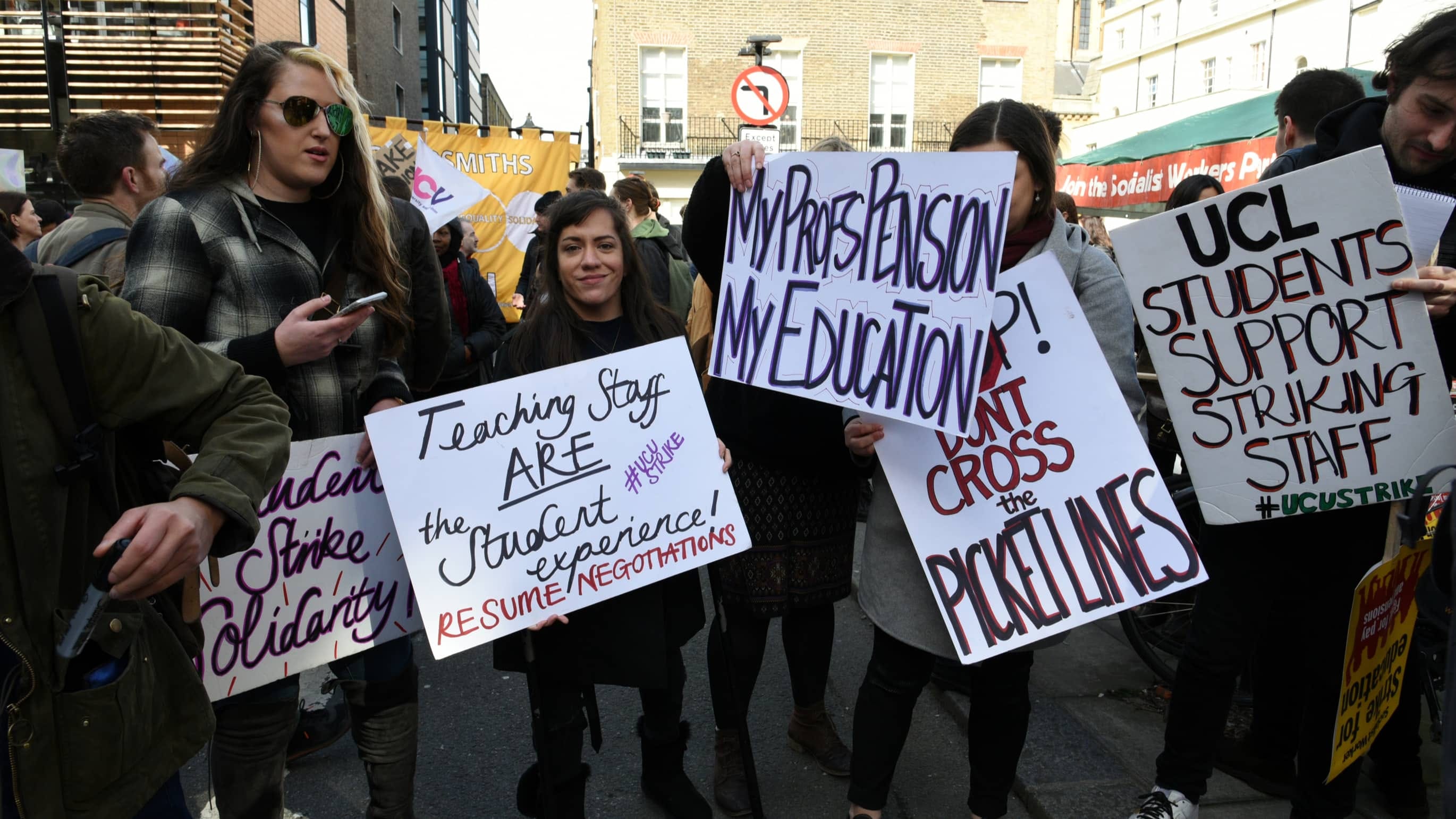
UCU announces both strike action and action short of a strike. The Universities and Colleges Employers Association (UCEA) on pay or Universities UK (UUK) on pensions mutter things about affordability and disruption. Vice chancellors try their arm at triangulating their SU into condemning the action, but most take NUS’ line and support it.
Students aren’t clear if they have redress rights and don’t really attempt to use them. Unpaid wages go into a hardship fund for students. Disruption happens, and universities “focus on student outcomes” because staff refuse to help with making up inputs and outputs. Negotiators agree a deal, members agree, and it’s all over for another year.
Here we go again
Judging by some we’ve spoken to in the sector about UCU’s announcement of December strikes, many are compacently assuming that this time around will be no different – the sector just has to tough it out. But several things have changed this time around that make this dispute markedly different in terms of power, tactics and attitudes that ought to cause a pause before the sector presses play on its usual plan.
First is timing and intensity. We’re not used to picket lines when the Christmas lights are up, and UCU’s eye catching announcement leaves universities with little time to prepare for a period of disruption that will continue with “action short of” even when academics are back at work. New General Secretary Jo Grady is an impressive organiser who managed to turn a tweet asking if members would be interested in a “wildcard, rank and file candidate” into a major electoral upset in a matter of weeks, and is now deploying those skills in this dispute.
Jo emerged from an energised, radical activism in UCU – spread through social media – that took both sides in the 2018 pension dispute by surprise, and managed to be clear in its demands and vivid in placing them in a wider context of sector direction, marketisation and casualisation. UCU is marching its members to the top of a steep hill, and will be looking for a win.
Then there’s the Office of the Independent Adjudicator. When it looks at the way universities handle complaints it takes consumer law into account, and the 2018 dispute was the first major action since the emergence of Competition and Markets Authority guidance a few years back. Plenty of universities that had struggled to get lectures rescheduled argued that there is no contractual obligation to provide a specific number of taught sessions, suggesting that students suffered “no loss” provided they are not academically disadvantaged.
But in a summary of cases, OIA’s Felicity Mitchell argued that the logical conclusion of that line of argument is that it doesn’t matter what you have taught your students as long as they come out with a degree at the end of it. Instead, OIA took the view that if a student is led to believe they will learn about a specific topic, then the provider cannot make up for failing to deliver that learning simply by not examining the student on it. Given UCU would regard tactics to make up for lost teaching as strike breaking, this all makes things much harder for universities this time around.
The student interest
And then there’s the Office for Students. It barely existed last time round, but with its new powers this time has already issued ominous guidance to universities on its regulatory approach in the event of a major strike, and has promised to find ways to communicate directly with students about their rights and ability to formally complain.
Uncomfortably, its focus on “outcomes” doesn’t fit neatly with OIA’s views on inputs and outputs, but it does monitor compliance – with a duty to have “due regard” to advice on consumer law, and right now is examining in detail the fairness of student contracts and the often unfairly broad “force majeure” clauses that allow universities to not deliver. Is national industrial action really outside the influence of the university, just because it’s collectively handled?
There are some in UCU and NUS circles that would regard OIA and OfS’ individualist, consumerist interventions as profoundly unhelpful – undermining efforts to build collective solidarity over the issues. But there’s another way of looking at it. If strikes happen and OfS is successful in getting its message out to students, students are more likely to formally complain. OfS will also carry out its regulatory crawl all over the realities of non-delivery on the ground.
And as the wriggle room on non-delivery narrows for universities, more of those complaints are likely to be upheld – if not by universities then by OIA. It turns out that complaining, litigious, individualist students could well be the most effective UCU crowbar yet in getting employers back around the table to compromise or cave.