

The Office for Students (OfS) has published a press release leading with the headline finding that 87 per cent of first-year students are satisfied with their accommodation experience.
Interim CEO Josh Fleming’s quote is reassuring – it’s “great to see” most students are positive, while the research highlights some “challenges” around cost, understanding contracts, and the quality and maintenance of accommodation.
Having read the underlying IFF Research report rather than the summary, a different picture emerges.
This is not research that shows student accommodation is largely fine. It is research that shows a sector which has successfully normalised poor conditions, systematically disadvantages students from under-represented backgrounds at almost every point in the accommodation journey, and routinely fails to give students the information they need to make meaningful choices or exercise the rights they technically hold.
Not happy. Just used to it
The first thing to understand about the 87 per cent satisfaction figure is what is sitting directly underneath it.
Despite the headline result, 61 per cent of students had experienced at least one quality issue with their accommodation during 2025/26 – and a quarter had experienced three or more.
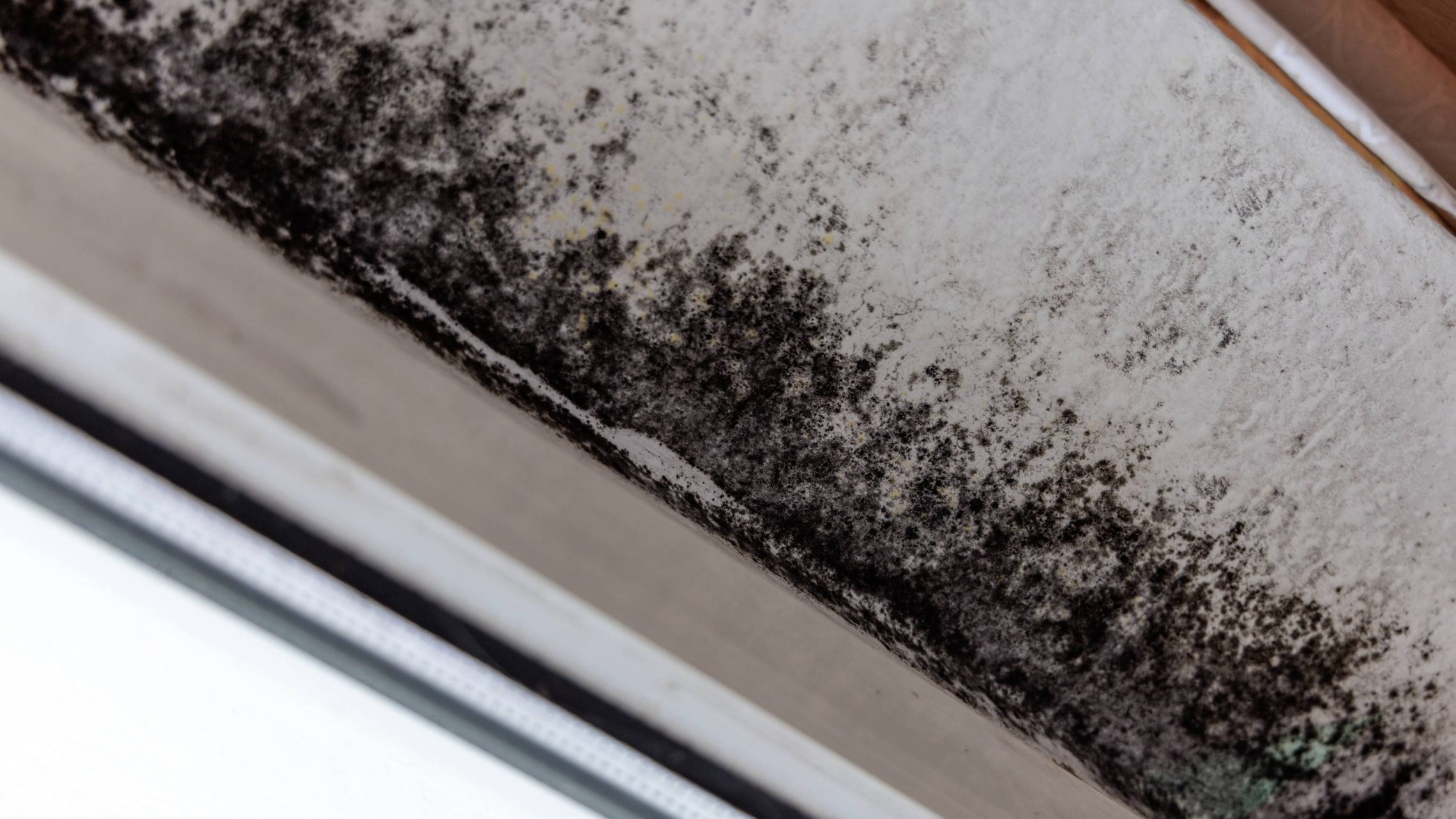
The most common issues were faulty or missing appliances (16 per cent), difficulty keeping warm (15 per cent), lack of hot water or heating (15 per cent), damp or mould (15 per cent), and plumbing problems including leaks (14 per cent). Six per cent reported unsafe layout, stairs, or flooring.
And 6 per cent – roughly one in seventeen first-year students living in rented accommodation in England – reported no working smoke or fire alarm, or another fire hazard. In a post-Grenfell regulatory environment, that finding deserves something more than a place in a subordinate clause.
How do you reconcile a 61 per cent quality issue rate with 87 per cent overall satisfaction? The qualitative research explains it – students described accepting minor issues as “typical of student housing,” and several noted that they had heard negative stories and were pleasantly surprised when their experience was not as bad as feared.
One student in university-maintained accommodation summed up the prevailing attitude as “problem solving quicker, but like the actual accommodation building itself is fine.” Another, asked what they’d change, said they couldn’t think of anything: the accommodation was “fine.”
Satisfaction my eye. This is students who have internalised low expectations performing contentment with a product they have limited power to change and limited confidence to challenge. The qualitative research explicitly notes that students’ anticipated problems they had not yet experienced reduced their standards for what counted as acceptable. The survey is measuring tolerance, not quality.
Look at the VFM-satisfaction link. Students who rated their accommodation as good value for money were almost universally satisfied (95 per cent). Students who rated it as poor value were only half as likely to be satisfied (51 per cent). Satisfaction in the research is largely a proxy for whether students feel they got what they were told they were getting – not an independent assessment of conditions.
The coping economy
The press release mentions that 15 per cent of students reported difficulties covering accommodation costs, and 69 per cent said expected costs strongly influenced their choice of university. Those numbers are significant enough, but the full cost picture from the report is much more alarming.
86 per cent of students said accommodation costs had some influence on their choice of where to study, with 27 per cent identifying cost as one of their primary factors.
But then look at the coping behaviours data. A large majority of students – 89 per cent – had taken at least one step to help cover accommodation costs during their first year. 79 per cent of all surveyed students had borrowed money from friends or family at least once. 63 per cent had reduced their energy use (including not putting the heating on, or showering at the university gym).
63 per cent had worked extra hours in a part-time job. 59 per cent had used an overdraft or a credit card. 44 per cent had taken out a loan in addition to their student loans or grants.
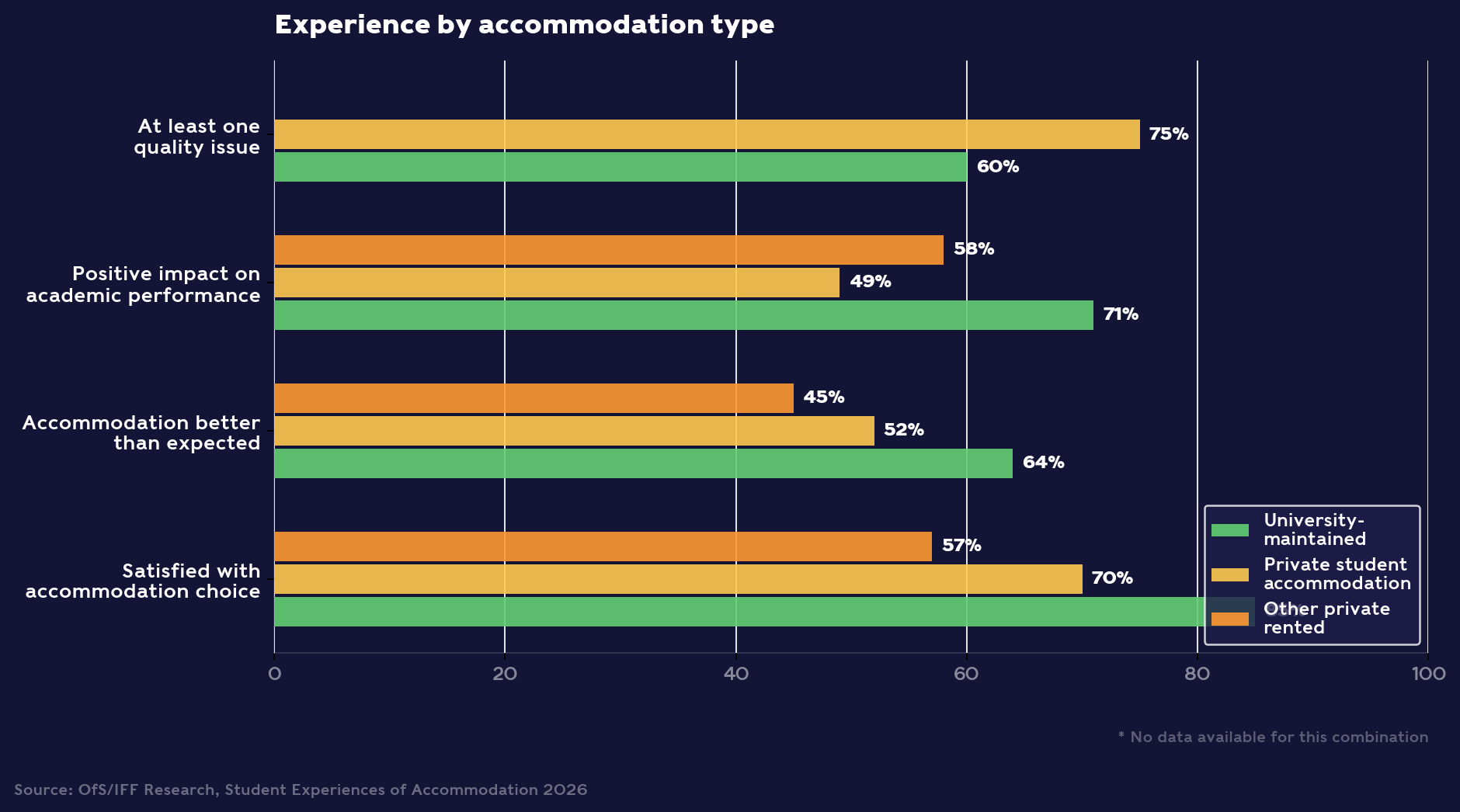
The report notes that four in five students had taken at least one of these steps on a monthly basis or more often. One student – in accommodation privately maintained on behalf of their university – said their maintenance loan was £4,900 for the year and their rent was £7,040, so the loan “doesn’t really cover that much at all.”
Against this backdrop, the 73 per cent of students rating their accommodation as good value for money is not reassuring. It represents students who have adjusted their frame of reference to treat family borrowing, energy deprivation, and additional paid work as normal features of student life rather than evidence of a system failing them.
The press release presents the 15 per cent who report difficulty covering costs as the problem population. The data suggests the actual problem population is considerably larger – it just includes many students who have found ways to manage that they have categorised as normal.
There is also a major gap in the research methodology worth noting – the survey excludes students living at home with parents or guardians and excludes distance learners. These groups disproportionately include students who have made their accommodation choice – or had it made for them – precisely because of cost. The survey excludes the students most financially constrained by accommodation from the research about student accommodation experiences.
One further counterintuitive detail in the cost data. The report finds that students with a parental history of higher education were more likely than those without to name accommodation cost as a primary factor in their choice of university (35 per cent vs 19 per cent). This seems to run against the financial pressure picture everywhere else in the data.
One reading is that students without graduate parents have less conscious agency over where they end up – they go where they get in, often through clearing, at which point accommodation has already been substantially decided for them. Cost shapes their options without appearing as a deliberate variable. That is a different and more concerning relationship with affordability than being a financially constrained chooser.
There is also a 10 percentage point gender gap in value-for-money perceptions that the report records without explanation – 79 per cent of male students rated their accommodation as good value for money against 69 per cent of female students. Whether that reflects differences in accommodation type, room allocation, or something about how financial judgements are made differently across genders is not explored in the research.
The inequality you can’t see in the headline
Running through almost every metric in this research is a pair of systematic gaps that should be of concern to any regulator serious about equality of opportunity. The first is the parental education gap, and the second is the disability gap. Neither is highlighted in the OfS press statement.
First in family, last in queue
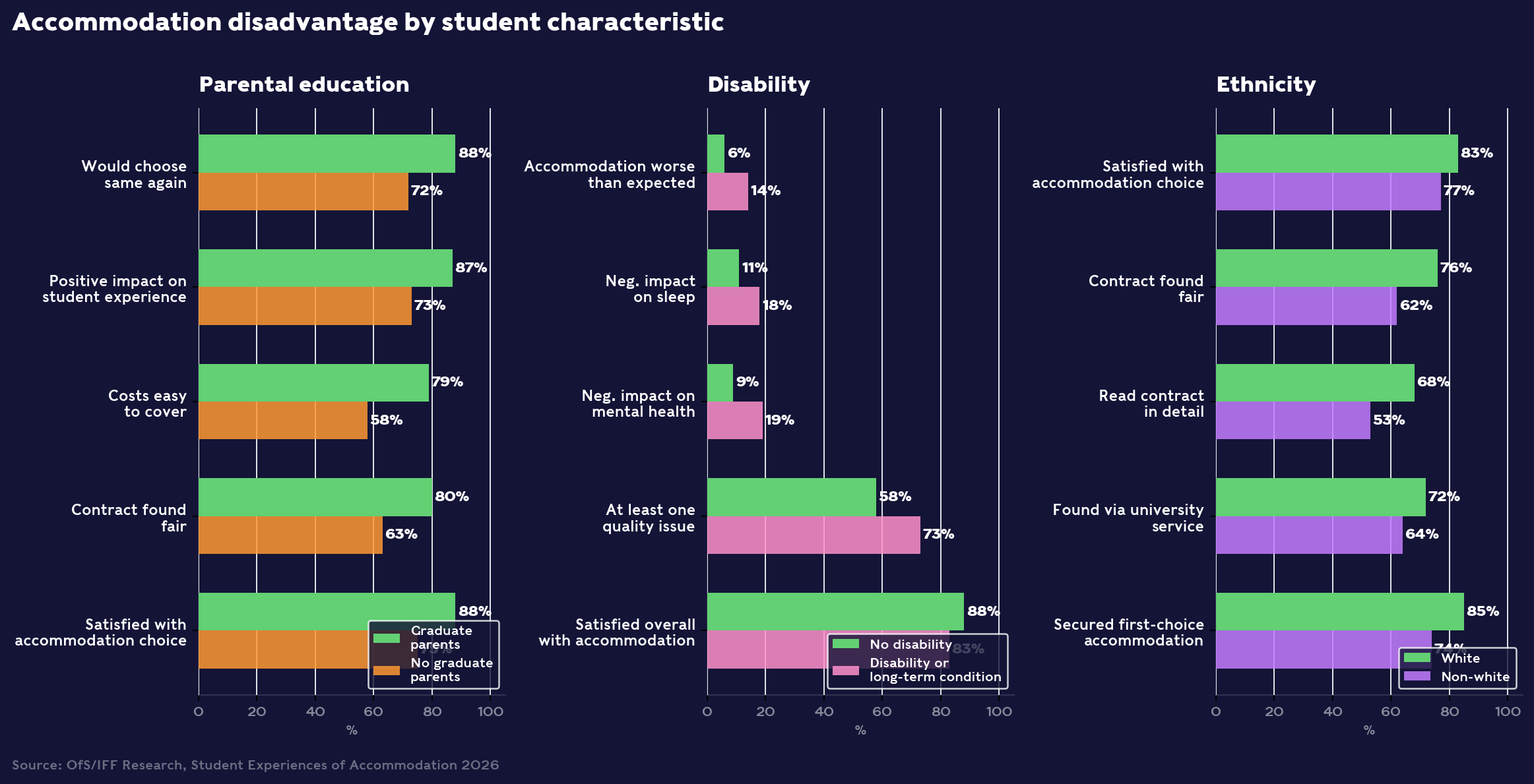
Students whose parents don’t have a degree-level qualification reported consistently worse outcomes across the entire accommodation experience compared to those with graduate parents.
They were less likely to be satisfied with the choice available to them (75 per cent vs 88 per cent). They were less likely to be satisfied overall (83 per cent vs 91 per cent). They were nearly three times as likely to find it difficult to cover accommodation costs (23 per cent vs 8 per cent). They were less likely to have read their contract in detail (52 per cent vs 75 per cent). They were less likely to find their contract fair (63 per cent vs 80 per cent). They were less likely to say accommodation had a positive impact on their student experience (73 per cent vs 87 per cent). They were less likely to say they would choose the same accommodation again (72 per cent vs 88 per cent).
This is a pervasive, compound disadvantage running through decision-making, financial resilience, contractual understanding, lived experience, and retrospective satisfaction. The likely explanation is a mixture of financial resources, social capital (parents who can read and interpret contracts, or who can lend money when the loan runs out), and the clearing/insurance choice dynamic discussed below.
OfS’s Equality of Opportunity Risk Register identifies cost pressures (Risk 10) and capacity issues (Risk 11) as sector-wide risks requiring providers to respond in their access and participation plans. This data provides the most detailed picture to date of how those risks manifest in practice. It is striking that the press release makes no connection to the APP framework.
Disabled, and more likely to be in the worst sector
The picture for disabled students – those with a long-term health condition or disability – is worse still. 73 per cent of disabled students had experienced at least one quality issue with their accommodation, compared to 58 per cent of those without. For students whose disability specifically affected their accommodation requirements, that figure rose to 80 per cent.
Disabled students were nearly three times as likely to say their accommodation had a negative impact on their mental health (19 per cent vs 9 per cent), and nearly twice as likely to report a negative impact on their sleep (18 per cent vs 11 per cent). They were more likely to say their accommodation was worse than expected (14 per cent vs 6 per cent), and significantly more likely to find it difficult to cover costs (39 per cent found it difficult or neither easy nor difficult, vs 30 per cent of non-disabled students).
There is a telling detail in how disabled students found their accommodation. They were more likely than the average to have found their accommodation through a private landlord (17 per cent vs 11 per cent) – meaning they are disproportionately in the sector with the worst issue resolution, the least responsive landlords, and the most protracted complaint journeys. The qualitative research describes private tenants with mould problems “didn’t know what to do,” landlords who ignored complaints about fire safety and ventilation, and students who felt they had no recourse.
OfS has a legal duty under HERA 2017 to have regard to the need to promote equality of opportunity, specifically including disability. The data shows disabled students systematically experiencing worse accommodation across almost every dimension. The press statement says nothing about it.
A consistent pattern the press release doesn’t notice
The press release mentions the finding that white students were more likely to secure their first-choice accommodation than students from other backgrounds (85 per cent vs 74 per cent), but frames it as one data point among several rather than part of a consistent pattern. The underlying report tells a different story.
White students were more likely to find their accommodation through the university accommodation service (72 per cent vs 64 per cent of non-white students) – the route most associated with better-quality, better-supported housing. White students were more likely to find their contract fair (76 per cent vs 62 per cent of non-white students). Black students were nearly twice as likely as white students to find their contract unfair (23 per cent vs 13 per cent). Among students who had read their contract, white students were most likely to have done so in detail (68 per cent), compared to 54 per cent of Asian or Asian British students and 47 per cent of students of mixed or multiple ethnic backgrounds.
These gaps run through decision-making, information access, and contractual protection in a consistent direction. They are not explained by accommodation type alone, and are also not mentioned in the OfS press statement – a notable omission for a regulator whose strategy commits to addressing racial equality gaps in higher education outcomes.
One other finding in the qualitative research is passed over fairly briefly but deserves more attention. Students who entered their university as their insurance choice, or who came through clearing, reported that the accommodation they wanted – typically university-maintained halls – had already filled up by the time they confirmed their place. They either had to accept what remained of university accommodation (often options they would not otherwise have chosen) or move to private student accommodation.
The students most likely to be entering through clearing or as insurance picks are disproportionately those from disadvantaged backgrounds, those who underperformed relative to their predicted grades, those from schools with less effective support for higher education applications, and those who made late decisions about where to study.
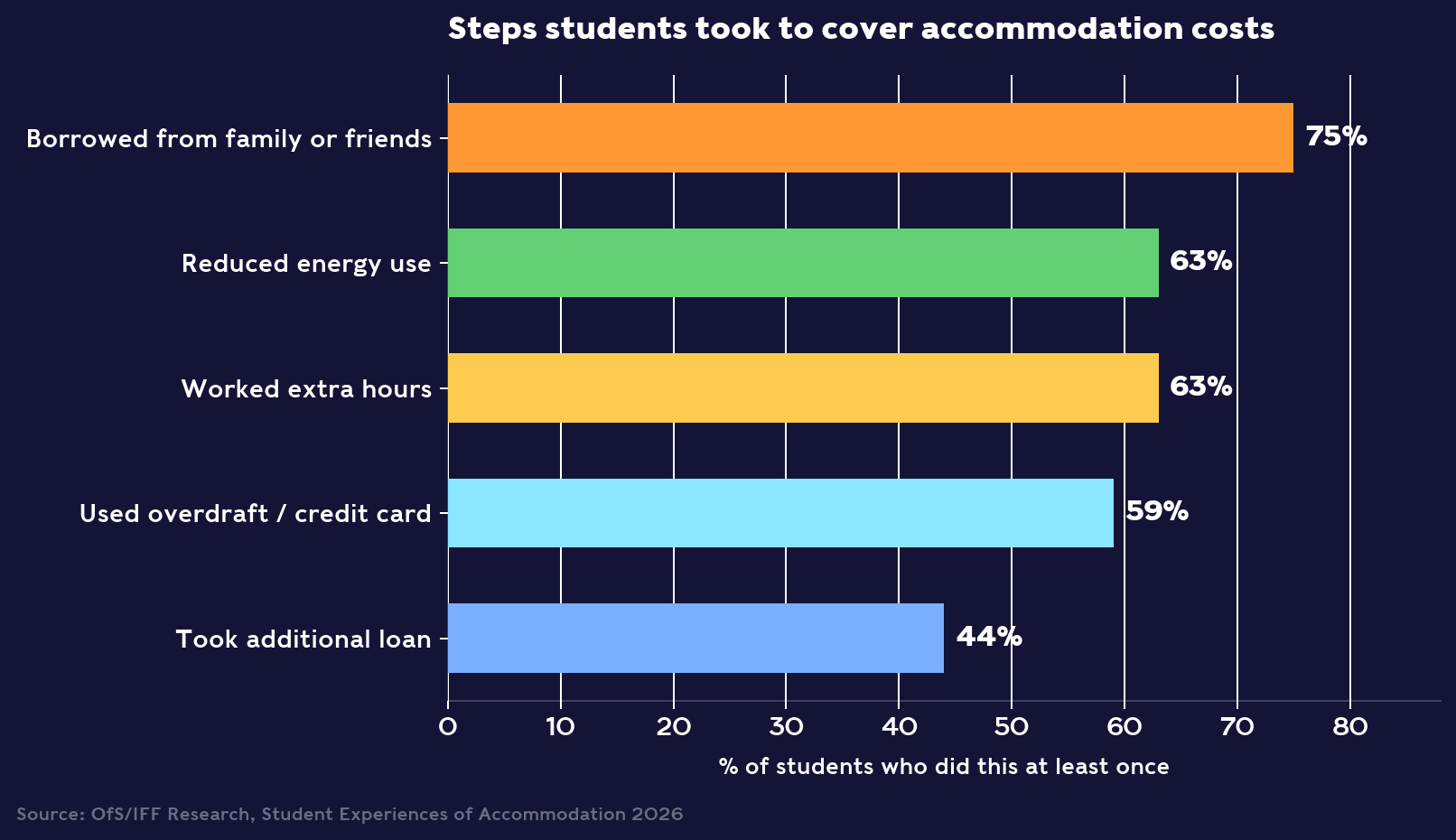
They arrive at their university already disadvantaged in the accommodation market – and the data shows that students in private student accommodation (the most common fallback) had worse quality issue rates (75 per cent vs 60 per cent), were less likely to find accommodation had a positive impact on their academic performance (49 per cent vs 71 per cent), were less satisfied with the choice available to them (70 per cent vs 85 per cent), and were least likely of any tenure type to feel confident about what to do if their rights were violated (63 per cent).
In his August 2024 speech to the SU membership conference, John Blake mused about whether there was “scope for thinking about what the obligation of institutions is to have discussions with their local community about where their students are going to go” when universities expand rapidly.
The issue here is more direct – institutions that take clearing students, knowing that those students will not be able to access university accommodation, are making an implicit promise they cannot keep. That is squarely within the territory the consumer protection consultation is supposed to address.
Ninety-seven per cent read their contract
The press statement also flags that one in three students in accommodation privately maintained on behalf of their university thought their contract was with the university rather than a private provider. This is noted, accurately, as a problem. But the wider contract data deserves more careful reading.
The report records that 97 per cent of students had read their contract at least in part. The qualitative research then spends considerable effort explaining why this figure should be treated with extreme caution. Many students had a parent or family member read the contract on their behalf – including, as one student noted approvingly, a parent who had professional legal knowledge.
Several had put the contract through ChatGPT. A number had simply signed without engaging substantively, reasoning that “thousands of people do this every year.” The report is explicit that “some students may have overstated their personal level of contract engagement.”
The implications are huge. Students are signing legally binding documents, often for the most expensive service they will commit to as a first-year student, with a level of engagement that ranges from superficial to non-existent. 16 per cent of those who did engage found their contract unfair. Among students in private student accommodation, only 62 per cent found terms fair, with 23 per cent finding them unfair. Students whose parents had no higher education history were considerably less likely to find terms fair (63 per cent vs 80 per cent) – reflecting that the students who most needed to understand what they were signing were least equipped to do so.
Students also reported confusion about specific terms – what counted as chargeable damage, permitted appliances, deposit arrangements, and how to challenge providers on their own obligations. More troubling, students described providers selectively enforcing contract terms – an experience that caused uncertainty about whether the contract would be enforced at all, and which reduced their willingness to invoke it.
Regulating housing contracts is obviously not OfS’ job. But when it finds data showing that all of the issues it finds in its own sector are present in the student housing sector (and then some), students might reasonably expect some planned liaison with MHCLG and/or the CMA. Maybe that’ll happen in secret.
It’s not about the laundry
The lowest satisfaction score in the entire research is for the cost and accessibility of laundry facilities – 63 per cent satisfied, 22 per cent dissatisfied. The qualitative research explains why. Students were frequently unaware that laundry would cost extra, and were surprised by the price when they arrived – with some spending £15 per week.
One student in provider-commissioned accommodation said she knew washing wasn’t included, but had no idea it would be “£7 for a wash and dry,” and couldn’t remember seeing any information about costs when she was choosing her accommodation.
Laundry costs are a trivial-sounding example of a material information failure. They are not trivial in practice for students counting every pound. But their significance in this context is as a signal – if providers are routinely not disclosing laundry costs upfront, what else are they not disclosing?
The information accuracy data from the report tells the tale. 39 per cent of students received inaccurate information about at least one aspect of their accommodation before moving in. 19 per cent received inaccurate information about appliance quality. 15 per cent received inaccurate information about the upkeep and cleanliness of shared spaces. 14 per cent received inaccurate information about proximity to local amenities.
A student choosing between two accommodation options at different price points is making a financial decision partly on the basis of the information the provider gives them about quality, facilities, and what is and isn’t included. If 39 per cent received inaccurate information for at least one element, that is a systematic market-information failure affecting choice.
The proposed C5 and ancillary services requirements are directly responsive to this – but only for accommodation with a direct contractual link to the provider. The gaps in coverage remain significant.
Why 19 per cent gave up
The report shows that of the students who experienced issues and attempted to resolve them, only 43 per cent said the issues were fully resolved. 22 per cent were dissatisfied with the speed of resolution. 8 per cent said their issues had not been resolved at all.
But the more important finding may be the 19 per cent of students who had problems and did nothing, and the reason why. Students described not challenging providers because of “past negative experiences of reporting issues or a history of them being unresolved.” Several described reaching a point where they “just let it fizzle out” or decided not to bother, reasoning that the university had “bigger issues to deal with.” In the private rented sector, students described feeling helpless against landlords who they suspected knew they were young and inexperienced and took advantage accordingly.
This is a classic illustration of the complaint-suppression dynamics that make aggregate satisfaction data unreliable. Students who have learned from experience that reporting issues is futile stop reporting them. Those issues are then invisible in both the issue resolution data and, eventually, the satisfaction data, because students who have decided not to engage with a problem they can’t fix may still rate their accommodation as broadly satisfactory.
Students with parental higher education histories were more likely to take action (88 per cent vs 78 per cent). Students who had read their contract in detail were more likely to feel confident about their rights. Students in university-maintained accommodation were better served by issue resolution than those elsewhere. The structural picture is clear – students with cultural capital, contractual knowledge, and a responsive institutional interlocutor get better outcomes. Students without those advantages absorb the problems.
What the consultation can and can’t fix
OfS’ press release frames the research as supporting the consumer protection consultation and prompting “discussion and reflection” across the sector. That’s a big square peg in a much smaller round hole.
It is worth noting what the regulator was actually asked to do on accommodation. 2019’s Augar review called on OfS to examine accommodation costs more closely and work with students and providers to improve data on costs, rents, profits and quality – with particular emphasis on rent model transparency, benchmarks for the proportion of maintenance support students spend on housing, and a government-commissioned financial analysis of what private PBSA developers and investors are extracting from student rents.
The framing was supply-side – who is making what, on what model, using public maintenance loans as the effective revenue base. Six years later, OfS has published a student experience survey. That is useful as far as it goes – but asking students how they feel about their contract is not the same exercise as scrutinising the economics of the sector that takes their money, and the second was what Augar asked for.
The report establishes that a majority of first-year students experience at least one quality issue with their accommodation, that disabled students and first-generation students are systematically worse off across every dimension of the accommodation experience, that nearly two-fifths of students received inaccurate information about at least one aspect of their accommodation before they committed to it, and that a meaningful minority cannot comfortably afford their accommodation even after adjusting their behaviour significantly to cover costs.
The consumer protection consultation’s proposals – clear information, fair contracts, delivery of promises, faster redress – address the contractual and information failures identified in this research where the housing on offer is the university’s.
But they don’t address accommodation supply or affordability, the structural exclusion of clearing and insurance-pick students from first-choice accommodation, the private rented sector, and the systematic disadvantage faced by disabled students.
And they don’t address the deeper problem this research surfaces – that students, especially those without the cultural capital that comes from having graduate parents, have been successfully socialised into expecting poor accommodation as a normal feature of student life.
Back in 2025, John Blake said that OfS:
…must take a role, or at least have a view, where students are being treated unfairly, even if it is only to give an honest and open account to the sector and to government about the state of student experiences and the likely impact of those on student outcomes.”
John Blake no longer works at OfS.