Is it time we renamed our degrees?
Christine Broughan and Tahereh Riahi interrogate the titling of degrees in the UK, and call for inclusive change to reflect our diverse graduates.
This article is more than 5 years old
Comment|
Christine Broughan is Deputy Faculty Pro-Vice Chancellor for Health and Life Sciences at the University of Northumbria
Tahereh Riahi is studying psychology at Coventry University
Do you ever think about why your degree is called a Bachelor’s or a Master’s? Where did these titles come from? Why do university degrees confer such male-orientated titles? How does this make our graduates’ feel?
Suki Doe has a Master’s Degree in Sociology from a popular university. But she wishes she hadn’t. It’s not that she regrets her degree or her studies – far from it. Rather, she’s perplexed as to why her gender was transmuted against her will when she achieved her academic goals:
As I was sitting in my graduation ceremony, waiting for my name to be called out, it suddenly dawned on me that, here I was, on the day of my greatest achievement to date, and I was about to be conferred a Master’s degree.”
I’m always mildly irritated when I order things online and the default setting when filling out your personal details is “Mr”. But I guess compared to no choice at all, as in the conferment of degree titles, this position doesn’t seem so bad.”
If you stop to think about it for a moment, the awarding of degrees with nomenclatures of “masters” and “bachelors” is overwhelmingly gendered and colonial, which largely goes unnoticed. Surely, in 2020 this medieval practice is outdated and unacceptable. Don’t our current 1.5 million female, nonbinary and BAME students in the UK deserve better than to receive an award with labels that serve as a constant reminder of their otherness? Well, we can change this – we can do something about this.
The history behind our degree titles
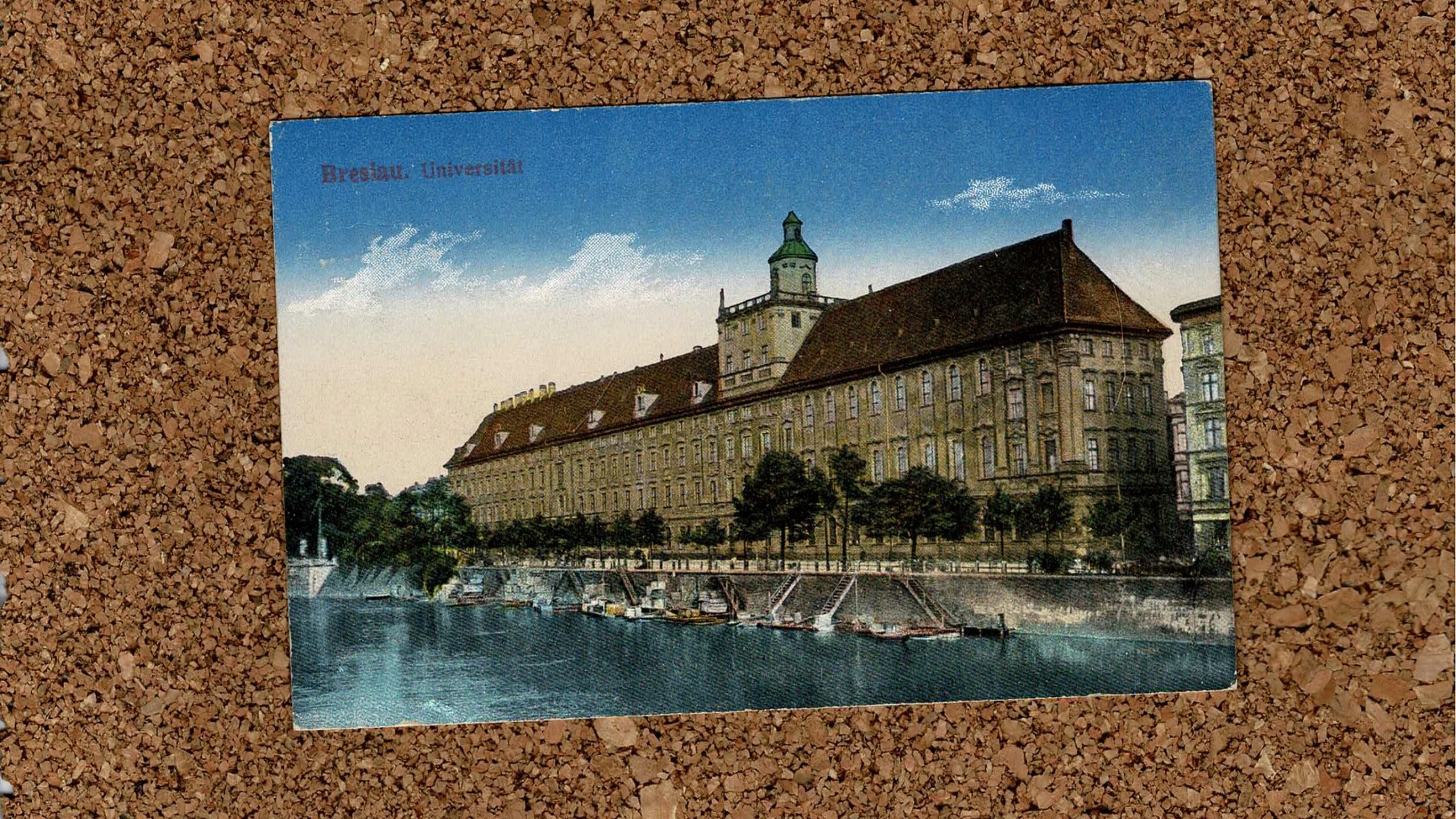
In the history of higher education, the degree titles we still uphold derive from the medieval curriculum standards of university. Medieval universities offered prospective students the opportunity to earn a Bachelor’s degree, promptly followed by a Master’s.
A Bachelor’s degree back then was always related to Art as a general qualification after 3 years of study. After the completion of a Master’s degree, any student would be qualified to teach virtually any subject at any institution. High-ranking institutions such as Oxford and Cambridge predominately enrolled higher-class male students wherein most were compelled to pursue a career that was not teaching. Therefore, obtaining a Master’s degree wasn’t seen as essential and fell out of favour.
At the turn of the 19th century, some universities determined more examinations and proper structures should be introduced to reaching a Master’s degree. It was proposed that after students complete their Bachelor’s degree, they be expected to study and work diligently to obtain a Master’s degree through arduous examinations. Some say this change in curriculum structure portrayed earning an MA as an unattainable feat that only the brightest students could achieve.
Students of the past were predominately men of the higher class, but much has changed since then and our current students come from a much wider range of demographics and personal characteristics, which are not represented by these titles.
International comparisons
Some countries and individual institutions have either never adopted such gendered and colonial titles, or have changed them in recent years.
To explore this further, we looked at 100 countries and their degree nomenclature. We found an interesting mix where:
- 55 of the 100 countries use gendered nomenclature for both their “Bachelors” and “Masters”.
- A further 26 of the countries have gender-neutral nomenclature for either their Bachelors or Masters, but not both.
- 19 of the countries use gender-neutral nomenclature for both Bachelors and Masters.
What was most intriguing, however, we found documents from University of Guelph, dating back to 1995, highlighting gendered degree nomenclature as a problem which should be addressed.
The document also points out that three other Canadian universities including Concordia, York and Western have addressed this issue by giving students the option to request to have their degree under the new nomenclatures of Baccalaureate for Bachelors and Magistariate for Masters. This was later also adopted by the University of Waterloo. So, the question is, why did we stop talking about it? Why not take this initiative forward?
A call to action
So does it really matter? Well, yes it does. Certainly, to the 1.5 million students that are not male, who graduate each year and have to be satisfied with a label that recognises their hard work but does not recognise them.
This is not about ignoring the history of higher education, or tearing down statues to Cecil Rhodes in the name of wokeness. This is about showing respect to all of our students, not just the privileged white males who were once the sole beneficiaries of university education. If we really want to decolonise higher education, we could do worse than to start by challenging these established colonialisms and to critically question some of the axiomatic assumptions behind these labels.
And what would it take to change this? Well, this is the beautiful thing. It would cost virtually nothing and require little effort. Yes, it is true that we, the higher education sector, could spend a lot of proverbial ink discussing decolonisation, and we have a long history of that when it comes to addressing similar matters.
In a recent book, Chelsea Kwakye and Ore Ogunbiyi compared the rhetoric universities use to describe their inclusivity with the reality and they swiftly discovered a large gap between what universities do and what they claim to do.
Chelsea and Ore suggested that universities have become sophisticated in non-performative institutional speech acts when it comes to addressing equality.
But we have a choice. We can continue to tread gingerly around such topics, creating demands for “more research”, hide behind excuses of administrative quagmire and the protocol minefield or we can decide to navigate the moral maze and demand that such outdated practices come under public and permanent scrutiny. We can start today, making change one step at a time, because history is something that should be celebrated, but it should not get in the way of good judgement.
So after considering the history and the many names our degrees have internationally, is a change to degree titles imperative in order to reflect our diverse graduates? Can something like a degree title change despite its legacy associated with one gender’s intellect and accomplishments?
One student adds:
While the drop-down menu in my online shopping gently irks me, and I sometimes can’t be bothered to change the default, when it comes to something that I have invested in so heavily, in time, commitment and money, I would like the opportunity that the title conferred reflects both my achievement and me – please.”