


It’s September 2021, and Western University’s Orientation Week is going badly wrong.
Reports of sexual assault and druggings are surfacing on social media, students are walking out in their thousands, national news crews are descending on London, Ontario (that’s the other London, the one in Canada), and the student council president finds himself on television explaining what happened. It is, by any measure, a crisis.
I’m in Canada this week ahead of HESA’s Re:University event, and I’ve been having a poke around students’ unions while I’m here. Western’s University Students’ Council is the first stop – it caught my attention because of what they did next.
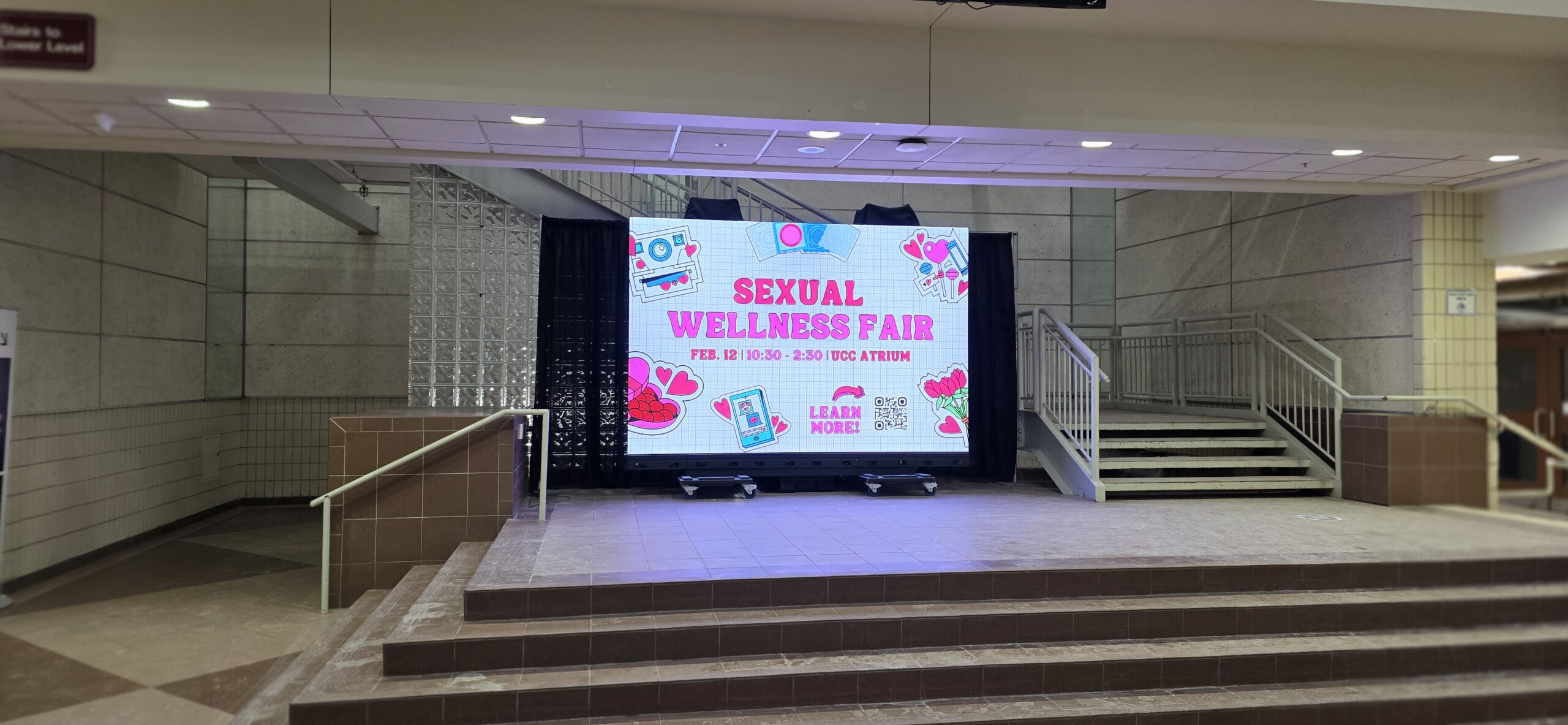
So far, soph good
At Western, orientation week is run by an army of upper-year volunteers called “sophs” – over 950 of them each September, selected and trained to lead activities, help with move-ins, and mentor incoming students.
The programme predates the crisis by decades, but after 2021, the training changed.
Soph preparation expanded to two paid weeks – not a half-day briefing and a lanyard, but an actual fortnight, compensated, covering gender-based violence prevention, suicide response, harm reduction, and naloxone administration.
Many sophs then work alongside professional staff throughout the year, not just during freshers’ week, running events and providing ongoing peer support in a way that helps students become and belong rather than just “cope” with Week 0.

The current USC president, Kathleena Henricus, was herself a two-time residence soph before taking office, and ran on a platform that included bringing the Take Back the Night campaign to campus, expanding overdose response training, and adding eating disorder awareness to soph preparation.
It looks a lot like the structured peer mentoring systems we’ve encountered across European universities – the “fadder” schemes in Scandinavia, the tutoring programmes in the Finland – but resourced at a scale that would make most UK institutions blink.
In the UK, freshers’ week volunteers might get a few hours of safeguarding training and a free t-shirt, and the idea that a students’ union could respond to a campus sexual violence crisis by investing in mass volunteer education – and actually have the organisational capacity to deliver it – feels almost exotic.
It’s also a useful example of the ways in which the right scaffolding can then have a crisis dropped on it – and then respond comprehensively.
Filling the cavity
The building that makes all of this possible is the University Community Centre, and walking through it is quite something – a pharmacy with a post office, an optometrist, a chiropractor, a dental office, a salon, a clothing store, and a campus radio station that’s been broadcasting since 1981.
There’s also multiple food outlets that seem to be capable of thousands of students eating together, rather than the “staff having a treat” catering the UK seems so often to have ended up with – and an impressive new grab-and-go eatery called The Cove that opened this January on the second floor, created specifically to reduce congestion at peak times.
It sounds like a US student union – those vast, professionally-managed complexes with bowling alleys and branch banks and all the rest of it – but it doesn’t feel like one. The furniture is mixed, the history is visible on the walls, and the vibe is distinctly studenty rather than corporate.
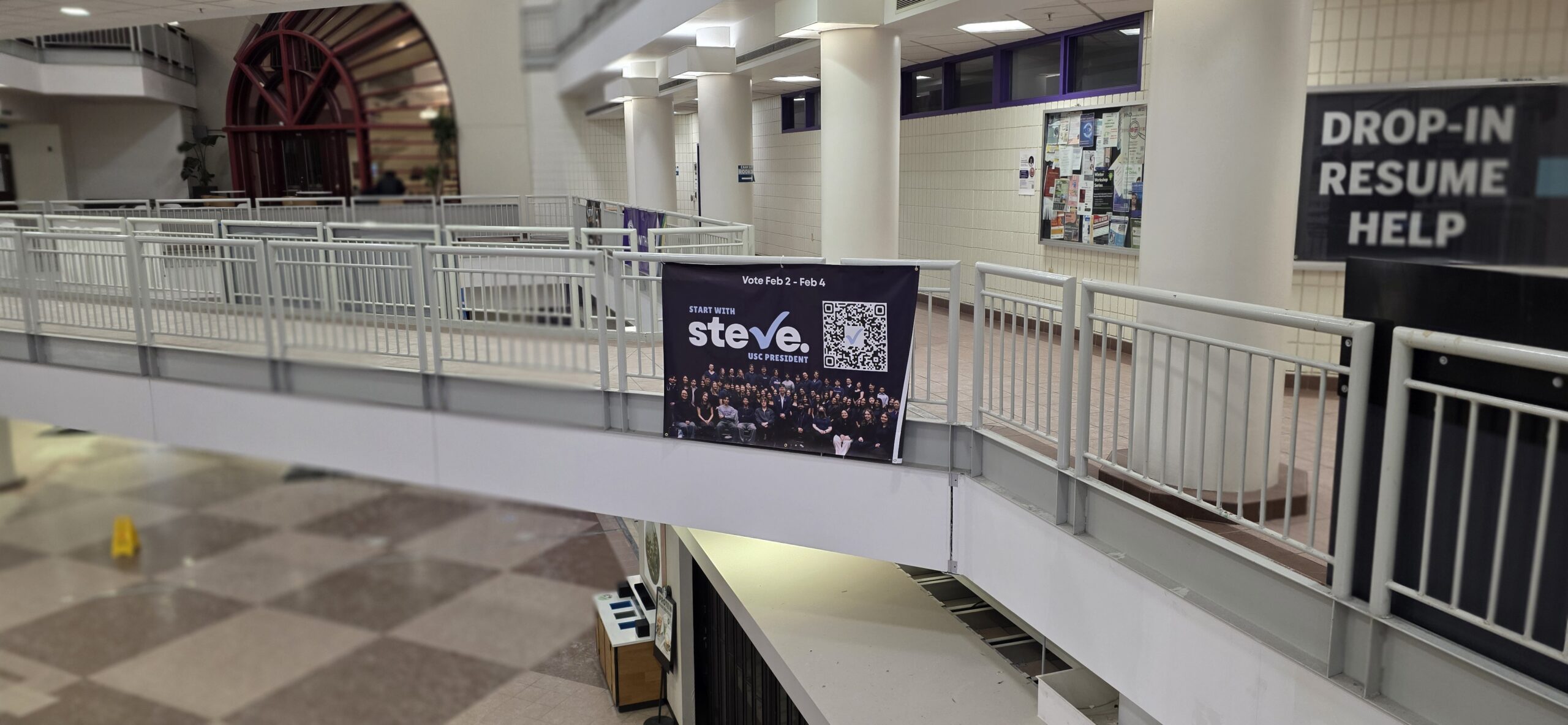
It feels like students actually live here, which of course they do – the USC offices are upstairs, council meets monthly in the building, and the student newspaper has been publishing from its rooms since 1906.
In the US, those big student union buildings are typically run by university administrators – professional staff managing commercial operations on behalf of the institution, with students in an advisory role at best. At Western, they’re in charge.
The USC (ie the SU) operates the building, runs the services, and decides what happens and where the money goes. American in commercial scale, but student-controlled in a way that US equivalents simply aren’t – and in a way that most UK SUs, having lost their commercial operations to university catering departments and outsourced providers, can now only dream about.
A grand entrance
The numbers are startling. Every full-time undergraduate at Western pays over $1,200 annually in ancillary fees to the USC – that’s around £700 at current exchange rates – covering a health and dental plan that includes prescriptions, mental health services, chiropractic, and emergency travel insurance, plus a universal transit pass for the city’s buses, the student buildings levy, and the orientation week pass.
Some fees are opt-outable under province rules, but the USC has successfully advocated for most to remain compulsory so that poorer students aren’t left out.
Add all of that up and you get one of the largest non-profit organisations in the city of London, Ontario – incorporated since 1965, with six elected student executives including a president who serves as CEO, a separate student board of directors providing corporate oversight, and a council of representatives from every faculty that meets monthly to set policy and approve budgets.
The February 2025 presidential election had seven candidates, used ranked ballots designed to reduce vote-splitting and encourage less adversarial campaigning, and achieved 29 per cent turnout – up eight percentage points on the previous year, with over 11,000 students casting votes.
Kathleena Henricus won with 52 per cent in the fourth round, becoming only the second woman of colour to hold the office in the organisation’s sixty-year history, and the eighth woman overall.

Council-approved policy papers on housing, mental health, tuition, accessibility, and transit form the evidence base for executive advocacy to the university, the city, and provincial and federal ministers – these aren’t wish lists or manifestos, but research-backed documents with specific recommendations that get reviewed on two-to-four-year cycles and cited in submissions to government.
The organisation is a member of the Ontario Undergraduate Student Alliance, sending delegates twice yearly to general assemblies where they debate and pass policy that forms the basis for lobbying Queen’s Park.
Their slogan – “We believe students have the power to change the world” – could scan as empty boosterism. It doesn’t, once you understand the machinery behind it.
Beach blanket bingo
What strikes me most about the USC, though, isn’t the scale – it’s the inventiveness of what they do with it. This is an organisation that, when students said they couldn’t easily get to supermarkets without a car, started a trial grocery shuttle on weekly evenings.
When students pointed out that the shuttle only went to mainstream stores, they expanded it to include international grocers. When they noticed students struggling with food costs, they set up an on-campus food bank providing anonymous monthly hampers.
There’s a grant fund established by student referendum that hands out project funding for initiatives that don’t fit the traditional “find fourteen friends who share your interest” club model – creative works, civic engagement projects, faith-based activities, whatever students come up with.
There’s a free tax clinic every March staffed by student volunteers certified by the revenue agency.
There’s REACH, an annual weekend conference that brings 250 local young people from grades seven and eight onto campus for overnight stays in residence, introducing them to higher education through activities run by trained student mentors – a widening participation programme that puts most UK equivalents to shame.

And the tentpole events programme has the same inventive streak. The USC runs a concert series throughout the year – PurpleFest in September, Purple Frost in January, Purple Finale before exams – that has featured major recording artists and, in the case of the September event, evolved into something quite unusual. PurpleFest was originally created in 2018 to deter unsanctioned street parties during homecoming weekend, giving students something better to do than cause trouble in residential neighbourhoods.
By 2025, it had grown into Rock the Runway, a two-day public festival at London International Airport capable of hosting 25,000 people, run in partnership with an entertainment company and open to the general public for the first time. A student event that started as a harm-reduction measure had become a proper civic institution.
The current president’s platform included plans for a weekly shuttle to the beach in September, student-made murals on the campus plaza, a bookable photo studio in the main lounge, and a “Western Stampede” event with rodeo games and carnival attractions. Some of these will happen, some won’t – but the point is that the organisation has the resources and the freedom to try things, to experiment, to respond to what students actually want rather than endlessly justifying its existence to a sceptical university.
Rush hour
The USC isn’t a museum piece – it’s a living organisation that actually does things and makes contested decisions. In 2021, the same year as the orientation crisis, council voted to strip fraternities and sororities of their subsidised room bookings and recruitment privileges, with 83 per cent in favour, following accusations that Greek life contributed to campus rape culture.
They simultaneously allocated $10,000 for sexual violence prevention training for Greek life leaders – threading a needle between exclusion and engagement, and showing that student government can actually handle hard questions when it has the resources to back up its decisions.
London, Ontario experienced the largest average rent increase in Canada last year – 33 per cent in twelve months – and the USC’s response has been inventive: the food bank, the grocery shuttles, advocacy for expanded residence capacity and stronger tenant protections, a housing policy paper that’s been cited in provincial submissions.
It’s the kind of stuff that emerges when student organisations have both the resources and the freedom to experiment – rather than watching helplessly as the university commercial services department opens another branded coffee outlet in space that used to belong to students.
More from Canada later this week – as I glide East towards Montreal.


