


Summer at Wonkhe SUs involves visiting as many students’ unions as humanly possible, at the mercy of a rail network that has its own ideas about whether that will happen, to deliver in-house training.
As part of our summer of gallivanting across the country, we spent two days delivering training to some fabulous officers across the border in Scotland.
As I type, our Scottish sabbs are deep into everyone’s favourite simulation exercise, New Rules, where they rip up the rule book and reimagine how SUs work.
England and Wales share a lot of the concerns Scotland has. Housing, transport and the cost of living bite just as hard north of the border, even if they manifest differently. What differs is not the problem but the plumbing behind it – and specifically, what a student can actually rely on when things go wrong.
These sabbs are not the only people who have spent the past year tearing up a rule book.
Fairness, but not for you
The old shorthand was that Scotland has partnership and everyone else has protection.
Twelve months on, all three nations have rewritten bits of their rule book – and students are not obviously better off in any of them.
Scotland’s rewrite was the most literal. The Tertiary Education and Training (Funding and Governance) (Scotland) Act 2026 became law in March, giving SFC a single post-school funding brief and new powers to examine an institution’s finances and financial governance after Dundee.
What did not survive was learner protection. An amendment requiring SFC to intervene and demand a continuity plan when courses already underway were at risk was resisted on the grounds that circumstances vary too much to legislate for, and never moved. If a Scottish institution gets into serious trouble this year, what a student can rely on is still SFC’s judgement and willingness to act.
England went the other way and is only now catching up with itself. Condition E6 on harassment and sexual misconduct is in force, and a new fairness condition replacing student protection plans and consumer protection duties is due in autumn.
Wales has moved furthest on welfare, with most of Medr’s regulatory conditions applying from this month, including one on learner wellbeing and safety that covers harassment, sexual violence and hate crime.
Meanwhile partnership in Scotland sits in the Tertiary Quality Enhancement Framework, sparqs has written Scotland’s Ambition for Student Partnership, and fundable bodies must now consult students before decisions on provision and staffing. None of it is a right a student can enforce on a bad day.
Housing makes the point. Purpose-built accommodation of 30 beds or more sits outside Scotland’s tenancy rules and outside rent control, and the promised right to leave on 28 days’ notice is still waiting on regulations. The Scottish Government is consulting on those notice periods now, which is a job for SUs this month.
Every one of these frameworks was drafted by people with an institution, a regulator or a budget to protect. New Rules asks a different question.
What would you write if the only thing you had to protect was a student?
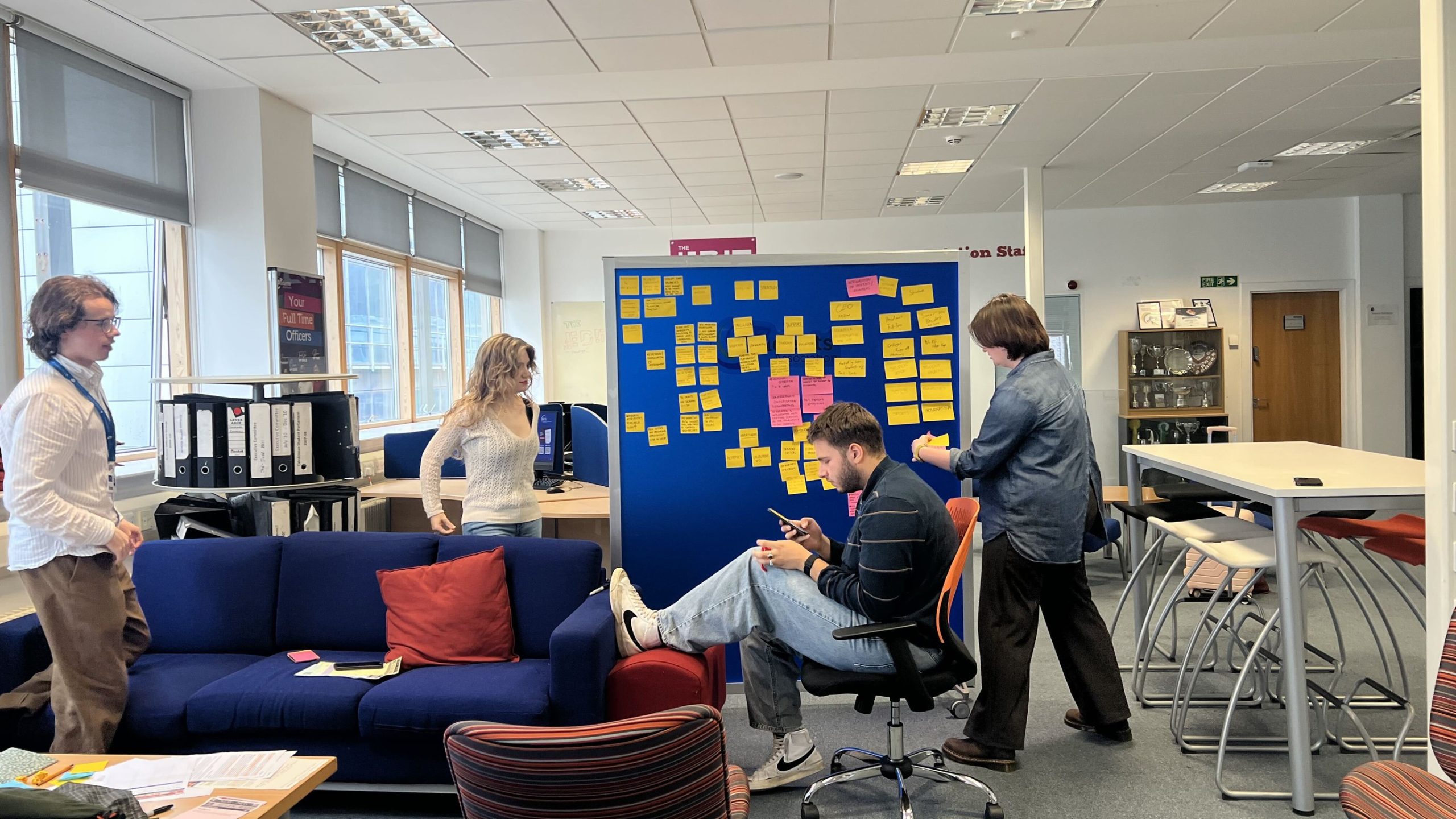
Thistle Metropolitan University
Thistle Met is one of Scotland’s largest and fastest-growing institutions, with 38,000 students, origins in an 1843 school of design and a polytechnic history behind its 1992 university status. If it wasn’t already clear, all of these case studies are fake for the purposes of the simulation.
It is also, on the team’s own framing, Scotland’s strongest widening access university, recruiting more students from the most deprived postcodes than anyone else. More than half commute. Many study part time or through blended routes.
There is no bar, no alcohol and no third space.
So the association named its three problems as time poverty, employment and social space, and then did something about the first one structurally. Out went a president. In came nine part-time sabbatical officers – one for each of the four faculties, plus comms and student relations, employability and external relations, wellness, societies and sport. If your members work while they study, the argument goes, your officers should be able to as well.
The rest followed the money. Each officer post hangs off a different institutional pot – the block grant covers three, an academic communities fund covers the four school officers, and the welcome process fund covers the two extracurricular roles. A gift from a wealthy alumnus, which had to be spent on a building in the city, became a student-led housing cooperative with room priority for widening access students and an association-run common room upstairs.
Their remaining £30,000 went on a cycle to campus scheme and a gender-based violence campaign whose name would not make it past Wonkhe house style, built around getting senior managers to record the slogan on video.
The line that should worry the rest of the sector is buried in their democracy strategy. It commits to expanding engagement beyond the election cycle, including work on “using the Tertiary Education Act to our advantage”. Two days in, and they had already found the lever most SUs have not noticed yet.
University of Blenheim
Blenheim is what happens when Durham, St Andrews and Oxbridge have a baby.
Collegiate, dispersed, and with an association whose motto is that it sits at the centre of your campus and the centre of your experience.
Its commercial services were in deficit, so the team scrapped them. The old commercial space became study space, because what students said they needed was academic support, and the ground floor became a student experience centre with a food bank in it. Volunteer officers got desks upstairs. Societies got the top floor. There is no association bar, because the colleges all have their own.
With the university having capped staff costs and left them with three members of staff, the structural moves got sharper. They tax the colleges and redistribute the proceeds. They send a little white van round a campus that arrives in dribs and drabs, on the basis that if students cannot get to the union the union can get to them. Half the seats on senate now go to their student council. Alumni loyalty attaches to colleges rather than the university, so alumni money goes into the housing cooperative.
Their best idea was imported. Borrowing from a Swedish university, they group students into cohorts of 13 before they arrive, with an older student attached to each group, so that nobody turns up friendless. Group social mentoring of exactly this kind is close to universal across Europe and close to absent here.
The same is true of the employability work. In a lot of European systems it is academic societies, not careers services, that lead on careers – graduate alumni hosting students on a Friday afternoon, faster and better attended than anything the professionals run.
Blenheim’s alumni mixers and peer-to-peer career support are a version of that, and their campaign list – community relations, employability, and a housing campaign called Mould Be Gone that teaches students to deal with damp themselves rather than wait for a landlord – reads like a union that has stopped waiting to be resourced.
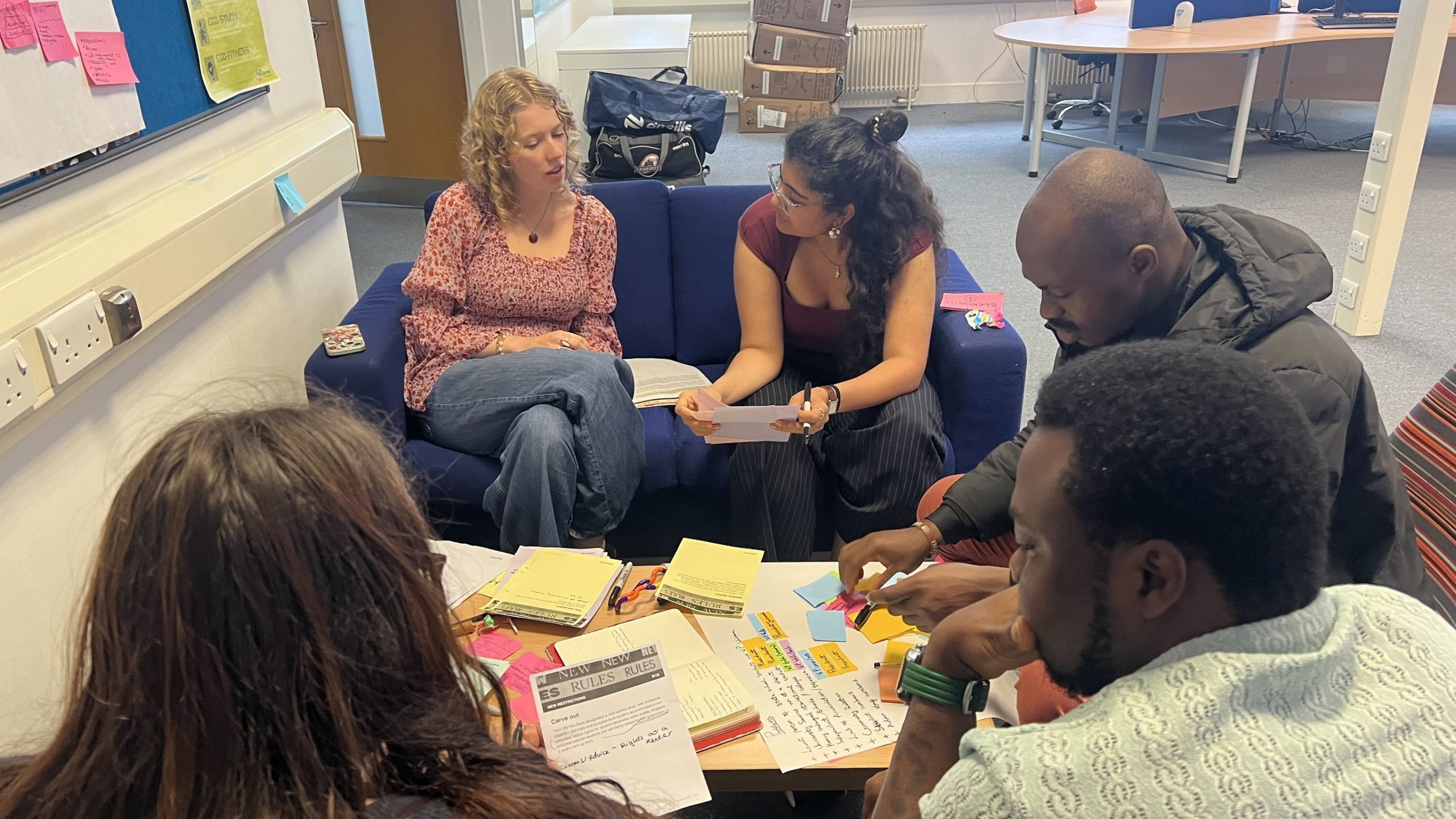
Midsticks University
Midsticks described itself as a metaphorically burning institution.
The numbers are brutal. The university has lost £71m, then £64m, is £34m down this year and forecasting £45m over five. Buildings are falling apart, the association’s building is being requisitioned for teaching space, and its own funding has been cut to £100,000.
All is not lost! It still has a café.
The response was to stop pretending the old model was affordable.
Two full-time officers – President and Senior Vice-President – with everything else done by unpaid part-time officers, college and postgraduate reps, and a volunteer coordinator.
The university has handed the association everything student-facing while keeping central services like finance and human resources.
Their alumni network is, in their words, “kind but not rich”, so they ask for time rather than money, and get mentoring, employability sessions and trainers out of it. Their law school runs the advice clinic. Their café doubles as a year-round survey point, on the grounds that election turnout is a terrible measure of democracy.
Latvian and Lithuanian unions run on almost exactly this basis, with no permanent staff at all and alumni in their late twenties and thirties keeping the services going. It is a model born of poverty that turns out to produce more student involvement, not less.
The sharpest thing they built was an automatic extension system. Their reasoning was that students reach for AI at the last minute because the parameters are unclear and the deadline is not moveable – so change the deadline, and you have a better AI policy than most institutions have managed to write.
Drech
Drech is the driest university in Scotland, with 20,000 students across two campuses including one in south east Asia, eight schools and an intake weighted heavily towards first-generation students.
Their mission was to represent, support and include – and, having decided that a world-leading students’ union should recruit like one, they appointed a series of improbably famous alumni to run it.
Underneath the joke was the most evidence-led case study of the two days. Only a fifth of their students said they were in good health. Only a third were registered with a GP. So they went to the NHS, twice, and threatened to campaign until student registration and provision were treated as a shared problem rather than the university’s to absorb.
Finland runs baseline health checks on students and guides them through the results. There is no reason we could not.
The support offer went the same way. A student response team of 150 volunteers, medically trained, trained in gender-based violence intervention, running mass casualty exercises with the fire and police services and making the social media content with them. Students respond to students first.
On housing, a donated building became a cooperative and advice centre. On employment, a campaign called Part-time Power, Full-time Progress, run with a trade union, on students’ rights at work. On placements, a scoping review of racism found that reports were going separately to the NHS and the university with no communication between the two, so they built a student-volunteer reporting route across both.
And because their finances were candidly awful, they proposed an opt-in £1,000 annual student services charge and a documentary explaining what the union is for.
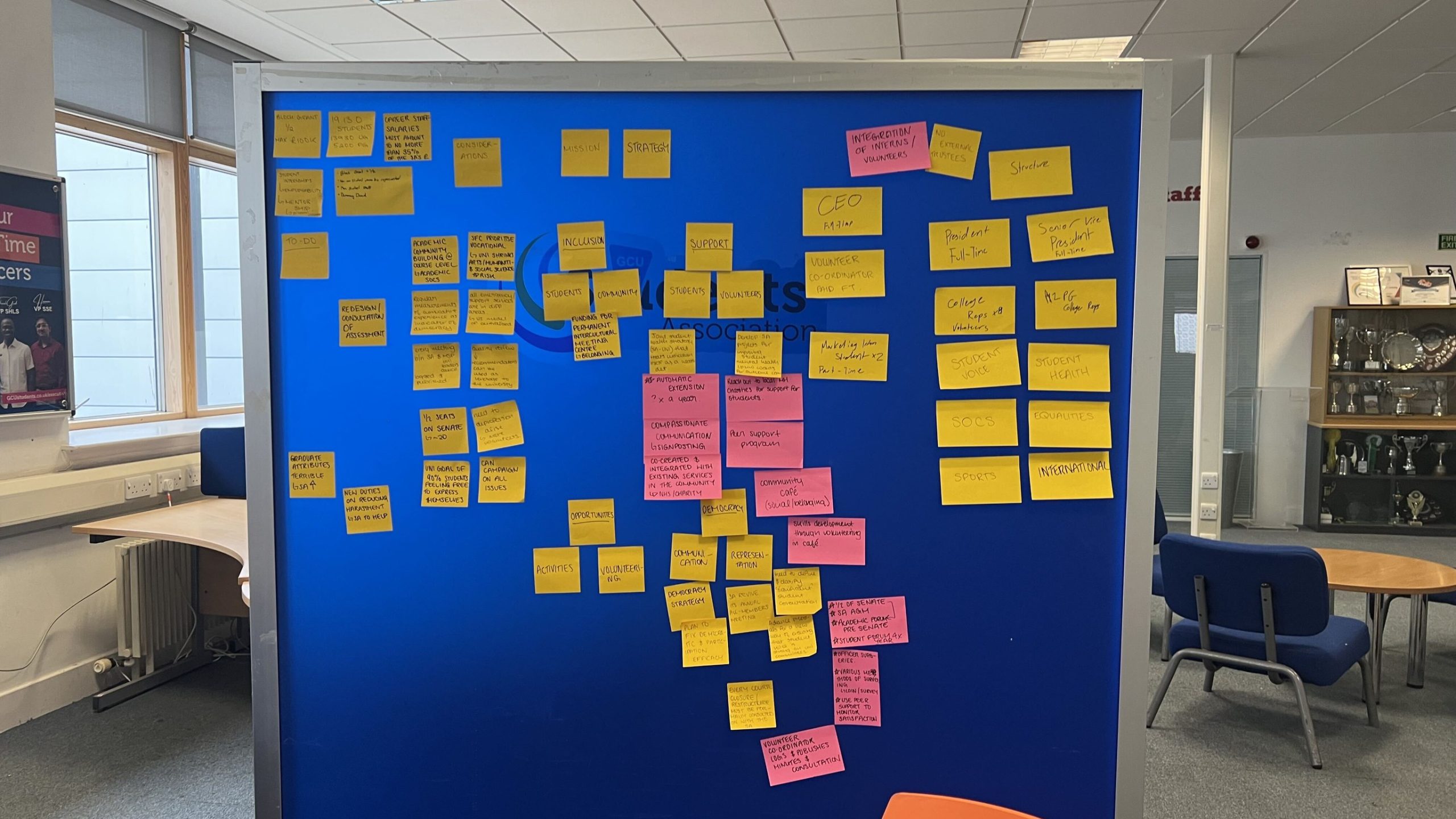
University of Firths
The Firths has its headquarters in a small port town and campuses scattered across islands, with 25,000 students of whom 18,000 are in further education, studying everything from agriculture to Gaelic.
Their structural problem was that 11 campuses had 11 democratic structures.
Their answer was one campus and one president per island, each with volunteer vice presidents for academic, culture, sport and support, an army of trained volunteers behind them, and students holding half the seats on senate and the health board.
Sabbatical officers can no longer be paid, so they are reimbursed for food and housing instead – paid volunteers in every sense except the word. Officers are elected on slates, which is the cheapest community-building device available to any union.
On services, they want the university to procure AI properly, train staff and students in using it with academic rigour, and redesign assessment around it rather than policing it.
On wellbeing, with staff costs capped, they proposed a digital framework and a knowledge base that answers what it can and signposts what it cannot.
On community, being dry meant partnering with pubs and cafés to create student space off campus, then asking those businesses to sponsor the sports clubs.
And then there is Boaty McBoatface – a floating students’ union, funded by a grant and an alumnus with a boat, captained by the chief executive, sailing between the islands. It is a joke that contains a serious idea, which is that if your students are dispersed you can move the union instead of the students.
In parts of Europe, Unions are handed empty high street buildings and told to make something of them, five years ahead of anything we have over here.
Elsewhere in Europe there is a module that groups students into teams for a project, pitched at two o’clock on a Friday, worth one credit on a pass or fail basis, where the winners get a ski trip and the students who do not take part do not enrol for the rest of the semester.
Dragons’ Den meets The Apprentice, for credit.
Someone with nothing to lose
Simulations like these always breathe some life back into a room, and this one was no exception. The ambition on display over two days was considerably more serious than the ambition on display in most of what has been legislated for this year.
The sector has just demonstrated, across three nations, that it is entirely willing to rip up a rule book when it wants to. It rewrote funding powers, registration conditions and welfare duties inside twelve months. What it mostly declined to write down was anything a student could hold anyone to.
The officers in that room had no institution to shield and no regulator to reassure. Between them they redesigned officer structures around students who work, funded housing out of alumni sentiment, fixed an AI problem by moving a deadline, took student health to the NHS, and put a students’ union on a boat.
The consultations are open, the consultation duties are new, and the officers who treat those as their rule book have more leverage this year than they had last.


