Wonk Corner|22/02/26 · 11:15
Student loan reform is coming. But not without a proper review
A couple of sticking plasters have popped up this morning from opposition parties to address the ongoing debate over Plan 2 student loans.
Jim is an Associate Editor (SUs) at Wonkhe
As we pretty much predicted last week, the Conservatives’ big idea is to cap interest at RPI only, removing the current RPI+3% element that applies to higher earners.
The Tories argue this would bring Plan 2 in line with Plan 5, and estimate a graduate with £40,000 of debt earning £50,000 would save £26,000 in lifetime repayments – and that a doctor with £80,000 of debt would save £58,000 and clear their loan six years faster.
The cost – which they estimate to be £2 billion a year initially, falling to £1.3 billion – would be funded by cutting university entrants by 100,000, targeting courses where high proportions of graduates never repay.
They say that would save £3.6 billion, with the remaining £1.6 billion going into 100,000 extra apprenticeships for 18-21 year olds via £5,000 per-apprentice employer grants, plus a “first job bonus” – putting the first £5,000 of NI paid by British citizens starting full-time work into a personal savings account usable for a house deposit, in what they’re calling a “new deal for young people”.
Meanwhile the Lib Dems are pitching to scrap the repayment threshold freeze announced in last November’s budget – pledging to link the repayment threshold to average earnings growth rather than RPI, so it would rise faster. They claim a typical graduate earning £35,000 would see repayments halved within three years, saving around £280 a year – with the lowest earners saving up to £5,000 over the loan lifetime.
They’d also write off 20 per cent of student debt after 10 years of public sector service for nurses, doctors and teachers – modelled on an Australian scheme – at an estimated cost of £300 million a year, with potential extension to police and armed forces.
Then an independent oversight body would protect graduates from retrospective changes to loan terms, and a royal commission would develop a cross-party consensus on longer-term reform. They also want to restore maintenance grants of £3,500 a year for disadvantaged students – but it’s not clear how that would be funded, what disadvantaged means, or whether that’s an aspiration for this royal commission or something that would appear immediately.
Show your working
Let’s play with the IFS student loans calculator to look at shadow education secretary Laura Trott’s maths first. There’s no mention of any reversal of Rachel Reeves’ threshold freezes, so let’s look at keeping that, plus the switch to RPI.
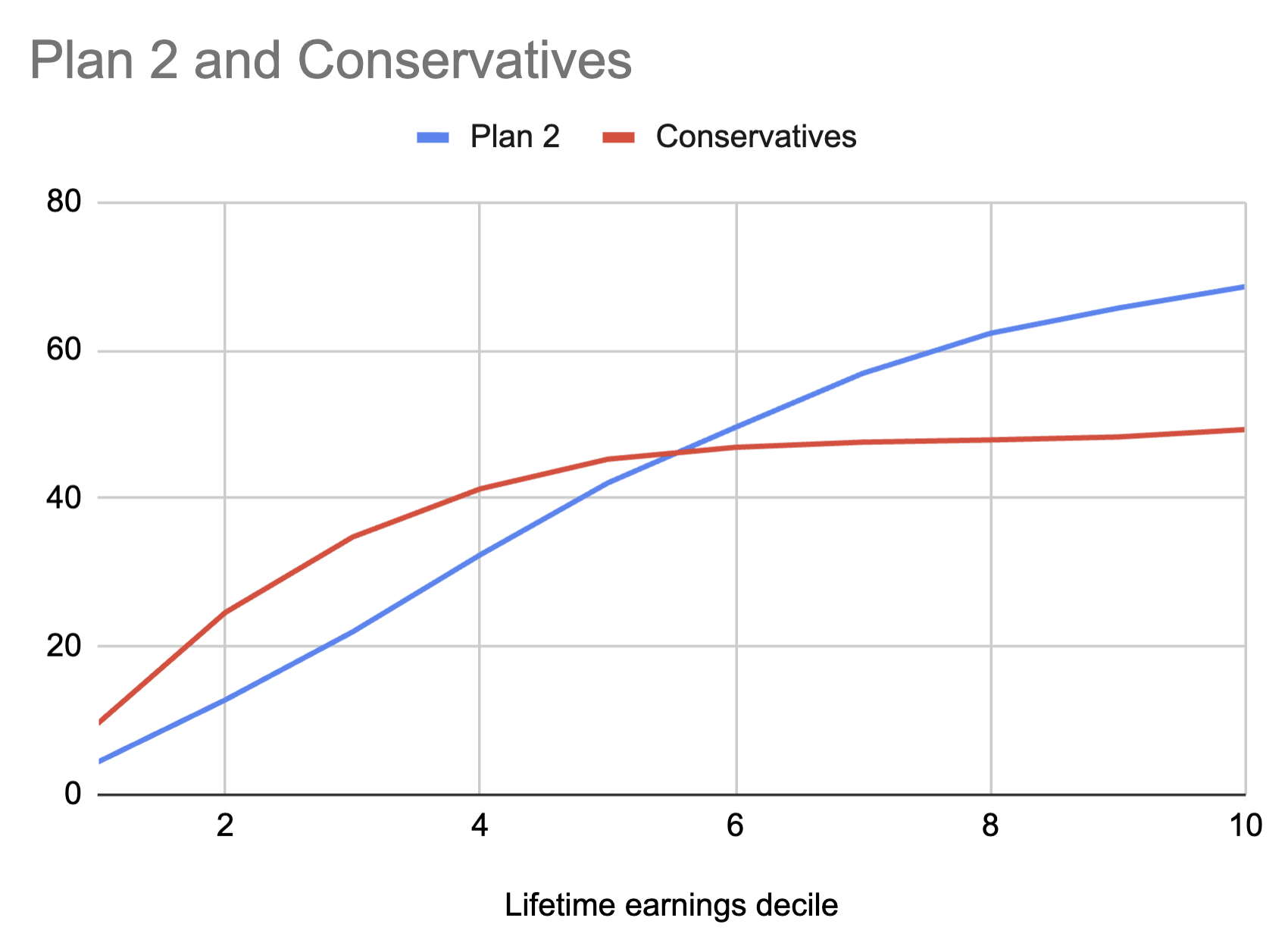
What a surprise. Lower earning graduates pay more over their lifetime, while better off grads pay less.
Meanwhile, I’ve no idea how they get to a cost of “£2 billion a year initially, falling to £1.3 billion”. If we just look at the forgone payments from richer grads (pretty much the right hand side of that chart), it’s a cost of roughly £1.6bn a cohort.
It won’t therefore be quite that much for earlier Plan 2 cohorts – they’ve paid more off than say 2022 entrants – but still. I guess the back of fag packets are crowded with health warnings these days.
Now let’s look at those savings. If the Conservatives could somehow find a way to ensure that each and every student in that 100,000 cut ended up in lifetime earnings decile 1, that would save about £3.1 (not £3.6) billion.
But they obviously can’t, so it’s not really worth typing any more, is it?
Half measures
The Lib Dem approach doesn’t seem to worry much about needing to find savings, so all we’re having to do here is look at the difference between Reeves’ frozen threshold for repayments and projections for earnings and inflation.
Using the OBR’s November 2025 central forecasts for earnings and RPI, linking the Plan 2 repayment threshold to average earnings growth rather than freezing it does reduce repayments, but not by anything close to half for a graduate on £35,000 within three years.
Starting from the £29,385 threshold, earnings-indexing would lift the threshold to just over £31,300 by year three, cutting annual repayments by roughly £175–£180 compared with the freeze. That’s a reduction of around 30–35 per cent relative to the frozen-threshold position, not 50 per cent, and closer to £180 a year than £280.
Larger savings would require faster threshold growth than earnings, or materially different macroeconomic assumptions.
Their wiping public sector work debt thing is fascinating for around eight seconds, partly because it’s not at all clear what would happen if someone left the public sector, or switched in and out.
The Australian debt relief measure that has been politically salient in recent federal elections was the Albanese government’s pledge to cut 20 per cent off all student loan debt, not a targeted scheme for public sector service. The policy was widely believed to be a factor in the Labor Party’s electoral performance in 2025 – it’s not clear that attempting to target it at nurses, doctors and teachers would have the same effect.
It also would be relatively regressive – under Plan 2, most don’t pay off in full by design, so it’s only the most successful Plan 2 grads (doctors, basically) that would see the benefit. Ironically, most of them will likely have disappeared off to… Australia anyway, to earn more in general.
Lines to take
Which just leaves Labour’s position. We learned this week that the Treasury is insisting that it will not U-turn on the terms of Plan 2 loans, but that “senior government sources” have been engaged in “preliminary discussions” to make the loans fairer.
The source added that it was “too early” to say what specific measures might be taken because these were being “scoped” by officials.
Looking across her appearances on the Sunday media round (a pre-launch for her SEND reforms), education secretary Bridget Phillipson clearly had four lines to take:
- It’s the Tories’ fault: The Plan 2 system was designed, implemented and delivered by the previous government. They had it for more than a decade and did nothing. It is therefore “galling” that they are now complaining about problems they created.
- We acknowledge the problem but our hands are tied: She admitted the system “does have problems” and that she’d “be the first to admit” its flaws. But she repeatedly gestured at the state of the public finances as the reason why wholesale change isn’t immediately possible – “as a government you have to look at a question of priorities.”
- We’re doing other things to help graduates: When pressed on whether she’d actually change the loan terms, she pivoted to the broader package – maintenance grants for less well-off students, childcare expansion, frozen rail fares, housing support. The argument being that graduates in their 20s and 30s benefit from the government’s wider cost-of-living offer, not just from student finance reform specifically.
- The attack on Tory hypocrisy over university numbers: She repeatedly hit the Conservatives for proposing to cut 100,000 university places in the same breath as claiming to care about graduates – and specifically framed that as “pulling up the drawbridge” by people who themselves went to university and want to deny working-class kids the same chance.
Maybe she’s been in meetings with HMT and concluded that almost of the options are too expensive. Maybe some options are being looked at but it’s too early to float them. Either way, the idea that the position will hold up to and including a 2029 election period would clearly be a major gamble.
But if anything is done to fix Plan 2’s perceived injustices, it would be expensive – and do nothing to assist current students or current universities’ woes.
Back to the drawing board
You can’t really fix student loans without also changing something structural about higher education – and any structural change to HE requires a comprehensive funding review.
Kuenssberg had a run at pushing Trott on the university closures that might follow a 100k student numbers cut and hit a wall – because the mechanisms to manage which institutions close, where, just don’t exist.
As John Blake points out today, if you were to do it, either students drive the change through grade thresholds, but outcomes are market-determined and tell you nothing about quality or economic value.
Or you create a body with powers to direct what universities teach via funding levers – which requires legislation, and still leaves government holding the political costs of research capacity loss and the collapse of civic anchor institutions.
A solution is required to address the wider funding settlement for HE as a whole, accounting for everything universities do beyond producing graduates with repayable debt. That still needs a proper review.