Surprisingly similar – a sweep across the election manifestos
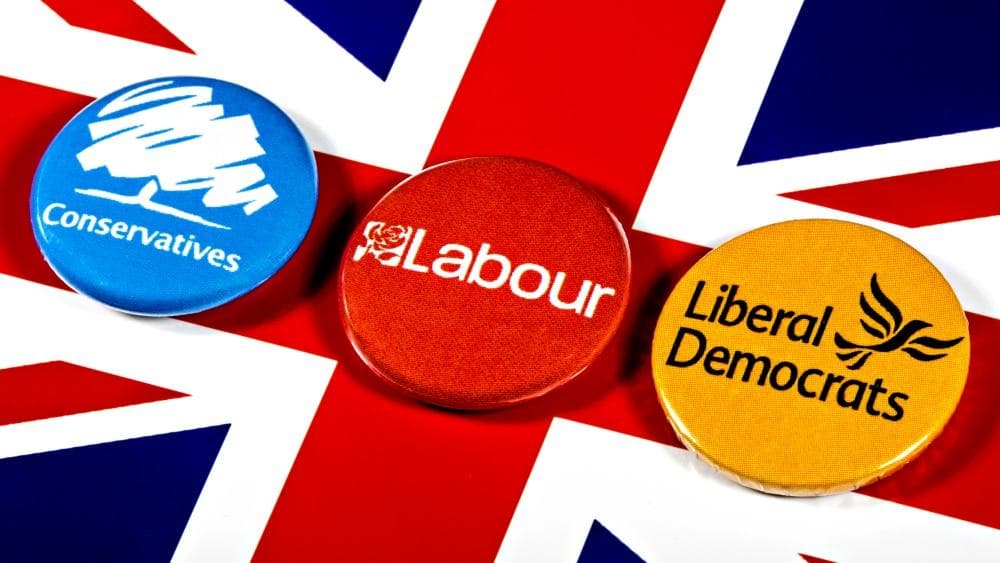
Beside their divergent views on the merits of tuition fees, there is a surprising amount that is similar across the political parties’ plans for education, with a particular focus on the FE and technical sectors, argues Ant Bagshaw.
This article is more than 9 years old
Analysis|
Ant Bagshaw
Ant Bagshaw is a Senior Advisor in L.E.K. Consulting’s Global Education Practice and co-editor, with Debbie McVitty, of Influencing Higher Education Policy
The heat of the debate about higher education in this election campaign - or what there has been of it - has focused on the prospect of scrapping undergraduate tuition fees in England.
This is not just a Labour policy, but a vision shared by the Green Party. Even UKIP wants to move to free tuition, albeit for a much smaller number of students, while the SNP’s manifesto celebrates the party’s commitment to free education in Scotland.
Looking behind the headlines of scrapping tuition fees, it’s clear that there’s broader political unhappiness with the current higher education funding system. The Liberal Democrats promise a review of funding, while the Conservatives state the following:
“To ensure that further, technical and higher education institutions are treated fairly, we will also launch a major review of funding across tertiary education as a whole, looking at how we can ensure that students get access to financial support that offers value for money, is available across different routes and encourages the development of the skills we need as a country.”
Now it seems unlikely that funding reviews promised by the Tories and Lib Dems would result in the adoption of a similar position to Labour and the other - not least given the costs involved - but the very existence of these commitments shows that there is no longer much confidence in the current system.
Going further
Fees and funding are an area of common political concern with a divergence of possible solutions. There is much more convergence between the parties in the area of skills, vocational and technical education, and the emergence of a ‘tertiary’ system which may bring together the higher and further education sectors.
For Labour, there’s a promise to “Set up a Commission on Lifelong Learning tasked with integrating further and higher education.” Plaid Cymru wants a new network of colleges while Labour wants more lecturers in existing colleges. UKIP, alongside its grammar school plan, wants a network of schools which link on-the-job training with formal education. The Lib Dems are a little vaguer, but there’s still a commitment to “Improve the quality of vocational education, including skills for entrepreneurship and self-employment, and improve careers advice in schools and colleges.” The Greens have a general promise for more funding for FE as well as HE. And the Conservative manifesto waxes lyrical about the party’s aspirations for new Institutes of Technology and the implementation of the Sainsbury Review.
It’s caveat time, though: presenting the policies alongside each other might suggest that the statements are of equal value. Obviously, they’re not. The polls are still suggesting a Conservative majority, and in any case, we’re unlikely to the ascendence of Green, UKIP or Plaid members at Westminster anytime soon. But, it is interesting to consider the prospect that these areas - on which there is a weight of political consensus - are the ones likely to progress largely untrammelled in the next parliament.
I’m sure there are voices out there saying “we’ve heard it all before”. The words are cheap, and there’s some justified scepticism about whether the next government - of whatever ilk - will make a real and sustained investment in further education and skills.
But if it does, higher education needs to watch out. As we’ve seen with the May government’s willingness to look across the breadth of the education system for policy initiatives - see university-school sponsorship, another unpopular policy made into a manifesto commitment - there is a perception that there’s money in higher education which could be spent elsewhere. The conservative commentators are already circling.
Reading the Brexit runes
Manifestos are an interesting opportunity to get an insight into the political parties’ views of various sectors. It’s interesting that Labour’s and UKIP’s positions on student migrants are barely indistinguishable: let ‘em in, but only the ‘genuine’ ones. Labour and the Lib Dems miss the point about whether students should be counted as migrants, with Plaid getting the brownie points for correctly focusing on the irrationality of students within a migration target.
It’s clear that universities’ efforts to make plain the perils of leaving the EU have been heard. There’s a widespread commitment to doing what can be done to enable student mobility through Erasmus+ and access to research funds including Horizon 2020. While the UK’s participation in those schemes might be decided by external factors - whatever gets decided on free movement in the Brexit negotiations, most likely - it’s pleasing to see a widespread understanding of the damage Brexit may do to UK higher education.
And as an aside, Sinn Fein makes a case for minimising the impact on Northern Irish students seeking to study in the Republic post-Brexit with an ‘all-Ireland’ approach to education.
Seen to be done
In the section of the Conservative manifesto called ‘A country founded on merit’, we can read a blueprint for major and sustained reform of education. Grammar schools, more free schools, university-sponsored schools; more money and emphasis for further and technical education; employers leading in shaping the curriculum. It’s hard to disagree with a statement like this:
“We want British technical education to be as prestigious as our world-leading higher education system, and for technical education in this country to rival the best technical systems in the world.”
If, as is still expected, the Conservatives are returned to government, a redoubled emphasis on technical education could mean a very disruptive few years for universities.
Related articles

Whose universities are they anyway?
Jim Dickinson | Analysis | 4/09/26
We say we value diverse research, but can we assess it?
Ola Thomson | Analysis | 27/08/26

Accommodation matters, for foundation year students too
Wendy Ashall | Analysis | 26/08/26

Going deeper: Student loans, public expenditure and the devolution funding gap
Jim Dickinson | Analysis | 25/08/26