Subscribe

Briefings

Daily BriefingEvery weekday · by 8amHigher education's essential morning read.Monday BriefingWeekly · MondaysThe full week ahead in HE policy.Friday ReviewWeekly · Friday lunchtimesWhat you need to know about the week just gone.

Newsletters & more

HE InfluencePolitics and policy and the way the sector is seen.HE CounselNewGovernance, law and regulation for anyone following legal developments.Policy RadarThe monthly live policy briefing – watch live or catch the replay on the portal.

Services

Wonkhe PassFull access for your whole institution.Wonkhe SUs PassFor students' unions – briefings, recordings and training.Free briefingThe Monday Briefing, Lite edition – free.
About Us+
About WonkhePeopleOur partnersWrite for WonkheContact us
Events
Latest+
Explore the whole archiveDataWonkhe researchLong readsAnalysisCommentWonk Corner
Podcast
SUs
Friday 25 September 2026Home of the higher education debate

Copyright © 2026 Thesis House Ltd.

Wonkhe is published by Thesis House Ltd, registered in England and Wales (no. 08784934), 31–35 Kirby Street, London EC1N 8TE.

  • Moderation policy
  • Terms and Conditions
  • Privacy Policy

Government must recognise the human cost to the crisis facing universities

As universities begin to take action to manage the financial impact of Covid-19, Jo Grady calls on government to stand behind the higher education sector.

This article is more than 6 years old

Comment|1/06/20
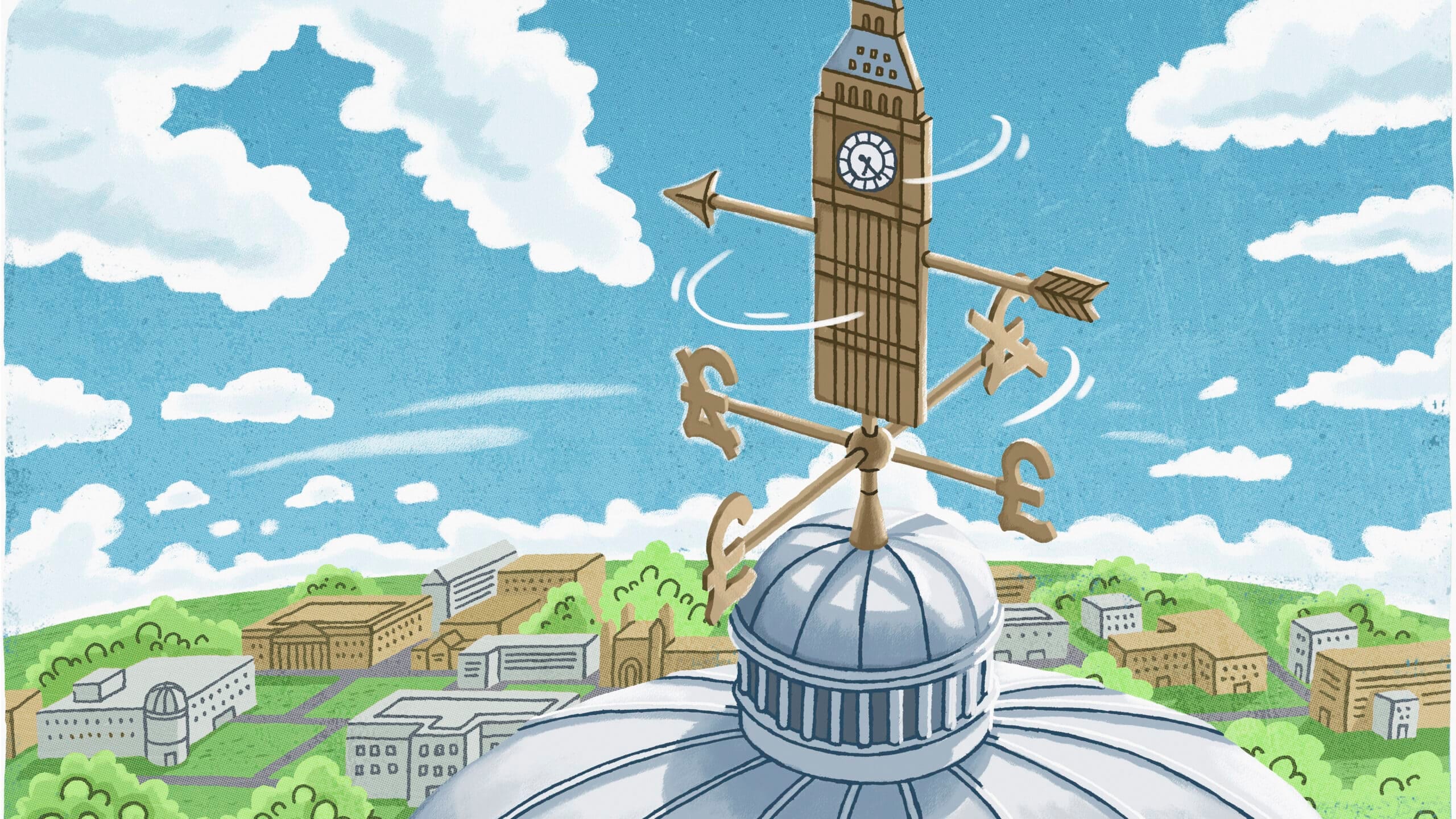
Image: Ikon
Jo Grady

Jo Grady

Jo Grady is general secretary of the University and College Union.
Tags
  • Covid-19
  • finances
  • Industrial Relations
  • UK Government
Jo Grady
Jo Grady is general secretary of the University and College Union.

The University and College Union has argued from the outset of this crisis that government support is needed to protect our universities.

We have not done this simply out of self-interest; we must protect a sector that is of such economic importance, will be vital to our recovery and will be extremely difficult to put back together if allowed to collapse.

The scale of the problem

A conservative estimate on the impact of Covid-19 on our universities by London Economics identified a £2.5bn funding black hole, which would result in a £6bn shock for the economy and a loss of around 60,000 jobs – half directly in universities and the rest in the communities they serve.

This is a not a problem of short-term liquidity in which short-term borrowing can bridge the gap. Without clear, early action to fund that gap, provision will shrink, jobs will go and the role of higher education in our recovery will diminish.

As well as not acting out in mere self-interest, our case is not borne out of a desire to defend or preserve the status quo. Marketisation has seen a different university system emerge in which staff are casualised wherever possible and students seen as cash-paying bums on seats. The current crisis has exposed the many faults in a system that glorifies competition and ignores student and staff concerns, leaving universities unable, and unwilling, to present a united front to protect the sector.

A cap that doesn’t fit

The student number cap universities signed up to is a misnomer. It will enable the wealthiest universities to substantially grow their domestic student base at the expense of other more locally-focused institutions. We cannot afford to let this dog-eat-dog approach to dominate what the sector is doing for the rest of the academic year.

Fears over cuts coupled with confusion over what a university education will look like next year have dominated the higher education press for weeks and that is filtering through to potential students. Universities are making different-looking pitches (of what is likely to be a similar offer of blended learning) depending on their position in the market. Meanwhile, the Office for Students is demanding that universities make clear what their offer is for students starting in September, while conceding that nobody knows what will be happening in the autumn.

That confusion is having genuine cut-through with the public. Polling earlier this month revealed that around 17 per cent more students than normal were already considering deferring their university place this year, and there was a 25 per cent chance that students would consider changing which institution they study at. Yet in response, some universities are telling students that they won’t be able to defer, which is doing little to quell what many will now see as a reasonable call for a fee reduction.

What kind of bailout does the sector need?

The fact the government managed to add strings to a package of no new money at the start of May suggests ministers have not yet grasped the full scale of the wider damage university contraction will cause.

To me, four things are needed.

  • First, government needs to stand behind the sector so that students can have confidence that their institution will still be standing and their education assured.
  • Second, we need to protect our country's academic capacity so that the thousands of casualised researchers and teachers currently facing being laid off can keep working and contributing to the recovery.
  • Third, we need to provide institutional stability by encouraging cooperation not competition.
  • Fourth, we need to position universities at the centre of our social and economic recovery from the crisis.

Universities who have some security of income will make better decisions about when it is safe to bring students back - they may listen more to students in fact who want to defer or postpone their studies. Institutions who are not terrified of a sudden loss of income will have no pretext for laying off talented and hardworking staff.

But if funding is protected, market position becomes less important - if only temporarily - and cooperation in the wider interest will begin to take hold. If those things start happening then higher education will be well placed to help drive our recovery both at community and national level.

Then it is time for the long overdue debate about how we fund universities in the future, so they are more secure and better positioned to work together and deal with anything like this in the future.


Related articles

Students are working more than ever. Or are they?

Jim Dickinson | Comment | 25/09/26

Image of the Singapore skyline

Lessons in collaboration from Singapore

James Coe | Comment | 25/09/26

Image of a postcard of the University of Birmingham bell tower on a cork board

Higher education postcard: Old Joe

Hugh Jones | Comment | 25/09/26

A field guide to mergers in higher education

Richard Mills | Comment | 24/09/26

If Scotland’s university funding problem is systemic, the response must be too

Vicki Stott | Comment | 24/09/26

There’s nine more pieces for the Quality Code

Nic Beech | Comment | 23/09/26

Comments · 4

New comments will come back with sign-in later this year.

Roger Weston · 1 Jun 2020

“As well as not acting out in mere self-interest, our case is not borne out of a desire to defend or preserve the status quo.”

Then someone has to fail – otherwise you are arguing to preserve the status quo – part of the reason UK HE is so charmingly backwards in so many ways is because nobody feels like anything is seriously ever going to change.

Michael Picken · 1 Jun 2020

Well stated article.

“government” – singular and obviously referring to the UK government of Boris Johnson, though of course HE is a devolved matter with the involvement of four governments.

One also has to assume that in declaring a unilateral “cap” on English domiciled students wanting to study in the other three nations, announcing it publicly without even notifying the devolved administrations let alone consult them, that this Johnson government is also declaring war on the devolution of HE, by protecting English HE at the expense of the other nations’ system. Goodness knows how they intend to police this (ie penalise institutions or students?). The fact that there was no new money in the recent “package” for England also means, seemingly quite deliberately, that there are no “Barnett consequentials” to hand on from the UK Treasury to the other three administrations – punishment for stepping out of line? The statements about the current UCAS cycle and particularly so-called “unconditional” offers by the Office for Students (England), also indicates that really the Johnson government wants to “nationalise” UCAS and use it as an instrument of UK (English) Government HE policy, rather than for the benefit of all the UK institutions and all the UK and international applicants it was set up to service.

This is a sad period for HE and it needs calling out by those sitting in UUK and heading institutions.

simon kaufman · 3 Jun 2020

Intrigued by your comments about the position of UCAS; not at all clear as to where the balance now lies between having put itself in this position as a matter of conscious strategic policy or conversely has found itself in a position where it has become or is in the process step-by-step of becoming a servant or ‘instrument’ of government policy.

On the one hand there are clear benefits to UCAS from the incorporation of compliance with UCAS business rules (aka UCAS Applications Recruitment Policy) into the ‘fair admissions’ principles underpinning the new condition of registration since this has the capacity both to address ‘by-passing’ of the scheme and which in the longer term will enhance the authoritativeness of UCAS data in overviews of sector access and participation both domestically and internationally.

The ‘downside’ as Michael has highlighted above lies in becoming an ‘instrument’ of government policy where HE is a devolved matter and where the four nations of the UK have differing policy priorities. Placing itself as a servant of DfE/OfS policy – as for example over the ministerial embargo on specific forms of offer-making between 23 March and early May – where this ‘writ’ only applies to England has – at least – the potential to compromise the standing of the organisation as an independent player in the agency mix supporting the UK sector.

Ever since HE became a devolved matter there has always been something of a tension between the position of UCAS as a UK wide application service requiring cognisance equally to be taken of evolving HE policy as it applies to applicants and institutions in Wales, Scotland & Northern Ireland and perceptions of primacy being accorded to the interests of applicants and institutions in England which make up the predominant mass of its customer base.

Perhaps this tension is simply manifesting itself more overtly than previously under the particular circumstances for the sector the covid-19 crisis has given rise to. Certainly there are real issues for the governance structure of UCAS here which require further scrutiny for its participating institutions given the organisation’s historic origins as a creation of its member institutions in the sector to perform a clearly circumscribed and articulated set of business purposes in the interests of the UK sector (rather than in furtherance of the policy interest of the government of the day at any point in time)

Matthew Del Nevo · 4 Jun 2020

The universities have been robbing overseas students blind. This is there come-uppance. Let them sink. The good ones will survive.