


Before you apply for a “co-op” work placement at the University of Waterloo, you can see what students who worked there thought of it.
The employer ratings are right there in WaterlooWorks, the university’s jobs platform – aggregated scores across seven questions plus an overall satisfaction rating, visible to every student browsing positions.
Data only appears once there’s enough responses to protect anonymity, but once it does, you know what you’re getting into before you click apply.

Rate my work term was developed in close partnership between the Waterloo Undergraduate Student Association (one of two SUs) and it’s faculty societies.
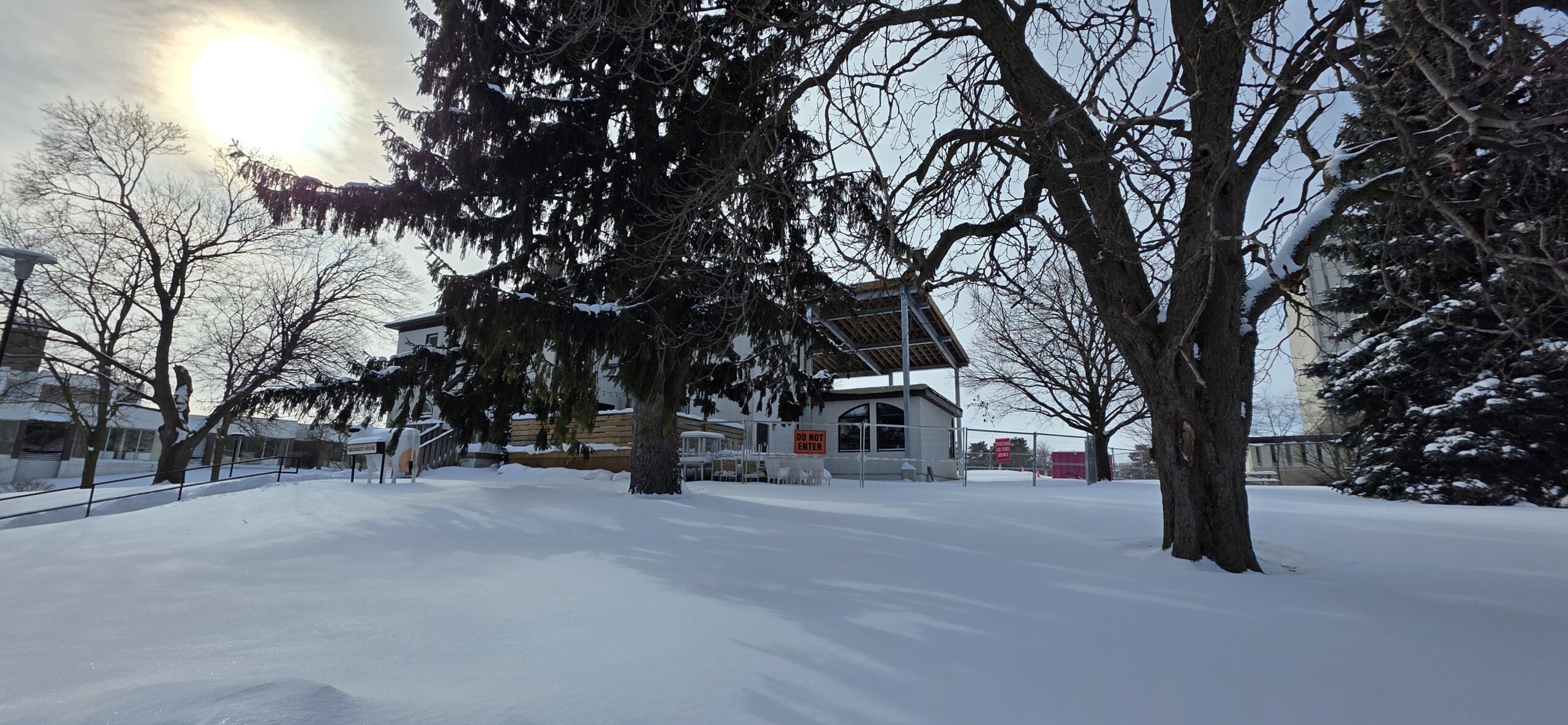
It’s one of the things I’ve come across on a snowy Monday morning in Waterloo, Ontario, mooching around students’ unions while the snow piles up outside and the campus slow ploughs do their patient, methodical work.
How co-op actually works
Co-operative education at Waterloo is how degrees are structured. Students alternate four-month study terms with four-month paid work terms on a fixed cycle, with programme-specific “study/work sequences” determining when the first placement happens and how the rotation unfolds.
Cohorts are split, academic calendars are reorganised, and employer relationships become an institutional function rather than an optional careers service.
Placements aren’t guaranteed, though. Students apply for jobs through WaterlooWorks, interview, and then both parties rank each other from one to ten. An algorithm generates matches based on the lowest combined score.
If you don’t get matched, you keep searching. If you can’t find anything through the system, you can arrange your own job externally – but you still need approval for it to count towards your degree. The university reports high employment rates, but as one student blog puts it:
…just because you are in a co-op program does not guarantee you a job.
Although clearly, it helps.
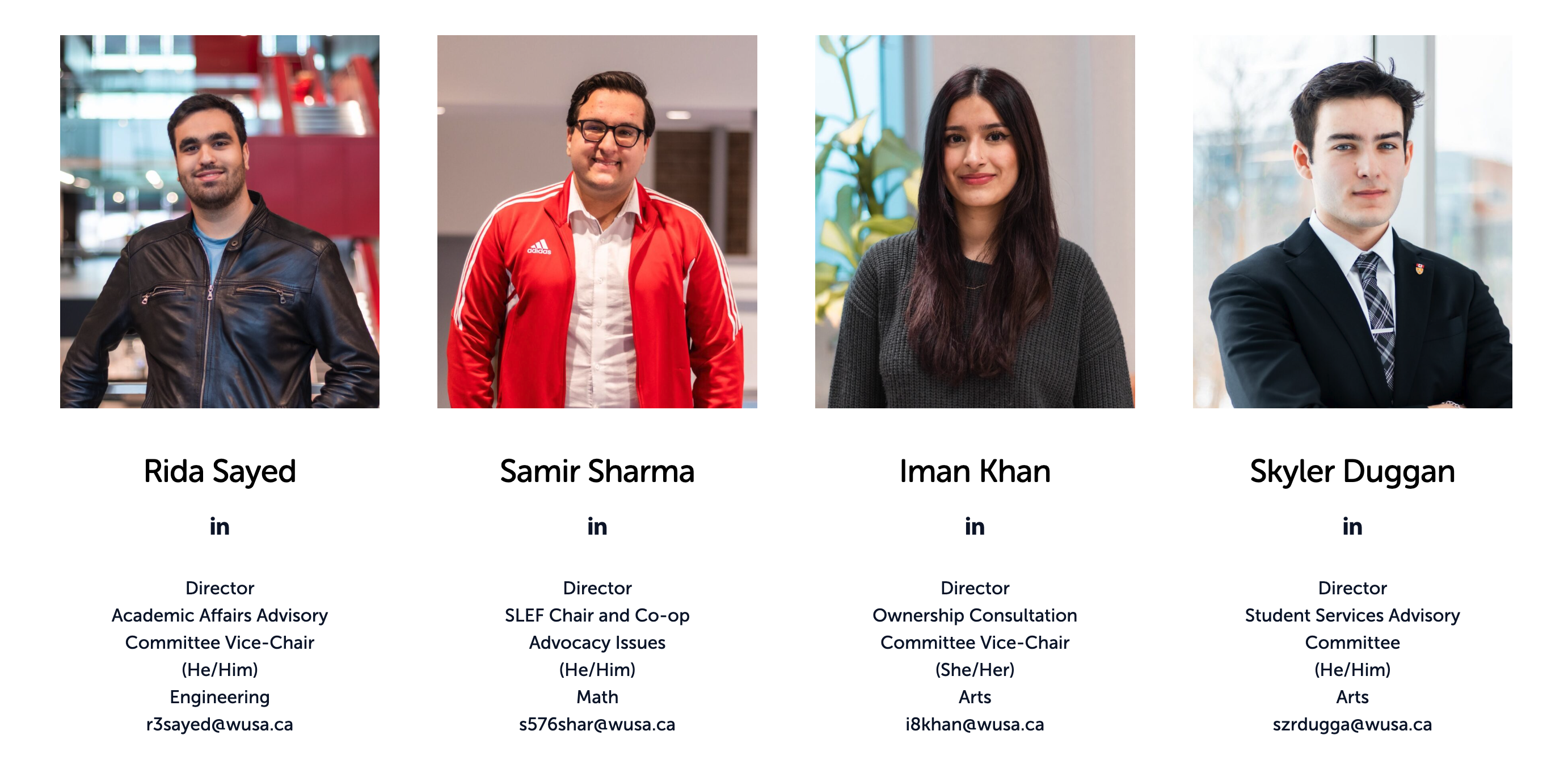
Rida Sayed, a nanotechnology engineering student serving his second term on the University Senate and sitting on WUSA’s board as Director and Academic Affairs Advisory Committee Vice-Chair, has been pushing on the quality side of it all.
WUSA’s research found that “finding a job” is the most challenging aspect of co-op – specifically, securing roles that are relevant and high quality – and that Cycle 2 interview periods often overlap with mid-semester exams, creating compounding stress at exactly the wrong moment.
When the university’s Co-operative and Experiential Education office proposed a 10 per cent increase to the co-op fee – a programme participation charge paid to the university across several academic terms, currently $817 per instalment – WUSA and the faculty societies pushed back. The increase was rolled down to 4 per cent.
Co-operative by design
It would be tempting to think of what’s called here “co-operative education” as an employability enhancement – but in reality it was the founding logic of the institution.
The story starts with money. In mid-century Ontario, the provincial government wouldn’t fund denominational colleges – and Waterloo College, the academic outgrowth of the Evangelical Lutheran Seminary, was very much denominational.
So in 1956, the college’s president Gerald Hagey created a non-denominational arm called the Waterloo College Associate Faculties to teach applied science and engineering and access public funding.
That bit admitted its first students in 1957, formally split off in 1959 when the Legislative Assembly of Ontario passed the University of Waterloo Act, and took the co-op model with it as the reason for its existence.

The original college stayed put and became Waterloo Lutheran University in 1960 – it secularised in 1973, and renamed itself Wilfrid Laurier University – partly to maintain the WLU acronym.
Today it’s next door (at least it looked close on the map), with strengths in business, music, social work, and the arts, while Waterloo dominates in STEM, engineering, and computer science. Students can (and often do) take modules at both institutions, and several double-degree programmes run across the two campuses.
But crucially, the “higher technical” nature of Waterloo isn’t hidden away as it often is in the UK.
Turnkey all night
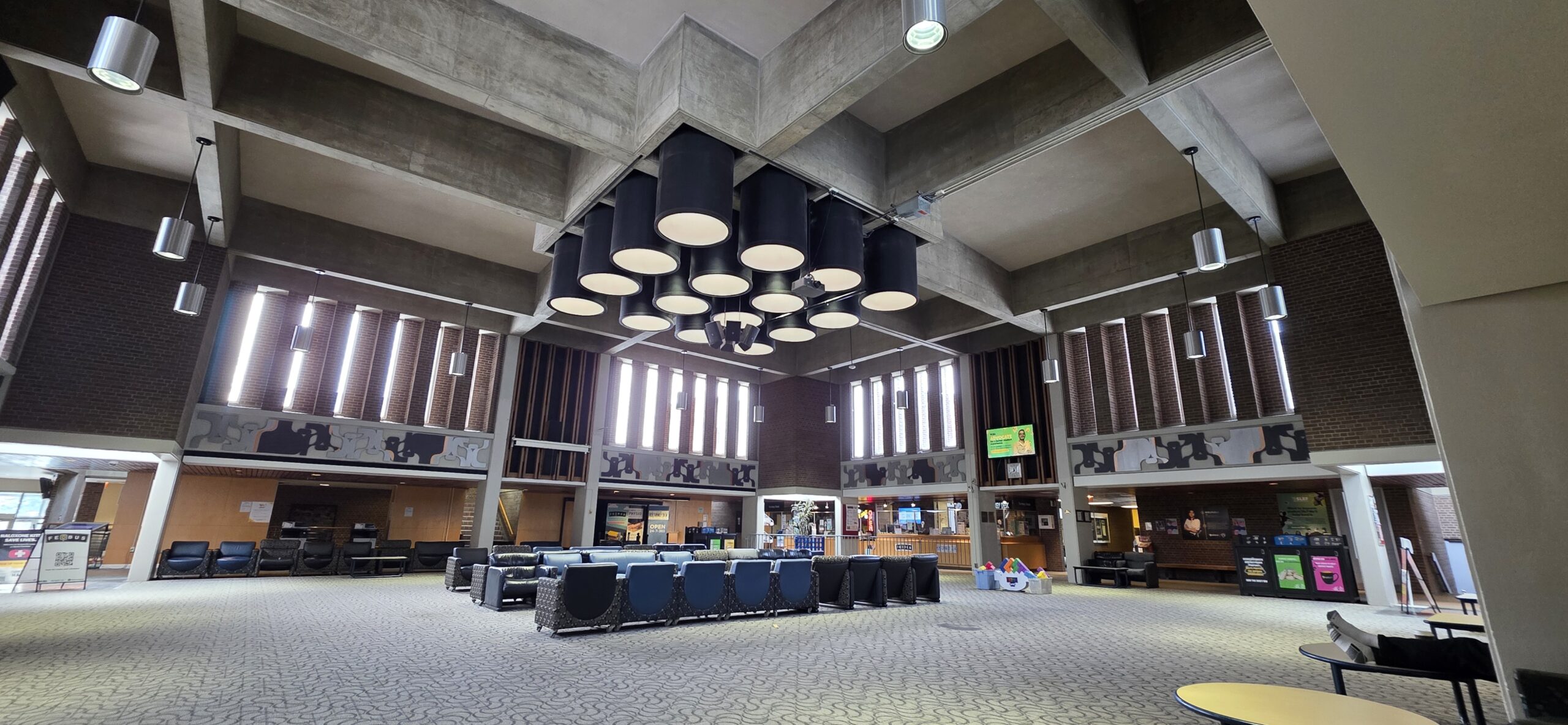
Back at Waterloo, the Student Life Centre is quiet on a Tuesday morning – but the Turnkey Desk is staffed. Open 24 hours a day, 7 days a week, 365 days a year, and operating almost continuously since 1968. That’s not a typo. The desk handles everything from lost property to study room bookings to transit fare cards, and it’s become the front door to the entire WUSA service operation.
It’s also the access point for the Food Support Service – confidential food and hygiene hampers available at any hour, with halal, kosher, and vegetarian options plus menstrual hygiene products. Someone can pick up a hamper at 3am without an appointment, without a means-test conversation, without anyone knowing. A design choice that only works because the desk never closes.
There’s a good story in the university’s archives about Brad Regehr, a history and religious studies student who was working a shift at the Turnkey Desk in the early 1990s when a colleague stopped by with a study guide. He’d wanted to be a teacher but was rejected from teacher’s college. So he sat the relevant entry qual, did his law degree, and eventually became the first Indigenous president of the Canadian Bar Association in 2020.
Something about that image – a student at an information desk, leafing through a study guide, deciding to change course – says more about what these spaces can do than any impact report.
On the walls
Walking through the Student Life Centre, you notice the posters. It’s obviously SU election season – last year Team Horizon sweep the board and Rida was among the directors elected. What’s noticable about their platform isn’t what they promised to change at the university – it’s what they promised to change about WUSA itself.
Last year Horizon’s pitch was governance reform, transparency, and accountability. Horizon’s argument is that directors are well-meaning but “held back by a system which restrains them,” and that students don’t know what decisions WUSA’s board makes on their behalf. The fix? Monthly newsletters, social media updates before important votes, stricter responsibilities for directors on clubs and affairs.
It’s an interesting inward turn – a slate focused less on demanding things from the university and more on making the students’ union itself legible, accountable and worth engaging with. Whether that’s a symptom of a broader exhaustion with institutional change or a necessary precondition for it, I’m not sure. But it’s notable.
The other thing that you spot when strolling round are the testimonials. Large panels are mounted on the brick, each featuring a student photo, their name, pronouns, programme, the clubs and services they’re involved with, and a quote about what WUSA has meant to them.
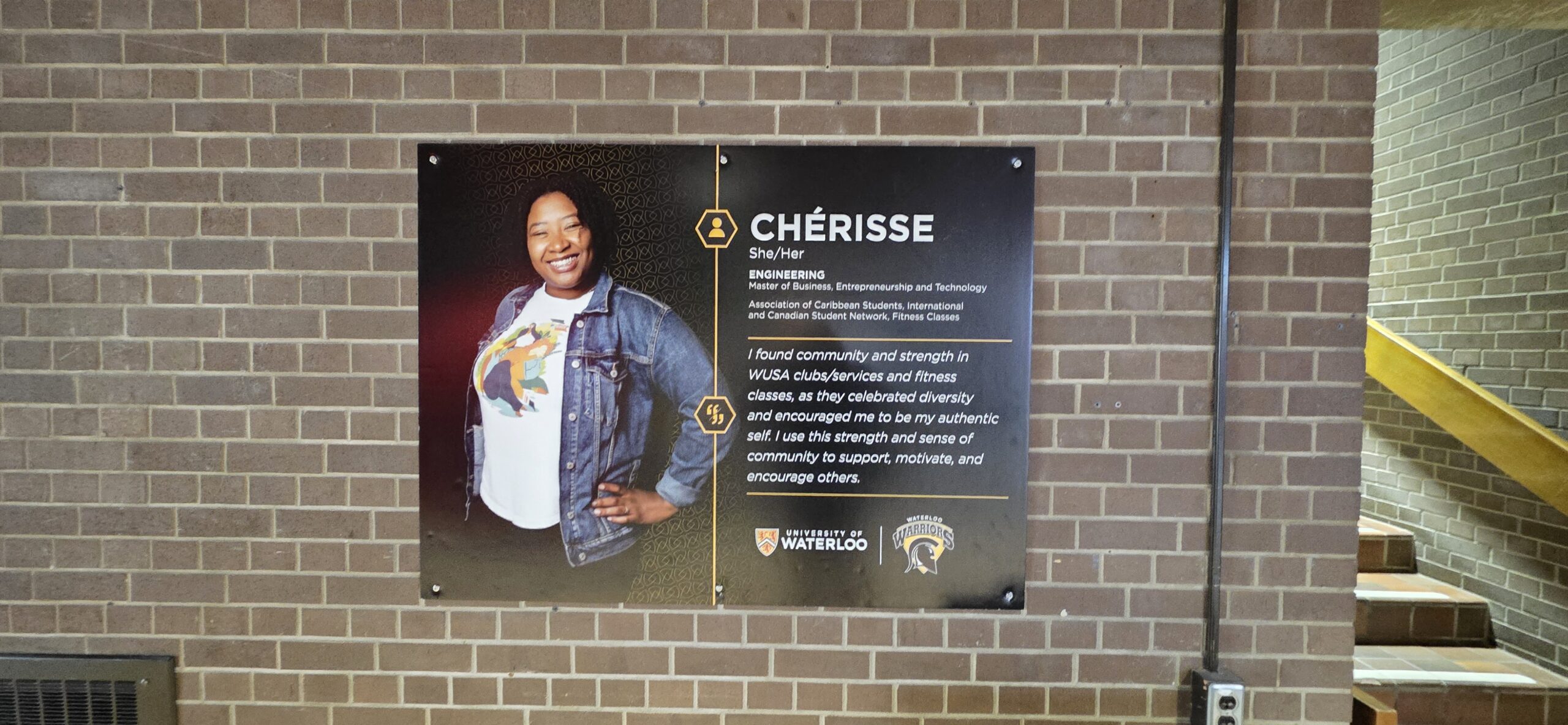
Chérisse, an Engineering postgraduate doing a Master of Business, Entrepreneurship and Technology, involved with the Association of Caribbean Students, the International and Canadian Student Network, and fitness classes:
I found community and strength in WUSA clubs/services and fitness classes, as they celebrated diversity and encouraged me to be my authentic self. I use this strength and sense of community to support, motivate, and encourage others.
There are loads of them – different programmes, different backgrounds, different ways of being involved. It’s social norming, obviously – making participation visible, showing who the SU is for, signalling that joining things is what students here do. But it’s also just nice – faces on the walls of a building that students own, rather than the usual corporate blandness or inspirational platitudes. The SLC feels like somewhere people belong because it shows you people who belong there.
And it keeps growing
An Ombuds Office was established in January 2025 after years of student advocacy, jointly funded 50-50 by the university and student fees through WUSA and the Graduate Student Association. The office provides confidential, impartial assistance navigating academic and non-academic challenges – grievances, appeals, housing contracts, supervisor conflicts – with ombudsperson Whitney Barrett helping students understand their rights and options. Until recently, Waterloo was one of the few Canadian universities without one.
WUSA is also piloting a WalkSafe volunteer escort service launching in March 2026, testing feasibility and demand before scaling up, and there’s also a Pay-What-You-Can meal programme running at The Bomber, WUSA’s bar and restaurant in the SLC. They’re ready-to-eat meals where you pay what you can afford. It’s a pilot, but you can see the idea catching on.
Public transport matters quite a bit – WUSA negotiated a universal transit pass with Grand River Transit back in 2007 after a student referendum, and it saves each student over $850 across the academic year. Full-time undergraduates tap their student card for unlimited access to GRT buses and the ION light rail, which opened in 2019 and connects Kitchener to Waterloo with a station right on campus. The fee is charged on academic terms but the pass works year-round, including during co-op work terms.
Student advocacy on transit keeps going. In late 2023, when Grand River Transit proposed cutting evening service on the ION from every 15 minutes to every 30, students mobilised – and Waterloo Region council unanimously voted to maintain the service:
Students coming home late from class, workers who have late shifts and those who rely solely on public and active transportation would be disproportionately affected,
Pay what you can
Back at Laurier, the Graduate Students’ Association runs something I haven’t seen anywhere else. The Mini Market, inside Veritas Café, is a pay-what-you-can grocery store where students privately select from four price points on the payment device – full price, 25 per cent off, 50 per cent off, or free. Staff pay full price, and all proceeds go back into supporting the programme. The GSA believes it’s the first of its kind at a Canadian university.
Veritas Café itself is a social enterprise – all profits reinvested into scholarships, bursaries, and food programmes, with staff paid above living wage for the Waterloo region. Graduate students get exclusive discounts. Every coffee sold does double duty.
There’s plenty of advocacy work too – the student-supervisor expectations checklist, for example, is a practical tool for graduate students to have structured conversations with their academic supervisors about what degree completion actually requires. Both parties complete it, revisit it periodically, and use it to track progress. It came out of casework on supervisory relationships, and it’s freely available.
And in May 2025, the GSA launched a partnership with myStoria, a digital fertility platform, funded through the Graduate Enhancement Fund. This is reproductive health as part of student wellness – there’s educational content, community engagement, and personalised tools – available to all enrolled graduate students at no cost. It’s not what you’d expect to find in a student association portfolio, but that’s rather the point.
One more Laurier story. In 1961, Paul Enns, a second-year student leader at what was then Waterloo Lutheran University, proposed a shoe-shining fundraiser during orientation. Four hundred students participated, raising nearly $1,400 for a local children’s charity. By 1964, the university had partnered with Cystic Fibrosis Canada.
Shinerama has now raised more than $29 million across 36 colleges and universities, making it Canada’s largest post-secondary fundraiser. Laurier has been the top fundraising school since 2019, contributing over $3 million to the total. The shoe-shining has evolved into car washes, barbecues, and bottle drives, but the principle remains – orientation as an introduction to giving back, not just to getting drunk.
RAG seems to have died off a little in the UK – but there’s something about the simplicity and competition aspects of this that makes it work, and it’s delivering both belonging benefits and bags of reputational kudos.
To be honest, I’m a bit of a mess
And then there’s the musical. The logic is simple – during welcome, slides don’t land. You can pack a lecturer hall with first-years and click through presentations about consent and mental health and harm reduction, but how much sticks? How much changes behaviour?
Waterloo’s answer was a full theatrical production called TBH – To Be Honest – co-produced by WUSA and Campus Wellness, with original songs, choreography, and a cast of student performers. The show explores what the programme calls “experiences that are totally normal but often not talked about” because they can be “awkward, uncomfortable, or just plain hard.”
The director’s notes put it simply – “Instead of sitting through a PowerPoint packed with slides, we are going to entertain you while helping you get to know UWaterloo a little better.” Sense of Belonging, Diversity and Acceptance, Consent, Sexual Health, Substance Use, AccessAbility, Dating and Relationships, Mental Health, Peer Support – all in one show.
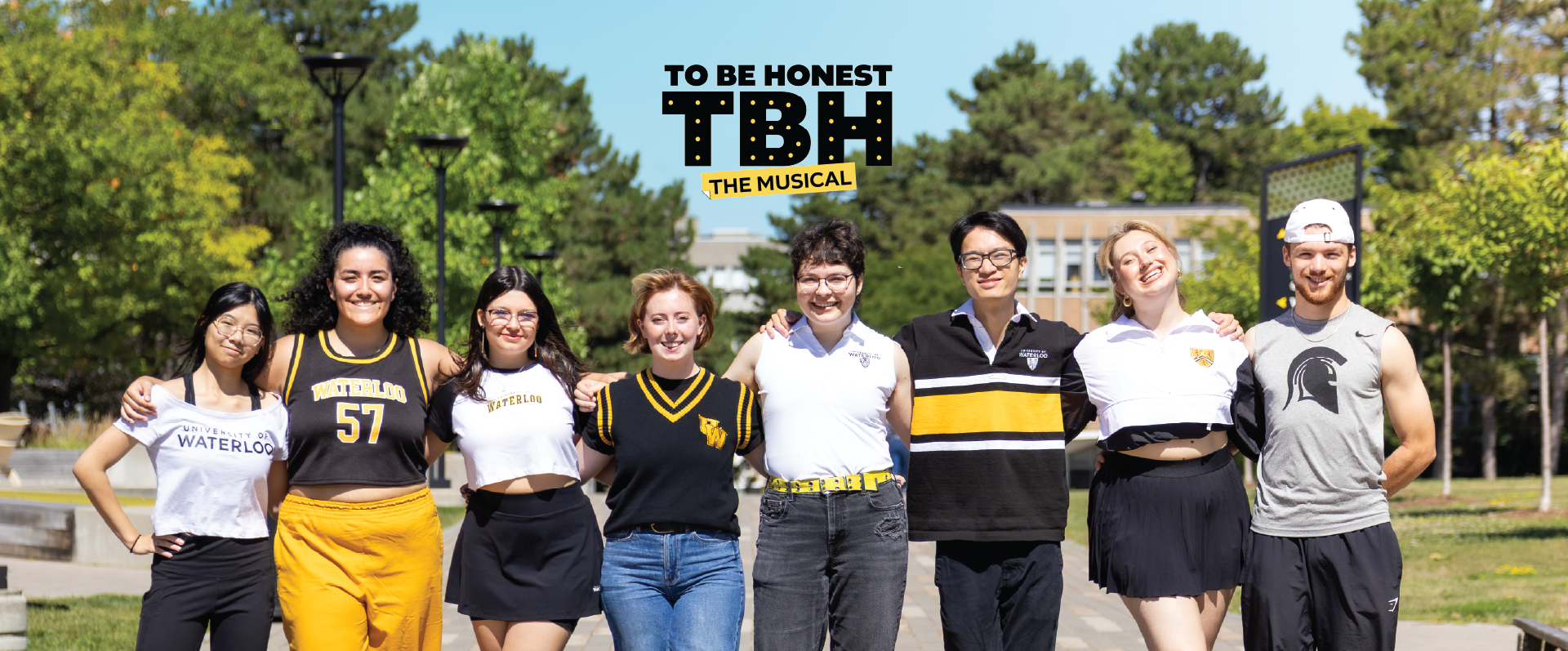
The lyrics were co-created with the original cast through open conversation. “We pulled out words and phrases that captured how it really feels to step into the unknown for the first time at university,” says director Amanda Kind, a UW alumna who now teaches commercial voice at Laurier – another Waterloo-Laurier crossover in a region full of them.
The title song includes the line – “To be honest, I’m a bit of a mess / I don’t have it figured out just yet.” I imagine various UK folk would regard it as cringe – but anyone that’s seen that Coventry SU microwave video should know that being talked about is half the battle.
Your stories, your voice
One more thing worth noting – the student newspaper. Imprint runs the tagline “Your Stories, Your Voice,” and it’s doing proper journalism on campus controversies rather than just reprinting press releases.
A recent piece covers the fallout from the university’s new hybrid work guidelines, announced in October and taking effect this month, which require staff to work from campus five days a week with remote work allowed for only two.
A UWSA survey found 91 per cent of respondents said hybrid working was “very” or “extremely important” to them, and 76 per cent said five days in-person was “not ideal.” Staff feel blindsided. One told Imprint it was “a slap in the face to the staff who worked through the COVID lockdown.”
Students, meanwhile, aren’t worried about the principle – they’re worried about the consequences. “I didn’t see students care that staff have to be here,” one third-year student told the paper, “but I saw the panic of, ‘what if the good ones leave?'”
More tomorrow as I hit the capital that isn’t actually the capital – Toronto.


