


As something of a foodie, I sometimes wish I could eat out more.
But as a middle aged man, I recognise that even one set menu a week cuts against my efforts to stay fit and (ideally) lose weight.
Policy-making, as with life, entails trade-offs. Ignoring or fudging these trade-offs is useful if you’re prosecuting a strident argument, but leads to inconsistency and contradiction, in public debate and understanding as well as for decision-makers.
Earnings premium
In education and skills policy, the most common ducking of trade-offs involves the earnings premium. On the one hand, the value of a university degree is framed as requiring all graduates to earn more than they would have done without a degree. On the other hand, it is often argued, including by both the previous and the current Prime Minister, that the value of non-graduate pathways has been unreasonably devalued, in part due to the lower esteem attributed to those educational and skills pathways.
The first argument says: the graduate premium over non-graduates should increase. The second conversely affirms: the graduate premium over non-graduates should decrease. We all know politicians love a bit of cakeism, but no amount of rhetorical flourish can make both graduates and non-graduates earn more than the other in their monthly payslips.
By themselves, both aims or arguments are sensible enough. It’s reasonable to suggest greater “parity of esteem” for nongraduates, on grounds of equal citizenship as well as economic growth and fairness, especially in a context where there is heightened concerns about divisions between graduates and non-graduates socially and politically.
It’s also reasonable to ask whether a university degree is worth it. With graduates repaying fees and living costs through taxation for many decades, we can’t be complacent about 1 in 4 university graduates earning less than they would have done without a degree.
But should we really expect all graduates should earn more than non-graduates? On the IfS calculation (including the additional costs of repaying fees and loans), the size of the required earnings gap over non-graduates increases further still. And it’s not just HE sceptics who use the test of the “earnings premium” to assess the value of HE; legislation requires the regulator (the Office for Students) to monitor earnings returns as part of the B3 condition of registration.
Both ways
Sceptics of HE don’t just argue that higher education isn’t worth it because some earn less. They also argue that too many who are studying HE would be better off pursuing a non-HE pathway. But given their chosen test for the value of HE – that everyone attending should earn more than those who don’t – they must then also affirm that those not earning a degree should earn less. It’s hard then to see their recommendation for non-HE pathways as being in the best interests of young people, or as affirming the idea that non-HE pathways deserve greater esteem.
Esteem is a bit of a vague concept. One way to clarify it is with reference to earnings. On this metric, increasing the esteem of non-graduate pathways would entail that some/many non-graduates would have to earn more than some/many graduates. While esteem may not wholly overlap with earnings, the common view that there currently isn’t parity of esteem is grounded in the reality that non-graduate wages are not only lower than graduates, but that non-graduate jobs are less valued more generally
A non-financial way of assessing esteem is to look at the actions of those who currently have greater esteem. Here we observe that those who currently have the most esteem almost exclusively choose graduate pathways for their children. It is hard to see how parity of esteem for non-graduate pathways could be achieved without some of these children instead choosing those routes.
Bringing in disadvantage
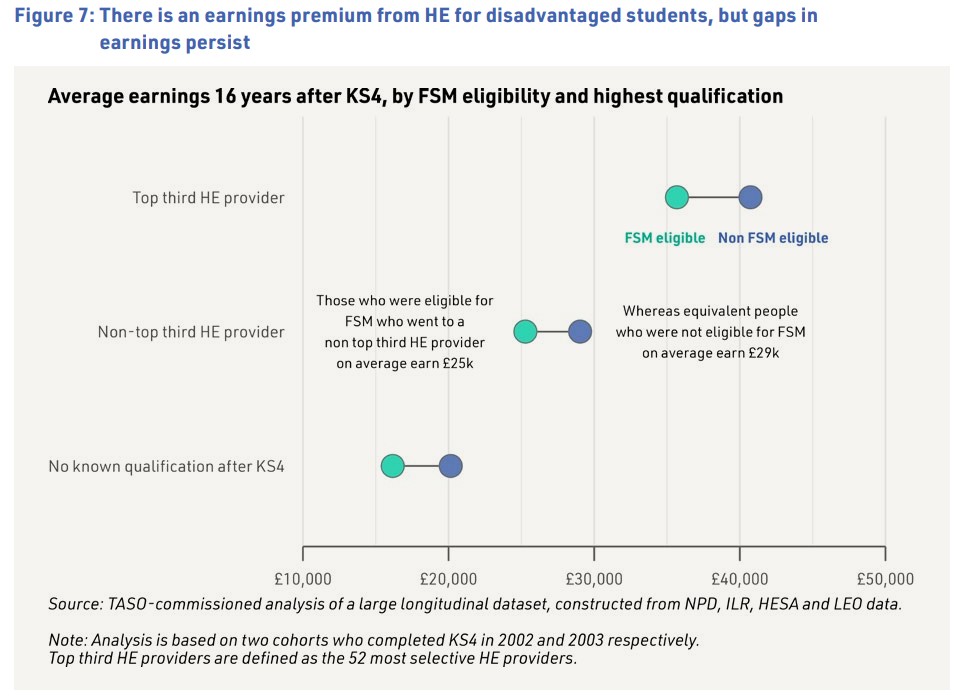
This raises a final point, namely that those most likely to earn less from a degree are those from more disadvantaged backgrounds. While the IfS report indicates that a significant proportion of such student would have earned more if they hadn’t pursued HE, the evidence also show FSM earnings to be lower across all educational qualifications.
While it’s true that FSM graduates earn less than their non-FSM graduate peers, FSM earners nevertheless benefit from every additional qualification they earn (see figure). This suggests a wider socio-economic penalty in the labour market, or that education alone cannot address the inequalities in earnings for people who grew up in disadvantaged households. It further indicates that steering more FSM students away from HE will result in them earning even less in the labour market on average, given that non-graduate pathways show lower earnings (little hope here for parity of esteem).
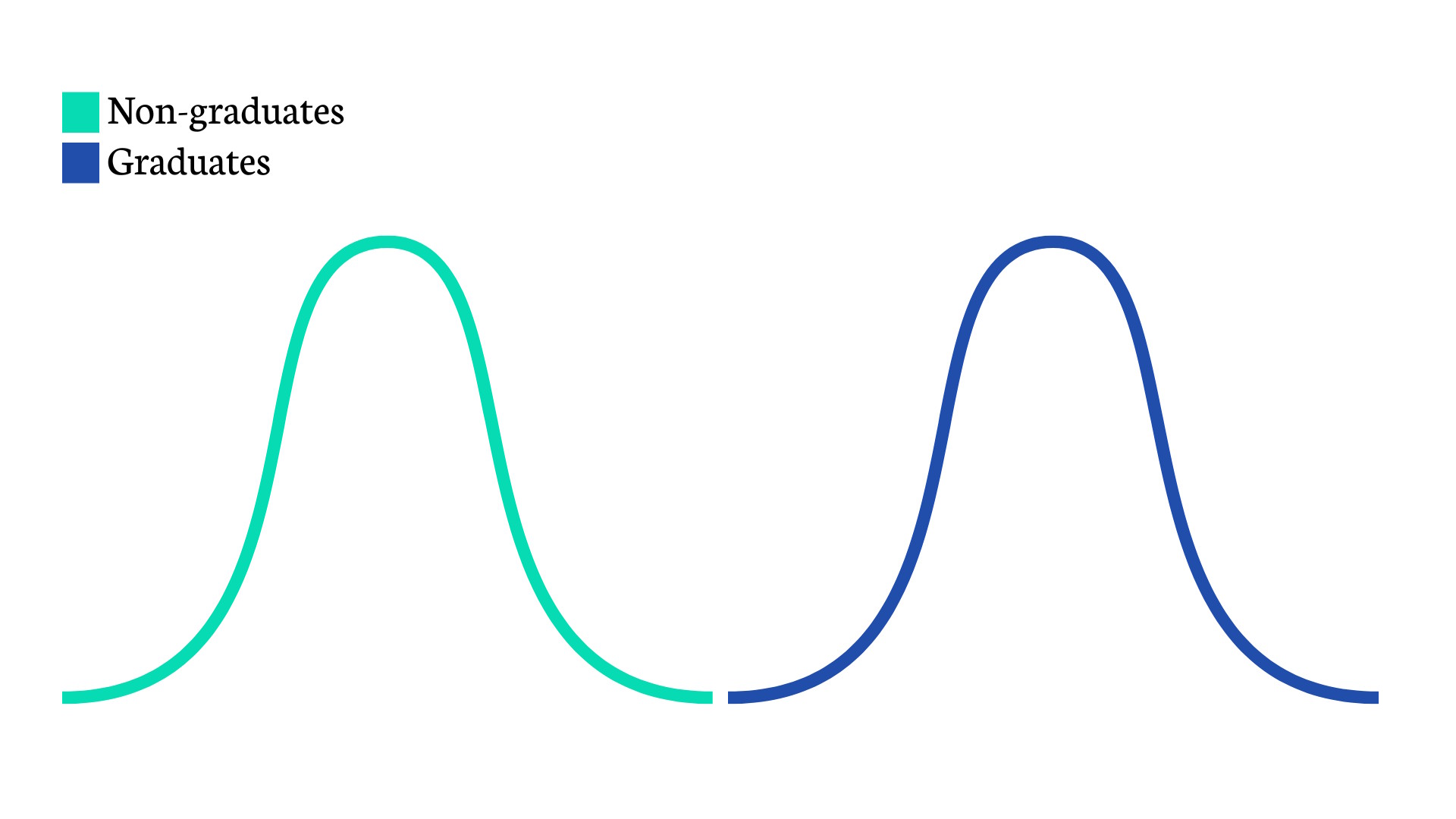
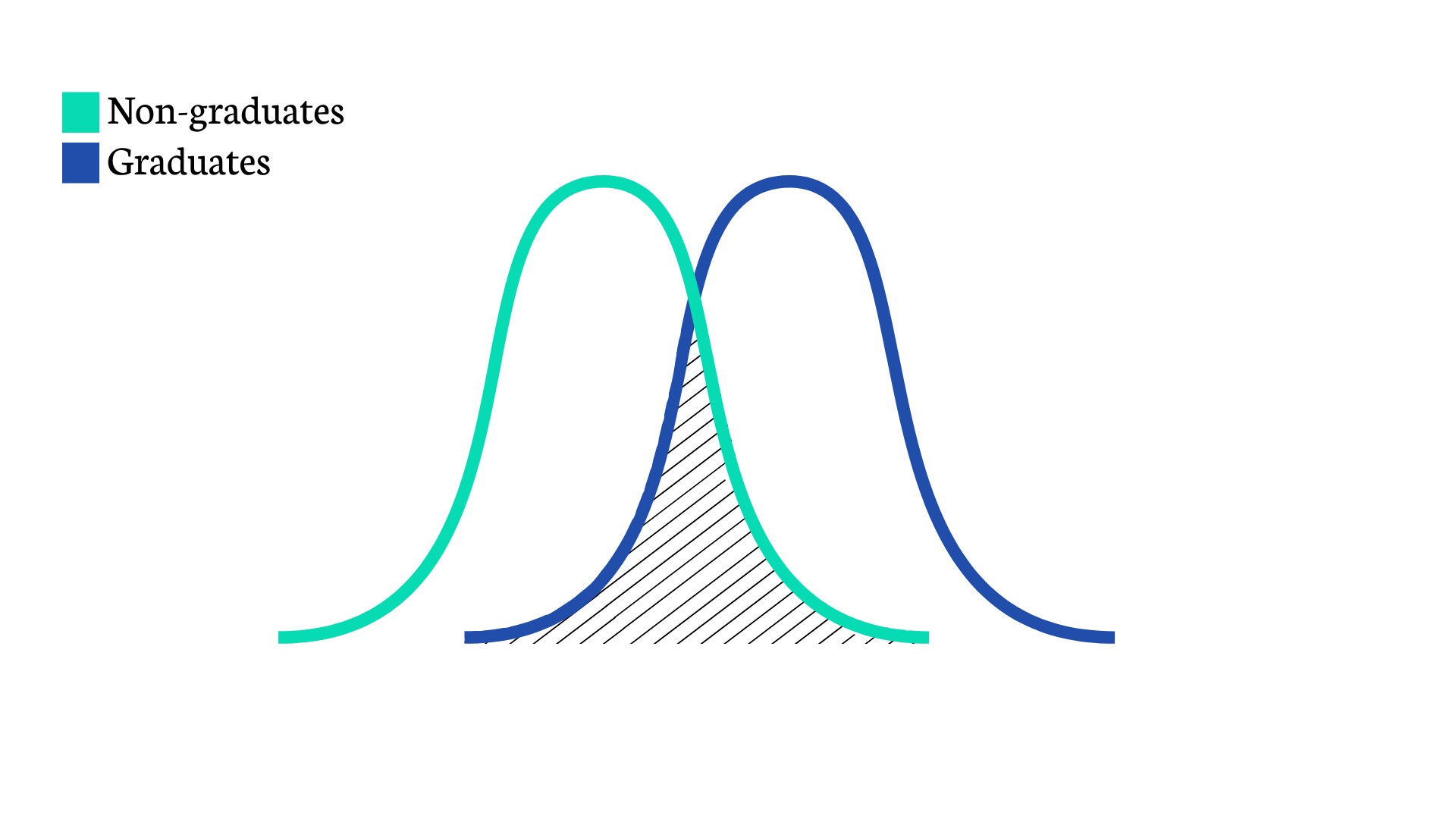
If we can’t resolve a trade-off, we can try to be more explicit in how we navigate or balance it. Consider the below four images, each with two earnings distributions: one for graduates, and one for non-graduates. Each image shows these earnings distributions as two pairs of two bell curve graphs placed side by side. The first pair (image 1) are placed so that the right hand tail of the left hand curve (the highest earning non-graduates) never intersects with the left hand tail of the right-hand curve (the lowest earning graduates). Taking each bell curve as the earnings distribution of graduates and non-graduates respectively, this shows every graduate earning more than every non-graduate.
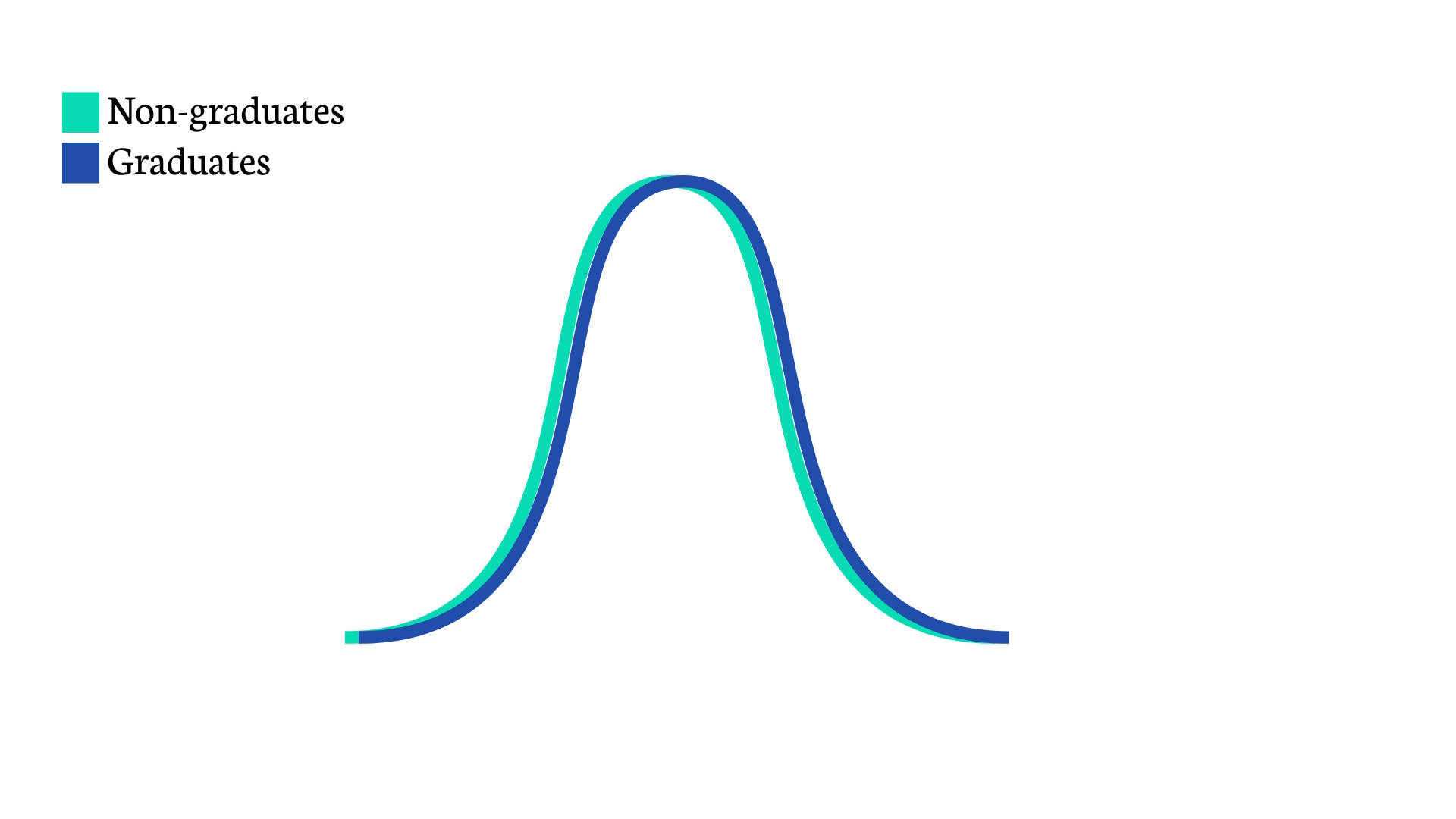
It’s hard to see that anyone would defend such a distribution. At the other extreme, few would defend the second image of equal income distributions, where the two bell curves overlap exactly. Almost everyone concedes that some graduates should earn more than non-graduates, and our policy apparatus (notably student financing) takes this as an assumption.
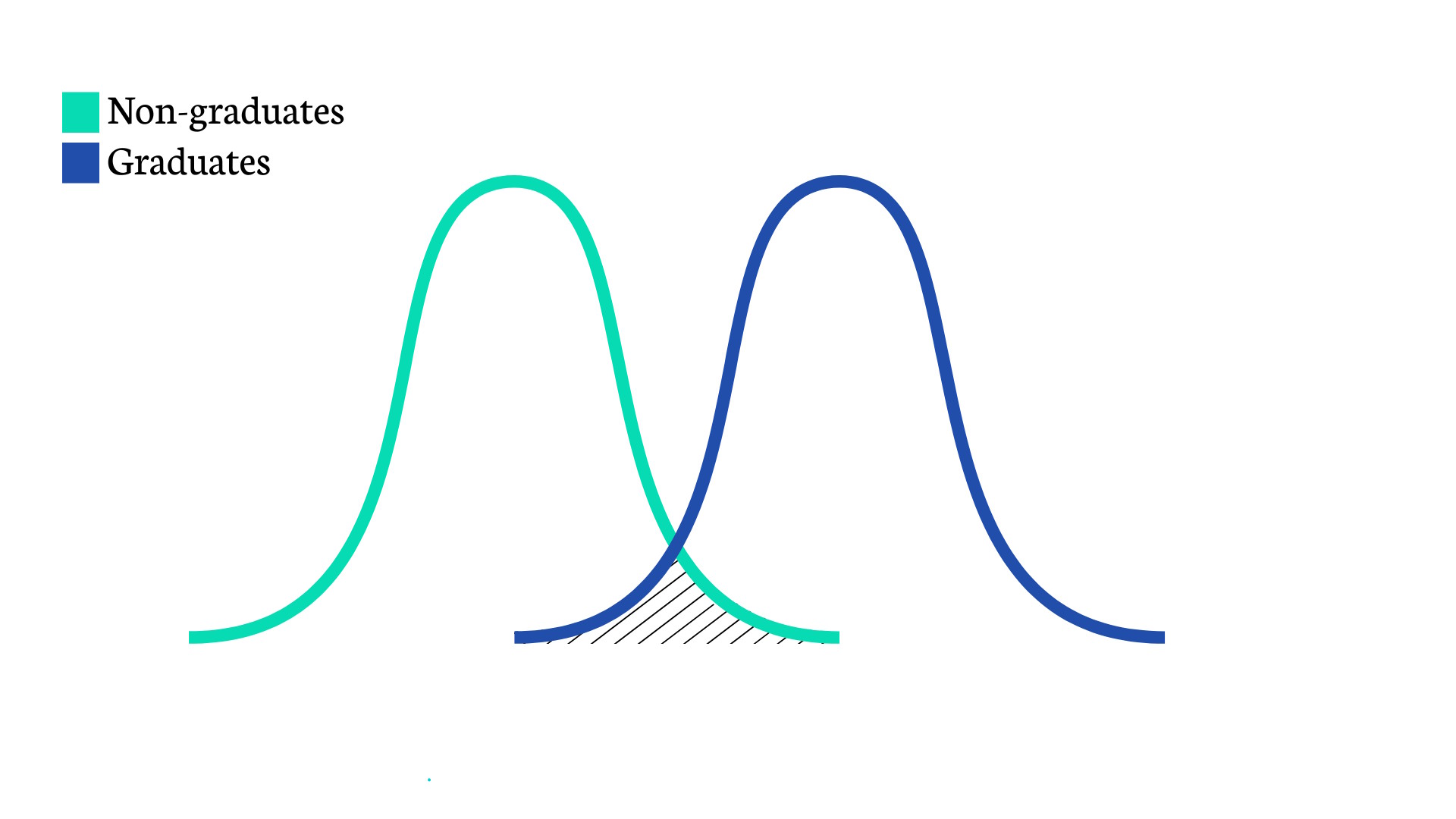
The real question, then, is how far graduate and non-graduate earnings distributions should overlap. Or, how many graduates could earn less than non-graduates. Do we think 1 in 4 graduates earning less is a problem, but 1 in 10 is fine, as that indicates a higher graduate earnings premium? Or do we think 1 in 4 graduates is too few, as it suggests that 3 in 4 non-graduates will earn less, making parity of esteem an unattainable ideal? Where do we land on the relative merits of images 3 and 4, and to what extent do we think a higher earnings premium or parity of esteem is the desired objective?
A messy place
As with my food/weight conundrum, there is no way to avoid the trade-off here. Instead we need a more honest discussion of the challenge, acknowledge that advocates for one side of the trade-off will negatively impact the other, but aim for a balanced approach.
A balanced approach is further recommended given education and skills policy cannot wholly drive wage returns in the labour market, which are determined by a wide range of factors in the economy and among employers. One consideration should be central, namely young people themselves. Learners are ill-served by a contradictory public debate and policy context that impedes their ability to make informed choices, particularly among the most disadvantaged learners, with knock-on effects on their income and wellbeing.
It would be nice if all good things went together, but the world is a messy place. For the policy designer, the question is how to weight and balance different aims, in this case economic growth, equal dignity and respect, and equal opportunity. Aligning these aims as far as possible is of course desirable, but the same hard choices await the new Prime Minister and Education Secretary as they did the last ones.