

Weekend courses can’t get student loans
Jim is an Associate Editor (SUs) at Wonkhe
Tags
That matters because being a “full-time” student is a distinct thing, both for student finance rules and other things (benefits, council tax exemptions and so on).
It also matters because a lot of courses, many of which are being franchised, are very much positioning themselves as, at best, “flexible” – and giving prospective students the impression that they are, well, part-time.
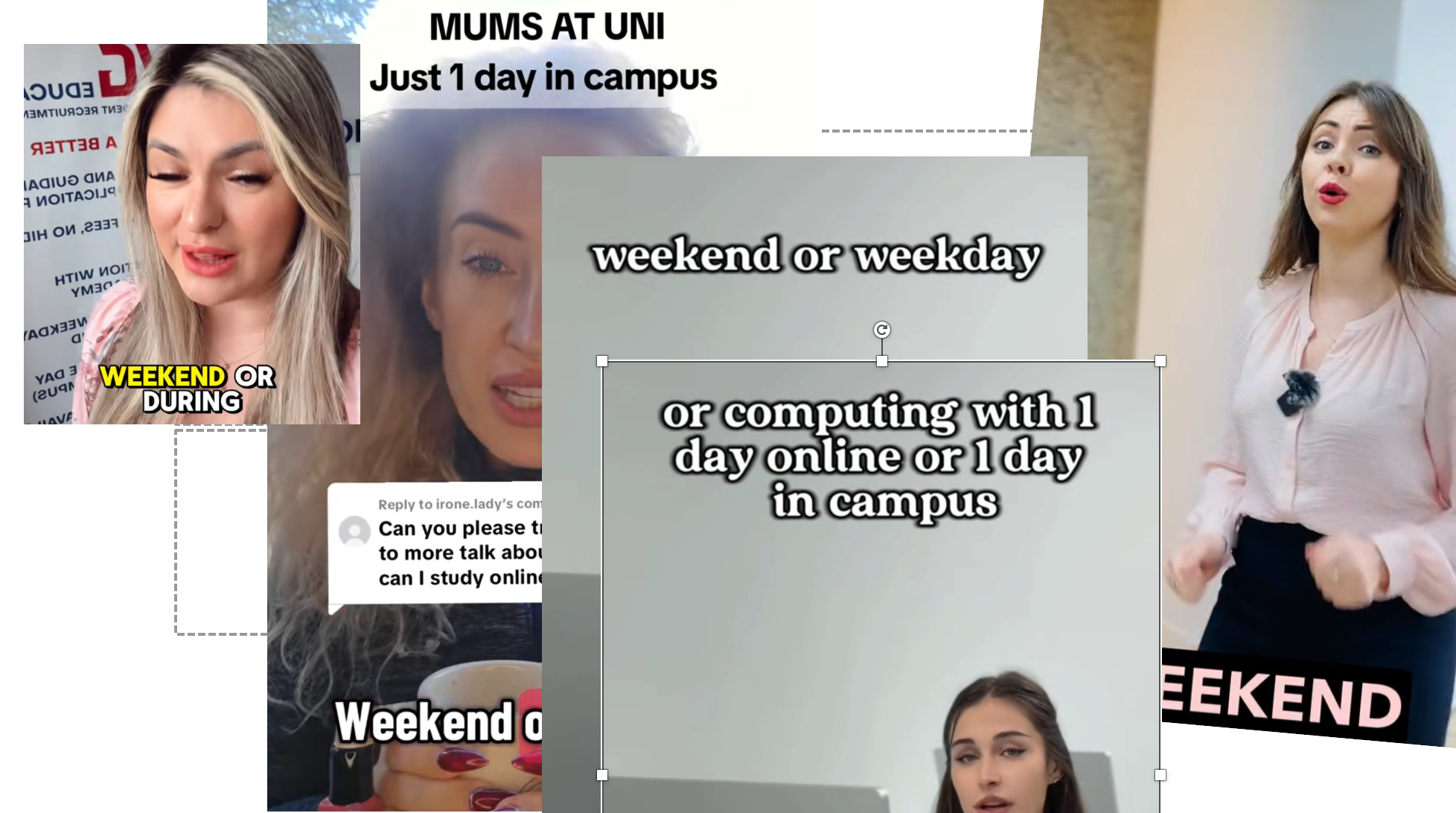
Spend 30 seconds on Instagram and TikTok and you’ll find ads for courses that you can combine with work, where you only attend one day a week, and where any/all of your teaching is at the weekends. It’s not clear whether the agents pushing them ever reveal that some independent study might be required at some point.
When the Public Accounts Committee picked over the issue back in 2024, it said that the Department for Education should work quickly to clarify what constitutes student attendance and meaningful engagement with courses – ensuring sufficient engagement with providers, and publish guidance as soon as possible.
That resulted in this note on the SLC website. It says that providers should have a published, auditable attendance policy, not claim SLC funding for students who are not adhering to that attendance policy, defines “attendance” for funding purposes as participation in the course (including face-to-face or blended teaching) in line with the provider’s own policy, applies to all courses including franchised provision, and that providers have flexibility over what attendance and engagement look like for different courses and students.
That’s separate to rules that UKVI/Home Office might have for international students, and individual circumstances (for example disability or specific study arrangements) can still be taken into account.
So far, all so familiar. But in today’s “franchising crackdown” letter from Bridget Phillipson to VCs, the weekend issue pops up.
On the way courses are marketed, she reminds people that the Fair Admissions Code of Practice exists, and has been updated to mention domestic agents. She might want to ask why so many providers have so far refused to sign it, and why for those that have, it seems to be making little difference to the antics of domestic agents.
But then she gets onto attendance. And as well as re-asserting the stuff in that note on the SLC website, she says:
Students whose attendance is limited solely to weekends will not meet the criteria.
Wording on weekends actually appears in a different doc, in the mode of study / distance learning section of the Courses Management Service guidance. That guidance lifts the statutory definition of a distance learning course and includes a familiar carve-out:
a course is distance learning where a student is not required to be in attendance, and “required to be in attendance” is not satisfied by a requirement to attend (a) for the purposes of registration or enrolment or any examination (b) on a weekend or during any vacation (c) on an occasional basis during the week
The same page then says:
- if the course meets that definition, it is distance learning
- if it does not, it is “in attendance”
- regular required attendance at a specific place means the course is not distance learning.
The wording is all straight from the Education (Student Support) Regulations 2011 – and the wording is identical in the Welsh legislation.
This matters because distance learning students aren’t entitled to the maintenance loans agents seem so keen to push. So the weekend carve-out is used to decide what kind of course it is, which in turn drives whether that course type is entitled to maintenance loans.
The obvious upshot is that students who are only, say, required to attend regularly on a Saturday, and do some online teaching on a Sunday, shouldn’t be getting maintenance loans. They are defacto distance learners. Ditto for a programme where a student is online on a Friday and on campus on a Saturday.
This will come as a surprise to many of the students, many of the franchise colleges providing the courses, and many of the universities doing the franchising.
There may well be a debate about the extent to which this was previously clear. And given one doc says that “attendance” for funding purposes can mean participation in the course including face-to-face or blended teaching, maybe some have been confused by a set of docs that effectively mean the “distance or not” definition is tied to physical attendance, while the “attending or not” can be either physical or online.
But either way, let’s imagine that a frantic phone call is on right now between a university and franchise partner, the jist of which is “we’ll have to make them come in during the week”.
That not what’s been sold. This sort of thing is obviously “material”. A university (and or its partner) would almost certainly be in breach of contract if seeking to impose such a change. Students would obviously be entitled to compensation.
Whether that gets delivered, and if so whose bottom line it comes from (the university or the partner) remains to be seen.
Now would be a good time for OfS – whose own research says that students in general don’t know their rights – to be proactive over the potential fallout.
There isn’t much too debate about whether it was clear that a course which only required in-person attendance at the weekend was not eligible for maintenance support – it has been stated in student support legislation and guidance since at least the mid-2000s