By Tuesday, students from at least ten of Iran’s most prestigious universities had joined them on the streets. By Thursday, at least six people were dead.
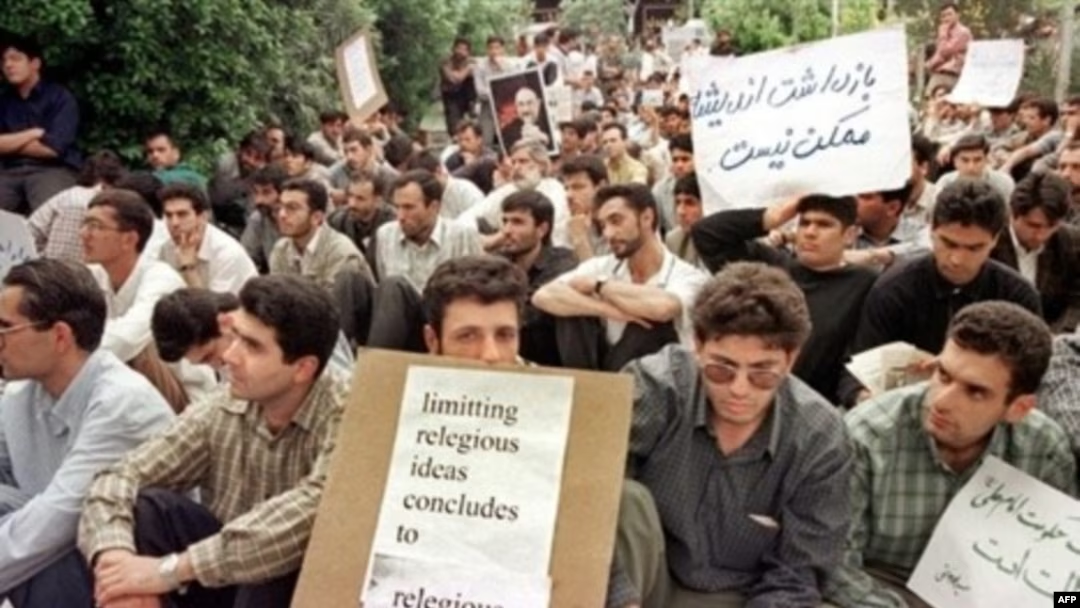
What’s unfolding is now being described as the largest outbreak of unrest since the 2022 Woman, Life, Freedom uprising. And once again, universities are at its centre.
Students from Tehran University, Sharif University of Technology, Khajeh Nasir Toosi University, Shahid Beheshti University, Amirkabir University, Tabataba’i University, Isfahan University of Technology and Yazd University have joined the protests.
The slogans tell us where this is heading – “the student will die but will not accept humiliation,” “death to the dictator,” and, at Shahid Beheshti, students shouting at members of the Basij paramilitary force: “Basij, ISIS, same thing.”
At Khajeh Nasir University, students chanted “No to scarf, no to suppression. Freedom and equality” – connecting the economic grievances that sparked the protests to the broader political repression that has defined Iranian campus life for decades.
Human rights groups report at least eleven protesters arrested near Tehran’s Shoush Square, with five students detained at universities in the capital. Student outlets have reported that one student at Amirkabir University – sometimes called Tehran Polytechnic, and widely described as “the beating heart of the Iranian student movement” – was severely injured after Basij militia members attacked their gathering.
Following confrontations at universities, the heads of campus security at Alzahra, Sharif, and Iran University of Science and Technology were dismissed for what the government called “a record of misconduct and failure to properly handle recent student protests.” Reformist figures welcomed the dismissals as unprecedented recognition that security alone cannot resolve the crisis.
Recognition maybe. But the context doesn’t half undermine the conciliatory framing.
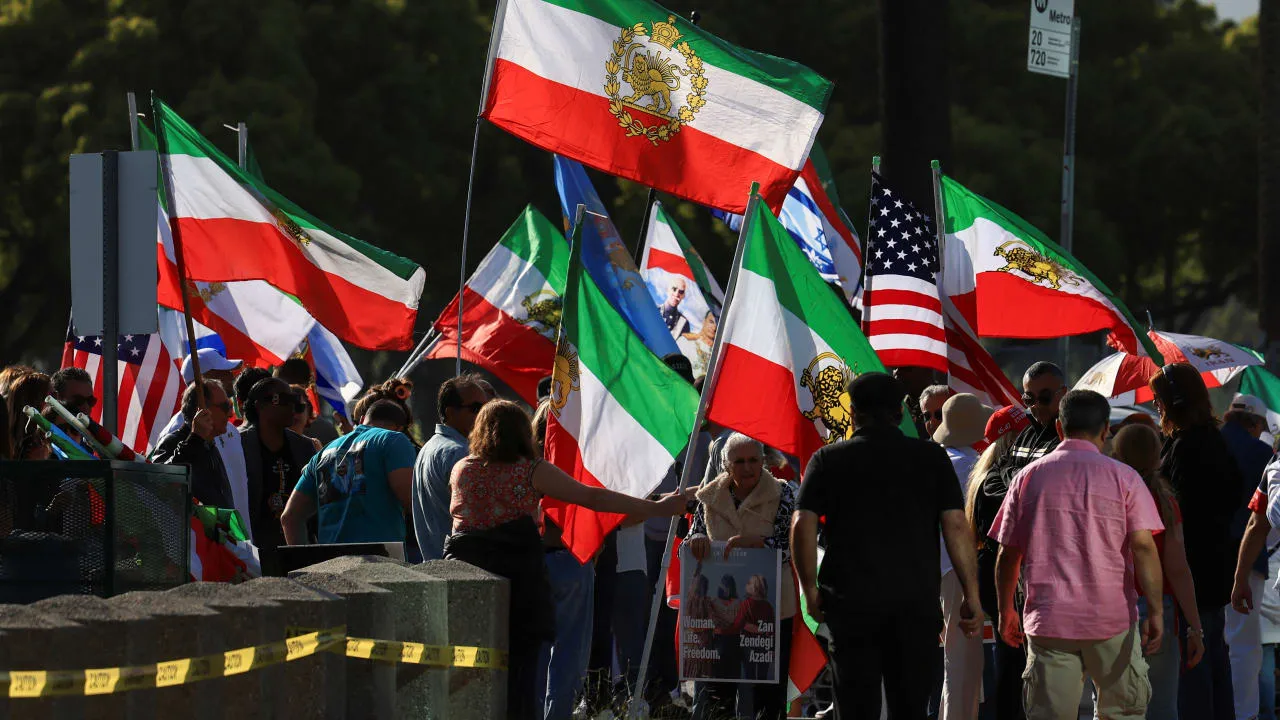
2,200 executions
Iran ended 2025 with well over a thousand executions, according to human rights monitors – the bloodiest period of Ayatollah Khamenei’s rule. The number was substantially higher than in previous years, continuing a steep upward trend since 2022.
During the 2022 Woman, Life, Freedom protests, hundreds of students were arrested, and many thousands more were suspended, expelled, forcibly transferred, or stripped of accommodation. Universities saw hundreds of demonstrations, overwhelmingly at public institutions. Some campuses, including Amirkabir and Allameh Tabataba’i, recorded the highest numbers of detained students. Dozens of academics were also suspended, dismissed, or arrested.
The infrastructure of repression is extensive. The Student Basij operates units across Iranian universities and works closely with campus security. Preferential admissions and other advantages for Basij members have long been criticised by students as tools of political control.
When protests occur, Student Basij cooperates with university security to suppress dissent – as it did in July 1999 when dormitory raids killed students and sparked six days of nationwide rioting, and again after the disputed 2009 presidential election.
Against that backdrop, President Masoud Pezeshkian’s acknowledgment of protesters’ “legitimate demands” and his statement that “if we do not resolve the issue of people’s livelihoods, we will end up in hell” reads rather differently than the conciliatory headlines suggest.
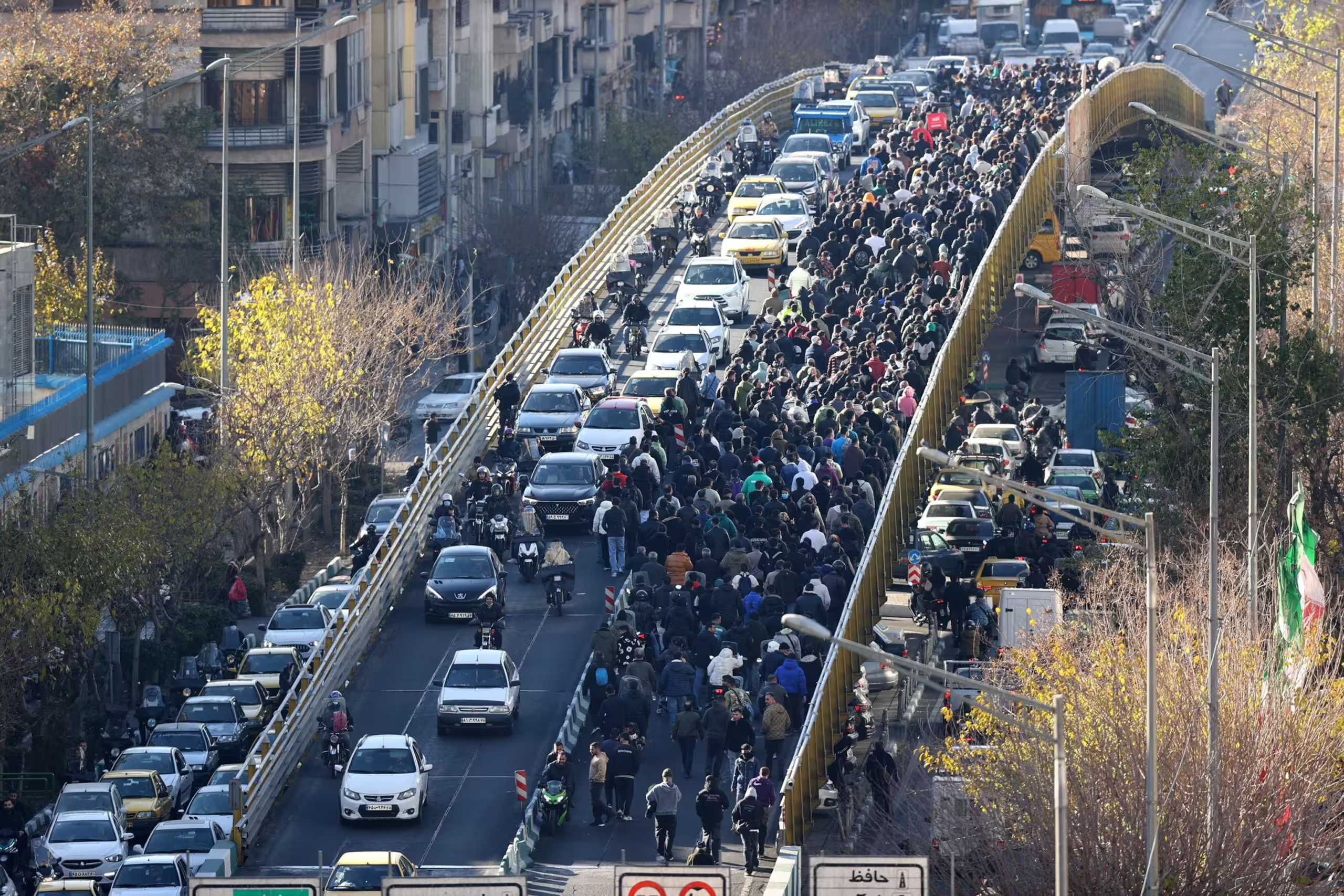
The numbers underneath
Understanding why Iranian students keep taking to the streets despite the consequences requires understanding the demographics. Iran’s population, now in the low ninety millions, is relatively young, and universities expanded rapidly over recent decades to absorb a much larger youth cohort.
Iran’s Islamic Azad University system enrols more than 1.7 million students. Payam-e-Nour University enrols close to a million more. Those two institutions alone educate a vast share of Iran’s higher education students.
The expansion created a labour market oversaturated with degree holders. Youth unemployment has climbed towards 25 per cent. Even with a degree, graduates can wait years for stable work. Iran also has one of the world’s highest rates of brain drain.
By the mid-2000s, women made up a clear majority of university students. In medical and basic sciences, women constituted around 70 per cent. Conservative circles framed this as a threat. In 2012, more than 30 universities barred women from dozens of academic fields. Female youth unemployment has remained especially high.
Meanwhile, year-on-year inflation officially exceeded 40 per cent by the end of 2025. Food prices rose by more than 70 per cent. Health and medical goods increased by around 50 per cent. The rial’s collapse has turned ordinary salaries into poverty wages.
One merchant told Iran International that even incomes once considered comfortable now fall below the poverty line in Tehran.
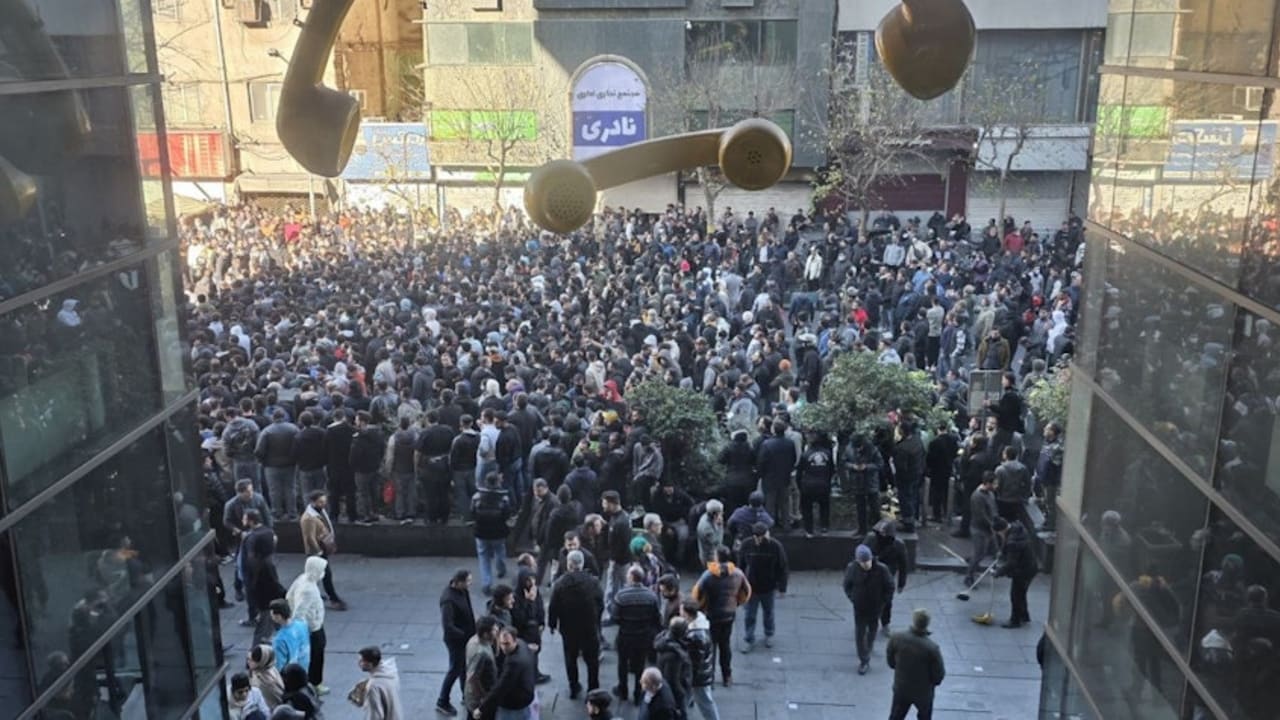
From economics to overthrow
What started as a protest about currency collapse has followed the direction previous Iranian protest movements have often taken. “Neither Gaza nor Lebanon, my life for Iran” – a direct challenge to the government’s regional priorities. “Death to Khamenei” – about as explicit as regime opposition gets.
Trita Parsi of the Quincy Institute noted this week that the president himself has signalled limits on what he can do, feeding public disbelief that the system can or will solve the crisis.
That undercuts the official line. Government spokesperson Fatemeh Mohajerani acknowledged “intense economic pressure” and said peaceful assembly is recognised under Iran’s constitution. The prosecutor general, meanwhile, warned that “any attempt to turn economic protests into a tool of insecurity” would “inevitably be met with a legal, proportionate and decisive response.”
Legal, proportionate, decisive. That is not how it has been described in Lordegan and Azna this week, where several people were reported killed and security forces were reported to have opened fire as protesters tried to enter government buildings.
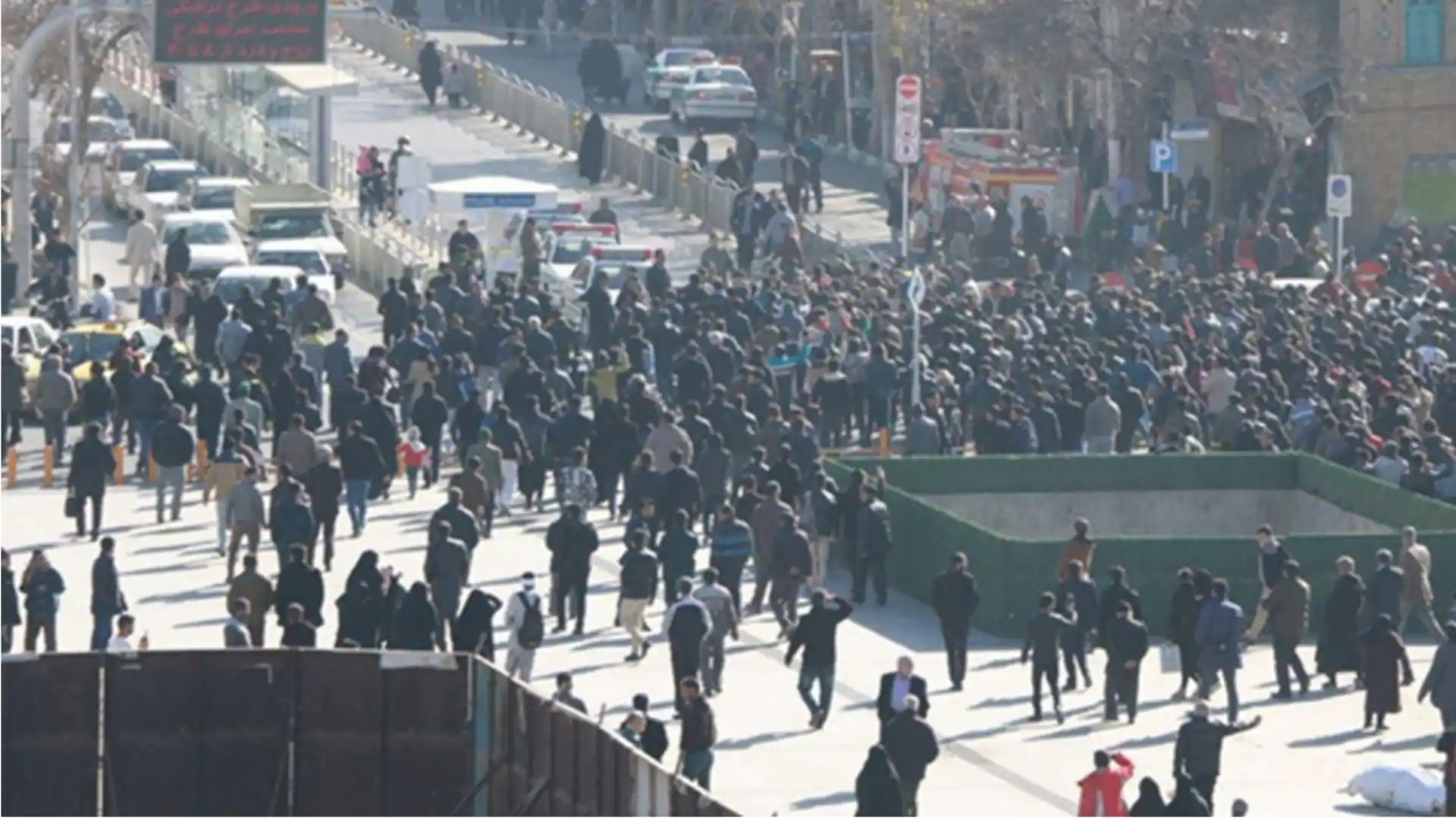
The familiar pattern
The 1999 student protests began over press freedom – the closure of the reformist newspaper Salam – and escalated into direct regime challenge. The 2009 Green Movement began over election fraud and ended with “Death to the dictator.” The 2022 Woman, Life, Freedom uprising began over hijab enforcement and ended with students chanting for the end of the Islamic Republic.
Each time, economic and social grievances morph into fundamental political demands. Each time, the regime crushes the protests. Each time, the underlying conditions worsen.
Nobel Peace Prize laureate Shirin Ebadi told Radio Farda this week that many Iranians now believe the current establishment must end before the country is further destroyed.
The bazaar merchants’ involvement is significant – they were crucial to the 1979 revolution that brought the current regime to power. Top Sunni cleric Molavi Abdolhamid said this week that crushing living conditions and a political dead-end are driving revolt. Filmmaker Jafar Panahi described the unrest as an attempt to “push history forward” now that shared pain has turned into a cry in the streets.
What happens next
As of today, protests are continuing into their sixth day. Reports suggest demonstrations have spread to smaller provincial cities and towns. The government declared public holidays across much of the country, officially citing cold weather.
State television reported arrests of seven people including five described as “monarchists” and two linked to “European-based groups.” Security forces claimed to have confiscated 100 smuggled pistols. Basij members and police officers were reported injured.
The internet has remained largely accessible – unlike in 2019 and 2022 when authorities imposed blackouts. Some Iranian media has covered the unrest. Whether this reflects a calculated strategy, a genuine constraint, or events moving faster than the state can control is not yet clear.
What is clear is that Iranian students – organised through long-running networks such as the Amirkabir Newsletter, which has documented student activism for decades despite direct threats – continue to mobilise with full knowledge of the likely consequences.
The Retirees’ Union put out a statement this week noting that the student movement remains alive, and that students, alongside workers, women, teachers, and retirees, are an “inseparable part” of the people’s struggle.
So far, the state response has combined symbolic concessions, arrests, and lethal force in provincial cities. The efficacy of that mix may be coming to an end.