Higher education postcard: Worcester College, Oxford
This week’s card from Hugh Jones’ postbag connects us to the Gunpowder Plot
This article is more than 3 years old
Comment|
Hugh Jones is a freelance HE consultant. You’ll find a daily #HigherEducationPostcard if you follow him on Bluesky
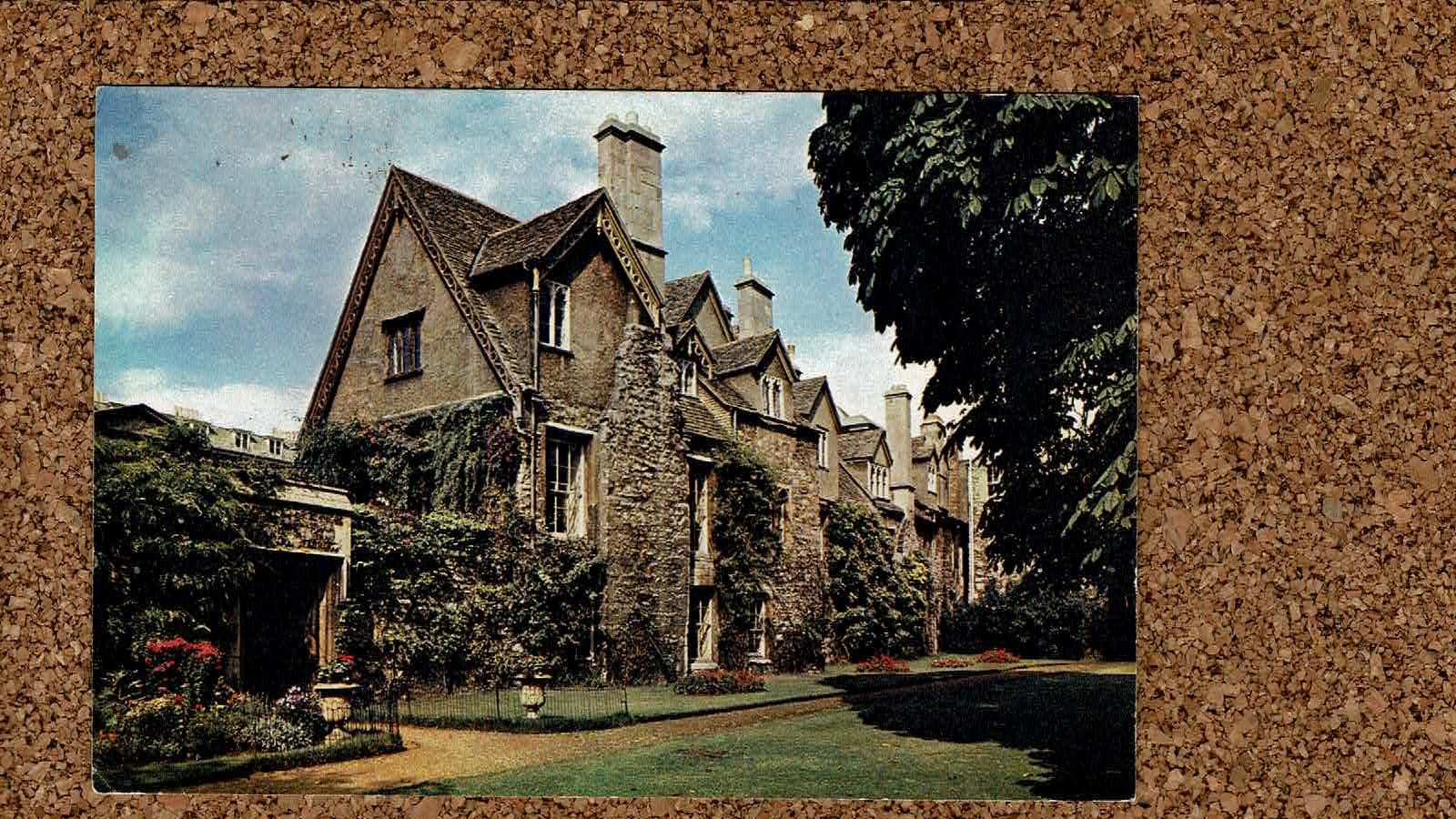
Greetings from Oxford!
These are the cottages at Worcester College, Oxford – old even by the standards of that city.
Originally medieval cottages, they sit alongside grand eighteenth century buildings which make up two other sides of the quadrangle. (Yes, I know I haven’t mentioned a fourth side, and a quadrangle definitionally has four, but it looks like a duck, walks like a duck and quacks, alright? Check on Google maps).
Worcester College was founded in 1714 from the bequest of Sir Thomas Cookes, a minor nobleman from Worcestershire.
Sir Thomas promoted education. In 1693 he gave an endowment to Bromsgrove School, and by 1698 he was in discussions about leaving £10,000 to endow a College at Oxford. Gloucester Hall (about which more later) was in the frame, as was Balliol College, the preferred choice of the University.
After Sir Thomas’ death, arguments continued, and for a while Magdalen Hall – later Mansfield College – was to get the money. But a decision of the Court of Chancery in 1712 gave the money – now totalling £15,000 – to Gloucester Hall, and with the agreement of the trustees in 1713, Gloucester Hall was re-established as Worcester College.
Gloucester Hall was the successor to Gloucester College, an Oxford University college from 1283 to 1542. Gloucester College was a victim of the dissolution of the monasteries, its property passing to the Bishop of Oxford, who sold it to Sir Thomas White, a cloth merchant, grand panjandrum of the city of London (he was Lord Mayor in 1553), and founder of St John’s College, Oxford. Gloucester Hall was treated as an annex to St John’s until Sir Thomas Cookes came to the rescue.
Worcester’s other buildings are a mixture of eighteenth, nineteenth and twentieth century styles. They include examples of works by four notable architects: Nicholas Hawksmoor (1661-1736), Henry Keene (1726-1776), James Wyatt (1746-1813) and William Burges (1827-1881). The college is unusual – for Oxford – in having sports fields contiguous to the main college buildings.
All being well, this piece will be published on 4 November. Which means that tomorrow, 5 November, is Bonfire Night, commemorating the attempt to blow up the King and the House of Lords in 1605. Robert Catesby – the prime mover of the plot – was educated at Gloucester Hall, but could not graduate, as to do so would have required him to swear an oath of loyalty to the King as the supreme head of the Church of England, something a devout Catholic could not do.
So if you are bobbing for apples, holding a sparkler and watching fireworks tomorrow, spare a thought for Worcester College and its connection to the celebrations.
Related articles

Boards can’t predict the future, but they can make sure their institution is ready for it
Debbie McVitty | Comment | 19/10/26

What counts as a graduate outcome when the labour market is changing?
Angel Tan | Comment | 16/10/26

Widening participation isn’t finished while background still predicts destination
Hannah Rolley | Comment | 16/10/26