Creative cities and the future of higher education
There is a buzz in the air. Alistair Brown writes about the rebirth of the creative city and the possibilities for higher education.
This article is more than 7 years old
Comment|

Alistair Brown is a Teaching Fellow in the Department of English Studies at the University of Durham
When the internet age dawned, visionaries predicted that the physical workplace would soon succumb to the “death of distance.”
Instead of crawling through congestion to an office in the city centre, we’d work from home in our pyjamas. Instead of team huddles around a flip chart, we’d doodle in second life hangouts. Aspects of these predictions have come true, of course. But it also turns out that in our increasingly creative economy, where we trade in intangible ideas rather than hard goods, and so needn’t be rooted to places of production, it has become more not less important to work together in tight-knit, urban spaces. The fact that innovative businesses thrive in “creative clusters” should carry lessons for higher education as it continues to debate the merits of digital teaching.
Rebirth of the creative city
For some digital-first evangelists, MOOCs and OPMs will collapse the walls of brick universities. Degrees will be sourced from the cloud of digital learning offered by various providers. A few world leading teachers will dispense their knowledge to vast classes who collaborate across continents. Their justification is often that the market leads ahead of the curve, and ivory towers need to catch up with digital-only modes of work already allegedly popular in industry “out there.”
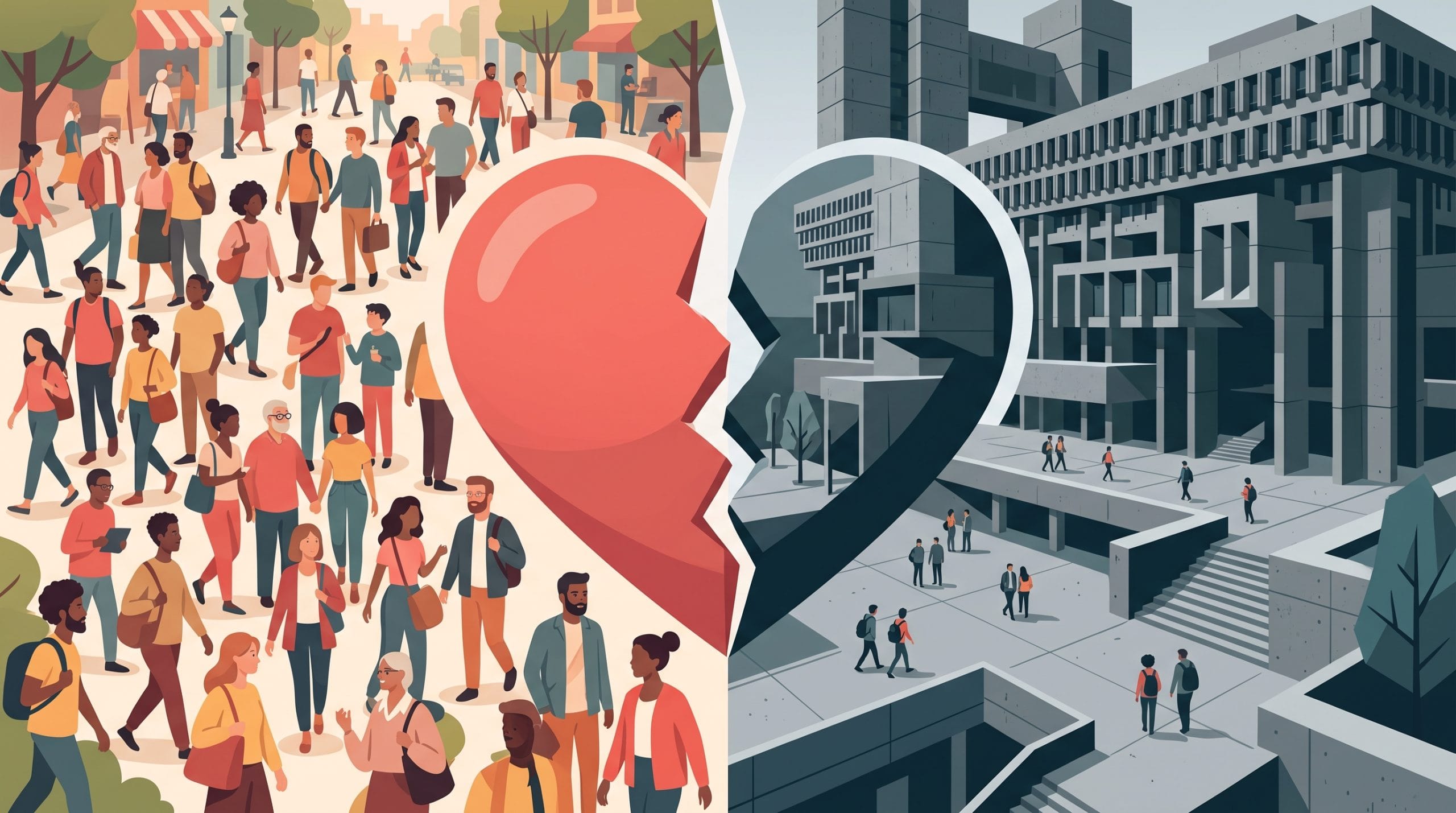
But research into creative cities – such as Silicon Valley in the USA or Manchester (“Madchester”) in the UK – suggests that, far from the death of distance, we’re experiencing the rebirth of intimate space.
A cluster of buzz
Businesses grow when they are located near to one another. This is especially true in the UK’s thriving creative industries, encompassing everything from film and video games to arts and crafts. In the creative sector, proximity matters more not less, and is measured by the unit of the “creative cluster”. Innovation happens when people from various backgrounds – which means not just skills, but also of diverse cultural, ethnic, and artistic backgrounds -come together and generate a hive-like feeling of “buzz.”
Buzz is a synonym for serendipity: the possibility that the budding playwright will bump into a theatre producer in a bar off Broadway; the chance encounter between a digital artist and app developer in a corner café. Highly localised networks spring up. Going to physical places to network takes more effort than firing up Facebook, but that initial handshake builds trust, and then prompts people then to collaborate digitally. In the words of Michael Storper and Andy Venables’ highly-cited paper on buzz in the creative city, face-to-face engagement “provides the strongest, most embodied signals of such desire and can generate the rush that pushes us to make greater and better efforts.”
Already words like “creative cluster” and “buzz” should seem quite resonant with the ideal of a university. A university is somewhere “firms” – in the form of disciplinary departments – co-exist and are able to draw on one another’s services or expertise. From student societies to campus cafés to academic conferences, universities create opportunities for chance interaction. Increasingly, ground-breaking research happens in spaces of interdisciplinary “spillover” between departments, in coincidental moments of meeting. Had Cardinal Newman been writing today, rather than looking back to the tradition of the medieval monastery he would have been invoking the “creative cluster” to model the university as a community of scholars under one roof.
The business case of going creative
In 2001, Edward Leamer and Michael Storper observed in a US government report on the economic geography of the internet age that “academic office hours, seminars, conferences and coffees testify to the importance of face-to-face interactions in the production and distribution of new or complex ideas”. Innocently writing just before the explosion of social media, they observed that “the virtual world of the Internet has no physical neighbourhoods, no Starbucks where like-minded people bump into each other for serendipitous handshaking in communities defined by cultural affiliation, language, ideology, desire, mutual identification, and other powerful forms of bonding”. But if Facebook and Twitter seem potentially to provide a digital substitute for Starbucks, it’s telling that it’s precisely since the advent of social media that there has become an ever stronger need for physical relationships in the creative city. Social media entails such loose engagements that businesses continue to thrive in concrete agglomerations of the like-minded.
So we should be very wary of the views expressed by the likes of the former-VC of the Open University, Peter Horrocks, who argued that the digital age should allow students to devise their own curricula from universities across the globe, and to freely switch from studying at one university to another based on their personal requirements. On this view, the “buzz” of being part of a single, spatially intimate university community doesn’t matter. However, it is a hollowed-out vision of what makes a great university, like a great creative city, generate ideas. While some may bemoan shiny new buildings springing up on campuses, the investment in shared space that they signify should be welcome.
Anyone who fronts a classroom, and wants their teaching space to stay connected in the most physical sense, might find that talking the language of creative business – which now sits at the heart of industrial strategy – will prick the ears of government.
Comments
New comments will come back with sign-in later this year.
Related articles

During times of transformation emerging leaders need to be inside the leadership tent
Alistair Jarvis | Comment | 12/10/26
Britain likes its universities but not its degrees
Jim Dickinson | Comment | 12/10/26
Who pays the price when universities cancel offers to protect refusal rates?
Jim Dickinson | Comment | 10/10/26

Erasmus+ is back, but who gets left behind?
Jonathan Disley | Comment | 9/10/26

Procurement is a collaboration question too
James Coe | Comment | 9/10/26
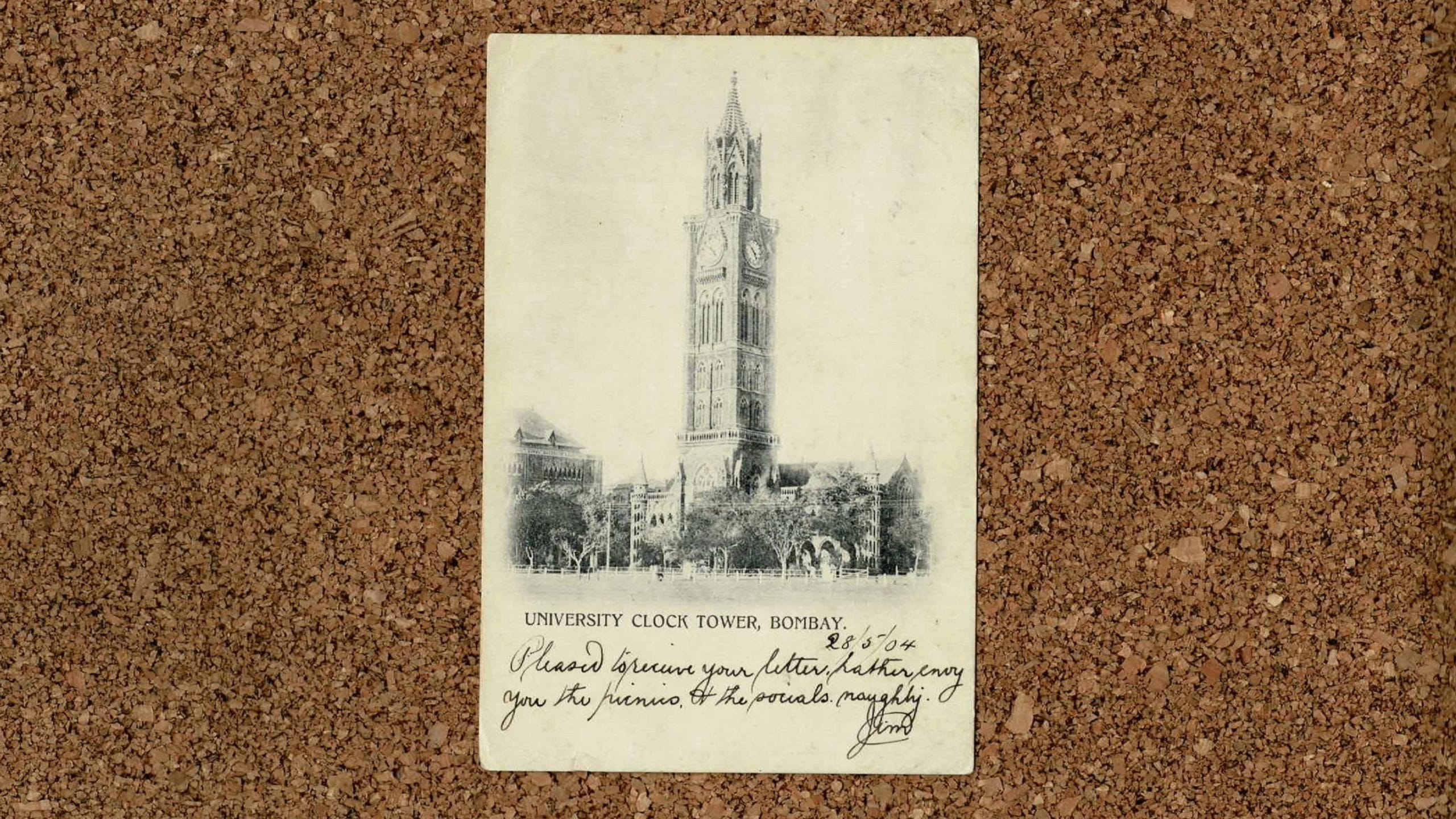
Higher education postcard: Rajabai Clock Tower, University of Mumbai
Hugh Jones | Comment | 9/10/26