
• About Us
    • About Wonkhe
    • Our subscriptions
    • People
    • Our partners
    • Pitch an article
    • Contact Us
  • Events
  • Latest
    • Explore the whole archive
    • Podcasts
    • Data
    • Wonkhe research
    • Long reads
    • Analysis
    • Comment
    • Wonk Corner
  • Jobs
    • Live jobs
    • Jobs posting & prices
  • Subscription
    • Briefings sign up
    • Subscription services
    • Check my sub status
    • Daily Briefing
    • HE Influence
    • HE Counsel
    • Wonkhe SUs
    • Policy Update
  • SUs
    • SUs HOME
    • SUs LOGIN
    • ADD NEW SUs USER
    • EXPLAINERS INDEX
    • SUBSCRIPTION BENEFITS
    • Summer 2026 Webinar Box Set
    • LATEST SUs BLOGS
    • SU STRATEGIES
  • Wonkhe Bluesky
  • Wonkhe Bluesky
  • icon-comments
  • About Us
    • About Wonkhe
    • Our subscriptions
    • People
    • Our partners
    • Pitch an article
    • Contact Us
  • Events
  • Latest
    • Explore the whole archive
    • Podcasts
    • Data
    • Wonkhe research
    • Long reads
    • Analysis
    • Comment
    • Wonk Corner
  • Jobs
    • Live jobs
    • Jobs posting & prices
  • Subscription
    • Briefings sign up
    • Subscription services
    • Check my sub status
    • Daily Briefing
    • HE Influence
    • HE Counsel
    • Wonkhe SUs
    • Policy Update
  • SUs
    • SUs HOME
    • SUs LOGIN
    • ADD NEW SUs USER
    • EXPLAINERS INDEX
    • SUBSCRIPTION BENEFITS
    • Summer 2026 Webinar Box Set
    • LATEST SUs BLOGS
    • SU STRATEGIES
by Abigail Morris
Comment
27/07/26

How to work with the department formerly known as DSIT

Former DSIT director of communications Abigail Morris explains what Whitehall's latest reshuffle means for universities
by Abigail Morris
Comment
27/07/26
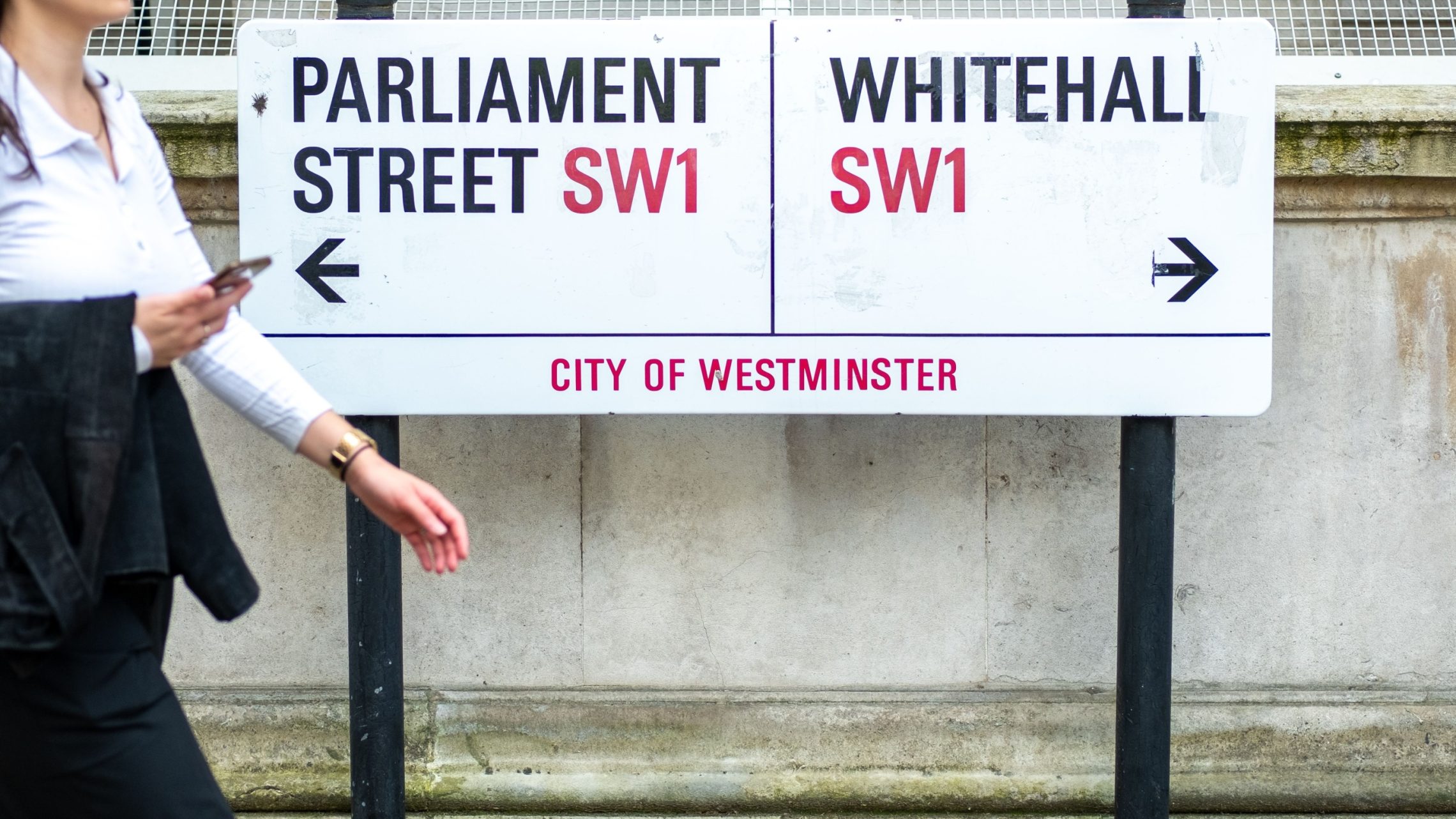
Shutterstock_2477802089
Image: Shutterstock
Am photo 1
Am photo 1

Abigail Morris

by
staff
24/07/26

Abigail Morris is a Director at Public First

Tags

  • Communications
  • DSIT
  • public engagement
  • UK Government
Abigail Morris

Abigail Morris is a Director at Public First

Tags

  • Communications
  • DSIT
  • public engagement
  • UK Government

Higher education is getting pretty used to machinery of government changes.

In the last decade, the research and innovation brief has moved from BIS to BEIS (in 2016) to DSIT (in 2023) and now DBIST, the newly formed Department for Business, Innovation, Science and Trade. So it goes.

As the sector gets to grips with what this means for university research, spare a thought for civil servants who might be navigating their third departmental move in as many years. While it may seem like a “lift and shift” from the outside, it is rarely that simple inside. While universities will (rightly) be wanting answers about policy continuity and the possibility of new initiatives, don’t underestimate the amount of time and energy a machinery of government change takes.

The view from the inside

I had been in my dream job as Director of Comms at the business and energy department (BEIS) for less than two years when I found out the department had been abolished via an overnight briefing to the Sun.

But while the timing was a surprise, as was the creation of DSIT, we weren’t surprised that BEIS was for the chop. Energy policy had become all consuming – this was the era of the energy price guarantee, the scandal of pre-payment meters, and new renewable projects. Science and research had sat uneasily alongside.

I spent a sleepless night pondering what to do next, and decided that DSIT was the right move for me. It’s good I came to that conclusion quickly, because my boss called at 6am asking what my decision was.

At BEIS, I’d been consumed with urgent energy issues so the new proactive focus of my role was energising: working on how to explain bio-engineering, making the public case for R&D, and communicating our excitement that the five critical technologies now sat together in one department (for the first time!).

On my first official day on the job, I took to Linkedin and said if DCMS was known as the Department of Fun, we would be the Department of Cool. Hyperbole? Well, I had to recruit some new comms people somehow. That 24/7 press phone doesn’t answer itself.

It became immediately clear that there was enormous support for the new department from stakeholders and staff alike. That doesn’t mean there were no teething problems – the move from Google Docs onto Microsoft Word was particularly painful for those ex-DCMS staff who now found themselves in DSIT, and equalising employment terms and conditions took a long time.

But people were excited. They were no longer competing with the BBC license fee, or the Olympics, or steel, or the Post Office for ministerial attention or civil service resource. And as we hot-desked around 100 Whitehall, you were likely to find yourself sat next to someone grappling with similar policy issues to you in similar sectors.

Beyond the eulogy

But to move this on from being a DSIT eulogy and into some practical advice: the way the HE sector engages with government will now transform entirely.

Universities were central to our DSIT comms strategy; we probably did more ministerial visits to higher education institutions than any other type of organisation. In science minister Patrick Vallance, and Andrew Griffith before him, you had deep understanding from their previous life outside government. This is about to change.

It doesn’t need stating to Wonkhe readers how critical AI is to growth and national security. But the risk is that every AI announcement or statement on the technology is chalked up as “one for innovation” with no energy or space left on the grid for other critical technologies or research priorities.

Likewise, whereas DSIT had the space to seriously consider the financial struggles of universities and their impact on the research pipeline, in the much larger DBIST, higher education will need to compete for attention with sectors such as steel. And in a competition over who is in more immediate crisis, steel is currently winning.

Universities will need a new strategy to make sure they are positioned as essential to the Jonathan Reynolds growth mission – not just as a sector (though that is part of the story) but as an enabler for growth across the country, in high value manufacturing, and in particular in sectors that have always been seen as critical such as the automotive sector.

Of course, higher education institutions have done this before. But after three years of an open door into DSIT which saw ministers thinking about innovation every day, engagement plans will need to evolve to take into account new political realities. There could be new opportunities: a narrative on how spin-outs can boost competition and consumer choice, or explaining how universities working hand-in-hand with the trade part of the department can enhance higher education even further as a great British export.

The returning business secretary launched a new Substack on taking office, with the words “growth must work for every postcode, creating opportunity for every community, and every business.” The stakeholders who offer the most to support that mission will be the ones who are most successful in the new post-DSIT Whitehall.

Share

  • Click to print (Opens in new window)
  • Click to email a link to a friend (Opens in new window)
  • Click to share on Bluesky (Opens in new window)
  • Click to share on LinkedIn (Opens in new window)
  • Click to share on Reddit (Opens in new window)
  • Click to share on WhatsApp (Opens in new window)
  • Click to share on Facebook (Opens in new window)
  • Click to share on Telegram (Opens in new window)
  • icon-comments
  • icon-share

Share

  • Click to print (Opens in new window)
  • Click to email a link to a friend (Opens in new window)
  • Click to share on Bluesky (Opens in new window)
  • Click to share on LinkedIn (Opens in new window)
  • Click to share on Reddit (Opens in new window)
  • Click to share on WhatsApp (Opens in new window)
  • Click to share on Facebook (Opens in new window)
  • Click to share on Telegram (Opens in new window)

making sense SLOLS 26 side green

MSoHE_blog_banner_1000x1680@2x

View here
by Mark Leach
featured message
18/01/24

post list Latest articles

Shutterstock_2503867781
Image: Shutterstock

For innovation, purpose matters more than machinery

by James Coe
Comment
27/07/26
shutterstock_2576451539-1
Image: Shutterstock

Northern Ireland’s cheap degrees come with hidden price tags

by Jim Dickinson
Comment
24/07/26
222vaskathecatoncork (1)
Image: Hugh Jones

Higher education postcard: is it the summer yet?

by Hugh Jones
Comment
24/07/26
wonkhe-exam-desk-empty
Image: Shutterstock

Admission testing needs proper oversight

by Beth Hocking
Analysis
23/07/26
Shrinking population
Image: Shutterstock

The Post-18 Project: No country for young men

by David Kernohan
The Post-18 Project
22/07/26
shutterstock_2742382911-3
Image: Shutterstock

Survey fatigue is the symptom of a wider student feedback fragmentation problem

by Emily Chapman
Comment
22/07/26
Magnifying glass missing piece
Image: Shutterstock

Why structural racism sits outside the vision of the Office for Students

by Shaalinie Sivalingham
Comment
21/07/26
wonkhe-local-buildings
Image: IKON

Devolution is not the only answer – higher education still needs a national policy agenda

by David Kernohan
Comment
20/07/26
Shutterstock_1870810618
Image: Shutterstock

Higher education would look very different if local areas were in control

by Michael Salmon
Analysis
20/07/26
shutterstock_2659904109
Image: Shutterstock

Beyond equity of regard to equity in practice for college and university-based higher education

by Nic Beech
Comment
20/07/26
Subscribe
Notify of

0 Comments
Oldest
Newest
Inline Feedbacks
View all comments

Related articles

Ministry for manchesterism

The Post-18 Project: A ministry for Manchesterism

by John Blake
The Post-18 Project
29/06/26
Image: Shutterstock

There is no growth without universities

by James Coe
Comment
22/06/26
Bitter,Gourd,,Extract,Powder,Bitter,Gourd,,And,Herbal,Capsule,On
Image: Shutterstock

There is now no alternative but for the sector to grasp the scale of the challenge it faces

by Samuel Roseveare
Comment
22/06/26
Sofa
Image: Shutterstock

International offices are being asked to manage risks they cannot see

by Lily Wednesday Rumsey
Comment
1/06/26
Lightbulb,Is,Located,On,The,Soil,,And,Plant,Are,Growing.renewable
Image: Shutterstock

To repair our social contract, universities must lead the conversation about how help to shape the country’s future

by Sally Mapstone
Comment
26/05/26
Untitled (1)
Image: Shutterstock

UK science must deliver on its promise of economic growth to resist growing political pressure

by Richard Jones
Comment
18/05/26
New,Ship,Flies,To,Another,Planet.,Spaceship,Takes,Off,Into
Image: Shutterstock

The HE sector is making progress on transformation – but government support could turbo-charge the potential gains

by Nigel Carrington
Comment
30/04/26
Red,Eared,Slider,Turtles,Sunbathing,On,A,Log
Image: Shutterstock

How DfE could design a university transformation and restructuring programme

by Matthew Howling
Comment
30/04/26

Copyright © 2026 Thesis House Ltd.

Wonkhe Bluesky

Wonkhe is published by Thesis House Ltd, registered in England and Wales (no. 08784934), 31–35 Kirby Street, London EC1N 8TE.

  • Moderation policy
  • Terms and Conditions
  • Privacy Policy
  • Moderation policy
  • Terms and Conditions
  • Privacy Policy

Wonkhe Mondays

By submitting you agree to our terms and conditions