Higher education postcard: University of the Highlands and Islands
This week’s card from Hugh Jones’ postbag takes us to Scotland’s newest university
This article is more than 2 years old
Comment|
Hugh Jones is a freelance HE consultant. You’ll find a daily #HigherEducationPostcard if you follow him on Bluesky
Scotland is bigger than you might think.
There’s more than 30,000 square miles of it; it’s three-fifths the size of England. But it’s nothing like as populous. And when you take into account the heavily urbanised stretch in the belt between Glasgow and Edinburgh, you’ll realise that there’s a lot of pretty empty space (and, indeed, a lot of pretty, empty space too). Some of it is magnificent mountains and glens. But it’s not entirely empty: there are towns, villages, hamlets. And if you want to ensure that people stay in the towns, villages and hamlets, you need to enable them to thrive. And, in educational terms at least, that’s how the University of the Highlands and Islands (UHI) came into being.
It’s an unusual institution. It brings together colleges across Scotland from Dunoon, on the Clyde estuary outside Glasgow, to Lerwick, chief town of Shetland – some 400 miles away by sea and land. It encompasses further education and higher education. It includes advanced research institutes. And it’s also the regional strategic planning body for education within the Scottish government framework. I’ve been struggling to think of another university with a similar remit.
The university’s origins lay in the UHI project, which started in 1992. Right from the outset, it was conceived of as having educational, social and economic aspects: see for example, this from the Oban Times and Argyllshire Advertiser of 28 April 1994:
A University of the Highlands and Islands could inject more than £70 million a year into the north of Scotland economy, according to a senior economist. Dr Ken MacTaggart, head of economics at development agency Highlands and Islands Enterprise, says the region stands to make major economic as well as educational and social gains if the project goes ahead…
Funding for the project was awarded by the Millennium Commission in 1996, and in 1998 the Open University confirmed that it would validate the degree-level programmes of the new institution. In 2001 it became the UHI Millennium Institute, and was recognised as a higher education institution. The following year, research funding was awarded, helping to cement its status. Taught degree awarding powers were granted in 2008, and in 2011 it was awarded university status, becoming the University of the Highlands and Islands.
It really is a multi-campus institution, and there’s a nice map on the UHI website.
Working (approximately) from North to South, there is
- Shetland College, located in Lerwick but with sites across the islands, founded in 1970
- Orkney College, in Kirkwall, founded in 1995
- North Highland College, in Thurso, founded in 1959
- UHI North, West and Hebrides – the former Lews Castle College, about which more later – founded in 1953
- UHI Moray, founded in 1971 as the Elgin Technical College
- Highland Theological College in Dingwall, founded in 1994
- UHI Inverness, founded in 1960; and also providing programmes at the Scottish School of Forestry
- Sabhal Mòr Ostaig, founded on Skye in 1973 and teaching solely through the Scots Gaelic language
- West Highland College, at Fort William, founded in 2010
- The Scottish Association for Marine Science (SAMS) at Oban, founded in 1884 and one of Europe’s leading marine science organisations
- UHI Perth, founded in 1961
- UHI Argyll, in Dunoon, founded in 1997.
Some of these sites have provision from school students through to doctoral research. It is a truly remarkable educational institution.
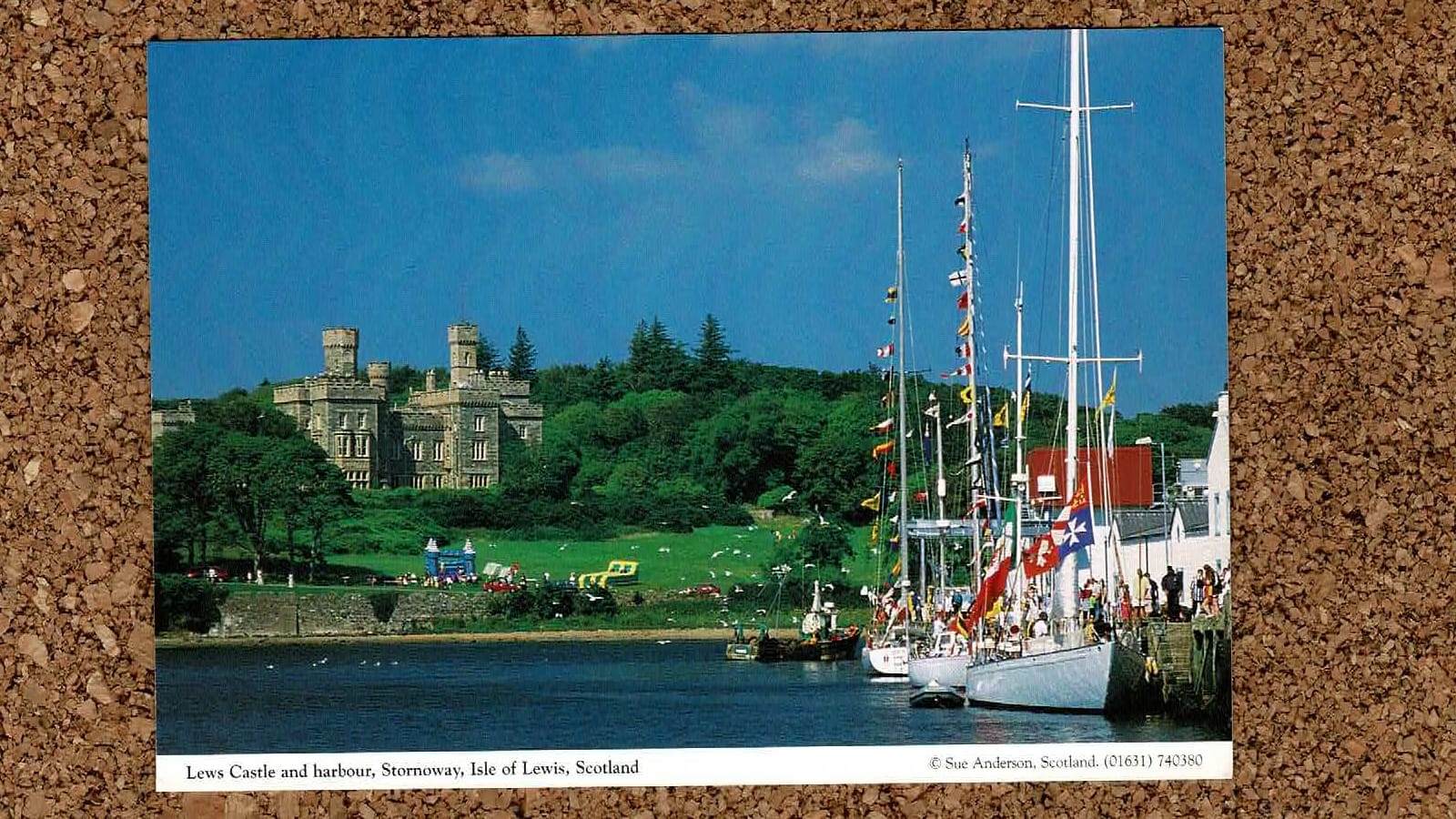
The card itself shows Lews castle and harbour. The castle was built between 1844 and 1851 by James Matheson, using the fortune he had made in selling opium to China (no, really – if you didn’t know about this, read up on the Opium Wars). In 1918 the Leverhulme family bought the Lews estate, and in 1923 the castle was given to the people of Stornoway. It was used by Lews Castle College in the 1950s, and is now a cultural centre and museum, with some private luxury apartments.
You might argue that this means it doesn’t really show the UHI, and should not count as a higher education postcard. I’d accept this as a fair criticism, but argue in my defence that it is a cheerful card to share as we head into autumn.
Nevertheless, to avoid any feelings that you’re being short changed, or deceived, here’s another postcard, this time of the Highlands Theological College (HTC), in Dingwall.
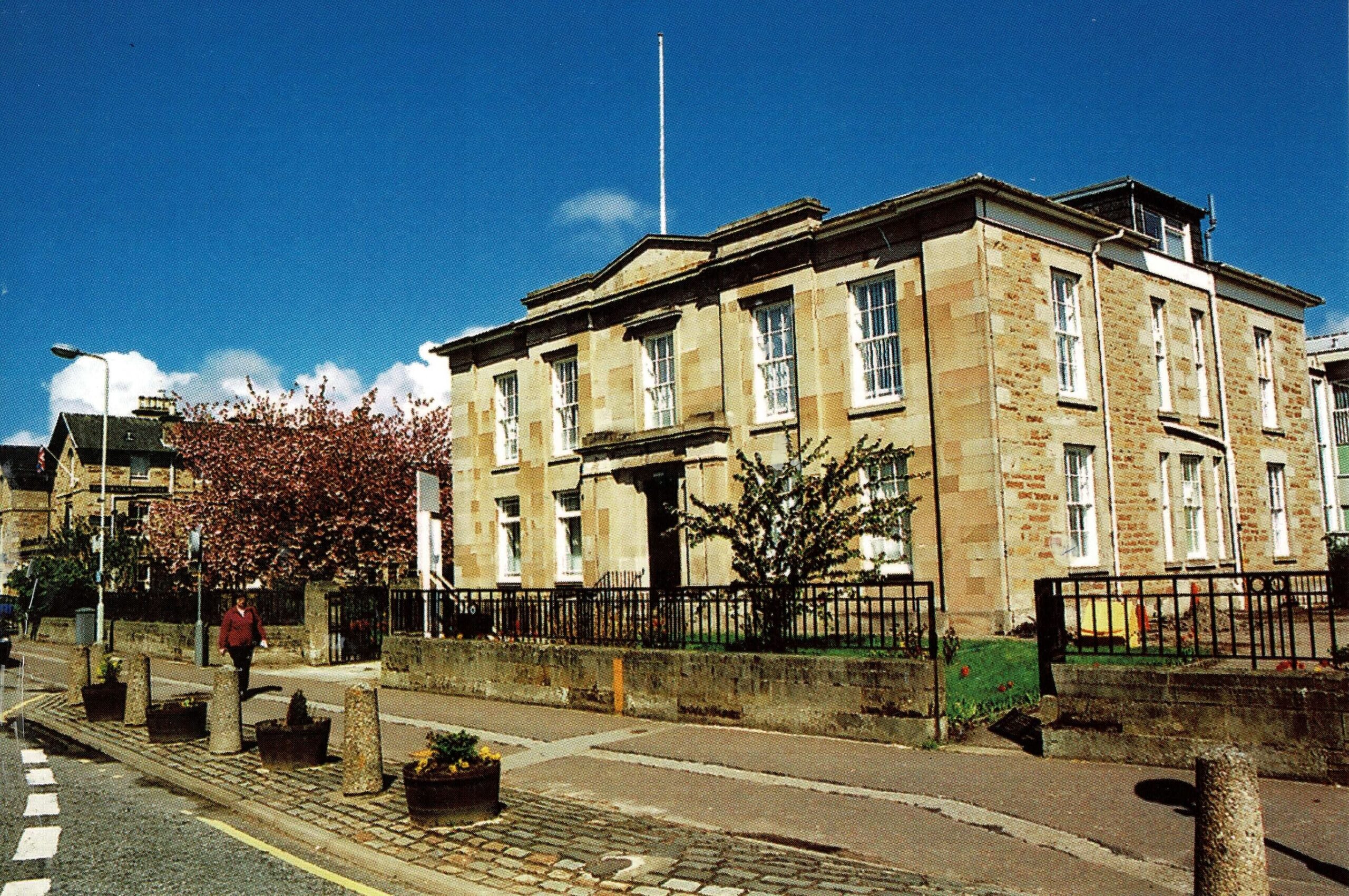
The creation of the UHI gave impetus to the foundation of HTC, and it has grown from a small hut in the grounds of Moray College to a well-established institution in its own rather splendid building. Its focus is Christian theology, but there is no religious test applied to study, and attendance at worship is not obligatory.
Related articles
Students just need to know where they stand on AI
Gracie Otley | Comment | 5/10/26
One year of leading UKRI
Ian Chapman | Comment | 3/10/26

Navigating the storms of student success
Kate Newby | Comment | 2/10/26
Higher education postcard: The Queen’s Tower, Imperial College
Hugh Jones | Comment | 2/10/26

A supplier shouldn’t be able to rewrite who owns students’ essays
Sam Dickinson | Comment | 2/10/26

Emeritus, honorary, and visiting professors are an untapped resource
Roger Watson | Comment | 1/10/26