Higher education postcard: Lady Margaret Hall
This week’s card from Hugh Jones’ postbag brings a card with a family connection (for him)
This article is more than 2 years old
Comment|
Hugh Jones is a freelance HE consultant. You’ll find a daily #HigherEducationPostcard if you follow him on Bluesky
In the universe of higher education, few institutions become known only by their initials.
Most of these are big beasts of research, like UCL and LSE; some are long gone friends (oh UMIST, where art thou?); and one is an Oxford college. LMH, or Lady Margaret Hall.
You’ll recall that a couple of weeks ago we looked at Somerville College, Oxford, and noted then that Somerville had an Anglican counterpart, Lady Margaret Hall. This is the LMH story.
So we’re in 1878, and the Association for the Higher Education of Women was formed in Oxford. The movers and the shakers of the association met on 4 June in the warden’s lodgings at Keble College. The warden – Edward Talbot – and his wife Lavinia had been impressed by Girton College in Cambridge, and reasoned that Oxford could do something similar. Talbot also asked “why should the Church not be for once at the front instead of behind its development?”, as he argued for an Anglican establishment. Answers on a postcard please.
And out of this meeting came a resolution to establish “…a small hall or Hostel in Connection with the Church of England for the reception of women desirous of availing themselves of the special advantages which Oxford offers for higher education.”
The hall established was Lady Margaret Hall, named for Margaret Beaufort. Margaret was the great-great-granddaughter of King Edward III, and mother of Henry VII, the first of the Tudor dynasty. She founded two Cambridge colleges – Christ’s College and St John’s College – and was an influential and autonomous politician, like few other women of her time.
The first students were admitted in 1879 – nine of them – and thanks to the college’s website we know their names (and on the website you can read a little more about them): Mary Anstruther, Edith Argles, Eliza Bradby, Winifred Cobbe, E Laura F Jones, Louisa La Touche, Edith Pearson, Mary Smith, and Charlotte Ward.
At first students did not – or more correctly could not – receive Oxford degrees for their studies. Degrees were awarded instead by Trinity College Dublin. In 1920 Oxford agreed to admit women to degrees, and the first Oxford graduates from LMH gained their degrees.
Early students of the college included Gertrude Bell, archaeologist, writer and diplomat, advisor to the British delegation at Versailles and drawer of the boundaries of modern Iraq; and Eglantyne Jebb, founder of Save the Children and author of the Declaration of the Rights of the Child, upon which the UN Convention on the Rights of the Child is based.
In 1928 the LMH celebrated its 50th anniversary, and was granted arms: “Or, on a chevron between in chief two talbots passant and in base a bell azure a portcullis of the field.” The talbots – dogs – recognised Edward and Lavinia Talbot; the portcullis was from the arms of Margaret Beaufort; and the bell symbolised the Wordsworth family, in honour of the first principal, Dame Elizabeth Wordsworth (who, by the way, also funded and founded St Hugh’s College, Oxford in 1886).
Lady Margaret Hall became a college of the University of Oxford in 1960. It was still for women only. But in March 1977 the college’s governing body decided to admit men, and in 1979 the first mixed cohort joined the college.
Let’s add three more LMH related facts.
Firstly, and fabulously, from 2016 LMH offered a foundation year. Uniquely amongst Oxford or Cambridge Colleges, this sought to widen access to the College. A big tick here for LMH, in my view.
Secondly, Nobel Peace Prize winner Malala Yousafzai studied at LMH from 2017 to 2020, graduating in philosophy, politics and economics (PPE). Lots of universities have Nobel prize winners amongst their professoriate; few amongst their student body.
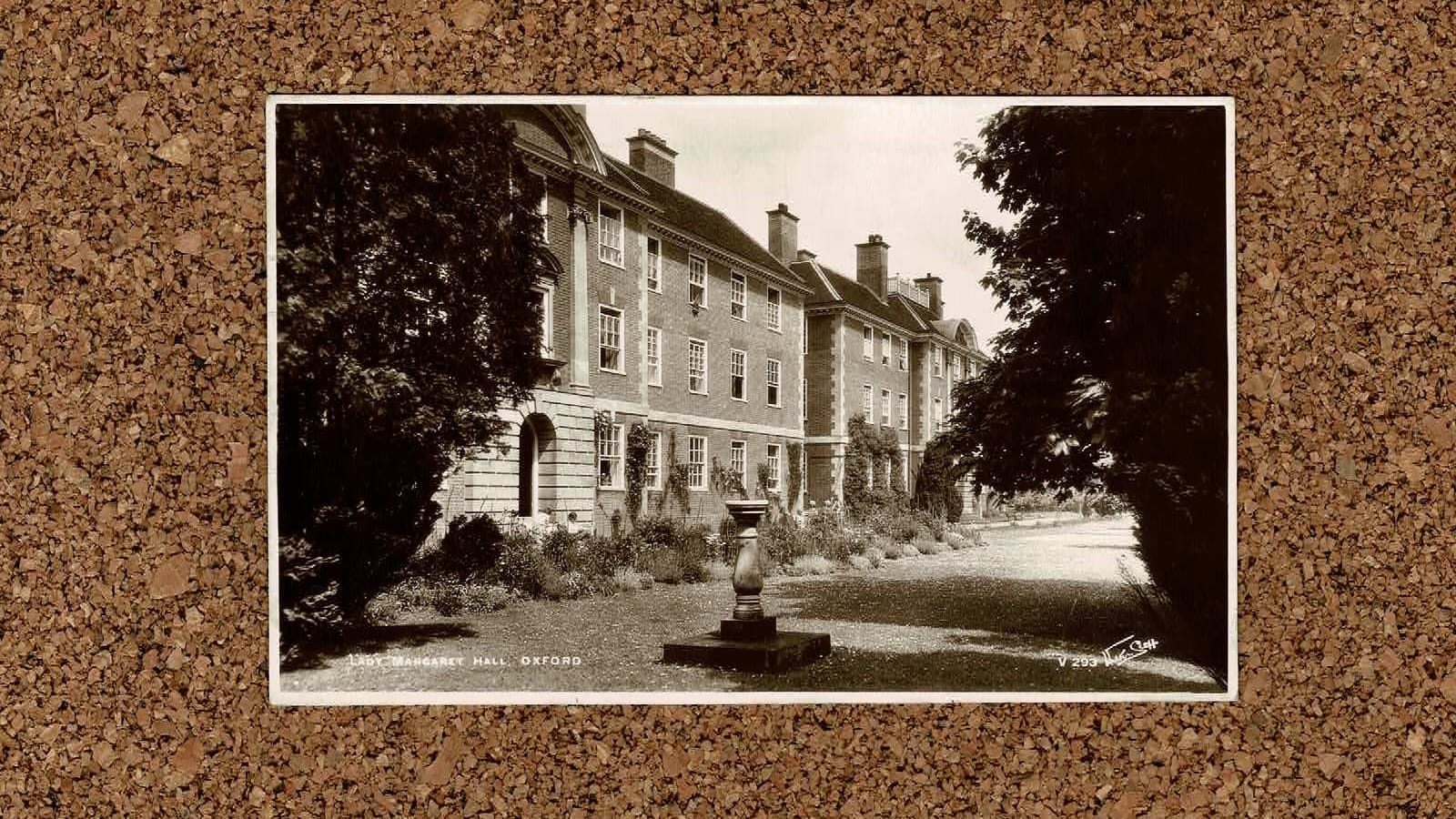
And finally, my aunt, Marion Parry, née Jones, studied at LMH, before a varied career in teaching and academia, including at Birmingham and Swansea Universities. At Birmingham she taught Tim Curry, with whom I am not sure she was overly impressed.
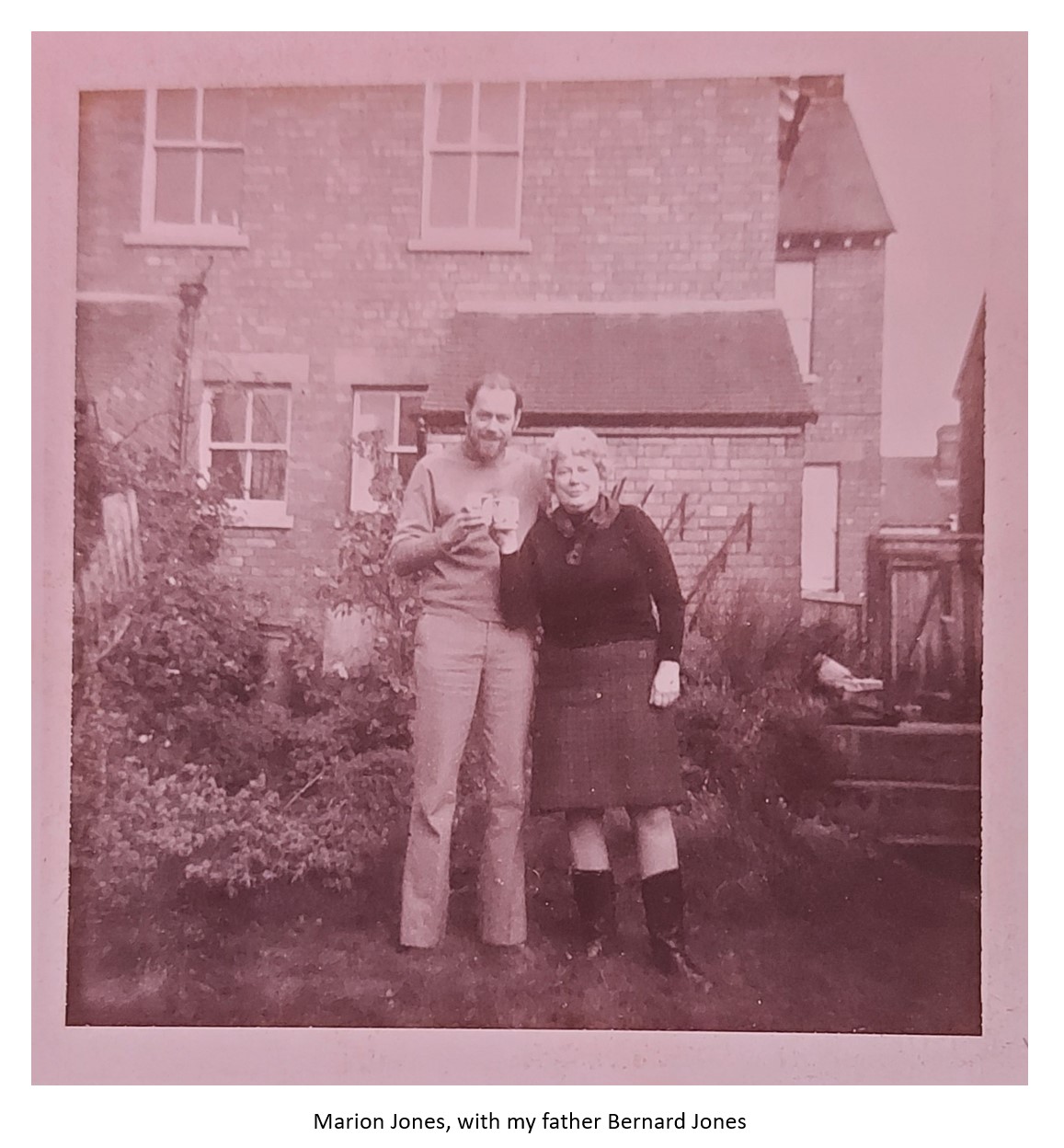
The postcard shown was sent on 27 March 1939 to Camberwell.
We’re having quite a nice weekend here, though the weather so far has been mixed. Oxford is beautifully quiet and peaceful after London.