Devil in the detail as the Bill enters final stages of scrutiny
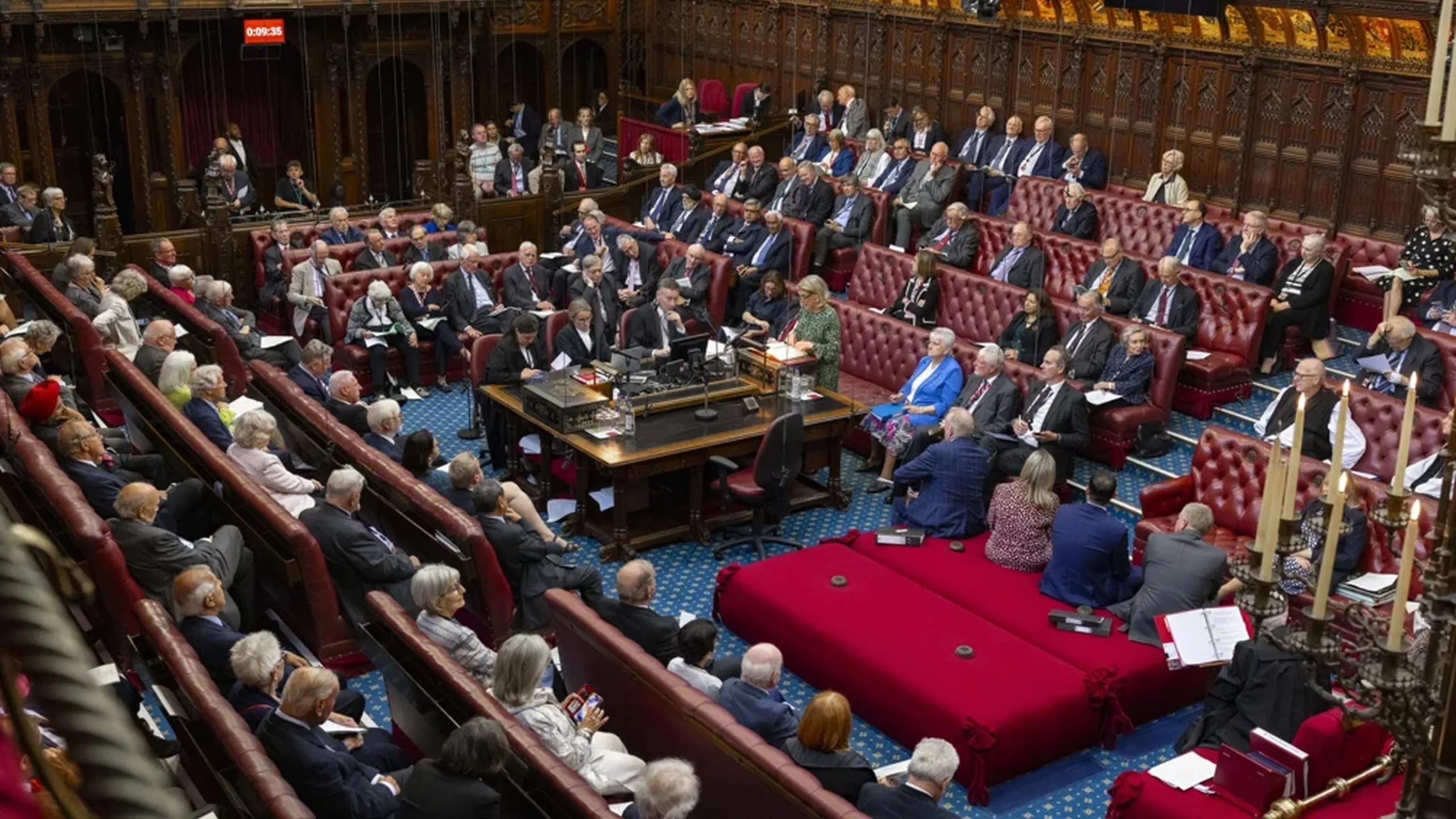
As the Bill enters its Report stage in the House of Lords, the sector has wound up its lobbying effort – but there are still numerous interesting amendments that peers will seek to make in the coming weeks.
This article is more than 9 years old
Policy Watch|
Mark is founder and Editor in Chief of Wonkhe
It’s been little over a month since the unprecedented seven-sitting Committee stage concluded, but developments both in public and private lead us to expect a very different Report and Third Reading then we predicted at the time.
Fresh in the minds of Peers will be the huge range of amendments to the bill laid by Viscount Younger of Leckie on 24th February – addressing many of the concerns raised during the Committee debates: on institutional autonomy, delegated powers, sector ownership of quality standards (moving from definitions within the bill and by OFS to explicit ownership by the “delegated body”, itself a sector owned organisation) powers of degree awarding power revocation, freedom of speech and academic freedom, Haldane and research council independence, and OfS/UKRI interrelation.
Alongside this, the government is presenting new aspects of the Bill – on credit transfer and accelerated degrees that perhaps reflect pressures and ideas from outside the chamber, most notably welcomed by a jubilant Independent HE – though the big winner in higher fees for two-year programs may well be the University of Buckingham.
These amendments have also been welcomed by Universities UK GuildHE in a joint statement wherein they signal that there are now happy with the Bill as it stands, and urge peers to now let the legislation pass. The letter takes also speaks up in favour of the current text on the Teaching Excellence Framework, stating: “We believe that adding more to the bill about the TEF (beyond the existing clause which allows this framework to be established) risks damaging the flexibility which is required to allow the sector and government to work together to achieve a tool which is ultimately useful for students, staff and employers.”
Not everyone is happy though, UCU has been raising concerns about the opening of the HE sector to new entrants who perhaps have less experience in delivering HE, and express these alongside claiming that “the government’s plans for the Teaching Excellence Framework […] miss their mark and won’t provide a meaningful measure of quality”, adding that “Peers have a clear opportunity to improve this bill and stand up for quality in our higher education system.”
We can expect TEF-related fireworks at any point between amendments 19-46 or 62-72; these may be taken as a block although their effects are varied. There is one particularly interesting amendment currently on the marshalled list: Amendment 72 – (from Lord Blunkett, Baroness Garden and Baroness Wolf expressing cross-party will) which would replace the current clause 26 (“Rating the quality of, and the standards applied to, higher education”).
The replacement text puts responsibility for this mechanism of quality assessment squarely in the court of the Secretary of State (rather than OfS) while quietly requiring separate parliamentary approval for the finalised process.
The likely reasons for this are buried in the unappetising-sounding Further supplementary Delegated Powers Memorandum. Entombed quietly in a section entitled “Amendments to clause 31 and Schedule 2, paragraph 2(2), (5), (6), new (6A), (7) and (10), and paragraph 3(2), (4), (5), new (5A), (6) and (9)”, we learn that the Secretary of State will have powers to set the “sub-levels” outside of the floor, basic and higher fee amounts without parliamentary scrutiny.
The “sub-levels” – perhaps better known as “bronze” and “silver” levels – are what make TEF relate to fee levels, and the Further Supplementary Delegated Powers Memorandum (para 28) is clear that “The Secretary of State’s ability to set the sub-level amounts by reference to whether or not providers have a quality rating and the level and type of that rating (paragraphs 2(7) and 3(6) of Schedule 2), is […] intended to provide flexibility and enable the Government to incentivise good quality teaching in higher education.”
Not only are the levels of fee increases for different TEF levels alterable at ministerial whim, the flexibility is provided to “maintain control over the overall affordability of the student finance system” (para 26) – rather than, say, to reward good quality teaching wherever it is found.
If the text under Amendment 72 is adopted, Parliament would have scrutiny over TEF, and thus the linking of TEF to fees each year, and would receive a regular update on the validity and suitability of the metrics involved in order to help them do so. This is perhaps heavy-handed, but might be justified for an important metric with major financial implications – and would be very difficult for a government already committed to a “lessons learned” study to argue against.
Amendment 19 from Kerslake, Stephenson and Garden is a simple and effective delinking of the TEF from fee levels. Whereas it may be that the Lords will vote “content” on a cross-party amendment of this nature, the appetite for further antagonising the government may be limited. Such a change would also most likely not be upheld by the Commons.
The cavalcade of Viscount Younger’s improvements to the text of the Bill that he defended so tenaciously at Committee make up a little under half of the amendments at Report (89 of 208). Others return to familiar issues from the committee: links between OfS and UKRI, sector entry and exit, Sharia-compliant finance, and the key wonk issue of the publication of open data (thank you, Lord Willis).
And if anyone was wondering what alternate name for OfS Lord Lipsey would suggest following on from what we have grown to know as “offie-gate”: he plumps, with the support of Lady Garden and Lord Burns, for the “Office for Higher Education Standards” in amendment one – we’d venture to suggest this would perhaps be commonly rendered as ‘office’, but will be watching the very start of the debate with bated breath.
A mere(!) four report sittings are scheduled this month, followed by a Third Reading on the 22nd March, just before the Easter recess begins. If it is green lights all the way there will be one round of ping-pong in the Commons tennis-court before the Higher Education and Research Bill receives Royal Assent some time before the Queen’s Speech at the State Opening of Parliament in May.