From Oslo to Hamburg – our January 2027 study tour
Ten years after the first Wonkhe SUs trip north, Jim Dickinson and Sharanya Sivarajah set out the route, the hosts and the costs for 2027’s study tours
SU Blogs|
Jim is an Associate Editor (SUs) at Wonkhe
Sharanya is Wonkhe’s SUs Community and Policy Officer
If anything, the case for UK SUs building links with Europe has only grown in the past year – and our partners around the continent show us that there are other ways to do student representation, democracy and services in the student interest.
Back in 2017 a group of SU officers and managers toured around Scandinavia on an extraordinary five-day journey packed full of lessons and learning – and since then we’ve organised tours to Scandinavia, the Baltics, the Low Countries, Finland, the Balkans and Austria, the Visegrad countries, Dublin, Stockholm, the Rhineland and Reykjavík.
So ten years on from that first trip, in 2027 we’re heading back north. Our five-day tour in January will kick off in Oslo and travel through Norway, Sweden and Denmark – with a ferry across the Kattegat in the middle – before crossing the border into Germany and finishing up in Hamburg.
Details below are provisional – we’re still lining up hosts, so the exact institutions we visit may change – and while we’re expecting demand to be high, please don’t book travel or accommodation yet. If you’re keen to come, we do need an expression of interest now – and we’ll then confirm the details of what you need to do next early next month.
On the site, Durham SU’s Gareth Hughes explains the benefits to SUs and why taking development seriously means getting on the bus, and a past participant sets out what they learned.
Why and how
We’re pretty confident that this will be the best bit of training and development spend you’ll make this year. Participants will engage with multiple delivery structures for student activities, volunteering and SU staffing, see a range of models for democratic structures – including elections, student parliaments and policy making – and generate new ideas for campaigning, collaboration and influencing in the student interest.
They’ll also learn about different kinds of regulation over student voice and the student condition, identify different ways of doing belonging, student activities and employability, and have the chance to network with other SUs – both from across the UK and across the countries we visit.
SUs normally send an elected officer and a manager. You are responsible for booking flights and accommodation. We book the in-country travel, plan the itinerary and set up the meetings with the local and national SUs.
It’s an amazing opportunity to spend time with other SU officers and managers, build links with European counterparts and bring back endless ideas for making student lives and SUs better.
Scandinavia and north Germany – Norway, Sweden, Denmark and Germany
Travelling on Sunday 10 January, the tour will begin on Monday 11 January and end in Hamburg on Friday 15 January, travelling back on Saturday 16 January.
This year’s route has been built around the bits of the student movement that UK SUs rarely get to see side by side – competing and complementary national unions, city-wide student bodies, the faculty layer that sits between course reps and the SU, student-run advice, student welfare organisations that students themselves govern, and student houses (for activities, performance and networking).
Day one – Oslo
We’ll spend the whole day on foot and on the metro in Norway’s capital. We’ll kick off at a student-run legal aid clinic that three law students set up in a converted bus in 1971 – it still uses its casework as evidence for law reform campaigns, and alongside a sister clinic in the same building, it recently won credit for a year spent as a caseworker.
We’ll then meet Norway’s national union, formed in 2010 when two rival national bodies merged and funded through a levy collected with every student’s semester fee, before moving on to the student parliaments at the city’s big universities. One has a signed cooperation agreement with its university that guarantees reps time in class, money at every level and pay for faculty student leaders, whose faculty councils survived a vote to abolish them earlier this year.
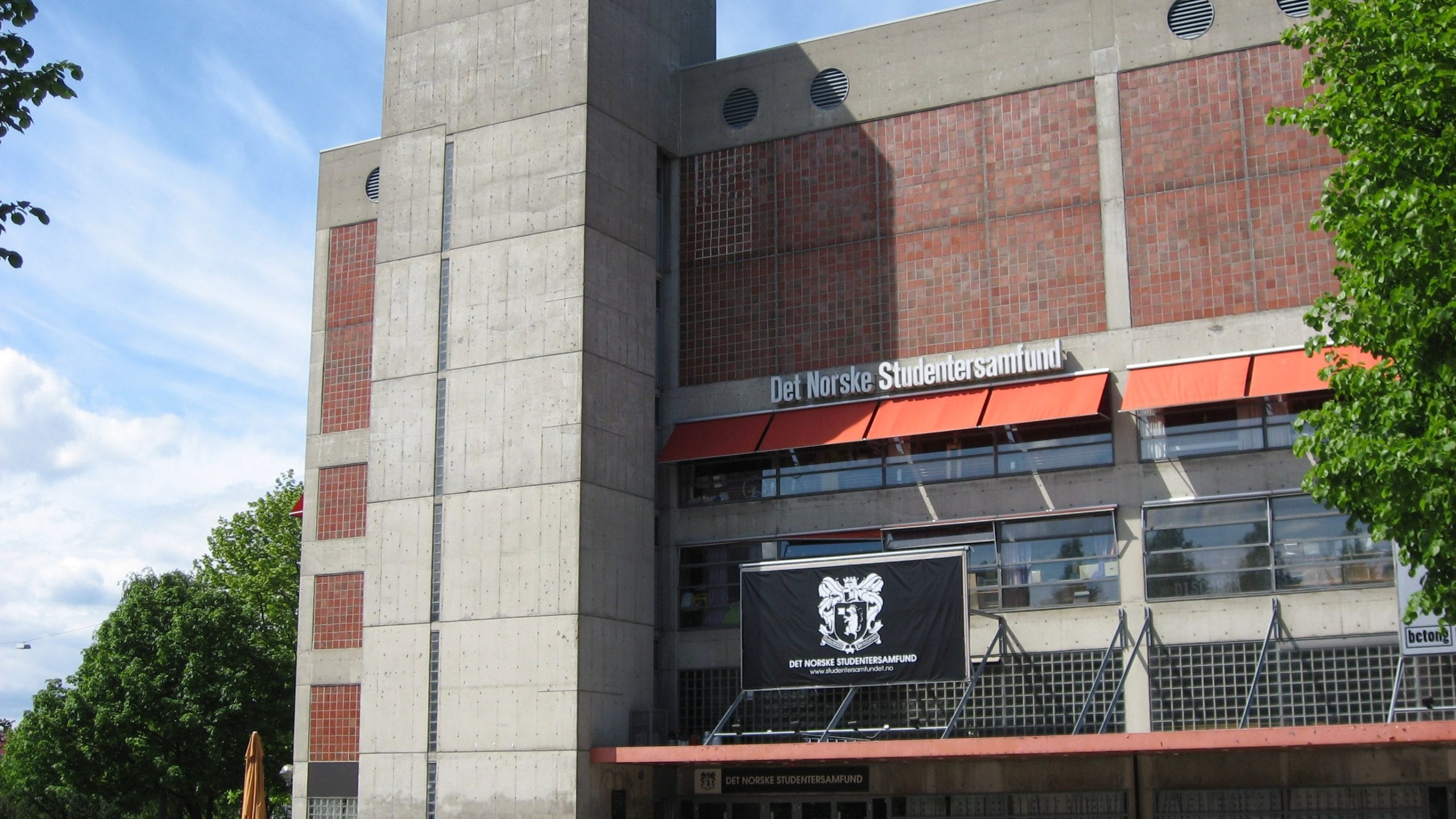
In the afternoon we’ll meet the city-wide student welfare parliament, which elects the board of the student welfare organisation that runs housing, health and catering across Oslo – and visit that organisation too. We’ll drop in on a student house whose residents have governed themselves since 1919 and are now fighting to keep it that way, before ending the day with dinner at one of Norway’s great student societies in its own huge multi-purpose venue.
Day two – Ås, Fredrikstad and Trollhättan
We’ll board the bus and head south out of Oslo to a specialist life sciences university, where students built their own student society building – now co-owned with the university – and where a weekly “democracy hour” is kept free of teaching and reps can take a credit-bearing course built for them.
In Fredrikstad, at a university college split across two towns, we’ll meet a student parliament that’s campaigning for credit for representation, alongside the student societies that every student joins automatically and the regional welfare organisation that funds them – the nearest thing in Norway to a UK SU’s activities arm.
We’ll then cross into Sweden for Trollhättan, where the city council funds the SU’s premises and employs a student coordinator, the council’s own housing company offers new students a 30-day housing guarantee, and the university is built around work-integrated learning. We’ll stay overnight in Gothenburg.
Day three – Gothenburg, the Kattegat and Hjørring
Gothenburg is one of Europe’s great student cities, and we’ll pack the morning. At the city’s technical university we’ll meet an SU with a full-time elected leadership and 17 programme sections, each with its own board, budget and welcome team. At the city’s other big university, we’ll meet a joint body of faculty-level unions – including one of Europe’s few doctoral students’ unions – at a university whose rules pay reps a flat fee for every meeting they attend.
Then we’ll talk housing. The city’s SUs set up their own student housing foundation with the council back in 1951, still sit on its board, and – together with a second foundation – run more than 90 per cent of the city’s student homes, with rents bargained collectively by the tenants’ union.
In the afternoon we’ll board the ferry across the Kattegat to Denmark, with a late lunch and a debrief on board, before an evening meal with the student council of a Danish university college in Hjørring and a short hop to Aalborg.
Day four – Aalborg and Aarhus
Aalborg is home to Europe’s best-known model of problem-based learning, in which students work in project groups for much of their degree. We’ll find out how the university funds student organisations according to the seats they win and recognises students who serve on its governing bodies, and hear from a group of health students who broke away from the main SU over the past year in a row over how money is shared. We’ll also see one of the city’s student houses.
In Aarhus we’ll meet a student council that acts as the umbrella for dozens of subject councils, runs Denmark’s biggest Friday bar and is home to a free legal aid service run by law students for anyone who needs it. We’ll stay overnight in Kolding.
Day five – Kolding, Flensburg, Kiel and Hamburg
We’ll start on a shared city-centre campus in Kolding where the council runs a student-life unit with the city’s four institutions, and where a design school has promised buddy schemes and a new route for reporting harassment in response to its own figures on loneliness and belonging.
Crossing into Germany, we’ll meet two student executives sharing one campus in Flensburg – where students hold as many seats as professors on the university’s extended senate, and can call general assemblies during which teaching stops – and explore what it’s like to study on a border with programmes taught in two countries.
In Kiel we’ll meet the student executive, the state-wide conference of student unions and the regional student services organisation as they gear up for the state election in April 2027, campaigning on a semester contribution that has now passed €400. And we’ll end the week over dinner in Hamburg with an SU fighting average budget cuts of 13 per cent across its university – and lending students the money for their semester fee interest-free so nobody is thrown off their course over cash flow.
Scandinavia and north Germany – costs
You’ll fly into Oslo and home from Hamburg, and we’d expect the cost of flights and accommodation to come in at around £5-600 depending on where you fly from and where you stay, with an in-country travel fee of £350 per person on top of that – covering the coach, the ferry, some meals and site visits. Scandinavia can be expensive, so you’ll also want to budget for additional meals/snacks.
What is the business case?
We’ve uploaded an example business case for use internally. The feedback from previous trips suggests it’s the best bit of development and training spend you’ll make all year.
What do we do next
We will need to confirm coach and ferry bookings and that we have sufficient numbers to proceed by the end of October, so it would be helpful if SUs could confirm interest by then – we’ll then allocate places for others joining later on a first come, first served basis.
Don’t book flights or accommodation until we have confirmed with you! We may also need to ration places – there are strict limits on each trip. Let us know now if you have any questions.
We also recognise that some may need to apply for a Schengen visa now – if that’s you, get in touch and we’ll issue you with an invitation letter and further detail.