Neutrality is not an answer when your university is asked about trans students
Gray Prothero-Gibbs explains why student leaders shouldn’t accept neutrality as an answer when their university is asked about trans students.
SU Blogs|
Gray Prothero-Gibbs is the Undergraduate Education Officer at the University of East Anglia's Student Union
There are moments that stick with you as a student leader.
A conversation, an email or a meeting that ends up changing your direction and dictating your year, or more, in leadership.
When I started my role in my students’ union, I felt a bit lost. I remember telling my mentor and head of advice that I was missing my “big thing” for the year. I wanted the project that would get me up in the morning and make me proud when I finished my term.
Their advice was that something would “pop up, they always do”. To my surprise, that moment came a few weeks later. I had the meeting that filled me with rage, passion and confusion.
Sometimes the project that defines your year isn’t the one you planned, or even the one you were looking for. Sometimes it’s the one you realise you cannot walk away from.
A neutral stance came down to not wanting to make waves
It was an introductory meeting with one of the university’s departments. The conversation drifted to where the university stands on certain issues, specifically the trans and non-binary community. The answer didn’t fill me with joy. It didn’t reassure me that the university would stand up for and protect its trans and non-binary students in a country with high levels of transphobia and discrimination.
I got the generic, and not quite correct, university spiel. As an institution it is very firm on the law and being neutral. It needs to protect both characteristics and to think reputationally. It will follow sector trends and can’t make waves.
This left me with the impression that they were reluctant to put out any formal statement of support, or make big changes to inclusion or other policies, because they didn’t want to be on the frontline of this in higher education. It felt like they were worried about damaging their reputation and putting future staff off applying. They would remain neutral in all conversations on the topic.
For those unfamiliar with the legal context, gender reassignment is a protected characteristic under the Equality Act 2010. Since the Supreme Court ruled in April 2025 that “sex” in the Act means biological sex, the rules on single-sex spaces have changed. Universities also have duties on free speech, and the regulator has encouraged them to stay neutral on contested issues.
But none of that cancels out the Public Sector Equality Duty. As public authorities, universities are also subject to the Public Sector Equality Duty. This requires them to work towards eliminating discrimination, advancing equality of opportunity and fostering good relations. It isn’t simply about avoiding discrimination. It requires universities to actively consider how their policies, practices and decisions affect people with protected characteristics.
Getting the answers in writing didn’t change them
I was polite in the meeting. I gently questioned but mainly stayed calm and noted their response. I had to stop myself from reciting the act and the duty. When facing issues like this, I find it’s best to smile politely, ask questions to understand where their view is coming from, and stay calm. That way I know enough about their angle to research it and come back later with a stronger argument, like the legal side.
This time I felt I hadn’t gathered enough, and I also wanted the university’s official stance in writing.
So I sent 20 questions to the director to clarify their position and get a statement. The list was bounced around Student Services and on to the head of equality, diversity and inclusion (EDI). They invited me to a meeting to discuss my questions and then sent the formal written answers I’d asked for. These were just as generic and full of legal jargon.
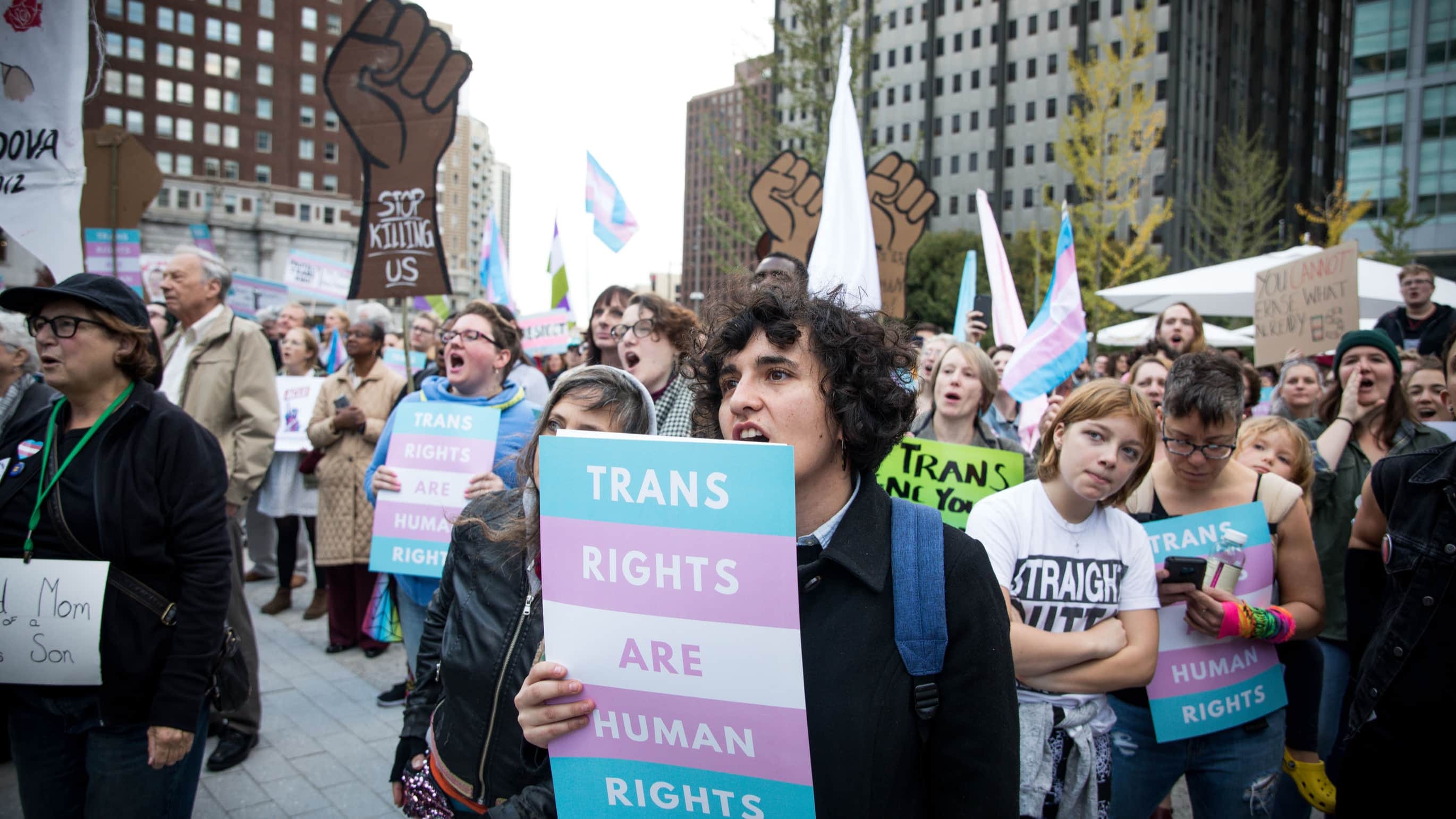
Trans inclusion is about far more than toilets
Many might assume my main issue here would be which toilets trans and non-binary people can use. My position, which echoes that of many other trans and non-binary people, goes far beyond that. Toilets are part of it, but definitely not the whole conversation.
I wanted to know how we would improve as an institution and raise our standards on inclusion. How would we go beyond the bare minimum? How would we protect our trans students, who report much poorer mental health and have lower graduate outcomes? There is so much more disparity and inequality to discuss. If we only talk about toilets, we miss the bigger picture.
The written answers repeated the same generic themes as the first meeting. They confirmed my view that neutrality was the university’s official stance.
A committee paper got the university to listen
I could have accepted defeat and decided there was nothing more I could do. The university had set out its stance and didn’t seem prepared to move. But I’m not that person. We need to keep fighting even when an institution takes a firm “neutral” stance.
I wanted to use the professional routes available to me before reaching for my placards. So I sent the team my own recommendations on trans and non-binary inclusion across the university, laid out as a formal committee paper. It called for a review of current inclusive practice for trans and non-binary students and a dedicated working group. It also set out targeted improvements for some departments, for example ending deadnaming at graduation and more careers support.
This did get a response. I was asked to present the paper at the EDI committee. The meeting was surprisingly positive. Most of the staff valued what I’d written and agreed we needed to provide more support. I’m now in the aftermath of that meeting, holding people to the positivity they showed and pushing for the change they said they would support.
The union can show the university what good looks like
But we can’t just leave it to the university and its EDI committee to enhance belonging and look after our trans and non-binary students. We have to create change in our union too. I’m hosting trans and non-binary events and working with binder companies to give students free binders. I’m providing grassroots support and caring for the community.
Student leaders should think about both top-down and grassroots support. Instead of waiting for the university to lead, show them what good practice looks like and give them practical ways to improve.
Sustainable change is embedded when everyone takes action, but sometimes we need to be the ones driving it. Don’t rely on others to be proactive or driven by care. There’s no guarantee they’ll go beyond the bare minimum, if they do anything at all. It’s up to us as student leaders to fight and to care. Even when a challenge doesn’t affect your own community, we need to be there for each other.
Push your institution for the change that’s needed and advocate for positive action. Don’t accept neutrality as the answer.
Related articles

Understanding governance is the key to unlocking better student outcomes
Fiona Walsh McDonnell | SU Blogs | 28/10/26

Sports clubs are playing away from home when they sign sponsorship deals
Mae Ramshaw | SU Blogs | 23/10/26

Jewels in the crown or rough diamonds – what universities miss about their SUs
Nick Smith | SU Blogs | 22/10/26