The biggest risk to SU advice services is ignoring AI
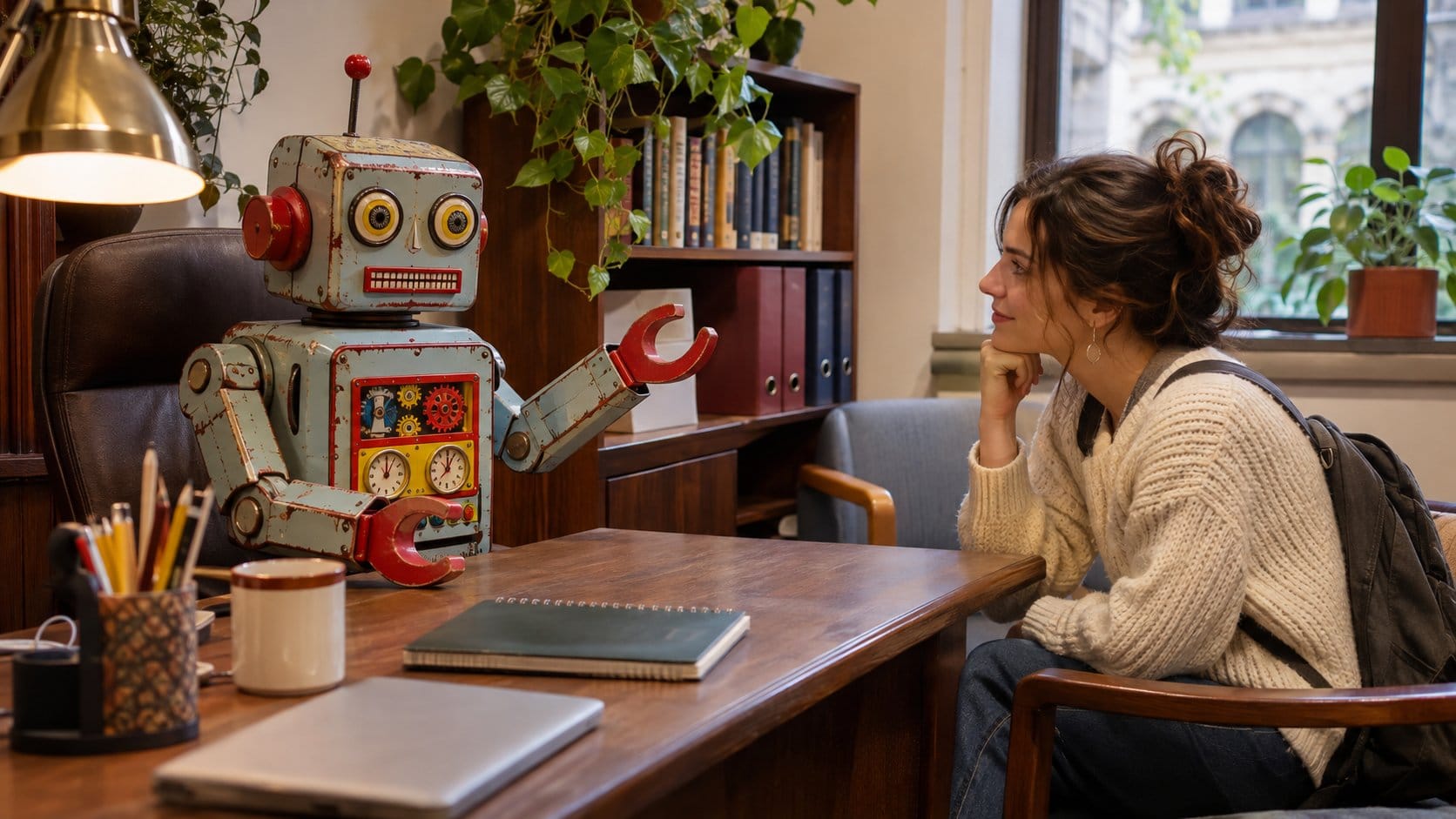
Students are already turning to AI for help with their problems – Vicki Greenwood argues SU advice services need to shape how it’s used rather than ignore it
SU Blogs|
Vicki Greenwood is Advice Service Manager at Lancaster University Students’ Union.
One thing we know to be true is that students are already using AI to get advice. A recent national poll by AdviceUK found that AI has already become a big part of how many people look for help, with 52 per cent of 18–24-year-olds having used it to get advice or information about their problems.
Ofcom reports that 82 per cent of adults in the UK use Google search, and more than half of adults – 53 per cent – say they often see AI summaries when they search for information.
HEPI’s 2026 generative AI survey also confirmed that 15 per cent of students are using AI to support their wellbeing in some way, whether for advice, companionship or to address loneliness.
Advice under pressure
Combine this with what those of us working on the frontline of advice are acutely aware of – SU advice services are under pressure. The NUS Big SU Advice Survey of 2024–25 highlighted that cases are becoming increasingly complex, student-to-adviser ratios are high, staff are feeling the emotional pressure, and it’s still difficult to recruit and retain experienced advisers.
These issues could lead to delays in students getting advice – and arguably the quicker alternative students may lean into is seeking advice from generative AI.
When AI gets it wrong
One of the risks of students leaning on AI for advice is that the information can be incorrect while being presented in a way that makes it look right. A piece by Steve Hughes for Citizens Advice noted that it’s already seeing the consequences of AI giving incorrect advice – one person had been advised not to respond to a court summons, and another to file for bankruptcy when better options were available.
There are, therefore, clear consequences when AI gets things wrong. AdviceUK’s survey found that 74 per cent of people are worried about getting incorrect or misleading advice from an AI tool, and that 81 per cent agree that AI can’t replace a human adviser when people have complex or sensitive problems.
Arguably human advisers aren’t easily replaceable. Advisers can spot concerning behaviour to identify safeguarding issues, use their experience and judgement to understand the whole person and the other problems they may be facing, and bring technical knowledge that AI can’t easily replicate.
Where that leaves us
We know that services are under pressure, and we know that AI is here – and although the brakes may be put on it somewhat at some point, it’s undoubtedly here to stay.
Advice services need to be having conversations about how we can use AI in a way that will help break down barriers rather than create new ones. And if we’re going to use AI, how do we put guardrails in place to make sure that complex cases or safeguarding concerns are passed to a human adviser, and how does that handover work in practice?
Using AI responsibly
Generative AI can of course be incredibly useful, and as long as it’s used with care, there are ways to use it to support advisers responsibly. It can help write up cases, freeing up advisers’ time to do what they do best – help people – and in turn giving them time back to work on the more complex cases.
Keeping information on websites up to date, and populating the online spaces students use with current and relevant information, can also help make sure that those who do use AI to find help are getting useful and correct information.
There’s a clear difference between using AI to speed up administrative tasks or help students find information, and using it to provide advice that really requires professional judgement.
The caveat is that funding is needed to implement any new technology, safeguards need to be in place, and training is required to support staff as they start using AI. Finding the resources and the time will be a challenge for many services, but that needs to be weighed against the risks of not taking any action at all.
Truth and trust
Advice remains a core requirement for SUs. As cases become increasingly complex, students need a trusted and safe space to get the advice and support they need during their time at university.
Advisers are truth seekers. They look for the facts, help weigh up the strengths and weaknesses of a case, research policies and procedures, and sit between the student and the process. The journalist and Nobel laureate Maria Ressa puts it well.
“Without facts, you can’t have truth. Without truth, you can’t have trust.”
Advice services need to find a way to keep being trusted by students, while also using technology such as AI in a way that improves their processes and supports the advisers who give so much to their work every day.
Related articles

UK students will march for everyone except themselves
Sharanya Sivarajah | Long read | 12/11/26

Putting students in charge can transform the SU members meeting
Nick Smith | SU Blogs | 11/11/26

Neutrality is not an answer when your university is asked about trans students
Gray Prothero-Gibbs | SU Blogs | 4/11/26