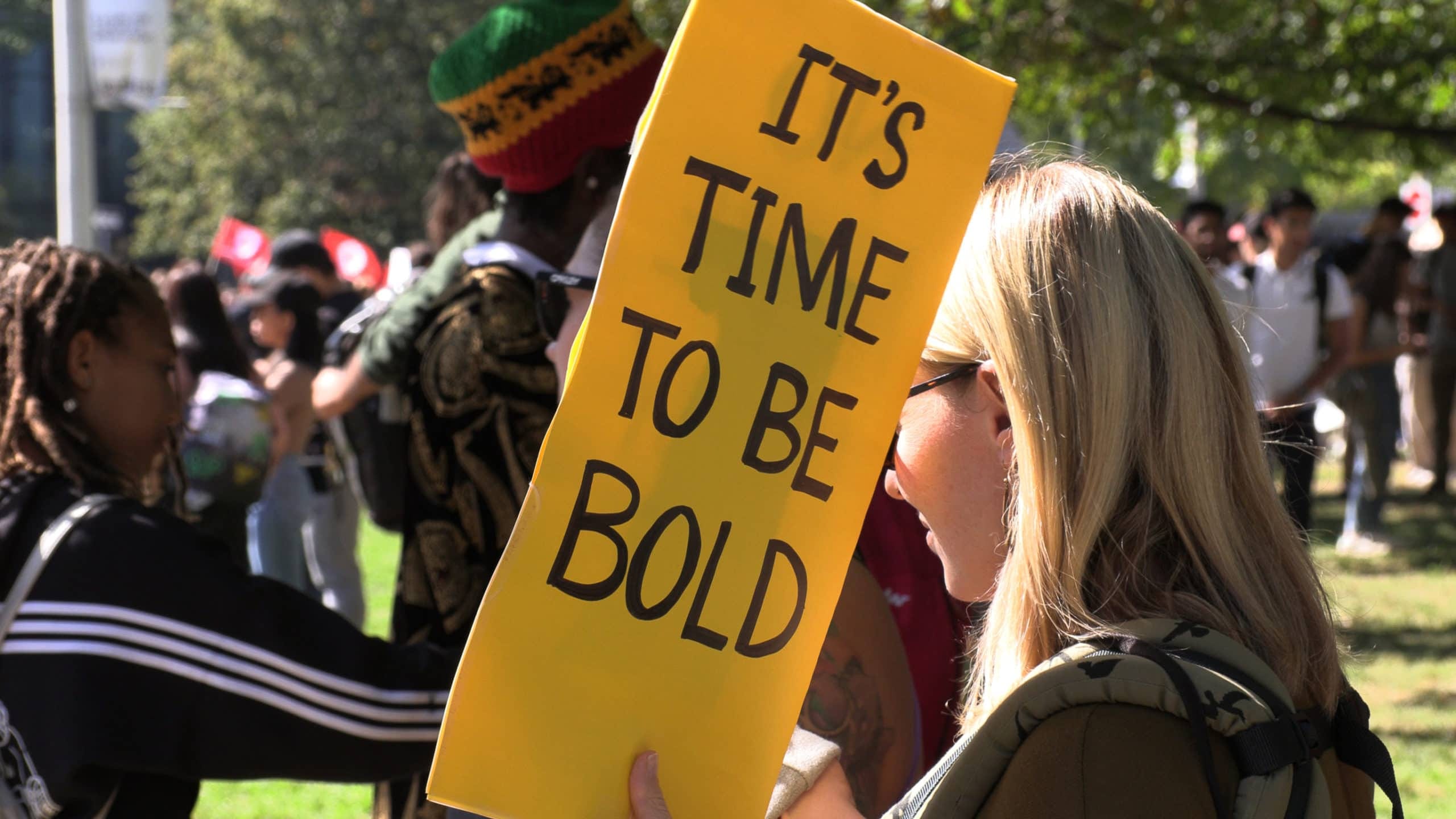
Putting students in charge can transform the SU members meeting
Drawing on trials at Middlesex, Reading and Warwick, Nick Smith launches a new resource on giving student members the roles officers usually play at members meetings
SU Blogs|
Nick Smith is a consultant specializing in governance
Things go in cycles, and in the students’ union sector – with its high turnover of officers and coordinator roles – there’s a particular need to revisit and retell even the most established practices.
This is the fifth time I’ve written on Wonkhe SUs about student members meetings, but I hope it’s also the last for a while, because I’m pleased to release into the world a new resource for making student members meetings work.
It comes in two versions – a zine and an accessible, print-friendly version.
While I pulled things together, it’s based on excellent work from a few SUs over the 2025–26 academic year – so a shout out to the brilliant folks at Middlesex, Reading and Warwick students’ unions, who took the student-led concept and created some amazing events.
Handing over the roles
Back in November 2025 I put out a call for SUs that wanted to look at their members meetings and try to improve them.
At the heart of each was the simple concept of giving the roles usually held by officers and staff to student members. Rather than the VP education explaining course reps, one of the reps would do it. A sports committee would outline the way the union supports it, rather than an activities officer doing so, and the accounts would be explained by a student trustee rather than the president – with training from a staff member either way.
These SUs trialled the new approach and we saw what happened. The answer was magic and transformative.
At Middlesex I was moved by the testimony of faculty reps, who talked about how their experience had made change for their peers and built their confidence to fight for justice elsewhere in their lives.
At Reading, students had the chance to feed into the union’s work on the new Renters’ Rights Act and see how it affected them.
The fencing society at Warwick SU described how it had brought wheelchair-using students into the centre of its activity to build a more inclusive student group. The chair of the African summit reported on how support from union staff had helped her create an amazing conference, with international speakers, on changing technology.
The event lasted several hours and student media groups used it as a volunteering opportunity – you can watch the livestream today.
Officer accountability is still important, and there were times when officers and the other trustees stood up for questions and scrutiny, as well they should – but the focus was on those they serve, not on them.
Doing things differently
As well as the most important change – putting students in the driving seat – the resource includes suggestions for making the event different, and better, in the way you present data and options.
A lot of this is in the forward planning. Giving the members meeting even half the marketing support that elections get would help – with my usual shout out to marketing and comms colleagues, and a plea to speak to them early. If you’re making the event a celebration, announce it as one, with save-the-date cards like you’d send for a wedding or a big birthday rather than a quick email that can get buried in an inbox.
Beyond death by PowerPoint
Being maimed by PowerPoint is a real concern, but some forethought lets you present things to students in different ways. The drama society could re-enact some of the advice case studies that have come through the union, preserving students’ confidentiality while bringing that important work to life.
Or play “Higher or Lower” with novelty playing cards carrying financial statistics from the year. Was more spent on sabbatical officer salaries or on meal deals in the shop? Is the percentage of the university’s turnover given as a block grant greater than what the union spends on cleaning?
Make it a celebration
The members meeting is a chance to communicate the union’s impact on students and celebrate the contributions of its members. You can hold it in a lecture theatre, but there’s an opportunity to make it closer to an awards evening, with cabaret-style tables and decorations.
It’s also a great chance for trustees to sit among the beneficiaries they work for – best done by sharing a table with them rather than sitting in a line on stage. Invite the university’s board of governors to see what students have achieved with the union’s help. I guarantee they’ll enjoy it more than reading your impact report, and it may even be useful when you next come to negotiate the block grant.
The cycle never ends
Organisations innovate and change, new models come in, new theories get applied, and the student body is constantly moving. But some things are consistent. We can’t be membership organisations without our members at the heart of the demand, design and delivery of what we do.
We can’t be organisations for student leadership if we constrain that opportunity to four student officers each year. And we can’t be students’ unions without our students doing things – allowing them the space to do so is not bravery but our fundamental purpose.
Thanks again to the SUs that supported the development of the resource – I hope colleagues in every union find it useful.
Related articles

Neutrality is not an answer when your university is asked about trans students
Gray Prothero-Gibbs | SU Blogs | 4/11/26

Understanding governance is the key to unlocking better student outcomes
Fiona Walsh McDonnell | SU Blogs | 28/10/26

Sports clubs are playing away from home when they sign sponsorship deals
Mae Ramshaw | SU Blogs | 23/10/26