Higher education postcard: The Queen’s Tower, Imperial College
This week’s card from Hugh Jones’ postbag takes us to another university bell tower
Comment|
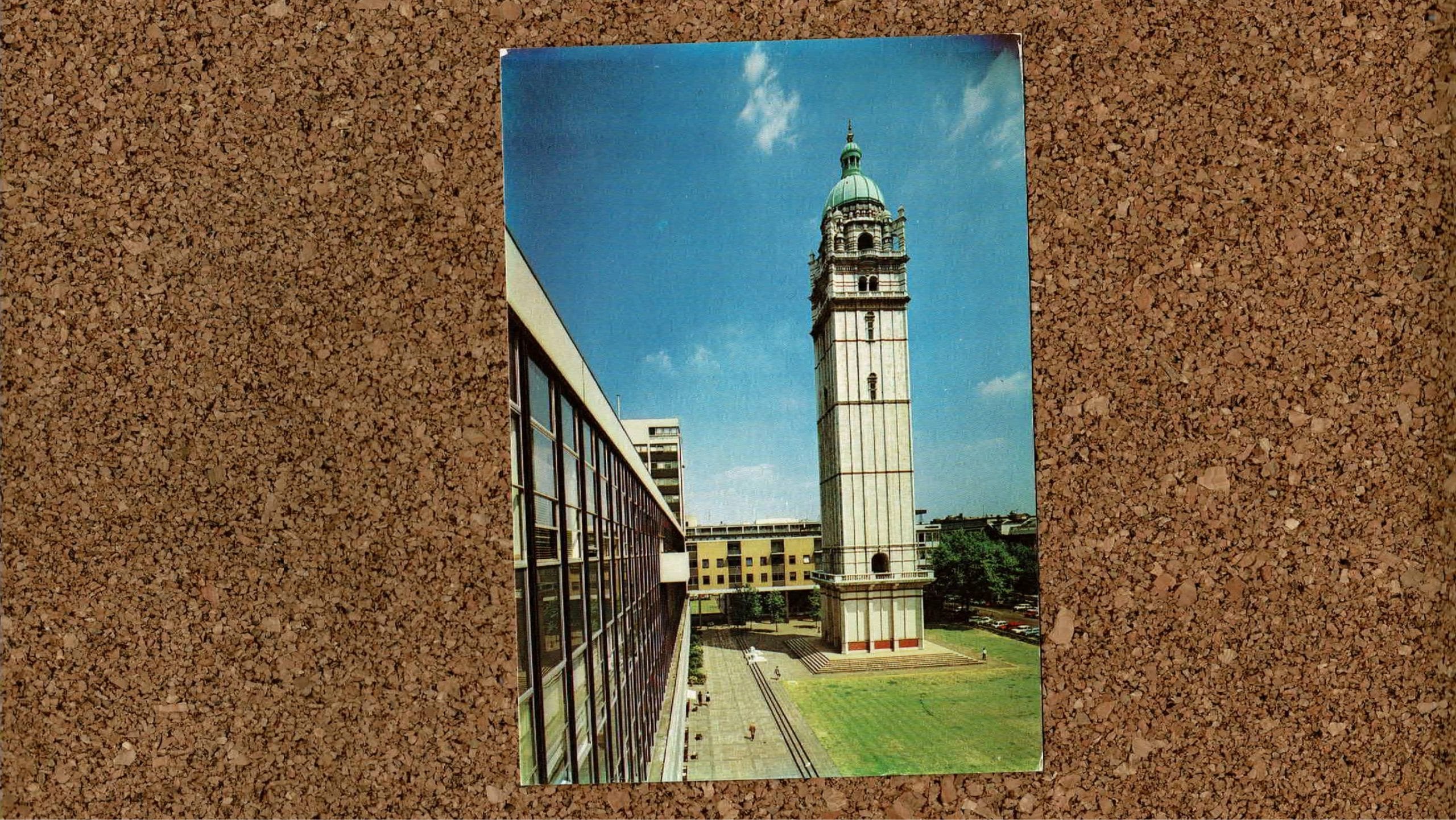
This week’s card from Hugh Jones’ postbag takes us to another university bell tower
Samuel Johnson, lexicographer, noted that “when a person is tired of postcards showing towers in universities, they are tired of life.”
Or at least he would have said that had he been asked, and had he lived when postcards were a thing – probably. Anyway, suffice to say that this week we’re looking at another campanile in another university.
This is the Queen’s Tower at Imperial College. It’s all that remains of the Imperial Institute buildings.
So before I talk about the tower, I’m going to have a look at the Imperial Institute – what was it, why was it, and why isn’t it any more?
The context here comes from the second half of the nineteenth century. Britain was the global superpower and its empire was huge. But it was feeling the pressure from other powers, especially economically. And some within the polity, especially the Prince of Wales (the future King Edward VII) felt the need to do something about it.
The “something” grew out of an exhibition of produce from India and the other colonies, and it was an idea for an Imperial Institute. Fundraising began in earnest in 1887, and in the end over £450,000 – which would be worth over £53 million today – was raised by subscription. Sometimes by subscription with conditions.
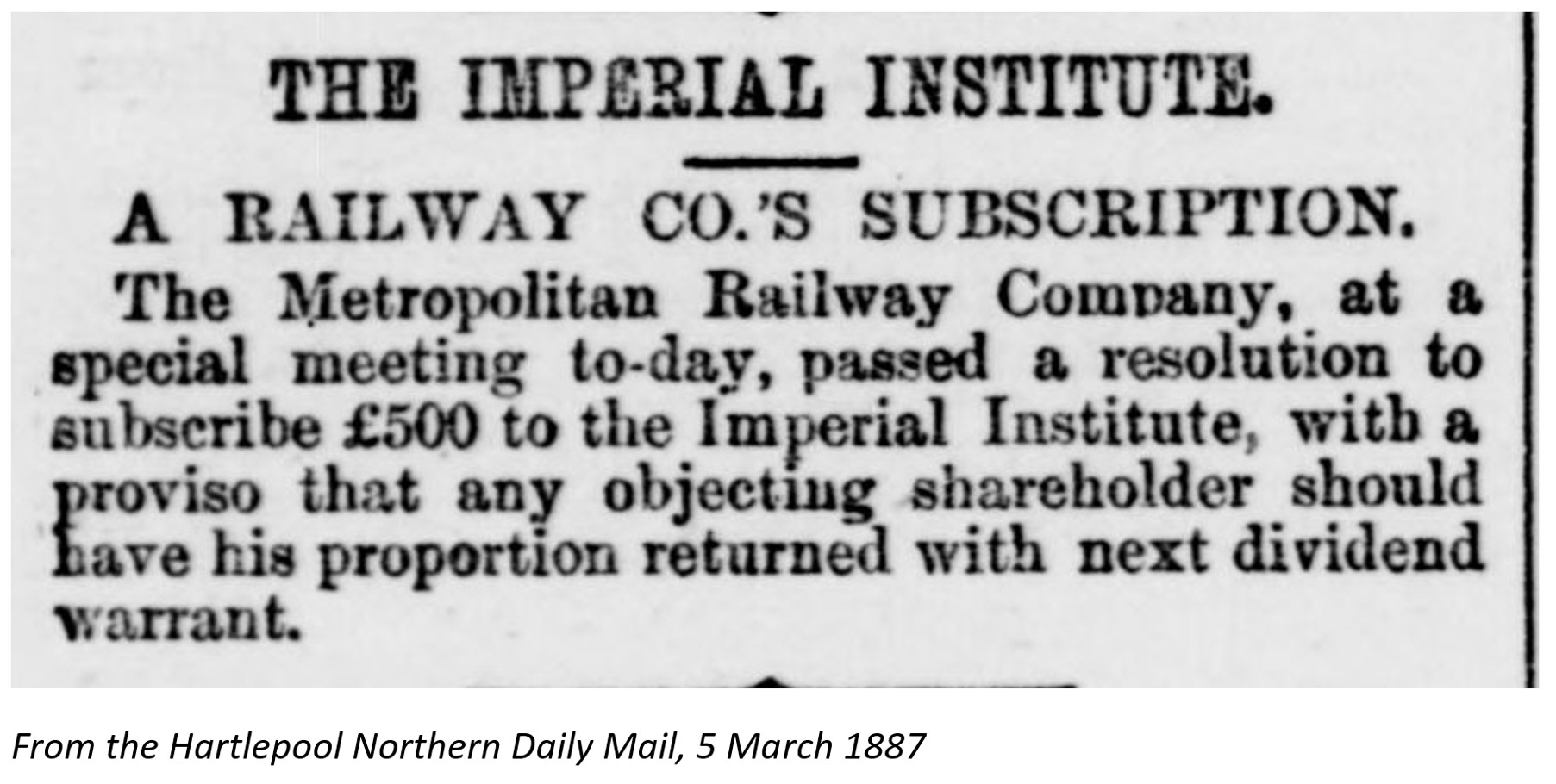
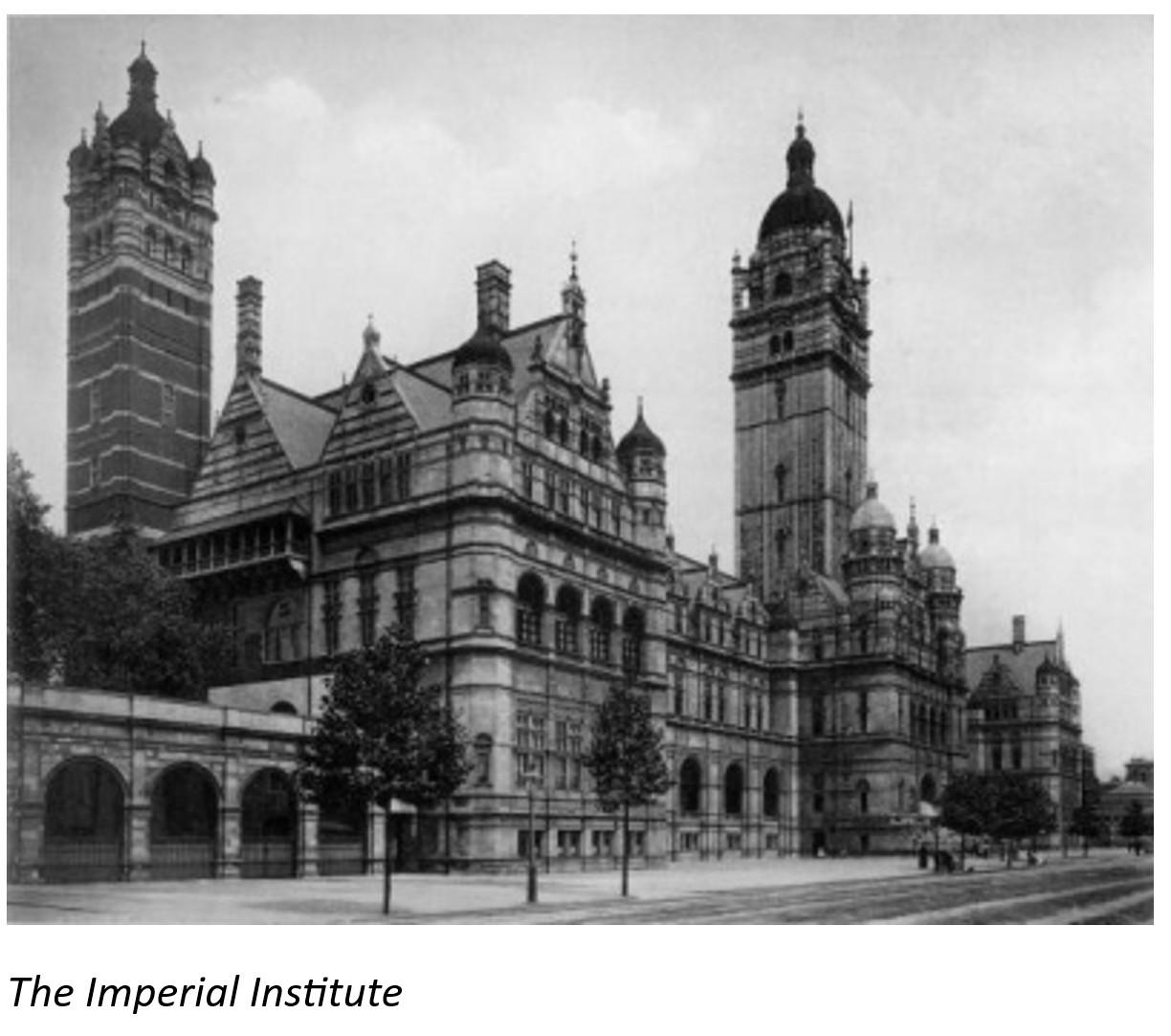
A competition was held for the design of the institute, and building commenced. In 1893 the institute opened: not yet quite complete, but looking something like the picture below. The Queen’s Tower is the one on the right.
The challenge was that no-one really knew what an Imperial Institute was. The scheme originally promoted in 1887 was for an exhibition space, with reading rooms and a programme of meetings. The charter granted in 1888 envisaged collections and exhibitions of produce, the collection and dissemination of commercial intelligence, special exhibitions and education, and facilitating friendly relations and trade within the empire.
But in practice these aims didn’t really amount to much. By 1898 the institute’s losses were such that it had to be bailed out by the University of London taking half the accommodation at the site – by 1902 it became a department of government. Firstly under the Board of Trade, then under the Colonial Office, and then in 1925 to the Department of Overseas Trade.
By 1952 a committee of enquiry found that many of the building’s occupants were there for no really good reason, and recommended that the name be changed to focus on the commonwealth not the empire (this latter change happened in 1858).
It’s fair to say that by now the institute didn’t really have a focus. And it has now, I believe, closed.
And now we bring in the big neighbour: Imperial College. In 1953 the government announced plans to expand the college, and the Imperial Institute site was to be used. There was much opposition, led by Sir John Betjeman – friendly bombs might fall on Slough, it seems, but not on South Kensington.
Eventually the plans were amended to keep the Queen’s Tower, but demolish the rest.
The tower is named for Queen Victoria and its ten bells – the Alexandra bells, named for Alexandra of Denmark, the then Princess of Wales, and later Queen, consort of Edward VII – are each named for a member of the royal family.
The tower has recently been refurbished, and you can read about it and the refurbishment here. At 287 feet tall it is about fifty feet shorter than Old Joe at Birmingham and about fifty feet taller than the Wills Tower at Bristol.
Here’s a jigsaw of the card, which was sent in April 1981.

Glenn Hurst | Comment | 22/10/26
Kate Bowen-Viner | Comment | 22/10/26

Mary Hunter | Comment | 21/10/26
David Mba | Comment | 21/10/26

Dirk Schaefer | Comment | 20/10/26
Rosie Nelson | Comment | 20/10/26
New comments will come back with sign-in later this year.