Higher education postcard: Old Joe
This week’s postcard from Hugh Jones’ postbag takes us to a landmark tower
Comment|
Hugh Jones is a freelance HE consultant. You’ll find a daily #HigherEducationPostcard if you follow him on Bluesky
Joseph Chamberlain is a big figure in the history of the University of Birmingham.
Founder of a Birmingham dynasty (one son became Prime-Minister; another won the Nobel Peace Prize) he made his fortune manufacturing screws, became politically active and, when Mayor of Birmingham, led the process of bringing utility companies (gas and water) into public ownership, for the benefit of the city.
If you wanted to find an ancestor of Andy Burnham’s devolution agenda, Joe Chamberlain is who you would look to.
He went on to be a big cheese in national politics, but remained a Birmingham icon, and was chancellor of the university when it gained that status – as well as having been a major force behind its gaining a charter.
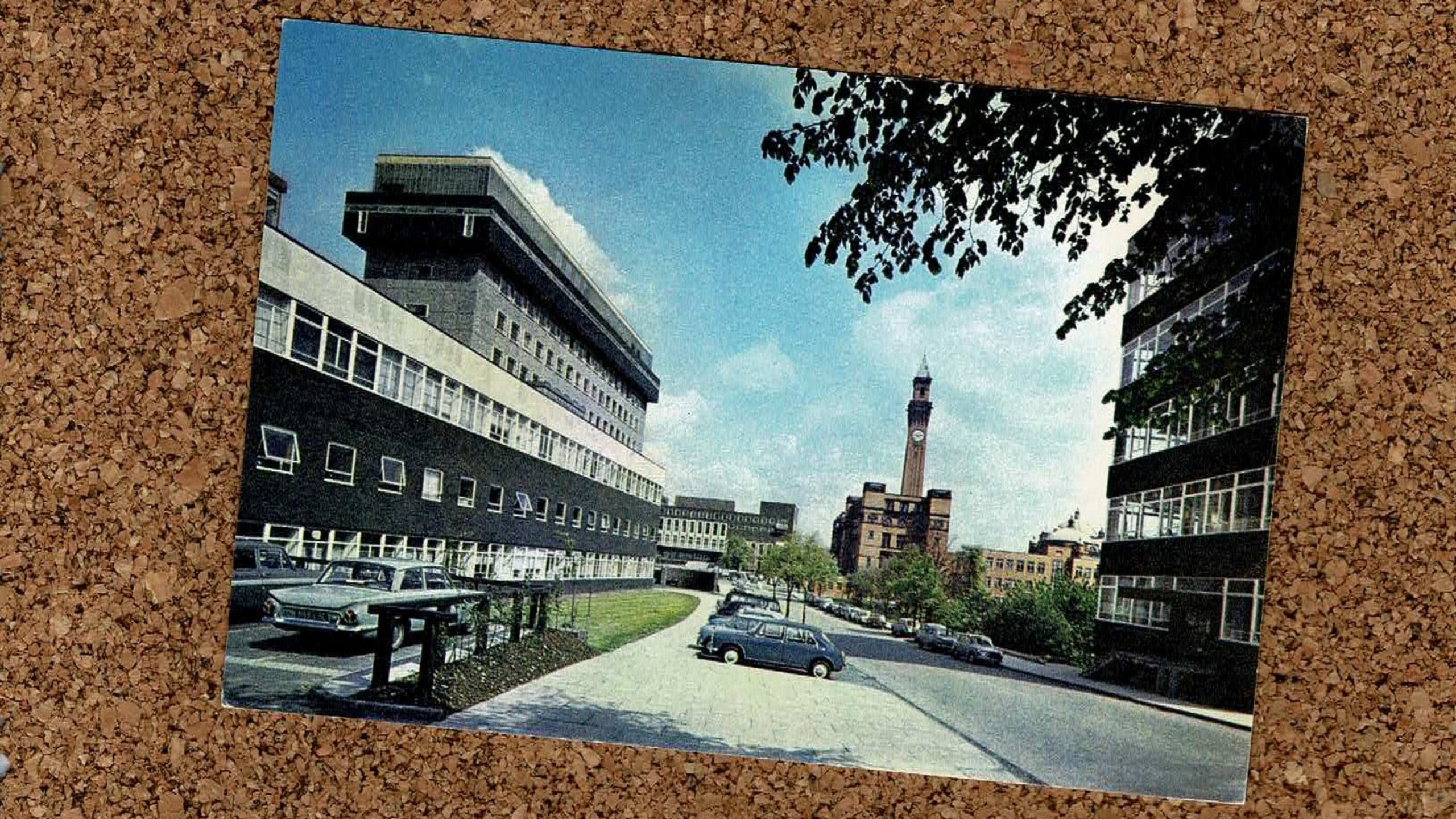
A new campus was being built in Bournbrook, and a gift of £50,000 had been received from an anonymous donor to build a landmark tower on the campus. Initially, apparently, the tower was to be modelled on the campanile of St Mark’s Venice, but the architects’ eventual design was modelled on the Torre del Mangia in Siena.
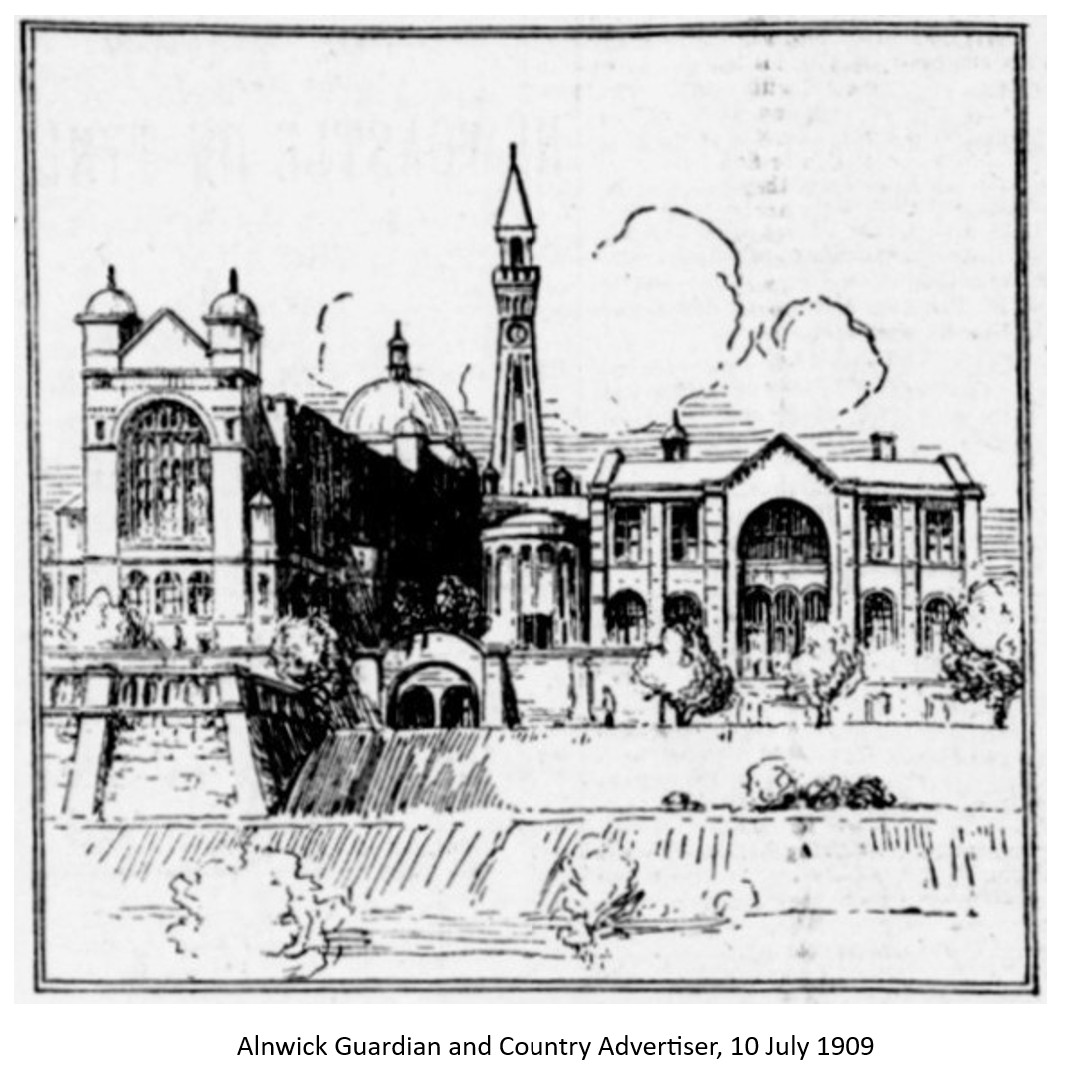
The new campus was opened by the King and Queen in July 1909. As well as the postcard I’ve linked, you can see the sketch used in nationally syndicated news stories, which has an approximation of the tower at the very least. In fact, the Alnwick Guardian and Country Advertiser image was more accurate than the postcard: the tower had not yet been finished at the time of the royal opening.
The tower stands 329 feet (just over 100 metres) tall, and from its construction until 1965 was the tallest building in Birmingham. It remains the tallest clock tower in the UK. The second tallest is the Elizabeth Tower in parliament, better known as Big Ben. The tower in Birmingham is about 15 feet (about 4 and a half metres) taller. Its bell is 5 long tons heavy, but dwarfed in this regard by Great George at the University of Bristol.
Officially known as the Joseph Chamberlain Memorial Clock Tower, it is better known as Old Joe. The university alumni magazine is named after it, and you can buy Old Joe soft toys from the university shop.
University tradition has it that if a student walks through the tower’s archway when the bell is chiming, they will fail their degree. It is unclear whether this will need to be reviewed in the light of the OfS’s strictures on degree algorithms.
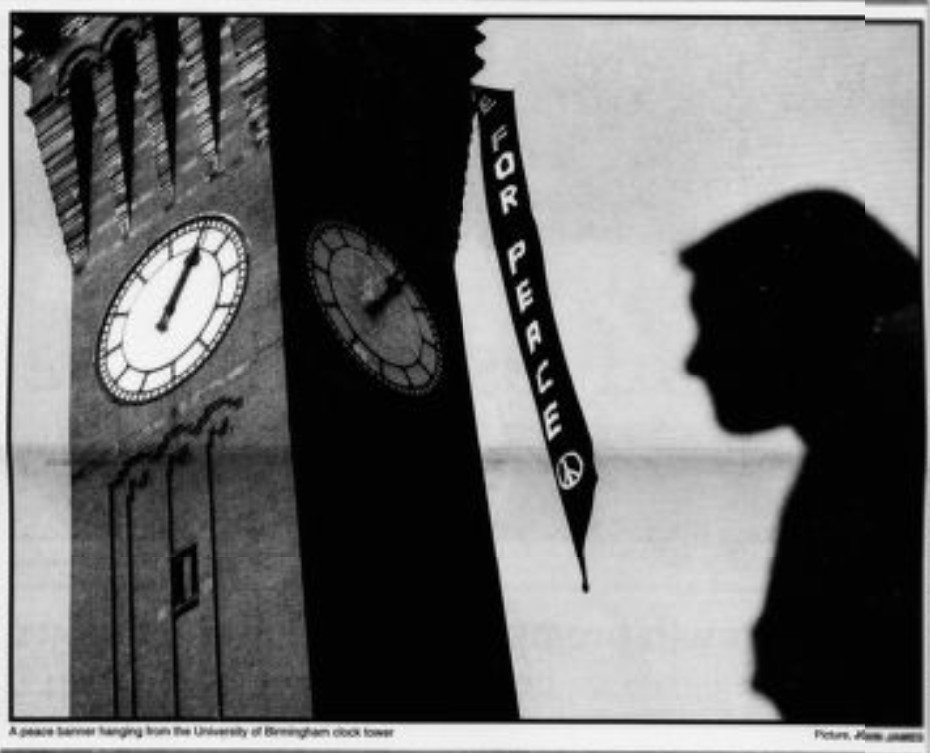
In 2003 students protesting against the Iraq war climbed the tower and abseiled down the outside, unfurling a banner which read “Time for peace.” The picture above from the Birmingham Daily post of 21 March 2003 shows the dramatic action.
Here’s a jigsaw of the postcard, which juxtaposes the old and the new. The card hasn’t been sent, so isn’t dated, but judging by the cars shown I’d guess it was from the late 1960s or early 1970s.