Wonk Corner|28/11/26 · 16:22
Wales still wins on student support
Three years ago I had a go at working out which of the UK’s four student support systems is the most generous, looking past the headline maximums that ministers like to announce to what happens to a student’s entitlement as their family’s income rises. With 2026–27 rates now set in all four nations, it’s worth running the numbers again.
Jim is an Associate Editor (SUs) at Wonkhe
The answer last time was that Wales was the most generous however you looked at it, and that outside Wales the devolved nations had found ways to keep the middle classes comparatively sweeter than England had.
The headline numbers
As before, I’m using a young student living away from home and studying outside London, and adding together whatever mix of grant, bursary and loan each system offers. For 2026–27 the maximum in Wales is £12,590, up from £11,720 in 2023–24. Scotland’s is £11,400, up from £9,000, England’s is £10,830, up from £9,978, and Northern Ireland’s is £10,020, up from £8,136.
Scotland, thanks to the special support loan that took its package to £11,400, has leapfrogged England at the top end – a 27 per cent increase on three years ago, against 23 per cent in Northern Ireland, 9 per cent in England and 7 per cent in Wales.
As ever, those are maximums, and they start to fall once a family is earning more than a certain amount. In England that’s £25,000, in Scotland it’s £20,999 and in Northern Ireland it’s £19,203, while Wales has no threshold at all because every student gets the same total.
Those are exactly the figures I quoted in 2023. None of the three thresholds has moved, and in England DfE has just declined a House of Lords committee’s call to raise a figure that has been stuck at £25,000 for 18 years, even as the minimum wage and household earnings have carried on rising underneath it.
Climbing the income ladder
The interesting bit is the taper – the thing we used to call the parental contribution. In England the loan comes down in a straight line from £25,000 until it hits its floor, and in Scotland the bursary and loan drop in a series of bands. Northern Ireland’s grant tapers and eats into the loan in a fairly baroque way, and then the loan itself tapers above £41,540.
Wales tapers its grant too, from £8,260 down to £1,020, but the loan simply fills the gap, so the total never changes. Here’s what all that means for our student as household income rises.
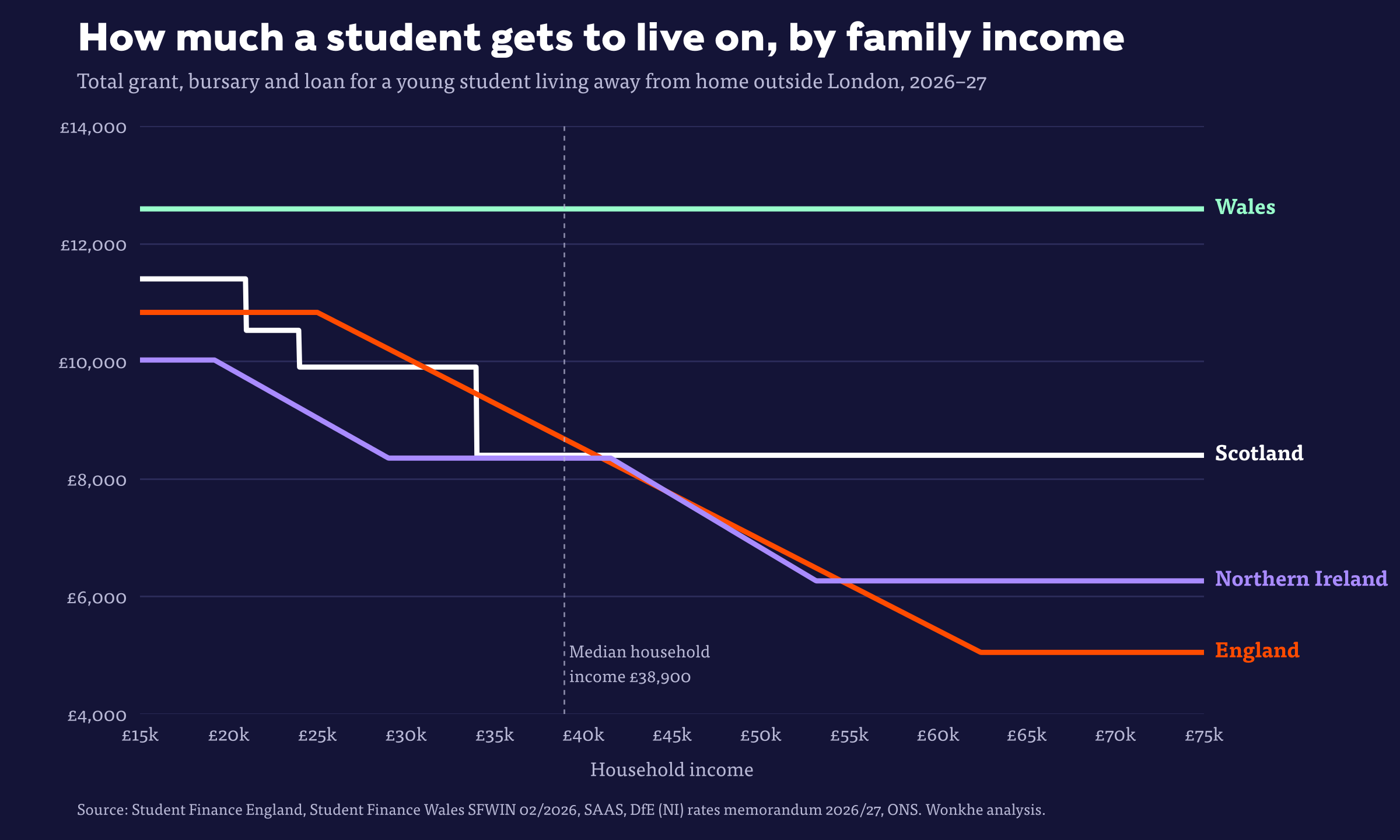
The dashed line at £38,900 is the nearest thing to the median I used last time – median household income before taxes and benefits in the financial year ending 2024, up from £35,000 two years earlier. A student from a median-income family gets £12,590 in Wales, £8,682 in England, £8,400 in Scotland and £8,352 in Northern Ireland.
Where the lines cross
In 2023 England stayed ahead of Scotland until family income got up into the £50,000s. Now Scotland’s £8,400 floor kicks in at £34,000 and England drops beneath it at around £40,700, so a Scottish family on a fairly ordinary income is already better off than its English equivalent.
Northern Ireland sits at the bottom for lower-income families, which is the opposite of what you’d want from a system with a grant in it. Its full grant stops at £19,203, so even a student from a family on £20,000 is £135 short of the maximum, and by £30,000 the grant has shrunk to the point where it replaces loan pound for pound, leaving the total stuck at £8,352 until the loan starts tapering.
Through the middle incomes it then runs neck and neck with England, before bottoming out at £6,264 from £53,129 – at which point England sinks below it.
England just keeps falling. Its floor of £5,048 kicks in at a household income of £62,410, and is once again just 40 per cent of the amount a student from Wales can pull down, where even the wealthiest family’s student still gets £1,020 of it as a grant.
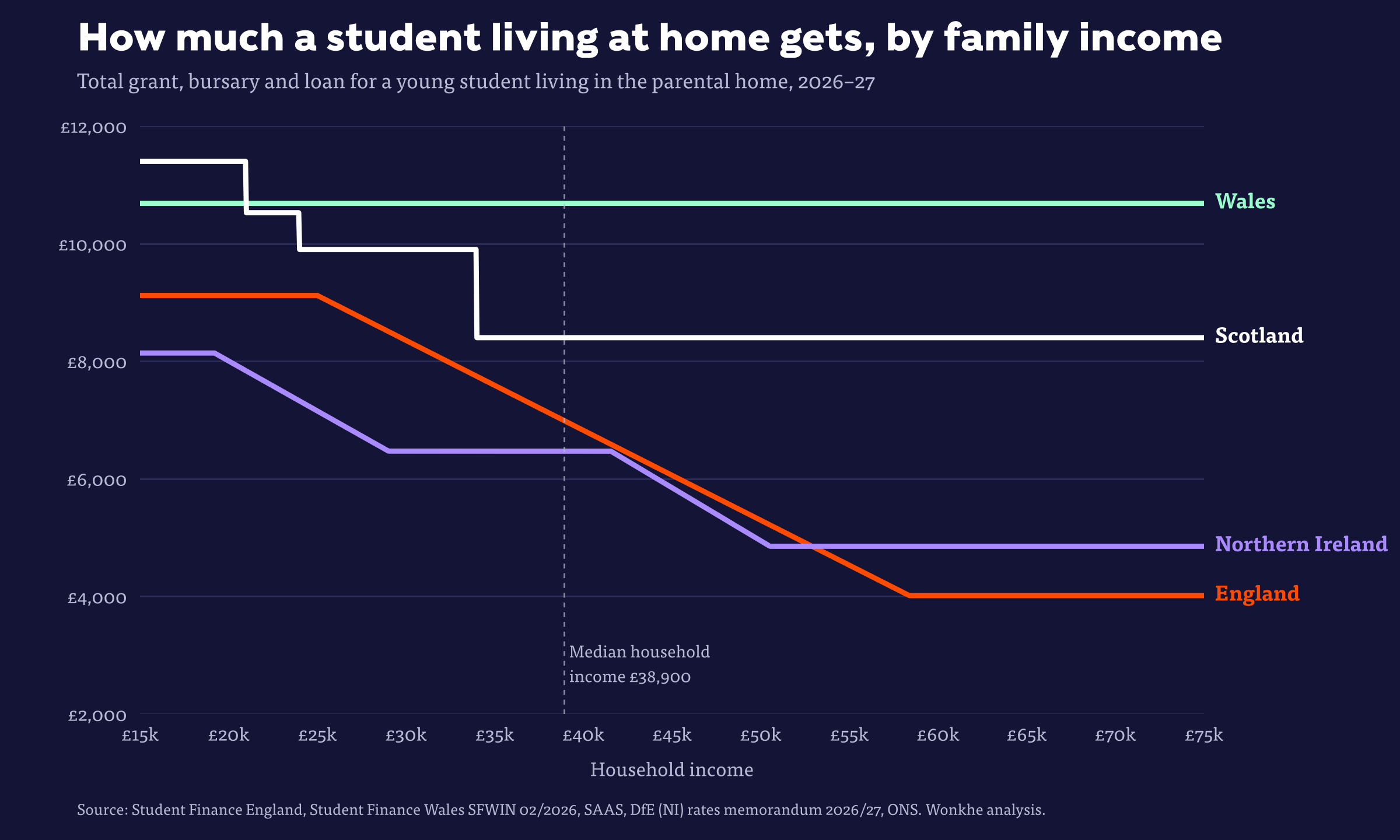
The picture shifts a little depending on where the student lives. For a student in the parental home, Wales pays £10,685 at every income, and Scotland – which pays the same package wherever its students live – beats Wales for families on under £21,000, the only point on any of these charts where anyone does.
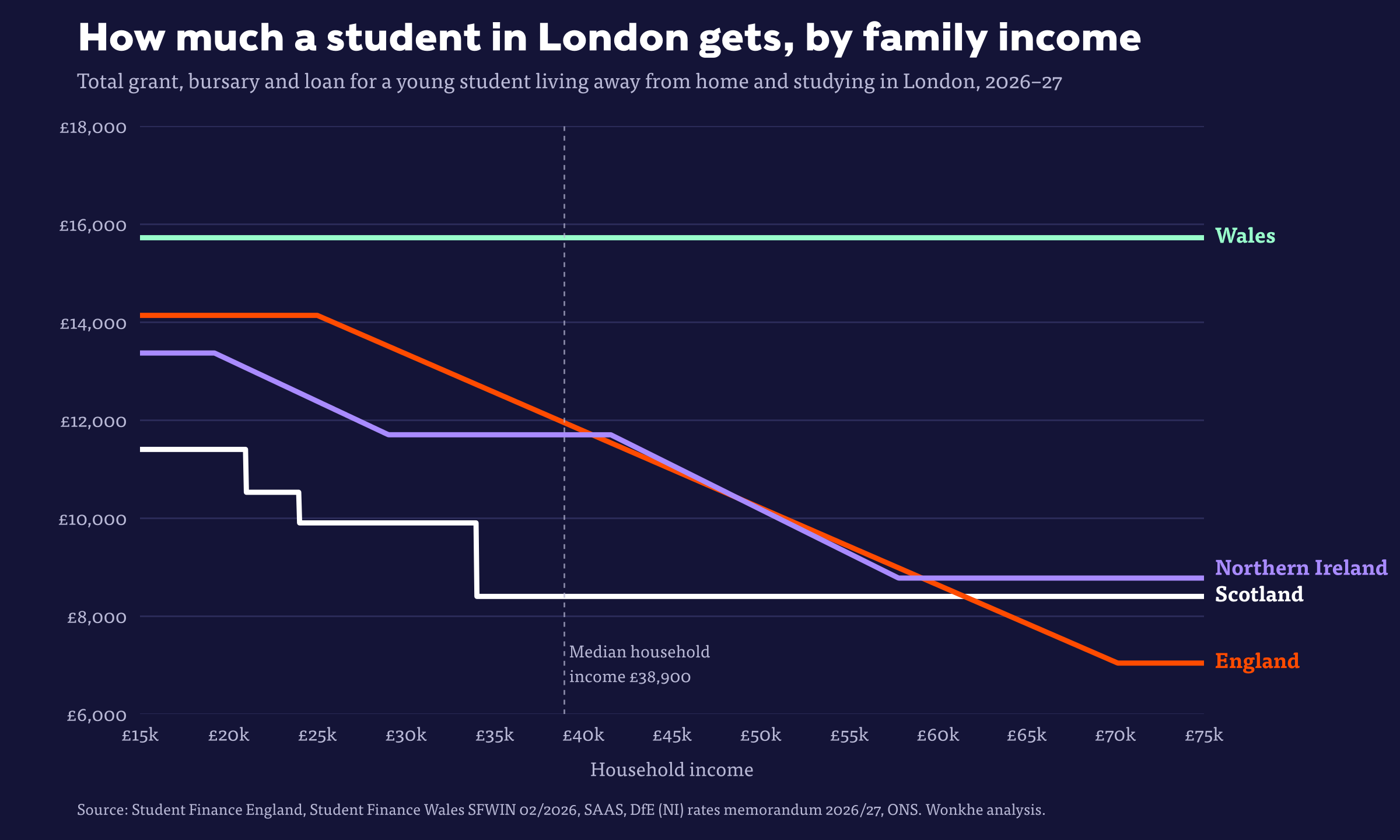
In London, Scotland’s flat rate leaves its students furthest behind. Wales pays £15,720 and England tops out at £14,135, but with no London premium a Scottish student in the capital gets the same £8,400 as anywhere else once family income passes £34,000, against £11,950 for an English student from a median-income family.
Three years of drift
Comparing cash figures across three years flatters everyone, because RPI rose by 11.5 per cent between September 2023 and September 2026. Strip that out, and follow a family whose income has simply kept pace with prices – so that a family on £35,000 in 2023 is on about £39,000 now – and the picture looks rather different.
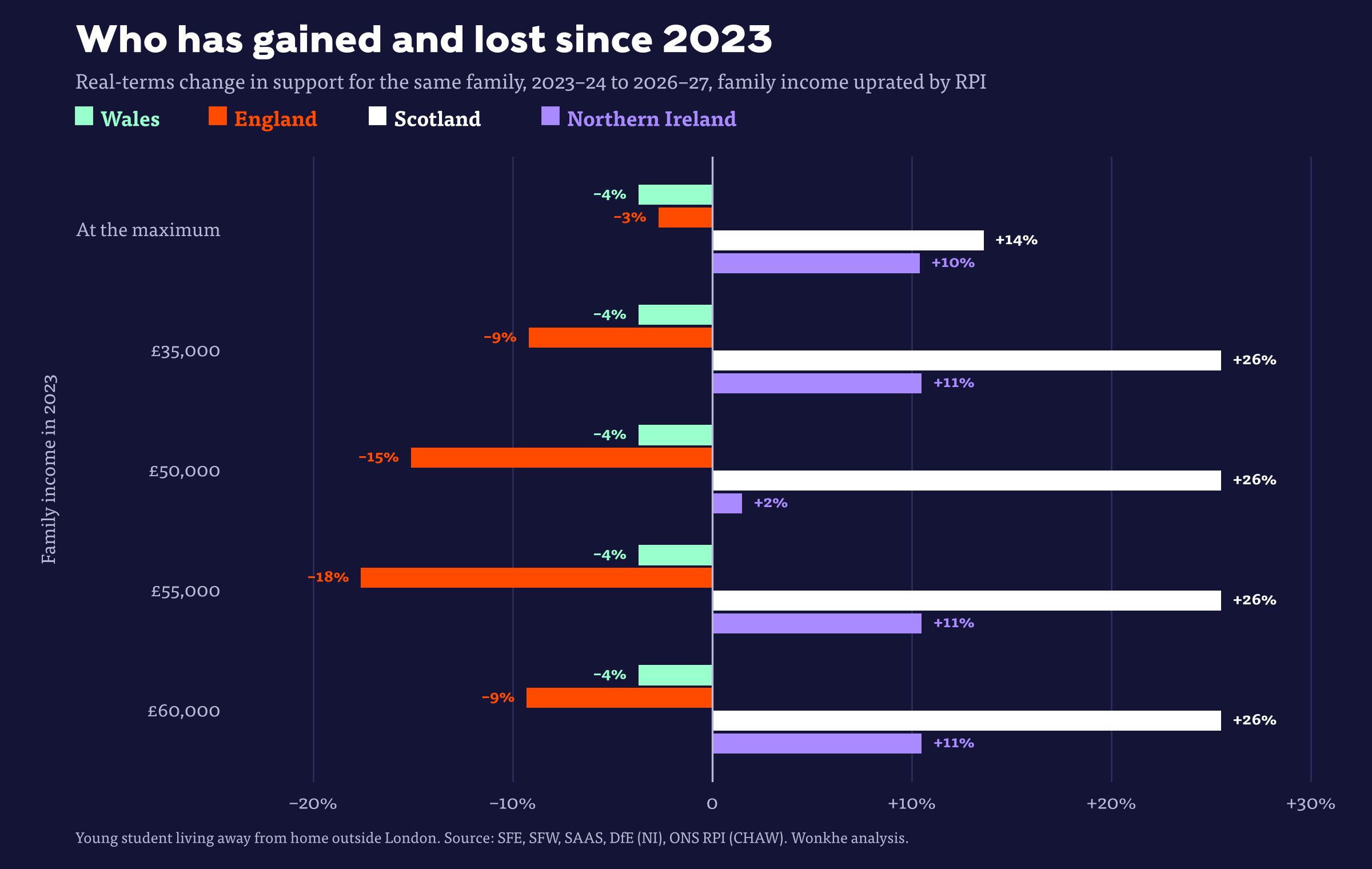
Scotland is the clear winner, and the biggest gains have gone to the middle. The floor for families on £34,000 or more has gone from £6,000 to £8,400, which is 26 per cent up in real terms, while students from the poorest families are 14 per cent better off. But the package has been frozen in cash at £11,400 since the special support loan arrived in 2024, so the erosion has already started.
Northern Ireland’s 20 per cent catch-up in 2025 has left it around 10 per cent up in real terms at most incomes. The exception is a family on around £50,000, where the frozen £19,203 threshold and a steep loan taper above £41,540 swallow almost all of the gain.
Wales is still out in front but drifting backwards, 4 per cent down in real terms at every income, with the grant threshold stuck at £18,370 and the promised link to a wage floor broken.
England is the big loser. Its maximum is 3 per cent down in real terms, but a family whose income has kept pace with prices is between 9 and 18 per cent worse off, because the £25,000 threshold hasn’t moved and the taper has got steeper – the loan now falls by £1 for every £6.47 of income above the threshold, against £1 for every £7.01 in 2023.
Three years ago England was second only to Wales for a middle-income family. Now it’s roughly joint last with Northern Ireland.
Almost none of that was decided. Scotland’s special support loan in 2024 and Northern Ireland’s catch-up in 2025 were the only big moves in the period, and since then all four nations have either frozen in cash or uprated in line with forecast inflation. England never made a big move at all, and Wales made its own back in 2018.
Fairer for whom
As I said last time, these arrangements are all devolved, so you’d want to look at household income distributions in each nation, and at who is and isn’t participating, before declaring any one system “fairer” than another. And none of these numbers feel like enough.
Wales is still the most generous however you look at it. Scotland has gone from the bottom of the table at the maximum to second, and now beats England for almost every family earning above the median. England, with a threshold frozen for nearly two decades and a taper that runs all the way up to £62,410, is the least generous of the four for a student whose family earns more than about £54,500, and barely distinguishable from Northern Ireland between about £41,000 and that point.
So the gap I spotted in 2023 has widened, and most of the work is being done by thresholds that nobody announces, while ministers take the credit each year for maximums that the freeze puts out of reach of more families each time.