There’s 104 days of summer vacation and school comes along just to end that
Sharanya Sivarajah and Jim Dickinson explain what they learned on a summer of SU training visits, where students patiently patched up the gaps their universities left behind
Comment|
Sharanya is Wonkhe’s SUs Community and Policy Officer
Jim is an Associate Editor (SUs) at Wonkhe
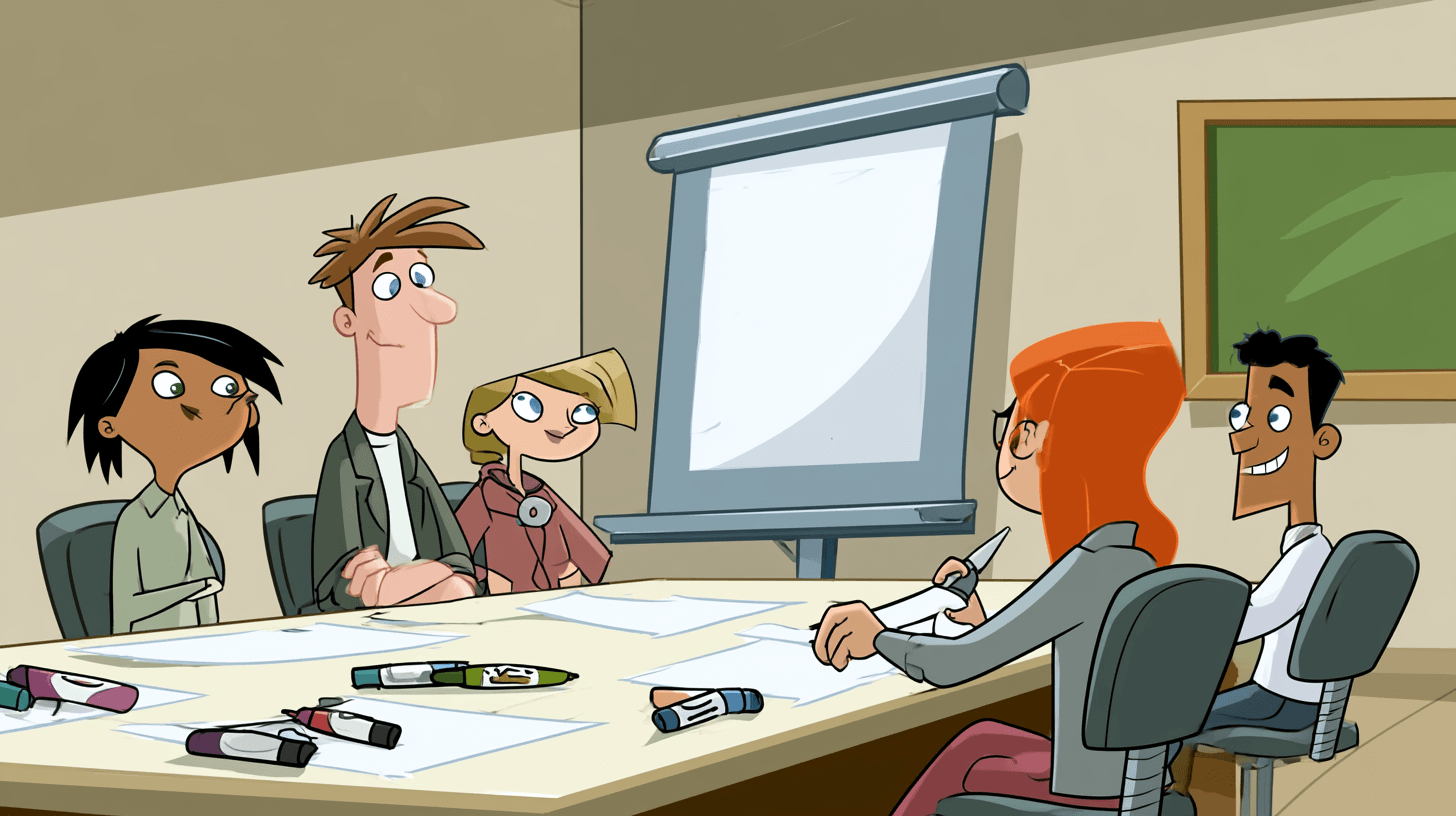
Phineas and Ferb always knew how to fill a summer – build a rollercoaster, form a one-day band, drive a sister to distraction.
SU sabbatical officers get 104 days too, give or take a handover – and the annual problem for the nation’s newly elected student leaders is finding a good way to spend them.
We try to help with that. Every year, while you’re arguing with a self-service passport gate, we’re out on the rail network meeting, briefing and training the new batch of students’ union officers who won last spring’s elections.
Which means that between June and September, we spend more time with people elected to represent students than we do with our partners or our pets.
It also means we get to visit a huge range of students’ unions and hear about the myriad of issues their students are facing – and, crucially, the temporary plasters those students are applying to their own education. As is tradition, what follows is a report back on what they’ve said.
This year, as the flipchart sheets went up on seminar room walls from Penryn to Paisley, one theme kept forcing its way to the front.
It’s not just that students are paying more and getting less. It’s that students are increasingly doing the work themselves.
Aren’t you a little young to be running a university?
The way we talk about higher education funding is almost always a conversation about payment – how the costs are split between student and state, how graduates are having to pay more, and how the fiscal illusions that underpin it all are unwinding.
We talk much less about students getting less for it. And we talk hardly at all about the labour that students are now supplying to make student life function – the paid work, the peer support, the societies, the representation, the campaigning, the navigating of bureaucracy and the fighting for adjustments that increasingly fill the gaps that make a university work.
Because the stories we’ve heard this summer aren’t really stories about complaints. They’re stories about jobs – tasks that someone had to do that the system didn’t, and that a student secretly did instead.
We heard about a trainee teacher who endured six weeks of abuse from a sexist mentor before abandoning their placement – graduating without qualified teacher status – who resolved to become a student leader as a way of changing course, without actually being able to change course.
We heard about a student who reported a homophobic and transphobic director, whose distressed email to counselling was acknowledged but never followed up, but who endured the production anyway, so as not to let down her peers.
We heard from one where the system had failed to establish whether safe housing was available for her overseas placement – and who, after being blamed for the situation she found herself in, fled, rearranged her own flights and via a student association, found somewhere else to stay.
We heard about a wheelchair user who repeatedly rearranged teaching rooms herself because nobody else had made them accessible, and about a student who discovered on the day of an examination that an agreed learning support plan had never been activated, failed the assessment as a result, but battled on. The APP dashboard chalks up a completion success.
We heard about a trainee whose placement system ignored their broken foot, leaving them to travel 45 minutes by bus in a medical boot to work 7.30am to 5pm. We heard about a student who self-reported a problem, sought help, and then spent six months completing placements and assignments without knowing whether they would be allowed to graduate.
One student found five friends to chase a landlord while living without adequate heating and with water leaking over the oven, clubbing together to buy blankets. We met another whose university opened £600-a-month accommodation without working wi-fi, hot water or heating – residents organised collectively to operate alternatives.
At another university, recruitment agents had promised accommodation the university couldn’t supply – so international students and their families slept in SU spaces while students and their societies rallied round to bodge up emergency alternatives.
Visas issued late meant students admitted weeks into their course, missing induction entirely, then accused of assessment offences they’d never been told were offences – with visas expiring before final work could even be marked, and no graduate route at the end of it. An international society stepped in to welcome them, explain how everything worked, and run study skills sessions otherwise not on offer.
Where one campus offered almost no international community at all, a student athlete travelled to another campus to join the Asian Society – finding the cultural network the university had offered, but never actually… offered.
The money ran through everything. We met a student who was working supermarket bakery shifts from 4.30am before starting her university day, where taking a job to pay multiple sports fees offered the friendships their module leader had never bothered to set up. We met students whose peers couldn’t afford clean clothes, and so had run a workaround to get some students’ clothes into other students’ washes. A short circuit (laundry), if you will.
We even met a student leader who, desperate for some graduate outcomes support, organised a secret careers evening for students in their subject, and was bawled out by a careers manager who accused them of offering “unauthorised advice” – and who later took credit for the evening’s success.
Hey, where’s the university?
Individually, each of these is an incident. Collectively, they’re a pattern – and it’s a pattern that this year’s officers described to us again and again, in similar terms, in every part of the UK.
Where maintenance loans now fall short of the real cost of being a student by at least £10,000 a year, students work long and antisocial hours to close the gap. Where budget cuts, staff redundancies and unfilled posts spread across the sector, students teach one another, share notes and use AI to obtain the explanations and feedback that their personal tutors – or lack thereof – do not provide.
Where courses fail to deliver the professional experience on which their value depends, students build their own pipelines – one international student assembled a spreadsheet and completed somewhere between 60 and 70 placement applications, then sent future vacancies back to programme directors so that later cohorts would have opportunities.
Where a course assessed video editing skills it had never taught, a student taught themselves via YouTube – and still received some of their lowest marks. Where a university moved practical art online without providing space or materials, a student improvised in an overcrowded bedroom and created her own feedback diary. Where a diabetic crisis was met with no structured academic recovery at all, a student completed three months of missed assessments by studying in Starbucks every evening after work.
Where universities forget to design things in, or offer things that can’t really be delivered because of the cuts, students design them themselves. They research their rights, assemble evidence and organise collectively to secure the teaching, facilities and support they were promised – like the students who fought the removal of advertised history options until the replacement stocks-and-finance module was at least made optional, or the cohort who, faced with a dissertation, a presentation and two assignments in the same week, supported each other through it and then designed a better sequence for the next cohort. It was still rejected as “impractical”.
They inspect properties, warn one another about landlords, explain tenancy rules and build informal housing support networks. They reorganise employment, travel and caring responsibilities around fragmented timetables, unreliable transport and inadequate campus space. Some even build the infrastructure directly – at one university, a student built their own campus app, complete with live bus times, laundry machine availability and walking directions, that by common consent works rather better than the official alternatives.
We’ve started to call it “bring your own university”. Students are increasingly supplying the missing infrastructure – academic, pastoral, social and physical – and doing so with a competence and a generosity that ought to be a source of shame for those whose marketing materials suggest that it’ll all be provided, and students can have it all – when it won’t, and they can’t.
Of course, we meet the survivors – the heroes who secretly turn their injustices into practical action and go on to win elections on that basis. Who knows how many students don’t find others that can help, or who are in the wrong WhatsApp groups and so can’t find the secret support.
There’s a fine line between community generosity and institutional failure – and when the successes of the former are a furtive secret, you can bet the failures of the latter go unnoticed too.
Part of their workload, not their transcript
There is a kind of irony to it all. If we were to write down what students learn by doing all of this, we’d produce a list that looks suspiciously like the graduate attributes framework in every university strategy we’ve ever read.
Institutional literacy – understanding how complex organisations actually work, and how to get things out of them. Systems thinking – tracing a laundry contract or a timetable failure back through the decisions that produced it. Negotiation, advocacy, events production, volunteer management, evidence gathering, project management, team leadership and collective action.
The student who calculated the compensation missing from a campus closure and pursued it while completing a relocated course was doing forensic accounting and legal advocacy. The students who surveyed their peers on laundry costs were doing social research. The rep who investigated a prescription failure and built a campaign was doing policy analysis.
It is a hidden repair curriculum – authentic, experiential learning of precisely the kind that universities spend serious money trying to simulate through employability modules and skills awards.
The difference is that it’s happening for real, in the cracks of the system, at students’ own cost – in time and money that, as their new leaders kept telling us, they increasingly don’t have. It sits in their workload. It just never appears on their transcript. They both get no credit for it, and get no credit for it.
There’s an obvious danger, and it’s one regular readers will recognise from our reflections last year, where we worried about students learning to rationalise the intolerable. If repairing higher education becomes a normal part of being a student, the failures that make the repairs necessary become invisible – and the pressure on anyone to fix them evaporates. Recognising the labour must never become a way of legitimising the gaps.
Oh, there you are
But the answer to that danger isn’t to pretend the labour isn’t happening. It’s to make it visible – and then to value it.
The mechanisms already exist. Reflective portfolios that capture what a student actually did to make their education function. Experiential learning modules that treat a year spent running a society, holding down a job, caring for a relative or representing a cohort as the developmental experience it plainly is. Recognition of prior learning that doesn’t stop at the university gates.
Credit – actual, degree-bearing credit – for representative roles, employment, caring and community roles, of the sort that plenty of European systems but almost no UK providers award. Authentic learning is already happening through these experiences – the credit system just fails to see it.
And a sector that has spent a decade talking about belonging, co-creation and students as partners might reflect on what it says that the most genuine partnership work in higher education is currently being performed unpaid, unrecognised and uncredited by the people with the least time and the least money to spare.
In the cartoon, of course, the joke is that the real work is always being done by the household pet – tirelessly, invisibly, while everyone else takes the credit – and the recurring punchline lands only when somebody finally notices he’s there.
This year’s student leaders told us, in effect, that their members are the platypus. Universities should repair the gaps. But where students have learned by crossing them, the least the credit system can do is recognise the journey.
Related articles
The civic university agenda has a geography problem
David Clelland | Comment | 14/10/26

Universities are overlooking their established researchers
Steve Joy | Comment | 14/10/26
Educational needs are a higher education issue
David Kernohan | Comment | 14/10/26

Student transition into university shouldn’t be a handover
Katharina De Vita | Comment | 13/10/26

Creating a space and a voice for widening participation professional practice
Tara Webster-Deakin | Comment | 13/10/26

During times of transformation emerging leaders need to be inside the leadership tent
Alistair Jarvis | Comment | 12/10/26