The widening access narrative must return to speaking about places
Young people in coastal and rural areas are missing out on higher education. Graeme Atherton calls for access work to reconnect with geography
This article is more than 1 year old
Comment|
Graeme Atherton is the Vice Principal of Ruskin College Oxford and Head of the Ruskin Institute for Social Equity (RISE)
Widening access to higher education has experienced a precipitous fall from grace in the eyes of politicians over the last ten years – a fall that may have slowed slightly but as yet to stop under this government.
This fall may have coincided with the shift away from place-based to institutional-focused approaches to the problem. The access and participation plan regime may have stopped widening participation slipping out of sight completely but as our latest report shows, they have done little to increase higher education participation for those from the poorest backgrounds, particularly in rural and coastal areas.
Split geographies
The report – Coast and country: access to higher education cold spots in England – looks at the data published annually by the Department of Education on participation in higher education by free school meal (FSM) backgrounds. There are things we know about what this data shows as outlined in previous reports I have written and more recent work such as that from the Sutton Trust – in particular that London does far better than everywhere else.
In this report, though, we show exactly how much. The national higher education participation rate in 2022–23 for those from FSM backgrounds was 29 per cent. If you take out London, which has only 16 per cent of the population of England, it falls to 23 per cent. London is covering up a much more challenging situation in the rest of the country than we are prepared to admit.
These challenges increase as areas get smaller. The report looks at the relationship between the size of an area and the FSM higher education participation rate. It drops steadily as population decreases from 43 per cent in big cities to 18 per cent in rural villages. Nor is the situation improving. The gap between London and the other 84 per cent of the population has increased 3 per cent from 2012–23 to 2022–23 and just under 3 per cent between predominantly urban areas and predominantly rural areas over the same period.
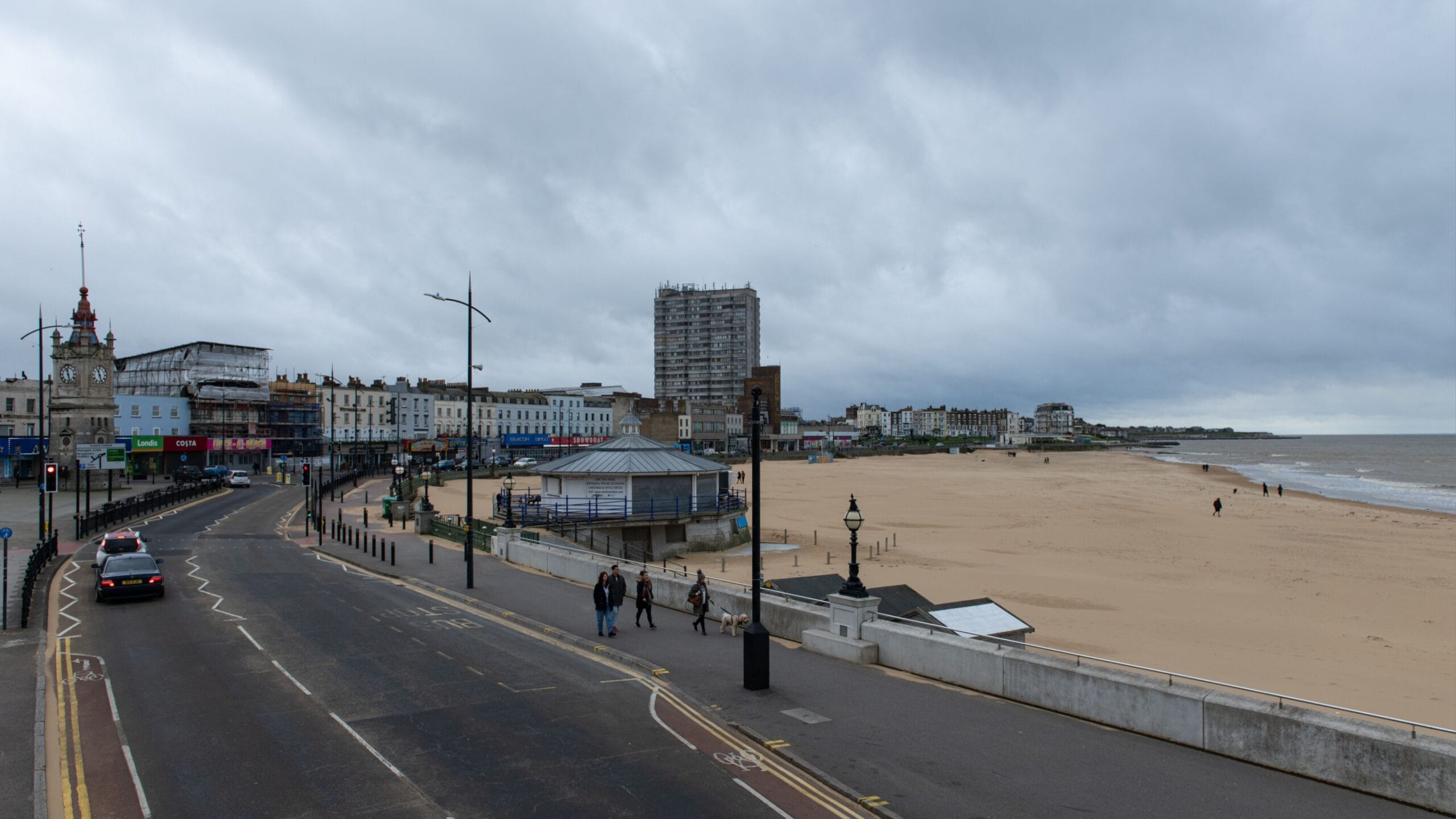
Many coastal areas in England – especially seaside resorts – have well documented problems with poverty, unemployment and health inequalities and higher education participation can be added to that list. The higher education participation rate for those from FSM backgrounds coastal communities was 11 per cent lower than in inland areas in 2022–23 with in many areas less than one in five such young people going onto higher education. There is an overlap here between rural and coastal areas here with the South West especially including areas of lower higher education participation.
It is often said that the differences in higher education participation described above are associated with attainment in schools. Increasing attainment was the priority where widening access work was concerned for the Office for Students for a number of years. In the report, we map GSCE attainment at the area level against FSM higher education participation – and the correlation is indeed strong.
It is far weaker, though, in villages and coastal areas than the rest of the country. This suggest that in the places where the problems are the greatest, better GCSE results alone won’t be enough. In 2022–23, six of the ten areas with the lowest levels of higher education participation did not have a university campus within them. What provision exists also matters.
We need new (old) stories
If any progress in closing the gaps between regions described above is to be made then place must again become the central focus for widening access to higher education work – as it was when the last Labour government championed the issue so vigorously in the 2000s.
The pendulum has swung too far since then toward what institutions themselves do. Consequently, that political link between widening access, opportunity and growth has been broken. It is possible that the government itself will swing the pendulum back to place, and some of the signs coming from the Office for Students in recent months have been promising.
However, higher education providers themselves can take the initiative themselves here and look for new ways to form stronger partnerships – ones that take whatever replaces Uni Connect as the start, not the endpoint, of what regional collaboration means.
While the sector’s financial challenges make competition for students more intensive than it has ever been – and thus collaboration in this area more difficult – the value of higher education itself is being questioned by young people more than it ever has been since participation increased rapidly in the 1990s. Fighting between each other for young people’s and their schools’ attention won’t convince those, especially from the poorest backgrounds, that higher education is worth it. But collaboration will.
Collaboration won’t produce additional provision in rural and coastal areas, or the money to fund it. But unless we shift the story and the practice of widening access back to place, this additional provision will never come.
Related articles

Students of faith need more than a prayer room
Mary Hunter | Comment | 21/10/26

Understanding universities from the perspective of place
David Mba | Comment | 21/10/26

Universities should stop selling degrees and start building lifelong relationships
Dirk Schaefer | Comment | 20/10/26

Universities can’t leave LGBTQ+ researchers to manage the backlash alone
Rosie Nelson | Comment | 20/10/26

Boards can’t predict the future, but they can make sure their institution is ready for it
Debbie McVitty | Comment | 19/10/26

What counts as a graduate outcome when the labour market is changing?
Angel Tan | Comment | 16/10/26