Ministers dodge the question of candour in universities
Baroness Jones asked which university functions the Hillsborough Law covers. Jim Dickinson finds ministers answered none of her questions
Policy Watch|
Jim is an Associate Editor (SUs) at Wonkhe
Why is it that every time this government has the chance to protect students, it chooses not to?
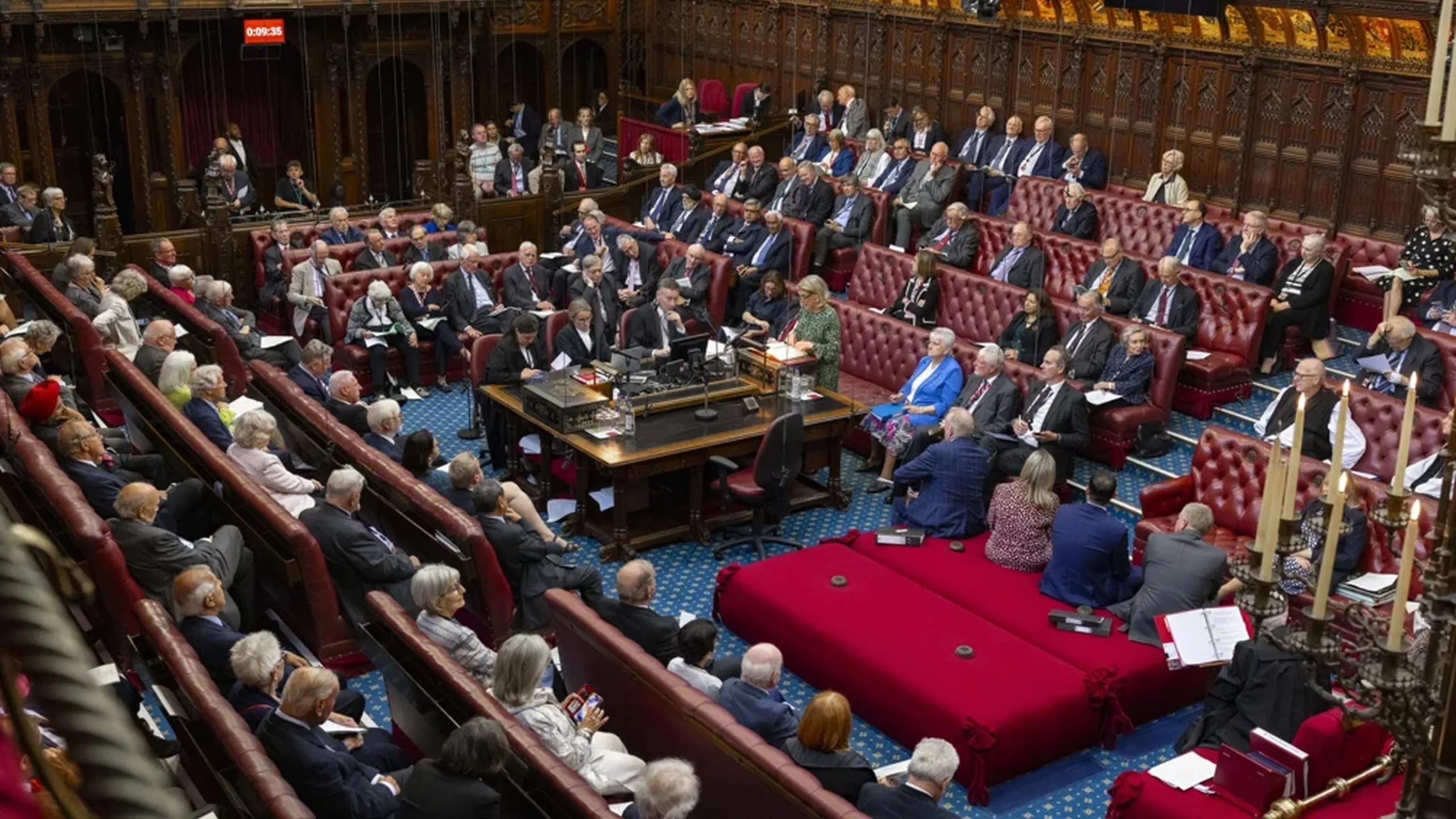
That’s the question I’m left with after the higher education section of the first day of Lords committee on the Public Office (Accountability) Bill – the Hillsborough Law.
It saw a set of carefully drafted amendments designed to settle which parts of a university’s work are covered by the new duty of candour.
They were met with a ministerial reply that answered none of the questions put to it and then pointed, for the rest, at a regulator that only exists in one of the four nations the Bill covers.
Back in July, when the Bill cleared the Commons, I argued that students and staff deserved more candour from ministers about where universities sit in the Bill’s two key duties.
With little clarity since and the Bill now in committee in the Lords, it was down to Jenny Jones – Baroness Jones of Moulsecoomb – to try to get answers. She didn’t.
What the Bill does to universities
Two parts of the Bill matter – a statutory duty of candour and assistance at inquiries and inquests in Chapter 1, and a duty in Chapter 2 to promote ethical conduct and adopt a published code.
Who is covered is set by two lists in Schedule 2, and both identify schools and further education providers outright, which means those bodies are covered for everything they do.
Universities are named in neither list. For the candour duty they come in only through the residual route for bodies whose functions “are or include” functions of a public nature, and then only to the extent of those functions – a test borrowed from section 6 of the Human Rights Act, with no power for anyone to settle in advance which university functions count.
When Siân Berry asked in March whether the Bill would explicitly apply to all universities, she was told it would capture “some aspects” of their work, and nobody in government has since said which aspects it has in mind.
That matters because Human Rights Act case law turns on the nature of the particular act, the courts have long treated the student relationship as contractual, and halls, wellbeing services, pastoral support and safeguarding look far more like services than the exercise of public power.
So whether candour applies gets argued after a death, at the inquest, with university lawyers free to argue that it doesn’t – and if the university isn’t a public authority for its counselling service or its halls, the firm it outsources them to isn’t caught by the contractor provisions in clause 4 either.
For the ethics code it’s worse. A body not on the list is only caught if it was set up by the Crown, statute or a minister and is mainly Crown-appointed – which universities aren’t – or if it exercises functions that ministers specify in regulations, and the government appears to have no intention of doing so.
So as drafted universities don’t have to adopt a code at all, while the FE college down the road does – despite the national review of higher education student suicide deaths having found families shut out of three in four serious incident investigations, and having specifically recommended a duty of candour for the HE sector.
Jenny Jones’ amendment and speech
Baroness Jones’ amendments 64, 65, 67, 69 and 140 take the government at its word on the hybrid model and then try to make it work.
They add higher education providers to both Part 2 and Part 3 of Schedule 2 in respect of their functions of a public nature, but crucially they then say that those public functions “include but are not limited to” a list of eight things.
The list covers admissions, assessment, progression and the award of qualifications, academic, disciplinary and fitness to practise processes including suspension and withdrawal, pastoral and student support services, student welfare and wellbeing, safeguarding, accommodation which the provider supplies or arranges, the handling of student complaints and appeals, and responses to serious incidents including student deaths, along with any review or investigation that follows them.
Because the list appears in Part 2 as well as Part 3, it goes at both duties – the inquest duty where Part 2 has no specification power, and the ethics code where Part 3’s power has never been used.
Amendment 140 then defines a higher education provider in a way that covers every provider on the OfS register in England rather than just those in the fee cap category, constituent colleges within collegiate universities, both of Medr’s higher education registration categories in Wales, higher education institutions in Scotland and the universities and colleges of education in Northern Ireland.
Jones’ speech was careful. She noted that the government has acknowledged that teaching and the award of degrees are public functions, but has otherwise left the boundaries to be resolved case by case, and then told the story of a family who contacted her through the campaign group ForThe100 – a son who died by suicide in April 2022, shortly after his university escalated a restriction it had already imposed on him to a complete ban from campus, followed by a long struggle to get the university to answer the family’s questions that continued for a further eighteen months after the inquest itself.
She cited the national review, pointed out that a government letter had recognised some university activities as public functions while leaving too many others in doubt, and headed off the obvious objection by drawing a distinction between a duty to take reasonable steps to prevent harm and a duty to be open and honest about what happened when something goes wrong – the Bill does the second, and nobody is asking universities to become healthcare providers.
Then came four questions.
- Does the government consider pastoral support, student welfare, safeguarding and university-arranged accommodation to form part of the provision of higher education?
- Does that extend to academic disciplinary processes, complaints and appeals and responses to serious incidents including student deaths?
- If these are public functions, is there any reason they should not be named in Schedule 2 rather than left to case-by-case judicial interpretation?
- And how does the government intend the Chapter 2 ethical requirements to apply to the relevant public functions of higher education providers – including where a university’s activities involve both public functions and arrangements with private contractors?
The government’s response
The minister answered none of them. Lord Lemos, Parliamentary Under-Secretary of State for Justice, restated that the definition of a public authority for the duty of candour and assistance is analogous to that in the Human Rights Act, catching any body carrying out a public function as far as that function is concerned, and offered the assurance that “universities are captured by this definition” and so must comply fully with the duty at inquiries and inquests.
That is true in precisely the sense that was never in question. Universities are captured to the extent that their functions are public – the whole point of the amendments was to establish which functions those are, and on welfare, pastoral support, safeguarding, accommodation, discipline, complaints and the response to a death, the minister said nothing.
On Chapter 2, the minister confirmed that the requirement to maintain standards of ethical conduct through a code is restricted to core public bodies and therefore does not extend to universities, and then added that registered higher education providers are subject to regulation by the Office for Students – and that it would be for OfS to deal with the questions Jones had raised about particular aspects of university life. On that basis, the minister hoped Jones would withdraw.
Later in the same group, responding to Lord Marks’ amendment 68 – which would have applied the Chapter 2 code duty to any body exercising public functions – Lemos explained that the government had focused the code duty on the public sector because “the government has some control of these bodies”, and promised statutory guidance to give public authorities clarity on whether they fall within the scope of the Bill.
Lord Alton, who had raised universities at second reading, asked whether the minister could confirm that where a student or an academic dies by suicide, the duty of candour would then apply in full to the university. The minister said he would check, “assumed” that if there were an inquest the duty would certainly apply, and promised to come back.
Analysis
The assumption is more generous than the Bill. Under the hybrid test the duty kicks in only to the extent that the inquest concerns the university’s public functions, which is exactly the uncertainty the amendments were designed to remove – so the letter that follows Alton’s question will matter more than anything said in the chamber, and it needs to say yes or no on welfare, safeguarding, accommodation and the response to a death rather than restating the test.
It’s also worth being clear about what Chapter 1 doesn’t reach even on the government’s own account. The duty covers statutory inquiries, certain non-statutory inquiries and coroners’ investigations – Baroness Brinton’s amendment 13, which would extend it to independent panels and reviews, exists precisely because they aren’t covered.
The university-commissioned serious incident review, the process the national review found families shut out of three times in four, sits outside the duty whatever view a court takes of public functions.
The control rationale is revealing too. It’s at least consistent with the ONS treating English FE colleges as part of the public sector since 2022 and universities as private non-profit bodies – but that’s a classification about spending, not about whether a bereaved family deserves the truth, and between fee caps, registration conditions and the student loan book, ministers have plenty of levers over universities whenever they want to use them.
But the bigger problem is the OfS answer.
OfS can’t easily do what the minister implies
The obvious hook is the public interest governance condition under section 14 of the Higher Education and Research Act, under which OfS publishes a list of principles that it considers will help providers perform their functions in the public interest.
But the condition itself only requires a provider’s governing documents to be consistent with those principles – and in April the High Court ruled in the Sussex case that a policy statement is not a governing document, that the phrase should be read narrowly, and that OfS cannot rely on its general power to set conditions under section 5 to stretch that governance condition any further.
A published code of ethical conduct, setting standards for the people who work for a university and the consequences when they fall short, is a policy document rather than a governing one. OfS could still try a free-standing condition along the lines of its harassment and sexual misconduct condition, but after Sussex any condition aimed at governance and conduct invites exactly the argument the regulator has just lost – and nothing in what the minister said commits OfS, which is independent of government, to doing anything at all.
OfS doesn’t do what families need
Even if OfS did act, its tools operate at the level of the institution. It doesn’t take individual complaints, its sanctions are fines and, in extremis, deregistration, and a regulatory condition creates no duty of candour at an inquest. A family seeking answers would get nothing from an OfS condition that they couldn’t already get from a university’s own complaints procedure.
There’s also an odd concession buried in the answer. If the government thinks universities should be held to standards of ethical conduct and that a regulator should enforce them, it has accepted the principle behind Part 3 – and every registered provider in England is already required to uphold governance principles that ask it to operate openly, honestly, accountably and with integrity, which is four of the seven Nolan principles the Bill’s codes have to reflect. Writing them down in a code under the Act would cost almost nothing.
OfS only regulates England
Above all, this is a UK Bill, and OfS registers providers in England. Jones’ definition was deliberately built to cover all four nations – Medr’s register in Wales, higher education institutions in Scotland, and the universities and colleges of education in Northern Ireland – and the minister’s answer to it identified a regulator with no jurisdiction over any of them.
Chapter 2 is supposed to operate across the UK, with the Secretary of State, Scottish or Welsh Ministers or a Northern Ireland department making regulations depending on whether the matter is devolved.
A student in Aberystwyth, Glasgow or Belfast is, on the minister’s account, outside the ethics code because their university isn’t a core public body, and outside the OfS fix because OfS isn’t their regulator – and no-one has said whether Medr, the Scottish Funding Council or the Department for the Economy are expected to do anything instead, or whether devolved ministers plan to use their own powers.
In Wales, Medr does run a register with its own conditions under the Tertiary Education and Research (Wales) Act, so there is at least a theoretical route. In Scotland and Northern Ireland there’s no equivalent registration regime at all, only the terms attached to grant funding.
So the effect of the government’s position is that the ethics code applies to an FE college in Cardiff but not the university down the road, and that the only proposed substitute doesn’t reach three of the four nations – which is a weird outcome for a Bill whose whole purpose is consistency in how public bodies behave when things go wrong.
What happens next
Jones’ amendments haven’t formally been disposed of yet – they sit further down the marshalled list, and when the committee reaches Schedule 2 she will almost certainly not move them, leaving her free to bring them back at report, where they can be pressed to a vote.
Before then the minister owes Lord Alton a letter, the government has promised statutory guidance on which bodies fall within scope, and it still hasn’t said in terms which of a university’s functions it thinks are public. That guidance is the obvious place to answer Jones’ four questions – if ministers are prepared to.
If the answer on welfare, safeguarding, accommodation and the response to a student death is yes, there is no good reason not to put that on the face of the Bill. If the answer is no, ministers should say so and explain to bereaved families why.
Then if the answer on Chapter 2 really is “leave it to OfS”, they need to explain how that works after Sussex, and what students outside England are supposed to make of it.
The case for candour in the Bill is that public bodies shouldn’t be able to decide for themselves, after the event, whether they owe people the truth.
Leaving the scope of the duty for universities to be argued out at each inquest – and leaving the ethics code to a regulator that may not have the power, doesn’t take complaints and only covers England – cements into HE the very problem the Bill was meant to solve.