Higher Education Postcard: Durham University
This week’s postcard from Hugh Jones’ postbag shows that higher education is definitely a team sport
This article is more than 4 years old
Comment|
Hugh Jones is a freelance HE consultant. You’ll find a daily #HigherEducationPostcard if you follow him on Bluesky
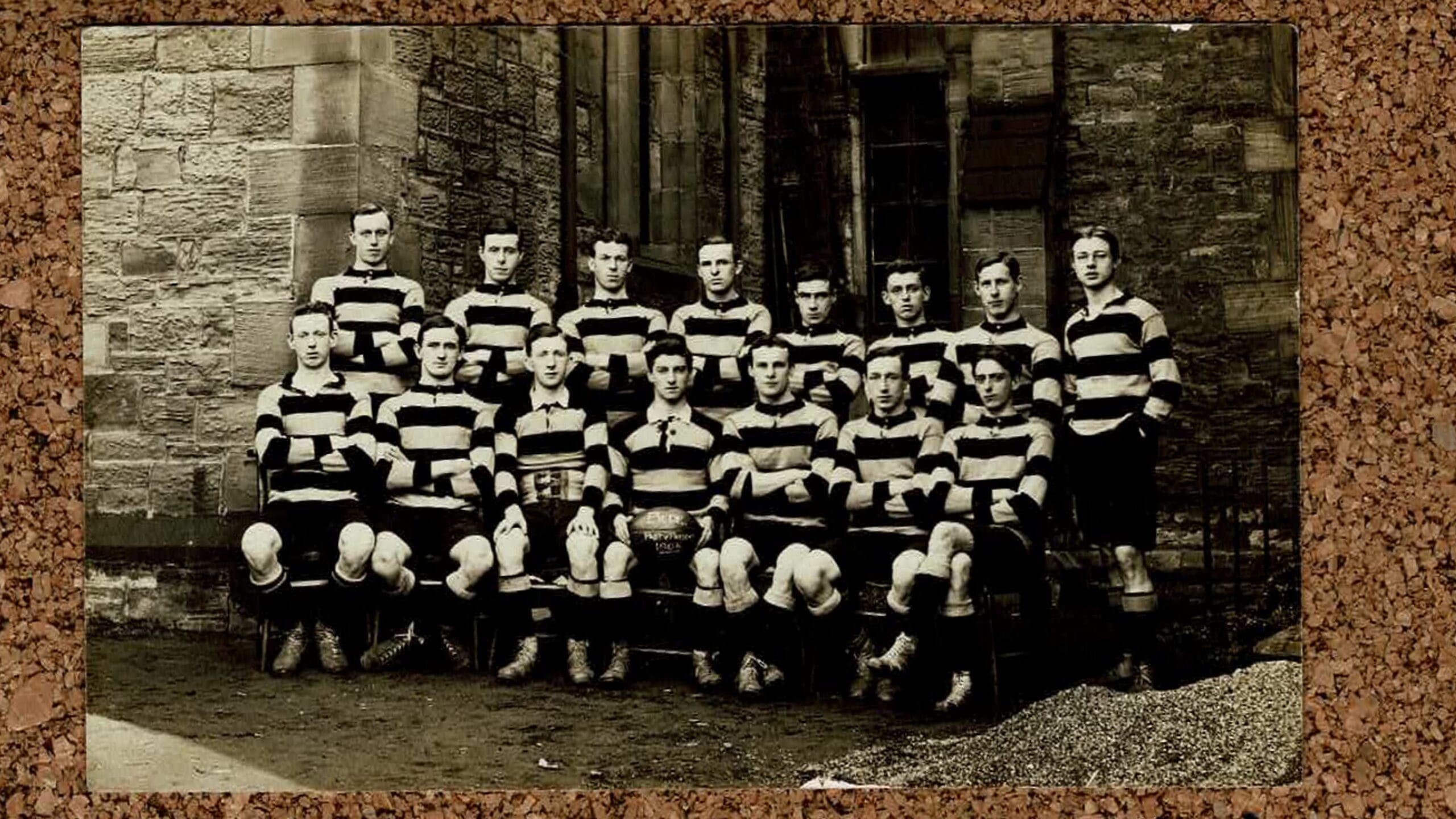
Greetings from Durham, and from the Bede College Past v Present match, 1908.
The College of the Venerable Bede was established in Durham in 1839, focusing on teacher training for men. Initially autonomous, in 1892 it became associated with Durham University, enabling students to study for undergraduate degrees of Durham, in addition to the PGCE which Bede College awarded itself.
It had a sister college – St Hild’s College – which was located next door and which focused on teacher training for women. Their paths ran parallel and in 1975 they merged, becoming the College of St Hild and St Bede – in 1979 they were admitted as a full college of Durham University.
The College’s colours were dark and light blue – the shirts would have looked like Cardiff RFC, if that is any help – and clearly Bede College was a recognised footballing name in the North East.
The Morpeth Herald of 25 January 1908 records the team which was to play Bedlington United and the Hartlepool Northern Mail nine months later records a Bede player – Patterson – appearing for Wingate Albions in the Durham Senior Cup second round. Mr Patterson was in the team v Bedlington, and therefore almost certainly in the picture. Which one was he?
By their ages I judge the card to be Bede Present rather than Bede Past. I haven’t been able to track down team sheets or a score for the match, but it was clearly a thing of moment, even if only a one-off game.
Sport continues to thrive at the college although intra-university rather than playing against regional sides. The team is now Hild Bede AFC, and last won the university league in 2015. What would Mr Patterson say?
Comments · 1
New comments will come back with sign-in later this year.
Paul Wakeling · 28 Feb 2022
That looks like a rugby team rather than a football team to me – 15 players and a irregular shaped ball (rugby balls were rounder then than they are now).
Related articles

Boards can’t predict the future, but they can make sure their institution is ready for it
Debbie McVitty | Comment | 19/10/26

What counts as a graduate outcome when the labour market is changing?
Angel Tan | Comment | 16/10/26

Widening participation isn’t finished while background still predicts destination
Hannah Rolley | Comment | 16/10/26

Higher education postcard: The Warburg Institute
Hugh Jones | Comment | 16/10/26

If not university then what?
David Kernohan | Comment | 15/10/26

John Healey’s drive for a resilient economy could further squeeze universities
James Coe | Comment | 15/10/26