England and Scotland’s funding experiments have both failed
Craig Mahoney argues it’s time for a conversation about what higher education is worth, who benefits from it, and who should pay
Comment|

Craig Mahoney is a higher education academic and former Vice-Chancellor
Higher education globally is locked in a desperate search for a sustainable funding model.
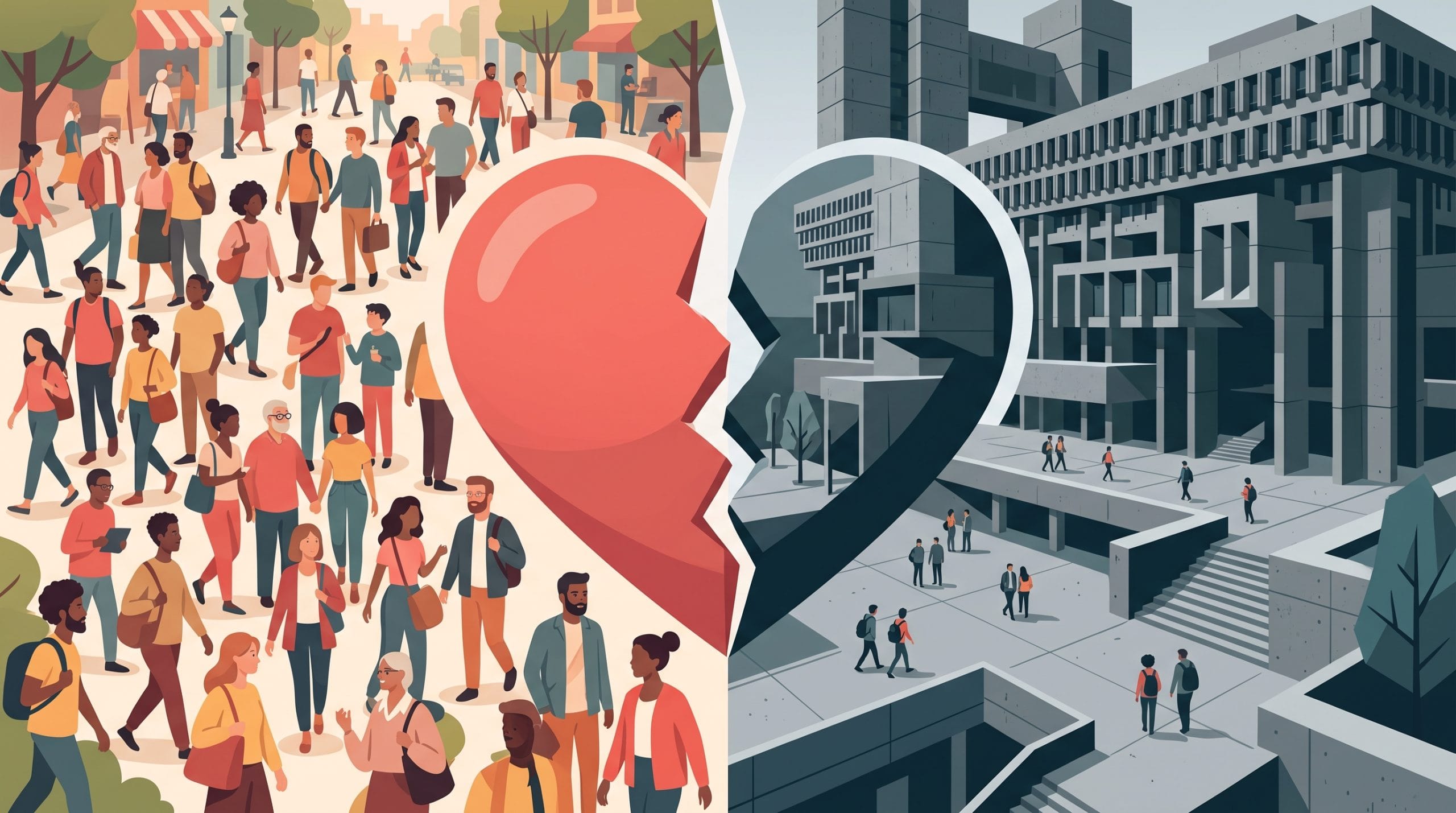
In the United Kingdom, we have managed to create two distinct versions of a foolish tax. In England, we have built a system of high-interest debt that stifles aspiration. In Scotland, the pursuit of free tuition has created a chronically underfunded shell that relies on international subsidies and quietly rations domestic opportunity.
Both systems are failing because they refuse to acknowledge a simple truth: higher education is a shared benefit that requires a shared investment. Scotland’s crisis is the more urgent and instructive case. As the Framework for the Sustainability and Success of Scotland’s Universities does its work, the question for policymakers is not whether the limits of public funding have been reached, but whether Scotland will have the courage to think boldly about what comes next. And this includes the funding model itself, or instead repeat England’s mistake of treating the symptom rather than the disease.
The hidden cost of “free”
Scotland’s free tuition model is routinely lauded as progressive.
Its founding logic is easy to understand: removing fees was meant to protect access for those who could least afford to pay, and no Scottish government wants to be the one that brings them back. But the reality of how that principle is funded is more troubling. Scottish universities receive around £7,610 per head to teach a domestic student, a figure calculated by the IFS, and around a fifth less in real terms than English institutions receive for an equivalent student.
More than half of Scotland’s universities are running deficits in 2025-26, on the sector regulator’s own figures, and the sector’s aggregate operating position has collapsed from a £210m surplus in 2022-23 to a projected deficit within three years, according to the Scottish Funding Council.
To stay solvent, Scottish institutions have been forced to prioritise high-fee international students. Domestic places are capped. Tuition may be free in name, but its availability is rationed, talented Scottish students are quietly locked out to make room for global revenue. This is not the social democratic triumph it is often presented as. In practice, it is a managed retreat dressed in progressive language.
The fiscal evidence is damning. In the 2024-25 Budget, the Scottish Government cut the higher education resource budget by £28.5 million, what Universities Scotland called the toughest funding settlement the sector had faced. For the first time in years, they explicitly reduced the number of funded first-year domestic places, a direct tax on opportunity, sacrificing a student’s ability to study in their own country to protect a politically convenient headline.
Meanwhile, the 2024 UK Autumn Budget’s hike in Employer National Insurance is estimated, by Universities Scotland, to cost Scottish universities an additional £45 million. Without the ability to raise tuition fees, institutions have no mechanism to recover these costs other than cutting staff or further shrinking domestic intakes.
The Scottish Funding Council’s own sustainability reports provide the starkest warning: Colleges Scotland warns that up to 11 colleges face the risk of effective insolvency in 2026–27 without urgent action. And while the Scottish Government continues to recite the slogan that “the rocks will melt with the sun” before tuition fees return, the fiscal cold is already biting.
The “broad shoulders” narrative, that progressive general taxation can indefinitely fund universal provision, is also under strain. With Scotland’s top rate of income tax now at 48 per cent, the highest of any UK nation, the system risks accelerating the outward migration of the higher earners whose tax contributions sustain these free services. When a state attempts to fund everything from prescriptions to bus travel to university places, it eventually funds nothing well.
The English debt trap
Scotland’s crisis is urgent, but England’s trajectory shows where the wrong reform leads.
The English experiment with high tuition fees, now capped at £9,535 for 2025–26, has not solved the funding question; it has merely displaced it onto graduates and deferred the political reckoning.
The system’s technical income-contingency has not prevented it morphing into a lifelong levy. Under Plan 2, which still governs everyone who started before August 2023, interest can run as high as RPI + 3 per cent, meaning that even as graduates pay 9 per cent of salary above the threshold, their balance often keeps growing.
The 2023 reform, Plan 5, capped interest at RPI alone, but paid for that concession with a lower repayment threshold and a 40-year write-off instead of 30. Today’s new graduates trade a gentler interest rate for two extra decades of a 9 per cent deduction from every payslip above a lower bar. Either version amounts to a permanent debt cloud that prevents young professionals from saving for house deposits or pensions. It is, in effect, a psychological tax on aspiration.
The design logic behind income-contingent loans is sound in principle: repayments scale with earnings, nothing is owed by graduates who never clear the threshold, and there are no bailiffs at the door. But sound design has not translated into a system graduates experience as fair.
There is a profound irony in politicians, many of whom received free degrees and maintenance grants, overseeing a system that charges 18-year-olds commercial interest on their education. A shift to interest-free loans, where students repay only the real value of what they borrowed, would restore a moral pact between graduates and the government. It would not cover the full cost of education, but it would provide a significant return on public investment without the punitive compounding that currently distorts young people’s financial lives.
The message for Scotland is clear: England has not fixed the problem. It has shuffled the debt, extended the timeline, and called it a solution. Scotland should not be tempted to follow that path.
A perfect storm brews
These structural failures are being compounded by a hostile policy climate at Westminster. The treatment of international students, who pay not only fees but visa costs, healthcare surcharges, and full living costs, has become a proxy for immigration politics. Blanket restrictions on student visas from entire countries are counterproductive and intellectually dishonest. The legitimate concern about abuse of student visa routes can and should be addressed through targeted enforcement, not the wholesale restriction of a revenue stream that underwrites British academic excellence.
The behaviour of the UKVI in delaying interviews for students already holding a CAS, funnelling international students away from teaching-led universities and into the Russell Group, is an unfair and opaque form of institutional stratification that has persisted across governments since Theresa May. The prospect of a new levy on international student fees adds yet another burden to institutions already operating on the margins.
Higher education is one of the UK’s most credible, globally recognised, and economically productive exports. Damaging it in pursuit of short-term political positioning is not just poor policy, it is a strategic own goal.
Sharing the load
To fix this, we must stop pretending that either the student or the taxpayer alone should bear the burden. There are three primary beneficiaries of a university degree, and all three should contribute to its cost.
For the individual, graduates benefit from higher lifetime earnings and enhanced career security. They should contribute, but through a fair, interest-free system that does not compound debt while they work.
For the government, a highly qualified, entrepreneurial workforce generates tax yield and drives economic growth. Public investment in higher education is not a cost; it is a down payment on future GDP.
And for industry, employers are the silent, and unchallenged, beneficiaries of graduate attributes developed at public expense. That must change.
We already have a precedent, and the government is already moving in this direction.
The Apprenticeship Levy charges employers with a payroll over £3 million, 0.5 per cent of their pay bill, and from this April it is itself being widened into a “Growth and Skills Levy” covering a broader range of training. The logical next step is to extend that same reserved mechanism into a graduate and skills levy, with a modest supplementary rate on the same base, ring-fenced for teaching grants rather than absorbed into general taxation.
Employers will object, as they did to the original levy, that this raises the cost of hiring graduates. But a business that recruits graduates is already drawing on a subsidy it does not pay for directly; a levy simply prices in a cost that taxpayers currently carry alone. As a UK-wide, reserved tax, this would need Westminster’s agreement, but Scotland, with the most acute funding gap of any UK nation, has the strongest case for making it. This rebalances the cost away from the 18-year-old applicant and the overburdened taxpayer, and places appropriate responsibility onto the sectors that profit from graduate talent.
We should also be far more serious about building a culture of philanthropic giving, modelled on the US and Canadian traditions, where alumni and industry sustain their institutions directly, rather than waiting on a state whose fiscal headroom for universal provision keeps shrinking.
It’s time to get real
Scotland stands at a genuine fork in the road.
The current free tuition model has reached its fiscal limits. England’s high-fee alternative has not resolved the underlying problem; it has simply moved the bill onto graduates’ payslips for the next forty years. Neither path is adequate for a system of Scotland’s ambition.
The Framework for the Sustainability and Success of Scotland’s Universities represents a rare and serious opportunity to move beyond the binary of free versus fees, but only if it is willing to put fees, and the question of who else should pay, back on the table, rather than ruling that conversation out of scope before it begins. Scotland could lead the UK, and arguably the English-speaking world, in designing a genuinely sustainable, equitable funding model that draws on the individual, government, and industry in fair measure.
The rocks may or may not melt with the sun. But Scotland’s universities will not survive on slogans. It is time for a grown-up conversation about what higher education is worth, who benefits from it, and who should pay.
Related articles

Student transition into university shouldn’t be a handover
Katharina De Vita | Comment | 13/10/26

Creating a space and a voice for widening participation professional practice
Tara Webster-Deakin | Comment | 13/10/26

During times of transformation emerging leaders need to be inside the leadership tent
Alistair Jarvis | Comment | 12/10/26