Getting students to turn up without threatening them
University teaching attendance has been a significant challenge for decades, with rates often hovering around 50 per cent or even dropping as low as 30 per cent in some cases. While students consistently report strong intentions to attend lectures, seminars, labs or whatever, there’s often a significant gap between what they plan to do and … Continued

University teaching attendance has been a significant challenge for decades, with rates often hovering around 50 per cent or even dropping as low as 30 per cent in some cases.
While students consistently report strong intentions to attend lectures, seminars, labs or whatever, there’s often a significant gap between what they plan to do and what they actually do.
And it’s often the “SU rep in the room” that’s asked to either explain why students don’t turn up, or offer ideas for causing them to appear.
There’s good reason to assume that some of the problem relates to cost of living challenges, time poverty and trade offs.
But the removal of barriers is usually a hygiene factor – it doesn’t in and of itself motivate attendance.
A recent study from Scotland offers promising insights into how this problem might be addressed through a simple, cost-effective intervention that SUs could easily advocate.
The attendance challenge
The importance of attendance for academic success is well-established. Students who regularly attend typically achieve better grades, develop stronger critical thinking skills, and experience greater engagement with their subjects.
Lectures, for example, provide opportunities for real-time clarification, hearing different perspectives through questions from peers, and building enthusiasm for the subject matter.
Despite the benefits, attendance rates remain stubbornly low across UK universities. Research consistently shows that whilst students have strong intentions to attend lectures – often rating their intention to attend at 8 out of 9 on measurement scales – their actual behaviour frequently falls short of these goals.
The intention-behaviour gap suggests that students aren’t lacking motivation, but rather struggling with the practical challenges of translating their good intentions into consistent action.
Various interventions have been tried to address poor attendance, including mandatory attendance policies, penalties, and lecture capture. But these approaches often prove costly, impractical, or counterproductive. Mandatory attendance can undermine educational principles and student autonomy, whilst lecture capture, though valuable for accessibility, is at least perceived by some as a way to reduce live attendance.
The gap between intention and behaviour isn’t unique to lecture attendance – it’s a common phenomenon across many areas of human behaviour. Psychological research has identified that people often fail to act on their intentions because they miss opportunities to act, get distracted by competing priorities, or lack specific plans for overcoming obstacles.
This understanding has led to the development of implementation intentions, also known as “if-then” plans, which help people specify in advance when, where, and how they will act on their goals.
Testing a volitional help sheet
Researchers from a large Scottish university developed and tested what’s called a volitional help sheet (VHS) to help students translate their intentions to attend lectures into actual attendance.
The study involved 178 undergraduate psychology students during the 2021-22 academic year, when lectures were being delivered online via Zoom due to the ongoing Covid-19 pandemic.
The VHS is essentially a structured planning tool that helps students create implementation intentions. Rather than asking students to come up with their own plans, which can often be vague or poorly specified, the VHS provides evidence-based options to choose from.
The intervention works by helping students identify critical situations that might tempt them to miss a lecture, and then linking each situation with a specific strategy for overcoming that temptation.
Students in the intervention group were presented with a dropdown list of 20 common situations that put lecture attendance at risk. These were based on previous research into why students miss lectures and included scenarios like:
“If I am tempted to miss a lecture because I feel tired/I’d rather rest…”
“If I am tempted to miss a lecture because I think the lecture recording/slides are enough on their own…”
“If I am tempted to miss a lecture because I have a university deadline approaching…”
For each critical situation they selected, students then chose from 24 goal-directed responses, such as:
“…then I will remind myself that attending lectures should help me get a higher mark”
“…then I will remind myself that attending the lecture should help me to better understand the topic”
“…then I will remind myself that I have a responsibility to learn the curriculum”
Students created four complete “if-then” statements, forming implementation intentions like:
“If I am tempted to miss a lecture because I feel tired, then I will remind myself that attending lectures should help me get a higher mark.”
The control group received exactly the same content but without creating the links between situations and responses. Instead, they were asked to select critical situations that would tempt students generally (not themselves specifically) and goal-directed responses that most students would find effective.
This design allowed researchers to isolate the specific effect of creating implementation intentions rather than just being exposed to the content.
The study tracked actual attendance through Zoom records over an 11-week semester, providing objective data rather than relying on self-reported attendance, which can be subject to various biases.
Significant improvements
The results demonstrated clear benefits for students who used the volitional help sheet. Students in the VHS group attended 58 per cent of their lectures compared to 49 per cent for the control group – a statistically significant difference that represents a substantial practical improvement.
Perhaps even more importantly, the VHS group maintained their attendance for longer periods. Using survival analysis techniques, the researchers found that VHS students were 45 per cent less likely to miss their first lecture at any given time point compared to control students. The difference became more pronounced as the semester progressed:
- By week 4, attendance maintenance was more than twice as high in the VHS group (55% vs 25%)
- By week 7, it was nearly three times higher (28% vs 10%)
- By week 11, VHS students were nearly five times more likely to have maintained perfect attendance (14% vs 3%)
On average, VHS students maintained their lecture attendance for approximately two weeks longer than control students. This sustained engagement is particularly valuable because consistent attendance provides educational benefits that sporadic attendance cannot match, including regular spaced learning, better retention, and reduced need for intensive cramming.
The intervention proved most effective for students with higher levels of conscientiousness. Contrary to the researchers’ initial hypothesis, highly conscientious students seemed to engage more effectively with the planning process, possibly because they were better at encoding the implementation intentions into memory and following through when the specified situations arose.
Importantly, the intervention’s effectiveness wasn’t dependent on students’ initial intentions to attend lectures. Since most students already had very high intentions (averaging over 8 on a 9-point scale), the VHS helped bridge the intention-behaviour gap rather than trying to increase motivation.
How SUs can use the results
The findings offer several practical opportunities for SUs to support their members’ academic success through improved lecture attendance.
Implementing VHS interventions
- SUs could work with their universities to implement VHS interventions at the start of each semester. The process could be integrated into existing orientation activities or delivered through virtual learning environments. Since the intervention takes only about five minutes to complete, it represents a low-burden, high-impact opportunity.
- The intervention could be delivered through apps, which many universities already use for timetabling and student services. This would offer the additional benefit of allowing students to update their implementation intentions if they encounter new challenges not anticipated at the semester’s start.
- SUs might also consider adapting the VHS approach for different contexts. While this study focused on online lectures, the same principles could apply to in-person attendance. The critical situations and goal-directed responses could be updated to reflect current challenges students face, such as cost-of-living pressures requiring part-time work, mental health challenges, or housing situations that make campus attendance difficult.
Advocacy and policy implications
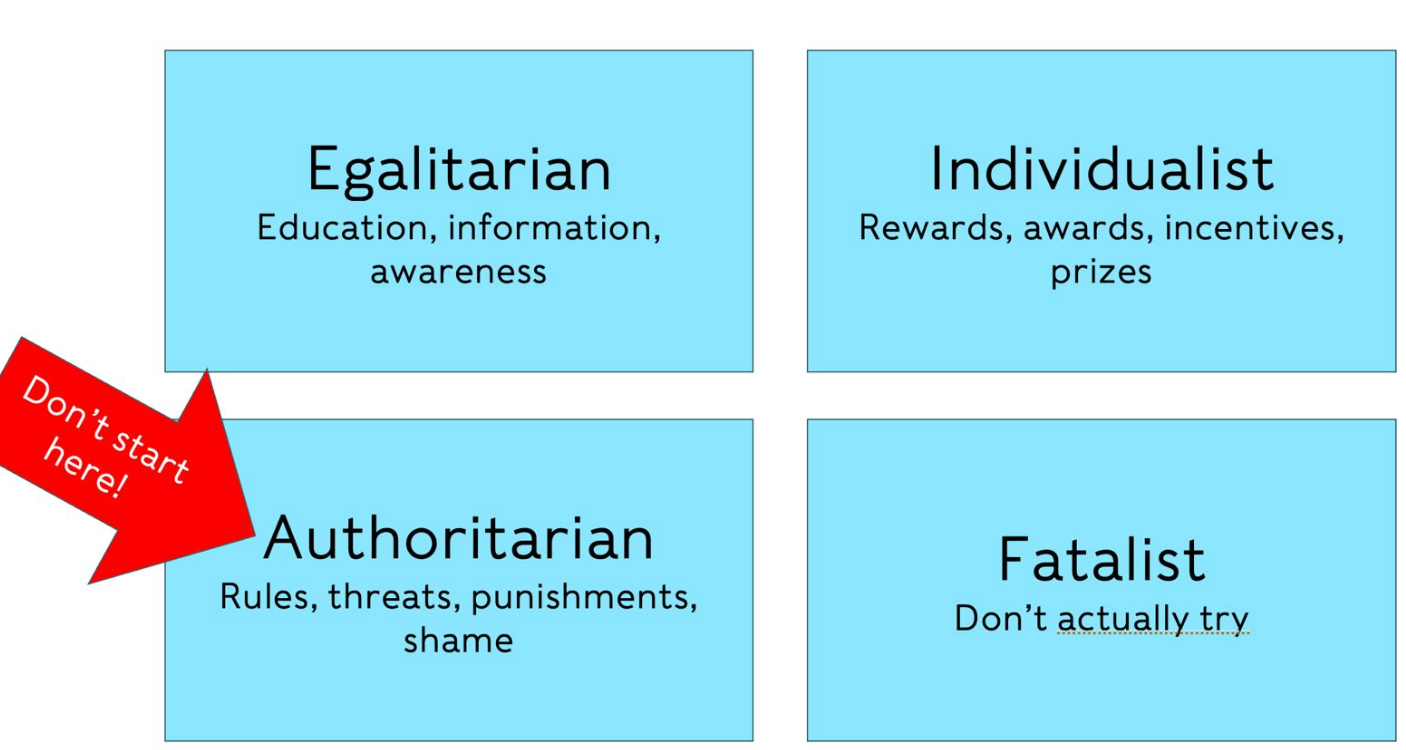
The research provides evidence that SUs can use in discussions with university management about attendance policies. Rather than implementing punitive measures like mandatory attendance, institutions could adopt supportive interventions that respect student autonomy whilst providing practical help.
SUs could advocate for the integration of VHS-type interventions into student support services, particularly for students identified as at risk of poor attendance. This could be especially valuable for first-year students who are still developing university study habits.
The findings also support arguments against overly restrictive policies. Since students generally have strong intentions to attend lectures, the problem isn’t motivation but rather practical barriers and competing demands. This suggests that support, rather than punishment, is the more appropriate response.
Broader applications
The implementation intention approach isn’t limited to lecture attendance. Student unions could adapt the VHS model for other student success behaviours such as:
- Submitting assignments on time
- Attending seminars and tutorials
- Participating in study groups
- Maintaining regular study schedules
- Accessing support services when needed
The University of Helsinki model
A particularly promising approach can be seen at the University of Helsinki, which has embedded systematic planning into its academic structure through Personal Study Plans (PSPs).
Every student must create and continuously update study plans throughout their degree, with dedicated teacher guidance and institutional support through their SISU system. Doing the initial plan is even a 2 credit module.
This model demonstrates how planning interventions could move beyond one-off activities to become integral parts of academic support. Helsinki students engage in regular teacher-student meetings focused on “study-related goals and needs” and “how you intend to progress in your studies.” These guidance sessions could naturally incorporate discussion of lecture attendance challenges and implementation intention planning.
For UK SUs, this suggests several enhanced approaches:
- Integration with personal tutoring: Rather than standalone interventions, unions could advocate for VHS-type planning to be embedded in existing personal tutoring systems. Many UK universities have personal tutor schemes, but these could be enhanced to include evidence-based planning techniques for academic behaviours like lecture attendance.
- Credit-bearing study skills modules: Universities could develop study skills modules that include implementation intention training, giving students academic credit for developing these crucial self-regulation skills. This would signal institutional commitment to these techniques whilst ensuring broader uptake.
- Systematic ongoing guidance: The Helsinki model shows how planning interventions can be supported by ongoing teacher guidance rather than left entirely to student self-direction. UK unions could advocate for training personal tutors in implementation intention techniques and integrating these discussions into regular check-ins.
- Technical integration: Universities could incorporate VHS tools into existing student information systems, making them easily accessible and allowing for updates when students encounter new challenges during the semester.
Scaling up: from pilots to institutional change
While individual VHS interventions show promise, the real potential lies in institutional adoption. Student unions could advocate for pilot programmes that test these approaches within existing frameworks, building evidence for wider implementation.
The Finnish model suggests that planning interventions work best when they’re:
- Integrated into existing academic systems rather than bolted on
- Supported by ongoing guidance and reflection
- Embedded in user-friendly technology platforms
- Treated as core academic skills rather than optional extras
SUs could work with universities to develop similar integrated approaches, potentially starting with volunteer cohorts or specific degree programmes before scaling up.
The beauty of this intervention lies in its simplicity, low cost, and respect for student agency. Rather than imposing external controls, it provides students with evidence-based tools to overcome the common obstacles that prevent them from acting on their existing good intentions.
For SUs committed to supporting academic success while maintaining student autonomy, the volitional help sheet – particularly when embedded within broader institutional frameworks – represents a promising addition to the support toolkit.
The University of Helsinki’s systematic approach shows how such interventions can move from research findings to institutional practice, offering a roadmap for meaningful change in student support.
Read more
- With the power of knowledge – for the world
- Study planning and PSP guidance at Helsinki
- Wicked problems: the solutions on offer need to improve
- Lecture capture as a tool for inclusion and legal compliance
- Reduced student engagement isn’t just about prioritising part-time employment
- What if they’re all part-time students now?
Comments
New comments will come back with sign-in later this year.
Related articles

Climate, Coffee, Crisis – where do SU’s fit in?
Krzysztof Mikulski | SU Blogs | 14/10/26

Universities can’t keep demanding diagnoses the NHS is slowing down
Sharanya Sivarajah | SU Blogs | 12/10/26

Higher education needs to recognise gambling harm as a student wellbeing issue
Max Gogerty | SU Blogs | 5/10/26
From Oslo to Hamburg – our January 2027 study tour
Jim Dickinson | SU Blogs | 1/10/26

A decade on the bus – some of our fave moments from Wonkhe SUs study tours
Jim Dickinson | SU Blogs | 1/10/26

Students are workers too – and they need to know their rights
Kim Allen | SU Blogs | 30/09/26