Access(ing) and participation (in student activities)
Do we need to look at extra-curricular activity through and access and participation lens? Jim Dickinson takes a look at the data. This is a briefing for Wonkhe SUs subscribers. To find out more go to the SUs page in the menu above.
This article is more than 7 years old
Jim is an Associate Editor (SUs) at Wonkhe
Elsewhere on the site we have a summary and downloadable report version of findings from our research into student loneliness.
As well as looking at loneliness levels, wellbeing factors and participation, we also found interesting wellbeing differentials negatively affecting students that were women, BME, disabled, in receipt of means tested funding and so on.
Is there a participation issue?
In addition to questions about the links between mental health and participation, a closer look at the national dataset suggests a broader participation issue for SUs. Some of the headlines include:
- Home students are around 33% more likely to take part in Sports Clubs than home students, with a similar differential for BaME students
- None-EU students are almost twice as likely to take part in daytime social events than home counterparts
- Students undertaking paid part time work are significantly less likely to be participating in activities
- Students that commute (20+ min journey) have broadly consistent participation levels with those that don’t – except in Sports Clubs where those close to campus are much more likely to participate
- Despite the uneven participation, participation in Sports Clubs is most closely linked to positive wellbeing – followed closely by participation in daytime social events.
Before we get into the detail, we also asked about liberation activity, student media and student enterprise- but the numbers were not large enough for us to be able to rely on the findings.
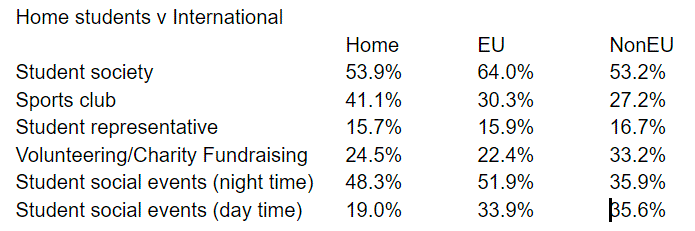
The most obvious differences here relate to Sports Clubs and social events. Home students are much more likely to be members of Sports Clubs than international students. And whilst home students have a preference for night time social activities, international students prefer day time events. Could alcohol be an issue here?
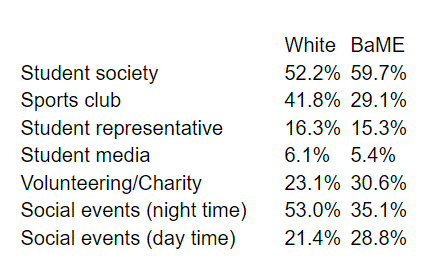
It perhaps shouldn’t surprise us – although should concern us – that disability and postgraduate status both are linked to lower participation levels. But the differentials are more marked with ethnicity – suggesting the BaME gap is as prevalent in sport and social events as it is in academic courses:
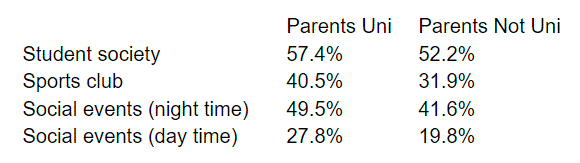
We didn’t find any particularly surprising differences between courses. But one of the other theories about “making the most of student life” is that those whose parents have experience of higher education tend to take on more activities, with others “bucking down” and realising that there are wider opportunities too late. We found some evidence to support this view:
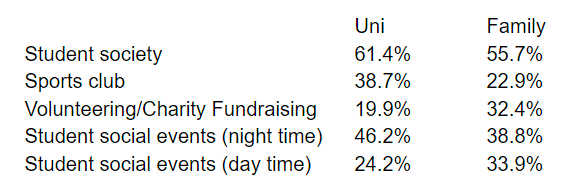
Living arrangements had an impact too. In this chart we compare students living in university owned accommodation with those living in the family home, but in almost all cases those living in the family home were less likely to take part:
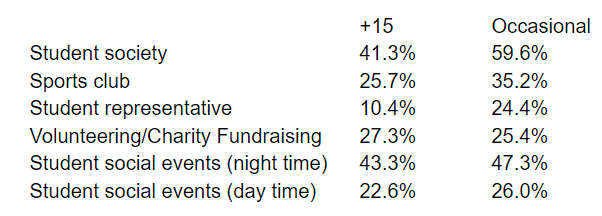
And working part time mattered too. In this chart we compare those working more than 15 hours a week with those only working occasionally, but again in all cases (we also looked at those undertaking no PT work) those working the most participate the least:
Student voices
In the main report we reproduce a host of qualitative student comments on barriers to participation that are worth interrogation. Some described practical issues – like commuting or having family commitments. Others described their background, fearing that that their schooling or class would mean that other students were naturally better at sport, or music. Many described an off-putting culture focussed on alcohol and hedonistic behaviour. Most believed that students’ unions and universities should do more to arrange activities that depend less on “joining” groups.
SUs may want to consider reproducing some of the data at local level, and clearly some of the differences may be down to institutional type – not all SUs are funded to the same level and have different cohorts of students. The national figures though reinforce the need to look at Access and Participation from this extra curricular perspective as well as through the more traditional “courses and programmes” lens.
Comments
New comments will come back with sign-in later this year.
Related articles

During times of transformation emerging leaders need to be inside the leadership tent
Alistair Jarvis | Comment | 12/10/26

Britain likes its universities but not its degrees
Jim Dickinson | Comment | 12/10/26
Who pays the price when universities cancel offers to protect refusal rates?
Jim Dickinson | Comment | 10/10/26

Erasmus+ is back, but who gets left behind?
Jonathan Disley | Comment | 9/10/26

Procurement is a collaboration question too
James Coe | Comment | 9/10/26
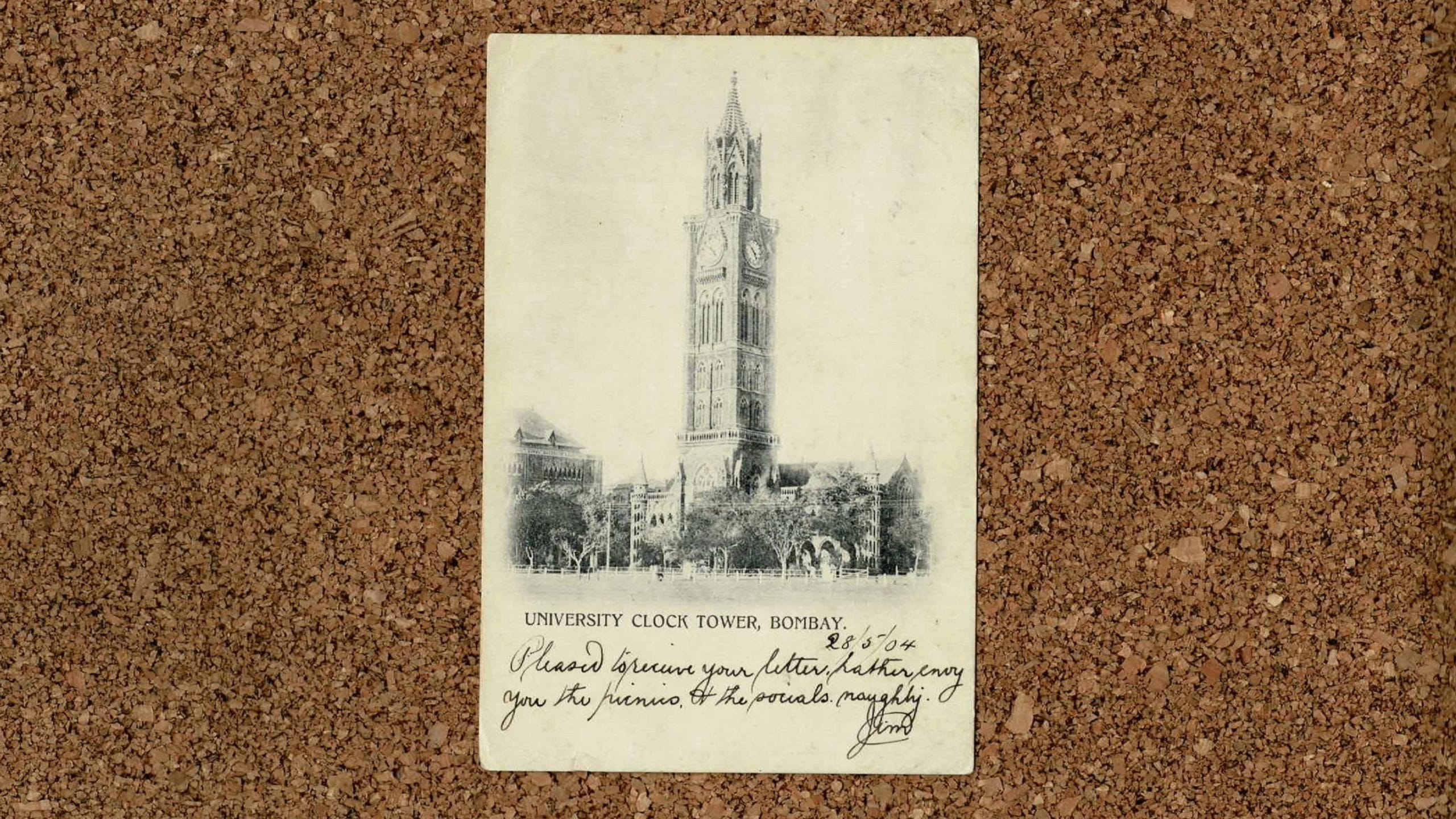
Higher education postcard: Rajabai Clock Tower, University of Mumbai
Hugh Jones | Comment | 9/10/26