Wonk Corner|28/09/26 · 20:58
Student poverty is feeding the NEETs crisis
Over on the Post-18 Project, Director John Blake has some reflections on what he’s seen and heard here in Liverpool.
Jim is an Associate Editor (SUs) at Wonkhe
Every single education fringe event is about NEETs or apprenticeships, or NEETs and apprenticeships, or NEETs but with a lengthy comment-not-a-question about apprenticeships.
It’s actually worse than he says. I’ve done my usual thing of roaming around things that aren’t about education, universities or students but probably should be. And they’ve all been about NEETs as well.
A bit like the debate over graduate jobs, a lot of it the ideas on offer seem to be oddly focussed on the supply side (wear a suit, start em young, aim higher yada yada) when it’s demand from employers that seems to be at least as big a part of the puzzle.
We’re even told that in an otherwise largely policy-free event, Andy Burnham will use his leader’s speech to announce something big on it tomorrow.
Sadly, I’ll bet he doesn’t announce what would almost certainly fix a big chunk of it overnight.
Shift happens
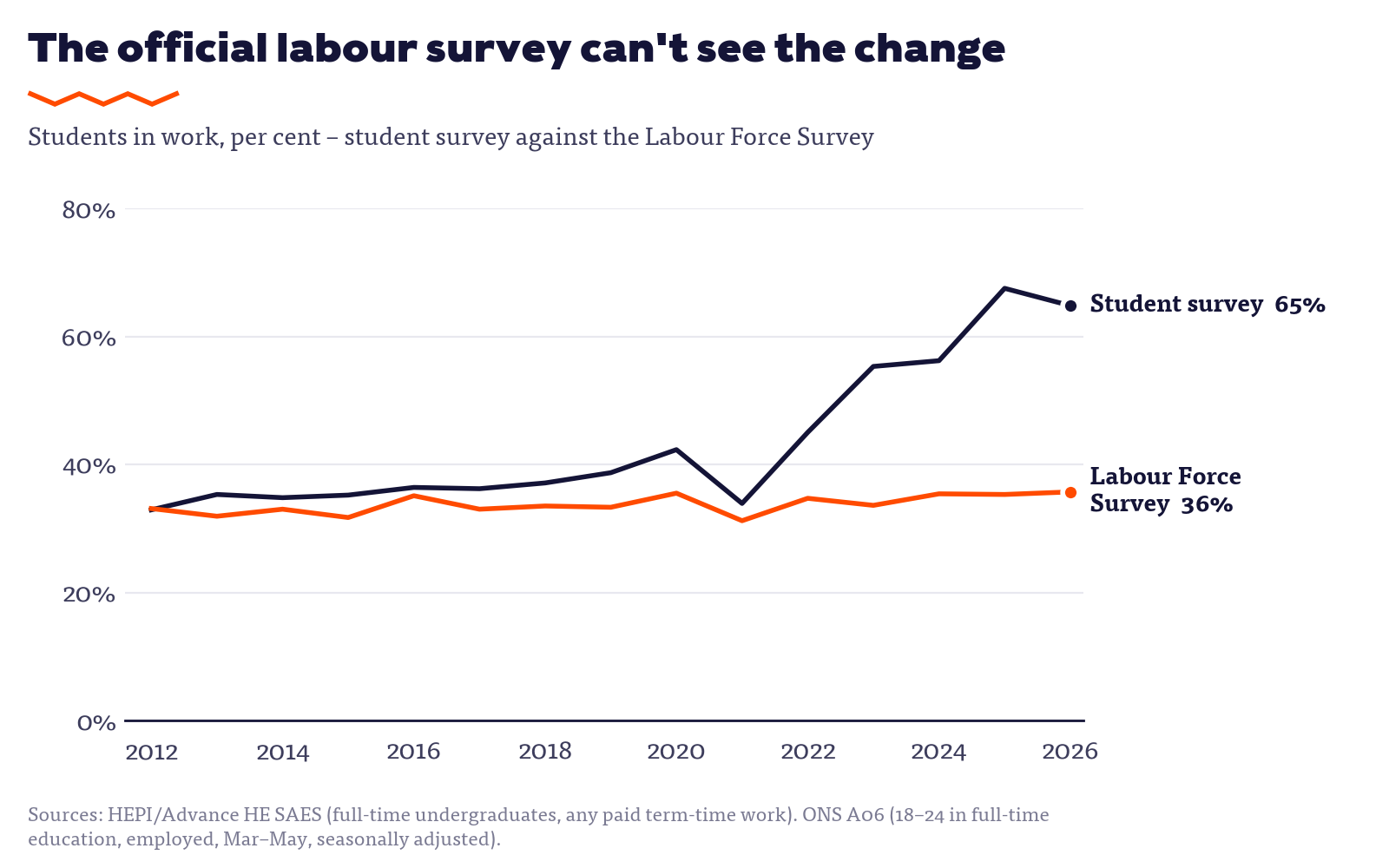
Last week I rehearsed the big problem with official government statistics on people at work when it comes to students. Ignore the Labour Force Survey – the share of full-time undergraduates in paid term-time work has gone from a third to two-thirds in a decade.
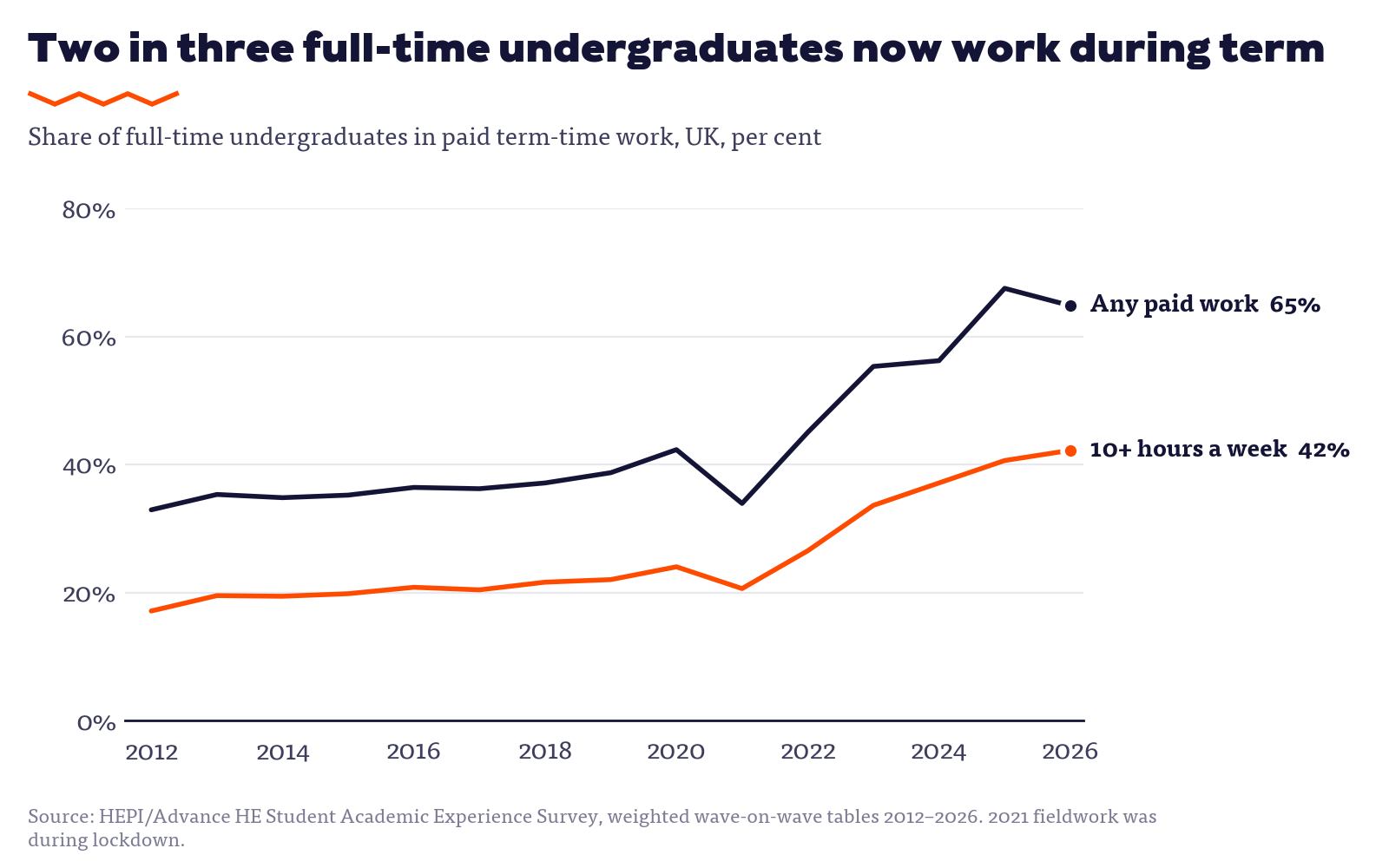
The share working 10+ hours a week went from 17 to 42 per cent. That kept rising in 2026 even as the headline rate dipped.
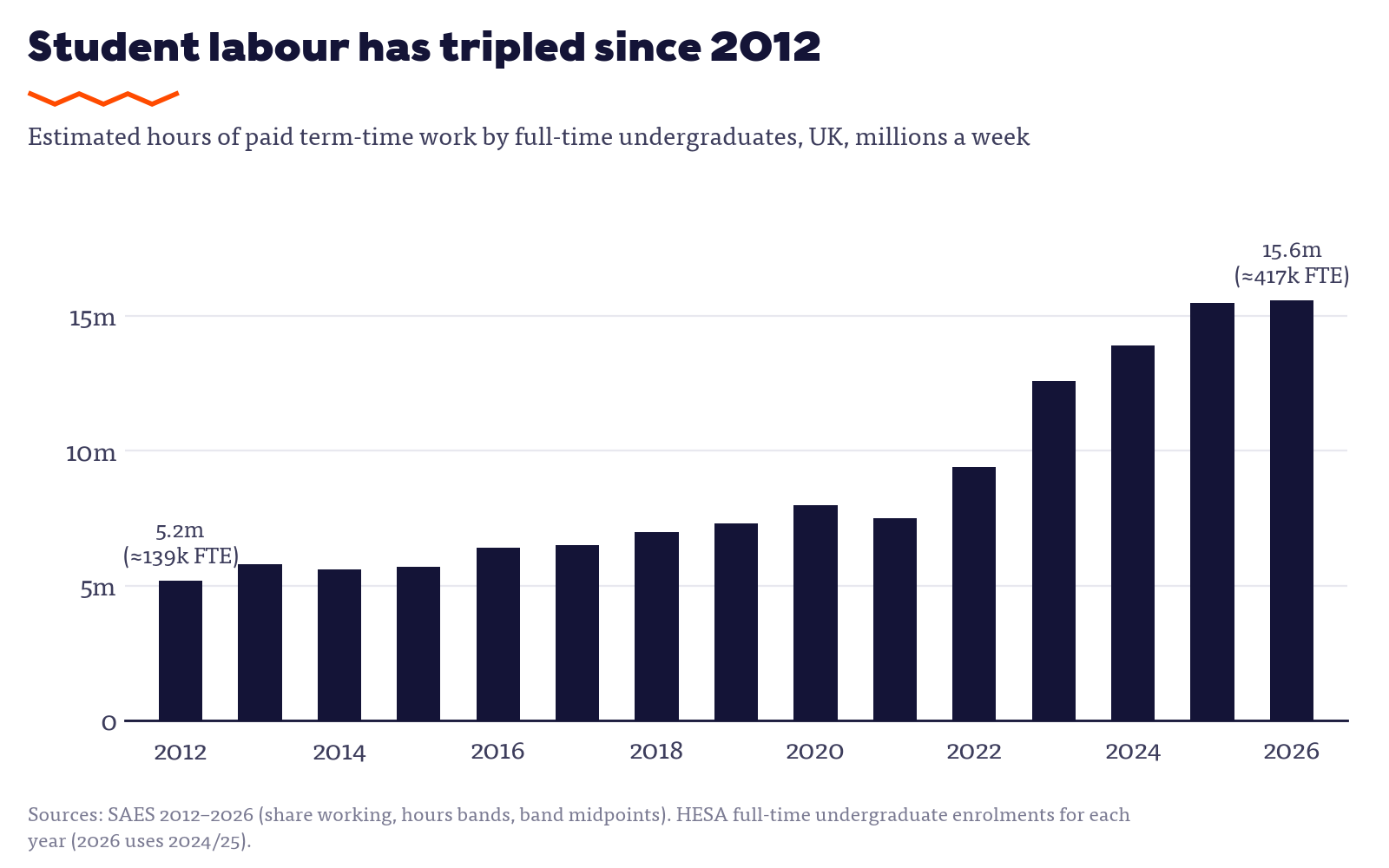
Extrapolate out the figures, and undergraduate paid work went from 5.2 million hours a week in 2012 to 15.6 million in 2026, or from about 139,000 to about 417,000 full-time-equivalent jobs.
That’s an extra 10.4 million hours a week, or about 280,000 FTE jobs. Most of the rise came after Covid. It was about +57,000 FTE between 2012 and 2019, and about +165,000 between 2022 and 2026.
Visa versa
Then think about postgrads. Non-EU full-time postgraduates went from about 140,000 in 2018/19 to a peak of 409,000 in 2022/23, and were still 347,000 in 2024/25 (HESA).
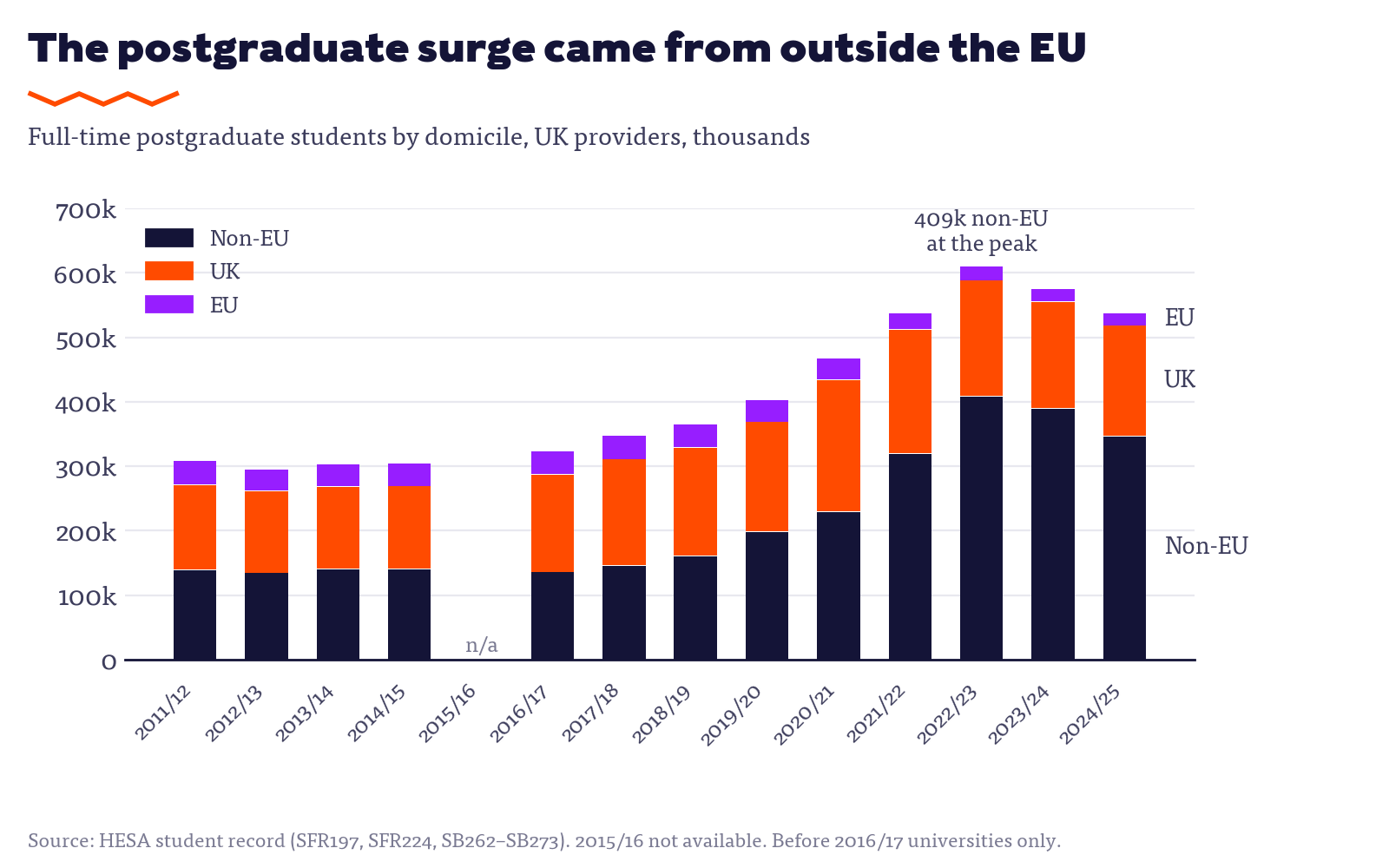
Applying survey work rates for postgraduates to HESA numbers, their labour went from about 87,000 FTE in 2014/15 to 145,000 in 2024/25, peaking at 162,000.
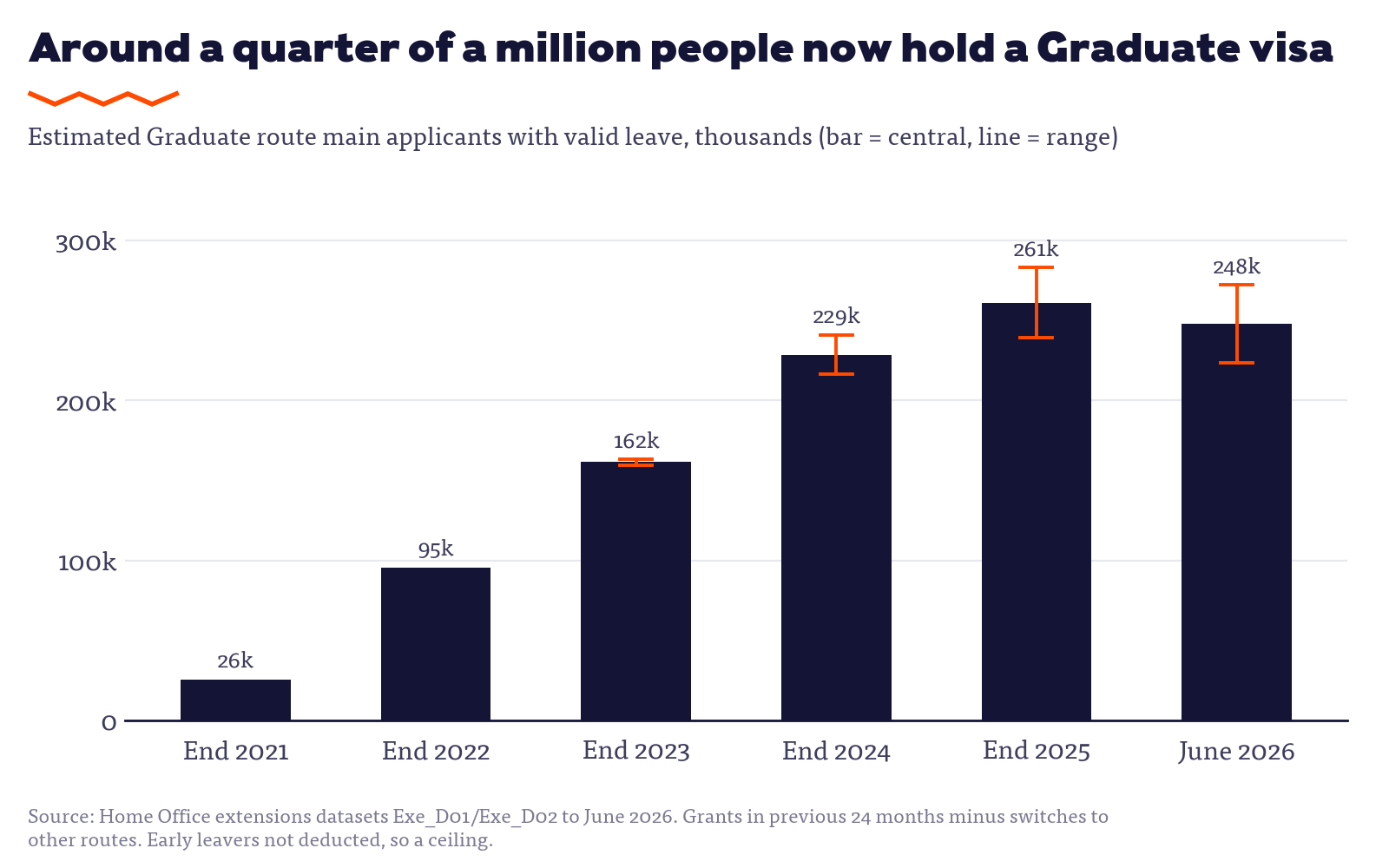
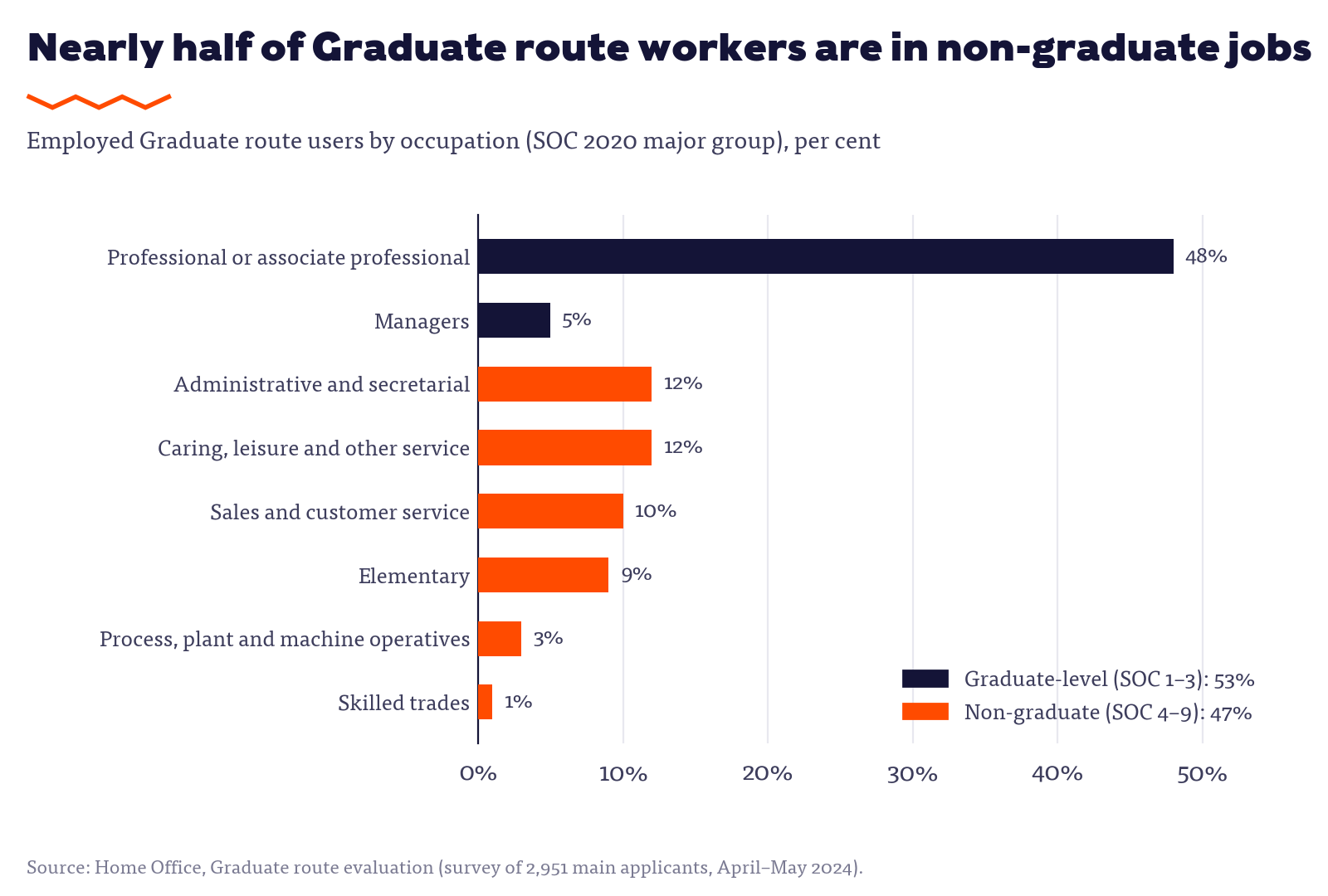
Then add in the graduate route. There were an estimated 261,000 holders at the end of 2025 and 248,000 in June 2026. 68–73 per cent had PAYE earnings in their first year, and in the Home Office evaluation, 53 per cent of those working were in graduate-level jobs and 47 per cent weren’t. 34 per cent were in care, sales, elementary or machine-operator jobs, and most worked full-time.
Autumn leaves
So? Well, the employment rate for 18 to 24 year olds not in full-time education had recovered to 77.1 per cent by Jul–Sep 2022, level with 2019. It fell 2.5 points in a single quarter to 74.6 per cent in Oct–Dec 2022, then declined steadily to 71.3 per cent. Cue Milburn etc.
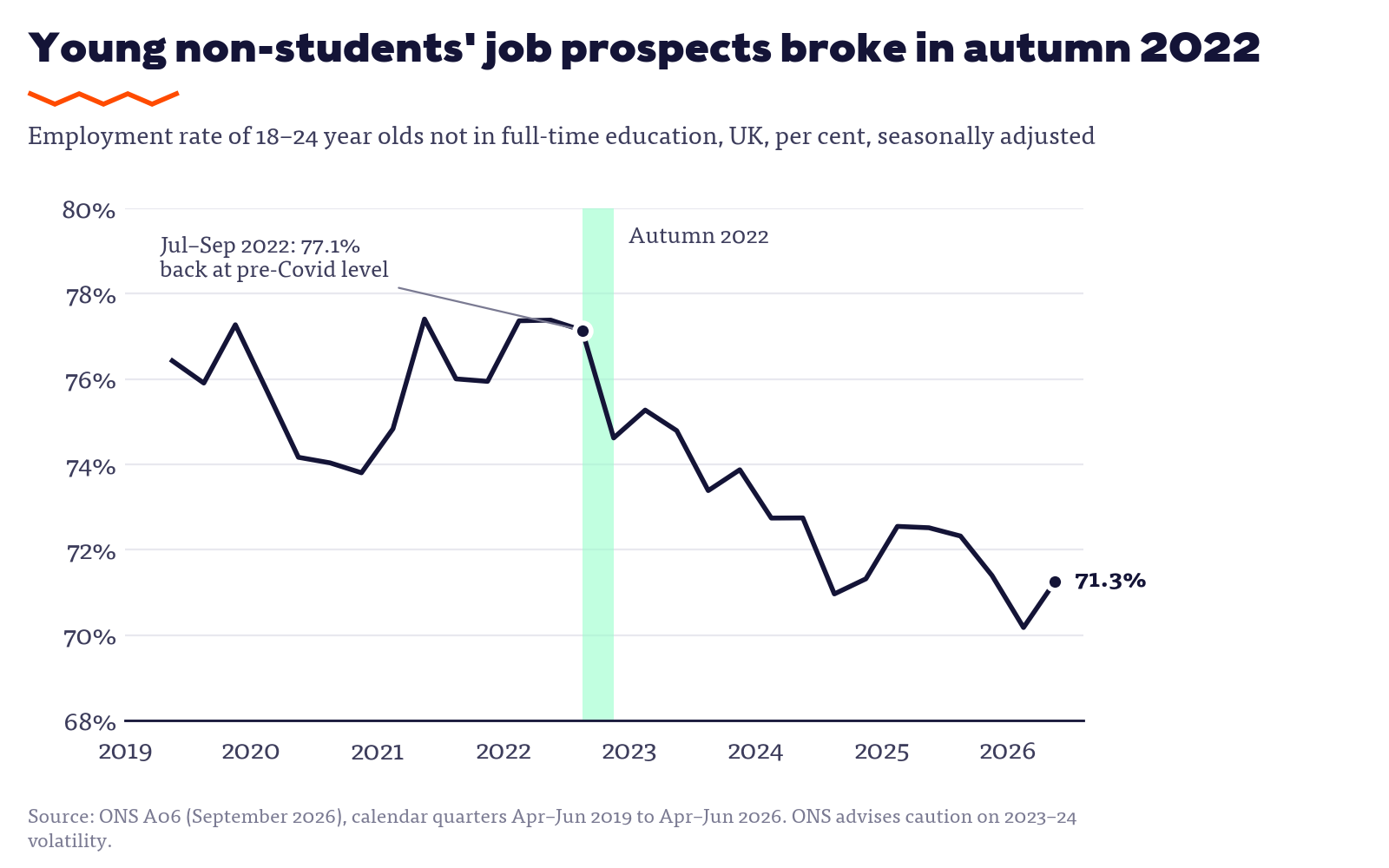
At the mid-2022 rate, about 229,000 more young non-students would be in work today.
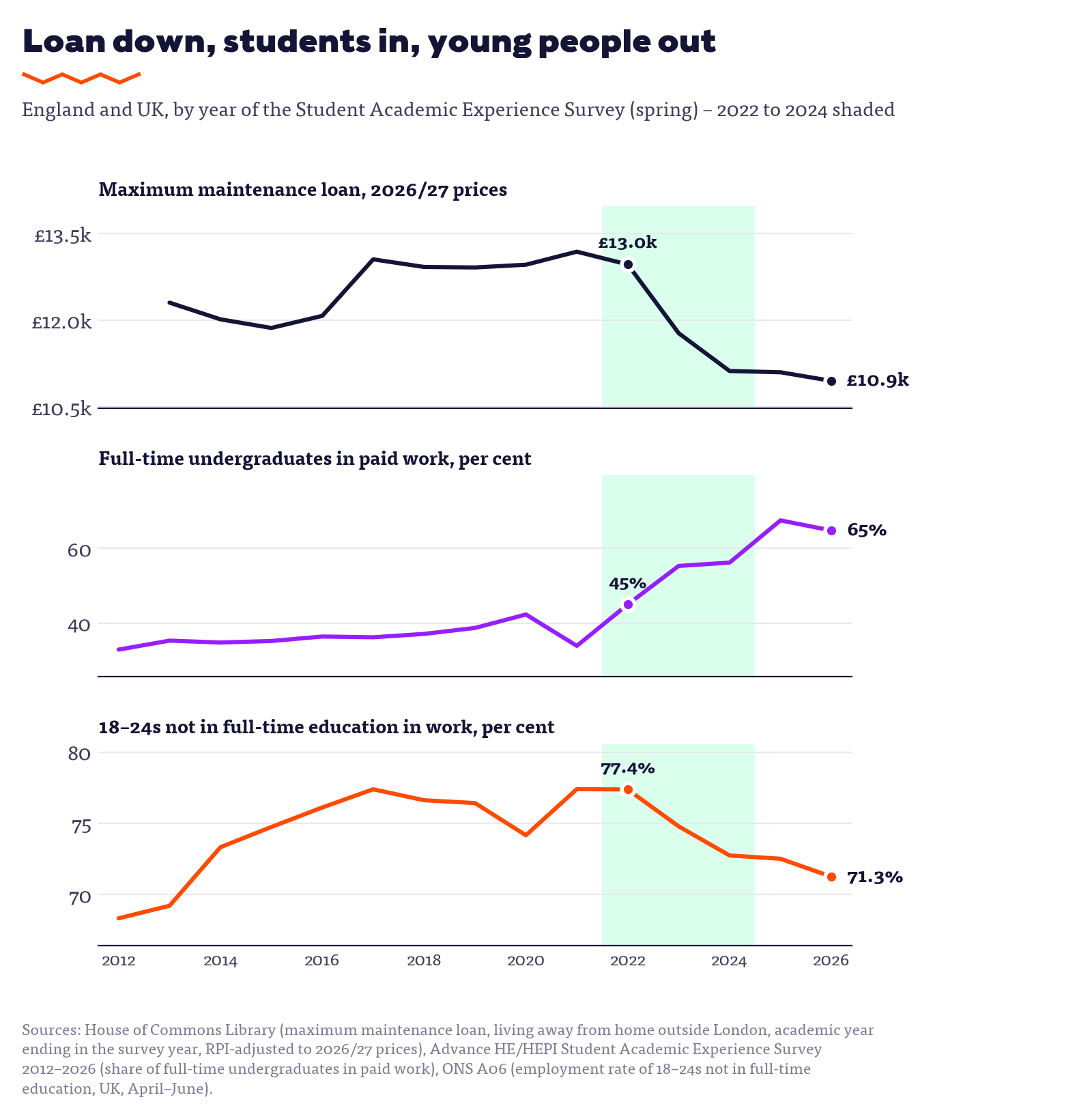
The break lines up with the start of the 2022/23 academic year – the peak international postgraduate intake, Graduate route grants jumping, and SAES undergraduate working rising from 45 to 55 per cent. And a rapid, steep decline in the value of the maintenance loan.
Unemployed non-students aged 18 to 24 rose from 298,000 in late 2019 to 439,000 (+141,000). Their unemployment rate went from 8.3 per cent in mid-2022 to 13.7 per cent. Inactive non-students rose from 547,000 to 680,000 (+133,000).
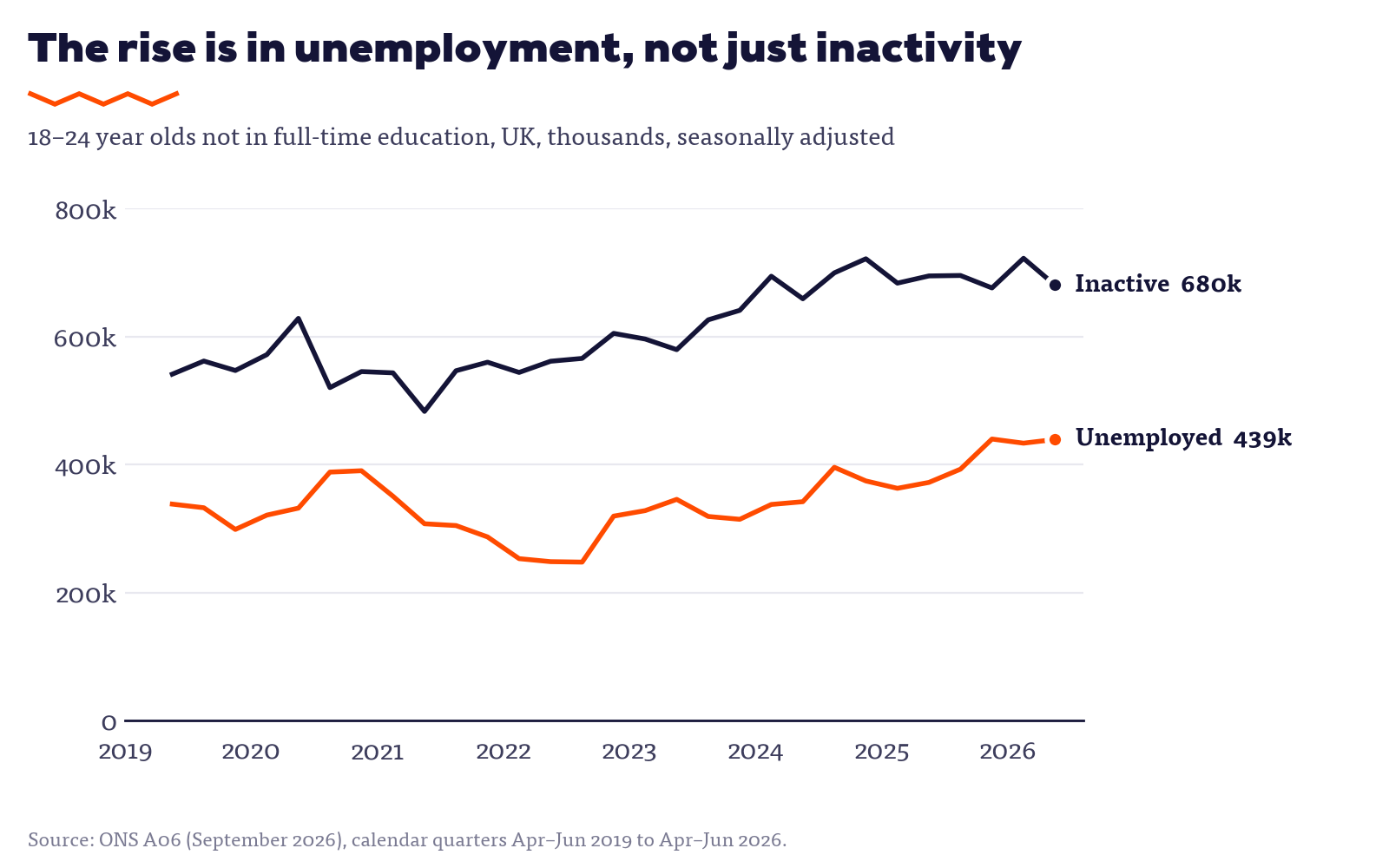
Rising unemployment means people looking for work and not finding it – which suggests too many people and not enough jobs then causing ill-health and inactivity, rather than ill-health and inactivity causing joblessness.
Last orders
Then think about the sort of jobs we’re talking about. Payrolled jobs in retail and hospitality peaked at 6.56 million in February 2024 and are now 6.30 million – about 257,000 fewer, and 212,000 fewer since October 2024.
Health and social work grew by about 20 per cent since 2019. Care is where many Graduate route holders and students work. Payrolled 16 and 17 year olds fell from 539,000 to 392,000 since September 2022, down 27 per cent.
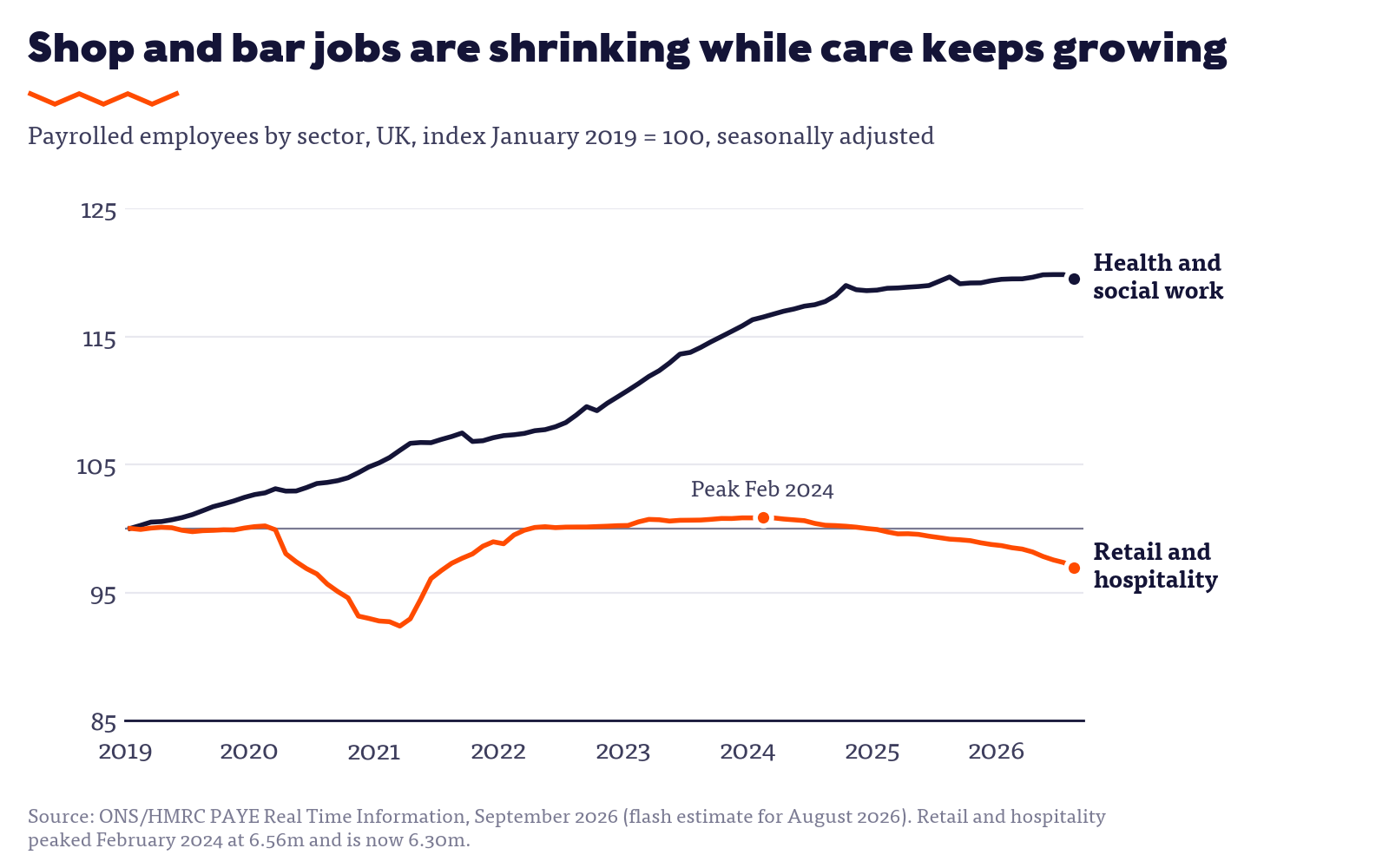
We also know that maintenance support has fallen in value, and HEPI’s minimum income standard implies 20+ hours of work a week at the minimum wage. So more students have to work, and more of them are working more hours – taking hours in entry-level jobs young non-students used to get.
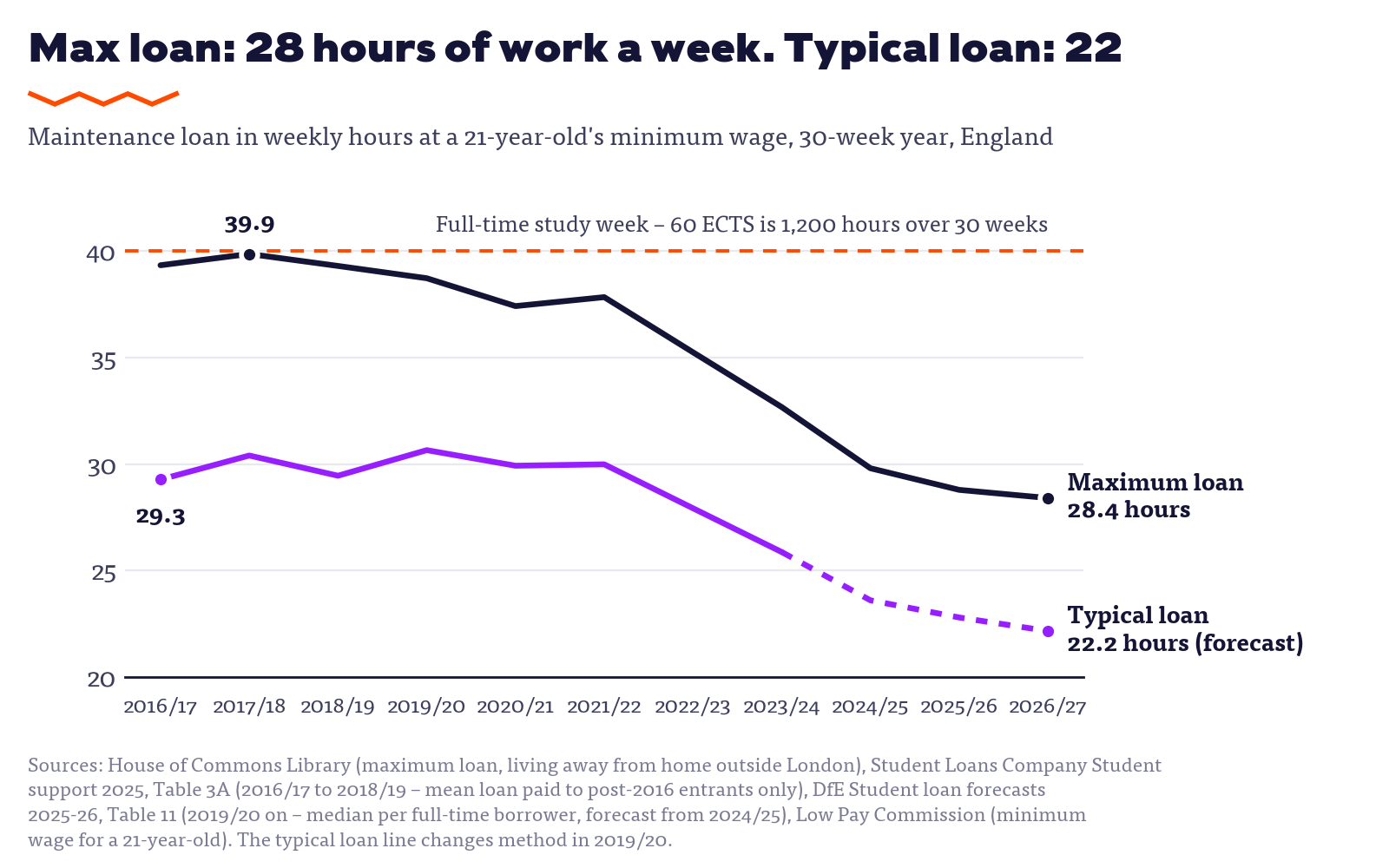
That shows up as young non-students out of work, which the government then counts as a problem with young people, measured by a survey that can’t see the students.
Degrees of flexibility
I mean think about it. The shops and bars left have broken work into short, irregular shifts around evening and weekend peaks. Students, pushed into work by maintenance that falls short of living costs, can take shifts that young people paying their own rent can’t live on.
International students are squeezed too, because the funds their visa requires are pegged to a loan that doesn’t cover real costs. University job shops, campus temp agencies and student-only shift apps then deliver all of them straight to employers, through channels young NEETs never touch.
For employers, a student offers flexibility and screening in one hire. Being at university signals reliability and polish, where a CV gap or health condition filters a NEET out, and students don’t expect progression, training or full-time hours.
The rise in employer National Insurance to 15 per cent in April 2025, with the threshold cut to £5,000, rewards tightly rostered part-timers. And as the 18–20 rate of £10.85 closes on the adult £12.71 ahead of merging by 2029, the young non-student stops being the cheaper option.
Overqualified international graduates, meanwhile, fill full-time care and service roles at the same price. No one consciously picks a student over a NEET – the jobs are just built around someone with a timetable, and some wouldn’t exist in their current form without students to fill them.
In turn, instead of spending time on the activities that would help them bag a graduate job, students are working in jobs that offer little to sell to an employer. And so the cycle of misery continues.
The loan ranger
Some of the above is speculation, of course. But think about it this way.
If today’s 1.79 million full-time undergraduates worked at the same rate and for the same hours as students did before Covid in 2019, around 467,000 fewer of them would be in a job. They would put in about 7.3 million fewer hours a week, equivalent to around 196,000 full-time jobs.
Compared with 2012, the gap grows to around 571,000 students, 9.1 million hours a week and 242,000 full-time jobs.
Things started to accelerate in 2022:
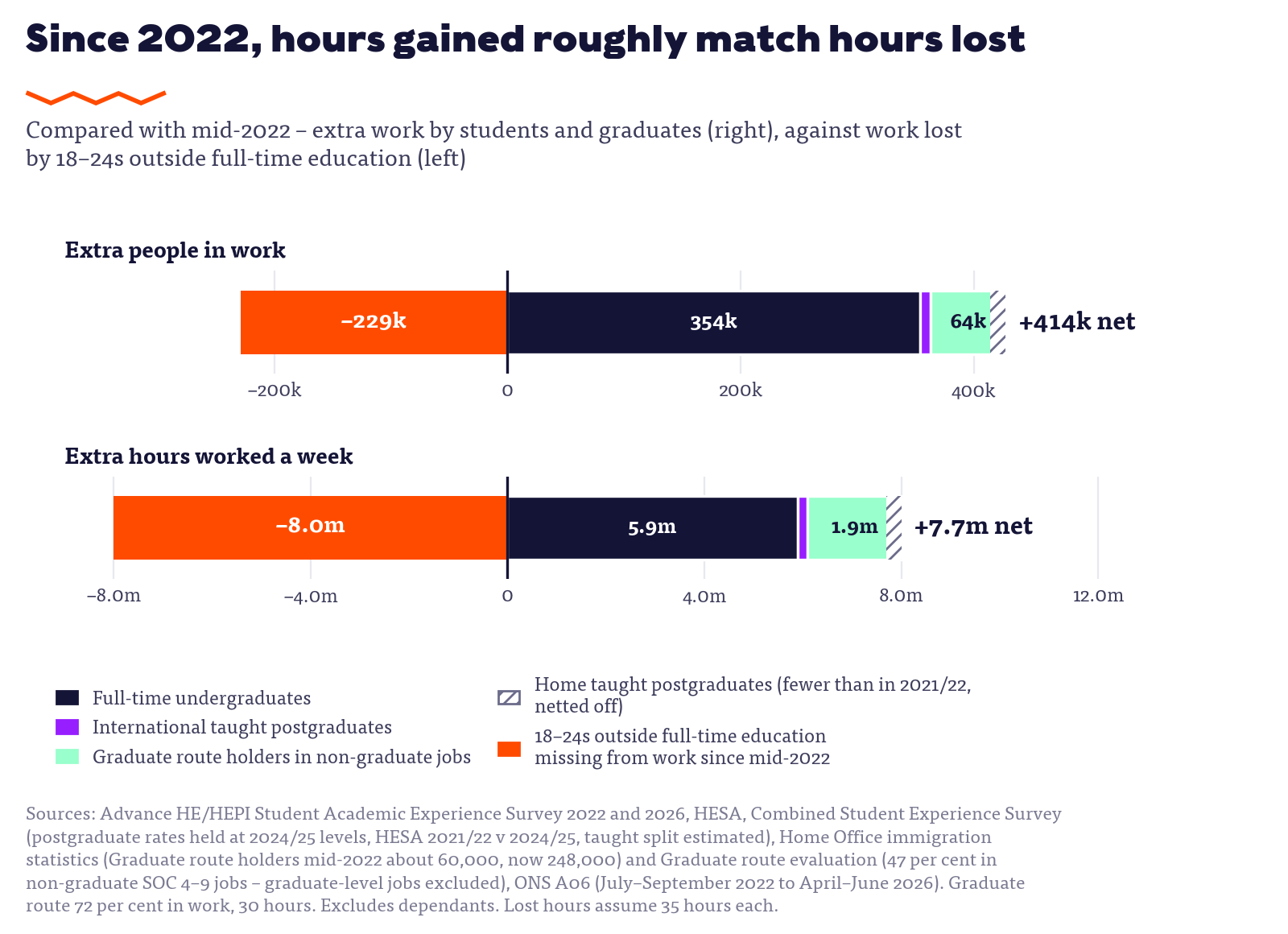
If those students were able to afford to live and so a) took up fewer of those jobs, and b) worked fewer hours in them, what do we think employers – who want us to believe that the problem is regulation and taxes – would do next?
So yep, the NEETs problem works like this. Loan students enough money to live on, and you both make a huge dent in your youth unemployment problem, and you free up time for students to gain the skills they need to get on in the graduate labour market. And as it stands, you get most of the money back.
If Andy Burnham announces that tomorrow, I’ll eat my “Hope Again” baseball cap, just £20.99 from the merch stand.