Higher education postcard: University of Wrocław
This week’s card from Hugh Jones’ postbag takes us to a university which took transnational education literally
Comment|
Hugh Jones is a freelance HE consultant. You’ll find a daily #HigherEducationPostcard if you follow him on Bluesky
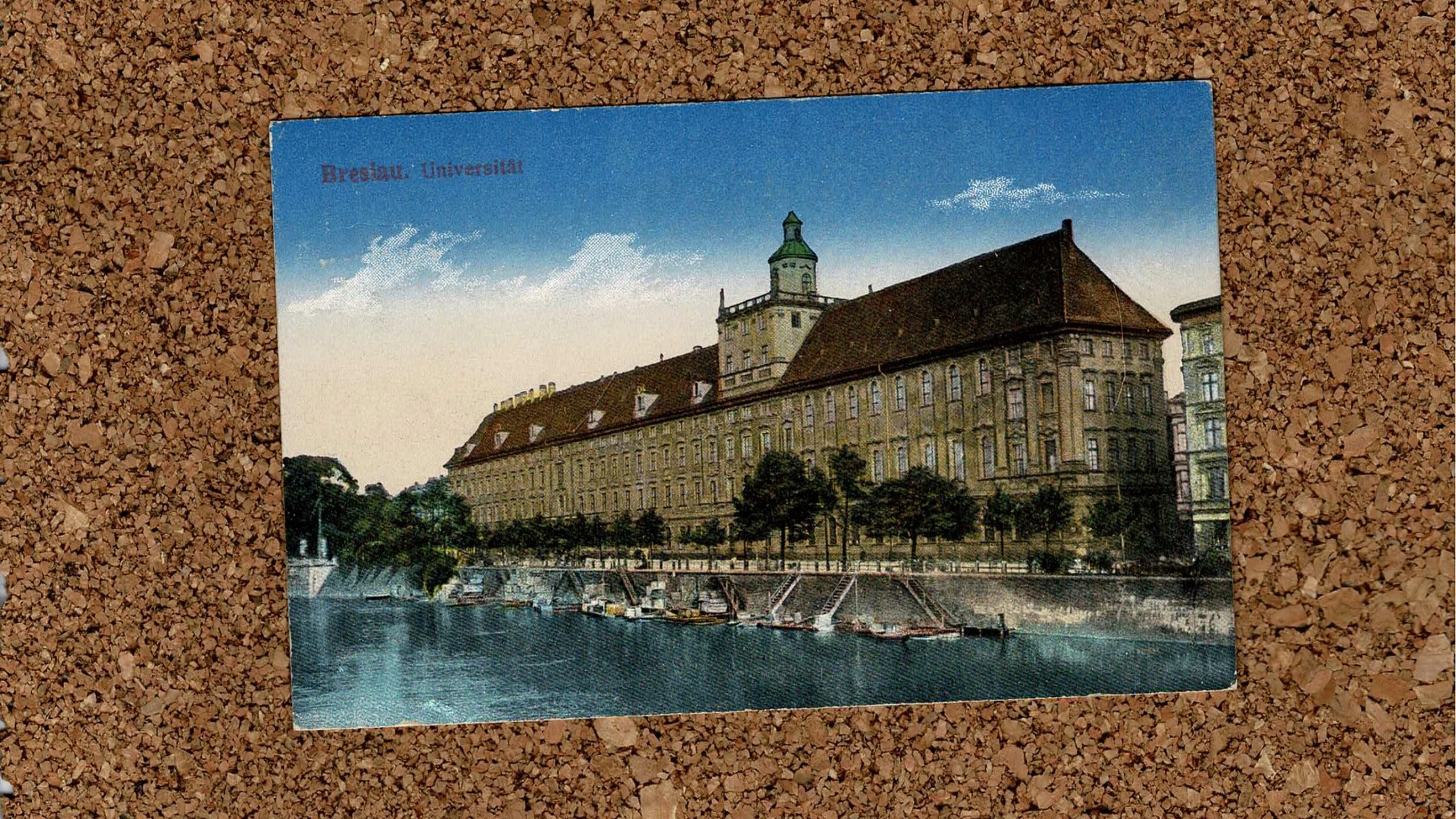
Greetings from Wrocław!
This card was sent in 1917. But the story behind it began a couple of centuries earlier, and it’s been witness to a decent chunk of history. Buckle in for the ride.
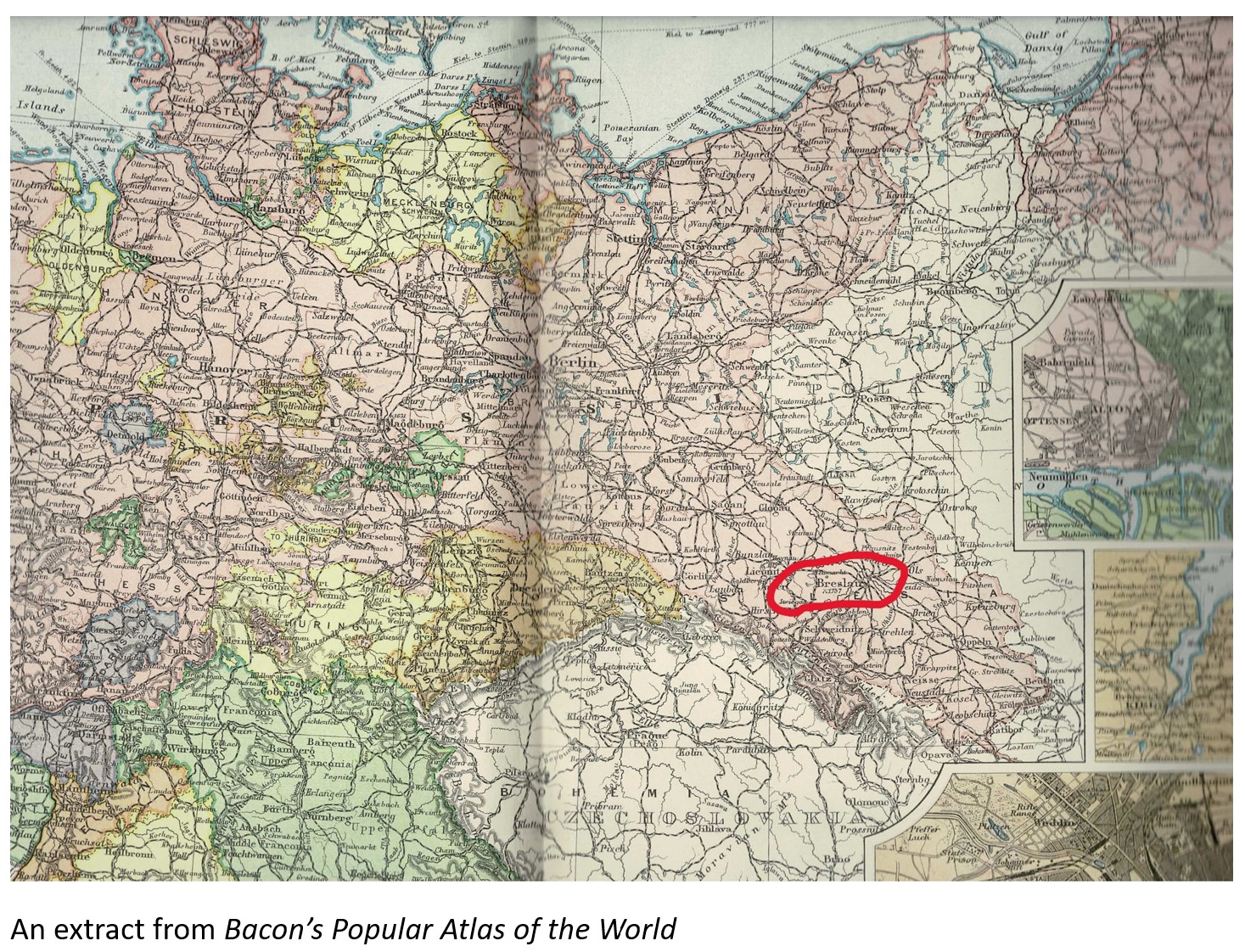
Firstly, where is it? Here’s a map from just after World War 1 had finished. Poland had been reestablished after many years of being a former state, but its borders were not what they are today. I’ve circled what was then Breslau, in Prussia, and is now (since 1945) Wrocław in Poland. Over the years Wrocław has been in Bohemia and Austria too. All without moving. As I said, it’s a part of the world which is full of history.
In 1702 Leopold I, Holy Roman Emperor, issued a decree establishing a university in Wrocław. This was built, figuratively speaking, upon a school which had been founded by the Jesuit order in 1638. The new university was called the Leopoldina, after its founder, and acted as a home for Roman Catholic thinking in what was a protestant part of the world. Wrocław was an important town: for a while part of the Hanseatic league – one of Poland’s three major cities.
The years wheeled and passed, and in 1741 Wrocław became part of Prussia. And in 1811, after Napoleon had defeated Prussia, Prussia reorganised itself under King Friedrich-Wilhelm III. University reorganisation was one of the priorities of the new Prussian state, and Breslau got a new name and a merger.
The university was merged with the Alma Mater Viadrina, a university based in Frankfurt am der Oder, and re-founded as the Königliche Universität zu Breslau – Universitas litterarum Vratislaviensis (Royal University of Breslau/Wrocław University of Literature). This involved the wholesale transfer of the library of 28,000 books, then the second largest collection in Prussia: they were all put on barges and floated down the Oder to Breslau/Wrocław. The intention was to create a university institution capable of rivalling Berlin.
And then in 1911 it was renamed again, as the Schlesische Friedrich-Wilhelms-Universität zu Breslau (the Silesian Friedrich-Wilhelms University of Breslau). Around this time the Prussian authorities also limited the number of Jews who could study at the university; this was followed in 1939 by a band of Polish students. As a footnote, in 2015 the university reinstated 262 PhD degrees which had been cancelled under Nazi leadership.
And at this point we get a big old dose of history again. Two world wars, much bloodshed and carnage, and in 1945 the buildings were mostly destroyed in the fighting between the Soviet Union and Nazi Germany. The post-war settlement saw borders redrawn and huge population movements, often in grim circumstances. Lewis Baston’s Borderlands is a humane and instructive introduction to this, and the consequences. Breslau became Wrocław once again, in Poland; and professors from Lvov (which was now Lviv in Ukraine) rebuilt the university. It was re-founded as the University of Wrocław in August 1945, and between 1952 and 1989 was called Uniwersytet Wrocławski im Bolesława Bieruta (Bolesław Bierut University of Wrocław) after the first president of the communist Polish state.
The German staff and students in 1945 were transferred to the University of Cologne, proof that credit transfer can be made to work even in the most trying circumstances.
I’ve tried to keep this light, but in truth the story of the University of Wrocław is pretty grim, with war, conquest, and killing accompanying its history. And it’s worth reflecting that the story of most UK universities is much more measured and peaceful. Long may that last.
Here’s a jigsaw of the postcard, which looks to have been sent to an address in Dresden in March 1917. The message is written in German, and the combination of language and early 20th century cursive script has defeated me! The one thing I am fairly sure of is that the card was sent to Fritz Teuber.