One officer can move national policy if they pick the right pitch
With ministers stripping statutory consultees out of the planning system, Sam Kilgour explains how one sports officer helped keep Sport England in it
SU Blogs|

Sam Kilgour is Head of Student Voice & Academic Engagement at the SU, University of Bath
Being in student voice in many SUs for the better part of a decade – each with its own unique relationship with national student lobbying entities – has trained my gut to have a good or bad feeling about where advocacy initiatives have a chance and where they don’t.
Student officers, boards of trustees, and other SU staffers don’t like going by a feeling in my gut. SUs seem to be loath to invest any resource to independently lobby the government or to campaign on national issues.
So how do I convince everyone that the right initiative is worth our time? Well, I think there are a few factors that increase the chances of lobbying succeeding.
The first is a government looking for ideas. The second is an issue where students will be seen as a credible voice – where we speak as students, but the government has to take a second look and ask “why are they so interested in this?”
The third is a nuanced ask that doesn’t require changes to the law. And the fourth is at least one student with the time, capability, and fight to drive the initiative.
An issue walks in
In the autumn of 2025, just such an issue made its way to the Voice office of the SU at Bath.
Angus Gueterbock, then sport officer, had spent much of the summer lobbying the university about the sports offer on campus. In the middle of a building push, fields and pitches were being moved and club storage was inaccessible and bursting, not to mention the litany of ongoing issues – something about a boathouse, something about having to walk to a field on a poorly lit trail while carrying kit. You know, sport officer things.
He popped in and told us he’d heard at a university meeting that the government was making moves to encourage building homes on sports pitches and playing fields. He almost immediately lost us – me and my Canadian background especially – with words like “statutory consultee”, “Sport England”, “National Planning Policy Framework”, and “local plan”, but the concern in his voice was evident.
We asked him to send us everything we might need to get up to speed, and boy howdy.
Angela Rayner, as deputy prime minister and secretary of state for housing, communities and local government, had announced some “red-tape cutting” initiatives in March 2025. Specifically, she was looking to remove the ability of Sport England, the Theatres Trust, and the Gardens Trust to slow down the building of new homes. We want more homes and we want them quickly! An admirable goal!
But now it’s October 2025, and she’s a backbencher, replaced by her former deputy at housing, Matthew Pennycook, as the point person for cutting the red tape. A quick read of his background suggests to us he’s going to be more open to arguments to protect sports pitches and playing fields on a health basis.
And so we’ve satisfied the first thing we need – a government looking for ideas. Irrespective of what can be said about the Labour government in autumn 2025, here we’ve got an initiative announced by a bounced deputy PM, moving forward under new leadership. Just like that, the consultation opportunity dropped, and we had until 13 January 2026 to get our response in.
The pieces fall into place
At Bath, we’re a sport university. Unfortunately for many of us on the staff side of the Voice team, we’re not a theatre or gardens university – we’re known for sport. Sport is also a big part of the university experience across the UK, a time to grow your skills and your body while you grow your mind.
The consultation itself, though, is about cutting red tape to allow for the building of new houses, something students also tell us is a priority.
Our status as student representatives weighing in on a matter of national housing policy gave us credibility in the conversation – the second thing we needed. We weren’t a trust or consultee that stood to lose power directly from the proposed changes. Who were we? Concerned citizens with an interest in protecting sports pitches and playing fields in the name of student sport, and with benefits for health and community to boot.
Our nuanced take satisfied the third requirement. Of the three statutory consultees slated for removal, we wanted just one protected, and only because we saw it as the one way right now to protect sports pitches and playing fields. We weren’t going to answer most of the questions in the consultation, but we were going to go big and deep on the select set that had implications for student sport.
The final thing we needed was at least one student with the time, capability, and fight to drive the initiative. We had that in Angus, our sport officer.
A sport officer committing to working closely with the Voice team – largely personally uninterested in, and not knowledgeable about, the subject matter – for the foreseeable future on a large-scale national advocacy and lobbying initiative? It’s tempting to think “Nuts & gum, together at last.” But for us, this was a great match – we had the advocacy infrastructure, and Angus had everything else we needed.
With all our variables satisfied – itself a rare feat – I made sure to keep the team grounded. Great, we have all these things! Even when I’ve seen this in the past, the chance of change is still low. Below 10 per cent. But we’ve got to do it anyway, as this might be the one where we get what we want, and we won’t know what doors might open until we try.
With my “less than 10 per cent” number, I may have been on the optimistic side of the Voice, broader SU, and university staff pool. However, it’s always worth pursuing.
For one thing, when you have an issue where you’re a credible intervenor, it’s a great experience for a student to learn how to build support, advocate, and do media. We then send that student off into the workforce more prepared, and with better interview answers than many of their peers.
Building the case
The core of any advocacy initiative, to me, is a new idea, backed by research, driven by fight.
Our new idea was that sports pitches and playing fields deserve special protection, even amid the most fervent home-building initiatives.
We got the research together. We met with leaders in the field of university and national sport, and found the literature that linked sports facilities to health and NHS use.
And then we fought for what we wanted. We drafted an open letter, as succinct as we could make it while maintaining the nuance required of our argument. The open letter, Protecting the right to accessible sport, became the centre of our push.
There was a petition to protect Sport England’s role, which we saw as distinct from our efforts – they were mobilising the public, while we were preparing to lobby behind the scenes and contribute to the formal consultation.
Chasing signatures
Angus, as sport officer, took the plan to a British Universities & Colleges Sport regional meeting, garnering early support and involvement from a wide array of sport officers and professionals.
Angus then painstakingly got the contact details of as many of the individuals responsible for sport at their campus as possible. We’re talking sport officers, presidents at SUs without sport officers, some other officer or the entire team at places that had neither, and university staff members at institutions where the sport offer fell under the university rather than the SU.
We went to the effort of making it look nice – trying to get ink signatures, centring the student representatives who signed, and adding logos where entire SUs or universities had signed on. One thing we didn’t do was our own digging. If someone told us they were signing on behalf of entire organisations, we took it that they’d gone through their processes, which we couldn’t possibly know.
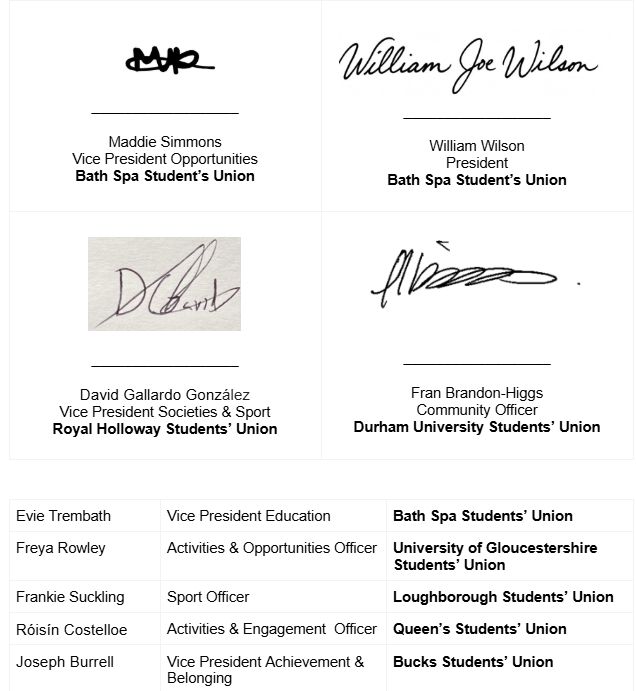
The ink signatures weren’t as nice or as plentiful as we’d hoped.
After the considerable logistics hurdle of emailing all these folks, soliciting their signatures, and, in some cases, convincing some to sign on, we ended up with our rejoinder – “Our open letter, signed on to by representatives of over 900,000 students…”
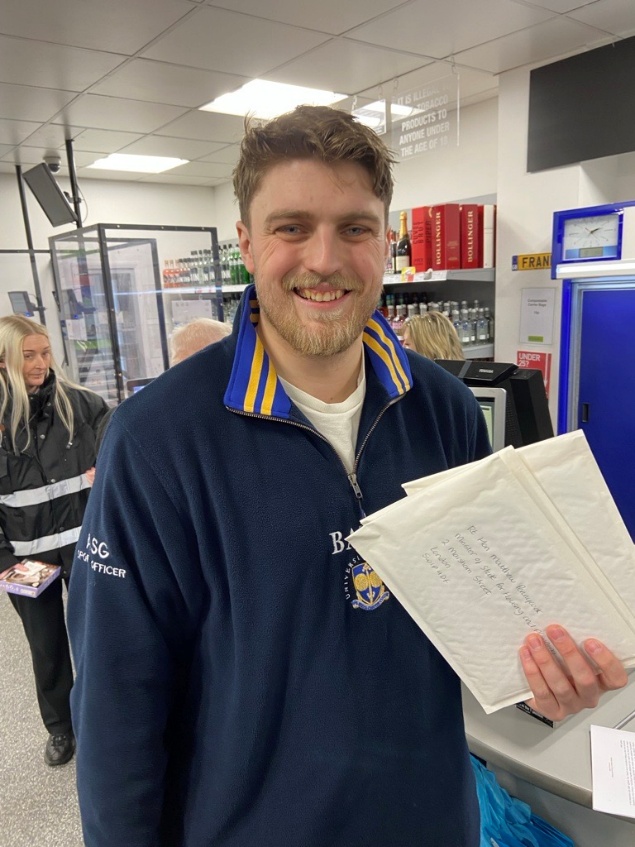
We then sent the letter in full, with all signatories, to as many people as we thought might be interested parties. That meant the parliamentary officials, the prime minister, the minister of state for housing and planning, and the civil servants responsible – the chief executive of the Planning Inspectorate and the director general for regeneration, housing and planning. We sent physical copies, hoping a couple would get read.
Playing the consultation
And then we did the formal consultation. We stayed disciplined. So many of these public consultations do everything they can to steer you towards what the government wants. We’d done the work of creating our open letter on our terms, staying focused on the aspects of student life, so for the consultation, there was a lot of skipping pages.
The real fun came when our letter served as a full or partial answer to what was asked. We’d start each answer the same way.
On behalf of representatives of over 900,000 students, [insert relevant text from the open letter]… to read the full letter and review the list of signatories…
https://docs.google.com/document/d/1AB7BPVQg8p0U1SMkctbqEtZpuSHaL-U2aUlOWM7OrMc/edit?tab=t.0
Yes. The full link. Ugly, but you never know how open-text comments are going to be reviewed. It’s the best bet if you want someone to go to the trouble of checking out the document.
Of course, we updated the general student population throughout, against my impulses. With an issue so complex, yes, I concede there are advantages to showing students what you’re doing, but I think it’s largely theatre. In general, my take was that this was an act of service an SU officer is uniquely called to. You’ve got to do it knowing you’ll not get much thanks from the general student population – unless you’re successful, and even then…
Let’s talk results
Well, for us – feeling like we were pushing against a bunch of closed doors, and not getting much engagement from the powers that be on this issue – a letter in response was a good result!
The government appeared to have quickly dispatched Baroness Taylor, under-secretary of state for housing and local government, to draft us a response, amusingly addressed to “Students Union”. We already knew her to be an ally – we just weren’t sure how much of a role she’d have to play in the result.
Next, Matthew Pennycook, the relevant minister of state, got back to us in early summer, but his letter was less encouraging. I was worried we were running out of runway. The government was in freefall, and rumours of an Angela Rayner comeback already abounded.
For us – an SU with a nascent independent national lobbying effort – getting recognised by the government for our work through its responses to our letter was win enough. Something really tangible to share with students and with the signatories.
But let’s get to the truly shocking news. I guess Angela Rayner didn’t get her post back quickly enough. The wheels must have been in motion, the paper already gone to print, because in mid to late August the government announced its response on reforms to the statutory consultee system.
And wow – a specific carve-out for Sport England. Gone were the Theatres Trust and the Gardens Trust. Kept, in a u-turn, was Sport England. Sure, Sport England’s right to consultation was limited to pitches exceeding a certain size or in specific areas, but considering what we were facing, this was a huge, hard-fought, electrifying win.
Less than a 10 per cent chance of success.
It’s hard to express what a positive jolt this was for our SU, for Angus, and for the Voice staff. We set out to try to influence national policy, and the most optimistic of the groups was saying we were going to put in all this work to have a one in 11 chance at success. Suddenly, here we were, receiving “thank you” notes from Sport England and leaders in the field for our efforts. Knowing we’d made the difference.
Worth the long odds
If there was any remorse about the result, it was that the government took time to acknowledge other grassroots movements in its consultation response, but was silent on our efforts. I was fine with that. We’d played outside the government’s rules, refused to engage head-on with its consultation, taken advantage of its turmoil and variety of opinion, and maybe annoyed some people. It’s not often the lobbyists fight for public recognition.
We know our work will serve to protect sports pitches and playing fields for the foreseeable future, and ensure access for another generation of students, in Bath and across the country.
You should chase something like this at your SU. En masse, fewer than 10 per cent will get more than half of what you ask for, and that’s nothing to turn your nose up at.
Related articles
Sports clubs are playing away from home when they sign sponsorship deals
Mae Ramshaw | SU Blogs | 23/10/26

Jewels in the crown or rough diamonds – what universities miss about their SUs
Nick Smith | SU Blogs | 22/10/26

Climate, Coffee, Crisis – where do SUs fit in?
Krzysztof Mikulski | SU Blogs | 14/10/26