

For years, the student experience has been discussed, attempted to be measured, and improved through a familiar set of lenses: recruitment, employability, satisfaction scores, retention.
These categories have shaped institutional strategies, national conversations, and the ways universities demonstrate impact.
But they no longer capture the reality of what it means to be a student today.
After two years serving as student officer, what has become increasingly clear to me was not just that students are facing more challenges but that the way we understand those challenges is fragmented.
Each issue is treated in isolation, while students experience them all at once, as part of a deeply interconnected reality.
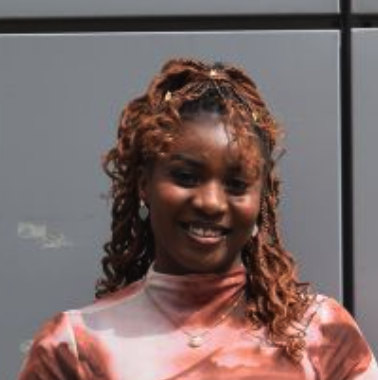
That realisation is what led me to produce Not Your Student, a documentary exploring the lived experiences of diverse students across these overlapping pressures. The aim was simple: to move beyond the abstraction of data and bring forward the human stories behind it.
Because while data tells us what is happening, it rarely shows us how it feels to live through it.
Smoke and mirrors
The traditional model of higher education still assumes a relatively linear student journey. A student arrives, studies, engages, graduates and progresses onto what the system considers a good job.
But for the majority of students today, that model no longer exists. The post-pandemic context drastically accelerated this shift, disrupting not just learning environments, but the wider social, financial and emotional foundations of student life.
Many students are now entering or continuing higher education with heightened financial precarity, increased reliance on paid work, and more complex mental health needs.
At the same time, students’ expectations around flexibility, digital access and institutional support have increased without institutional capacity and capability.
What this has created is not a temporary disruption, but a lasting change in the conditions under which students engage with higher education.
Students are working longer hours, navigating housing instability in increasingly competitive markets and managing mental health challenges shaped not just by academic pressure, but by financial insecurity, isolation, and uncertainty about the future.
For international students in particular, immigration status and financial obligations add another layer of complexity.
Conditions not categories
These are not side issues or external to the student experience. They are the student experience.
Yet institutions often respond to them reactively and as separate strands.
Mental health is seen as a service problem, employability as a careers issue, housing as a city-wide challenge and racism and exploitation as an immigration issue.
What this creates is a system where students are expected to navigate complexity, while institutions operate in silos. One of the key insights emerging from the documentary I’ve produced is that the system needs to shift from thinking in categories to thinking in conditions.
So instead of asking, “How do we improve employability” or “How do we enhance wellbeing services,” we need to ask, what are the conditions under which students are trying to learn?
And how do those conditions shape their ability to participate, engage and succeed?
This is a fundamentally different approach. It recognises that learning does not happen in isolation from life, it’s shaped by it.
If a student is working 35 hours a week to afford rent, their engagement with learning is different. If a student feels unwanted in the country, it hinders their success. If a student is experiencing anxiety linked to financial stress, their academic performance is affected.
These are not peripheral considerations, they’re central to educational outcomes.
Howdy partner
Another theme that emerged in the making of this film was the importance of partnership.
Students are often positioned as recipients of decisions, tools for symbolic cocreation, or simply as people who fill in the university’s survey. But for partnership to be successful students need to be active participants in shaping their own experience.
If we are serious about reforming higher education in a way that reflects students’ current realities, then institutions need to work more closely and more consistently with students as partners in that process.
This is not about token consultation as a formality, it’s about embedding student voice into decision-making in a way that influences outcomes.
Capturing the nuance
It would be easy to frame this as a call for incremental improvement. But the scale and consistency of the issues students are facing suggest that a broader reflection is needed.
The question isn’t whether the system is failing, but whether it meets the student realities it exists to serve.
For student officers, this is something you understand deeply and it’s our job to get decision makers to not only understand the student experience but to feel it.
Policy papers, surveys and reports are essential. But they often struggle to convey the lived complexity of student life.
Film, on the other hand, allows us to sit with those experiences, to hear them, to see them, and to feel their impact. It only made sense for me to leverage my background and passion for filmmaking and storytelling to end my term by creating a platform for students to share their current lived experience on screen and digitally.
The Not Your Student documentary is not an attempt to provide solutions. It is an attempt to create a shared understanding or a starting point for more honest conversations across the sector.
Because meaningful change rarely begins with agreement, it begins with recognition.
I have worked on this production for over 9 months and it premiered on 21st May 2026 at The Social Hub Glasgow, bringing together students, university leaders, policymakers and sector organisations for a screening and an honest discussion on what needs to change.
The event was designed as a space not just for reflection, but for dialogue between those shaping the system and those experiencing it.
If the student experience is no longer linear, then our approach to it cannot be either. The challenge now is not simply to improve what exists, but to rethink how it all fits together.


